That yellow coolant warning light just lit up your dashboard, and your heart sank. Don’t panic. Understanding why your BMW’s coolant level drops and what to do about it can save you thousands in engine repairs. Let’s get straight to what’s happening and how to fix it.
Why BMW Cooling Systems Fail More Than Others
Here’s the truth: BMW engineers chose plastic for many cooling system parts. It’s lighter and cheaper to produce, but it doesn’t age well.
Your BMW’s cooling system uses plastic radiator end caps, expansion tanks, and thermostat housings instead of traditional metal components. These plastic parts become brittle after years of heating and cooling cycles. Eventually, they crack.
The expansion tank sits near your radiator and consists of two plastic pieces glued together. That adhesive breaks down over time, creating tiny seepage points. You won’t see puddles immediately, but your coolant level slowly drops until that warning light appears.
This isn’t a design flaw you can avoid. It’s the reality of BMW ownership. Most expansion tanks fail between 80,000 and 100,000 miles, regardless of how carefully you maintain your vehicle.
What That Dashboard Warning Actually Means
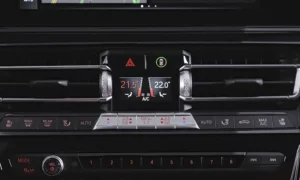
BMW’s warning system shows different colored lights for different situations. A blue coolant light during startup means your engine is cold. That’s normal and will disappear within minutes.
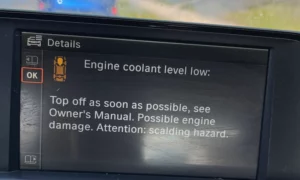
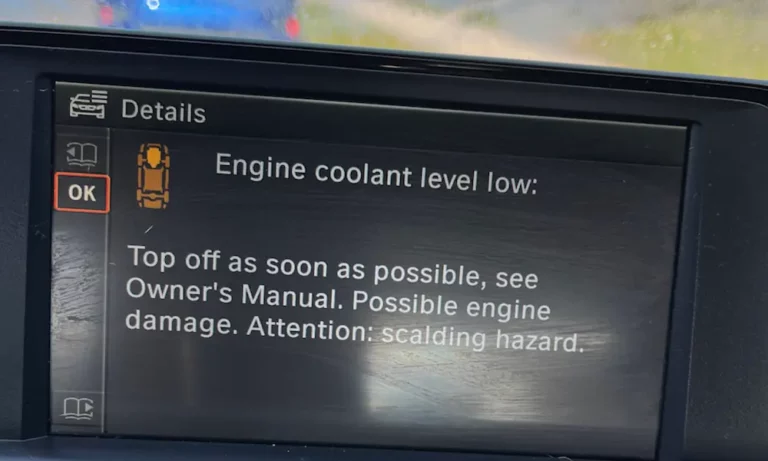
Yellow or orange warnings signal low coolant levels requiring attention soon. Red warnings mean pull over immediately. Modern BMWs display specific text messages like “Refill coolant” or “Engine coolant level low: Top off as soon as possible.”
Your BMW monitors coolant temperature constantly. Normal operating range sits between 195°F and 220°F (90°C to 104°C). When coolant levels drop, temperatures spike rapidly. The temperature gauge approaching the red zone means you’re minutes away from permanent engine damage.
Don’t ignore these cooling system warnings. The sophisticated monitoring exists because BMW engines sustain catastrophic damage quickly when overheated.
The Three Main Culprits Behind Coolant Loss
Plastic Parts Giving Up
Those plastic components we mentioned? They’re your primary problem. Radiator end tanks, expansion tanks, hose connections, and thermostat housings all use plastic that degrades with age and temperature cycling.
You might not see obvious cracks. The failures often start as microscopic separations in bonded joints or stress cracks in thin sections. Coolant seeps out slowly at first, accelerating as the damage worsens.
Check under your BMW after it’s been parked overnight. Coolant puddles appear as brightly colored liquid (blue, green, or pink) with a sweet smell. If you’re losing coolant but see no leaks, the problem might be internal.
Water Pump Failures
BMW uses electronic water pumps in many models instead of traditional belt-driven pumps. These provide precise temperature control but add complexity and failure points.
When water pumps fail, you’ll hear grinding or whining noises from the pump area. You might see leaks around the pump housing or notice inadequate heating from your climate control system.
Modern BMW engines use multiple cooling circuits with dedicated pumps for the engine, turbocharger, and transmission. If any pump fails, your entire cooling system performance drops, triggering warnings.
Most BMW water pumps need replacement between 60,000 and 100,000 miles. Electronic pumps sometimes fail earlier.
Head Gasket Problems
This is the scenario you don’t want. Head gasket failure lets coolant enter your combustion chambers where it burns off. You’ll see white smoke or steam from your exhaust, but no visible external leaks.
Certain BMW model years have documented head gasket issues. The X1, X3, 3 Series, and 5 Series from specific years show higher failure rates. Repairs cost between $3,000 and $3,400.
Check your oil dipstick. If it shows a milky or tan color instead of clear amber or black, coolant is mixing with your oil. This requires immediate professional attention to prevent complete engine failure.
BMW Coolant Isn’t Like Regular Antifreeze
You can’t just grab any coolant from the auto parts store. BMW requires NAP-free coolants (no nitrates, amines, or phosphates) because of their extensive aluminum, magnesium, and plastic components.
Standard coolants cause corrosion and damage to BMW engines. You need the correct specification, not just the right color.
Understanding BMW Coolant Colors
BMW uses color coding, but don’t rely on color alone. The original blue coolant (LC-87/G48) was standard from 1986 to 2018. The newer green coolant (LC-18/HT-12) appeared in 2018 models with improved longevity.
Some recent models use magenta or rose-colored coolant (LC-07/G30-91). The BMW i3 uses its own specific blue formulation (LC-13).
Blue and green coolants mix together safely. Don’t mix newer formulations with older coolants without checking compatibility first.
The 50/50 Mixture Rule
Always mix coolant concentrate with distilled water at a 50/50 ratio. This provides freeze protection to -40°F while maintaining optimal heat transfer and corrosion protection.
Never use tap water. It contains minerals that create scale buildup and reduce cooling efficiency. The proper BMW coolant specifications matter more than most owners realize.
| Coolant Type | Color | Years Used | Special Notes |
|---|---|---|---|
| LC-87/G48 | Blue | 1986-2018 | Original formulation |
| LC-18/HT-12 | Green | 2018+ | Extended service life |
| LC-07/G30-91 | Magenta/Rose | Select models | High-performance applications |
| LC-13 | Blue | i3 only | Electric vehicle specific |
How to Check Your Coolant Level Safely
Never open the cooling system when hot. Pressurized coolant causes severe burns. Wait at least 30 minutes after shutting off the engine.
Locate your coolant reservoir. It’s typically a black or translucent plastic tank near the radiator. You’ll see minimum and maximum level markings with a floating indicator inside.
The float should sit between those marks when viewed at eye level. If it’s at or below minimum, you need to add coolant.
Finding External Leaks
Look underneath your BMW for puddles or stains. BMW coolants are fluorescent and easy to distinguish from oil or other fluids.
Check these common leak points:
- Radiator hoses and connections
- Water pump housing
- Thermostat connections
- Expansion tank seams
- Hose clamps
Hoses crack, bulge, or develop soft spots with age. Run your gloved hands along the underside of hoses where damage isn’t visible from above.
Some leaks only appear when the system is pressurized and hot. You might need professional diagnostic tools to locate elusive problems.
When You Need Professional Help
UV dye detection works for hard-to-find leaks. A technician adds fluorescent dye to your coolant, runs the engine, then uses ultraviolet light to spot leaks. Even tiny seepage points glow brightly under UV.
Pressure testing definitively checks cooling system integrity. The technician connects a pressure tester and pressurizes your system to 15-20 PSI. If pressure drops, you’ve got a leak.
These diagnostic procedures require specialized equipment beyond typical DIY capabilities.
What to Do When the Warning Light Comes On
You’re driving and that yellow warning appears. Here’s your action plan:
Turn off your air conditioning immediately. Turn your heater to maximum heat. This transfers engine heat into the passenger compartment, buying you time.
Pull over safely as soon as possible. Shut off the engine. Don’t try to make it home or to the nearest shop. Modern BMW engines sustain irreversible damage within minutes of overheating.
The temporary inconvenience of calling for a tow beats the cost of engine replacement. We’re talking about the difference between a $200 tow and a $10,000+ engine rebuild.
After You’ve Stopped
Let the engine cool completely. Thirty minutes minimum. Check the coolant reservoir level.
If you have the correct BMW coolant mixed 50/50 with distilled water, you can add it carefully. Slowly remove the reservoir cap even when cool. Residual pressure might remain.
Add coolant gradually while watching the float indicator. It should rise to a position between minimum and maximum marks. Don’t overfill. Coolant expands when hot, and overfilling causes pressure buildup and spillage.
If you don’t have proper coolant, don’t add anything. Call for a tow. Adding the wrong coolant causes more problems than it solves.
Adding Coolant the Right Way
Find the coolant reservoir cap. It features warning symbols and temperature markings. Remove it slowly, even when the engine is cool.
Pour coolant gradually. Watch that float indicator inside the reservoir. It should be visible between the minimum and maximum marks when viewed at eye level with the filler opening.
Dealing with Air Bubbles
BMW cooling systems trap air bubbles that cause false low-coolant readings and reduce efficiency. Proper bleeding requires specific procedures.
Some systems need specialized vacuum equipment to remove all air. Others require warming the engine to operating temperature so the thermostat opens, then allowing complete cooling before topping off.
If you’re adding coolant and the level keeps dropping without visible leaks, air bubbles are working their way out. You might need multiple top-offs over several days as the system self-bleeds.
Professional cooling system bleeding ensures all air is removed properly.
Prevention Beats Expensive Repairs
Check coolant levels monthly when the engine is cool. Look for gradual decreases indicating developing leaks. Catching problems early saves money.
During oil changes, ask your technician to inspect hoses and connections for deterioration, corrosion, or damage. A quick visual check takes minutes but prevents roadside breakdowns.
Annual cooling system inspections identify potential failures before they leave you stranded. These should include pressure testing, coolant condition analysis, and component wear assessment.
When to Replace Components
BMW cooling system parts have predictable lifespans:
Water pumps: 60,000 to 100,000 miles (electronic pumps sometimes fail earlier)
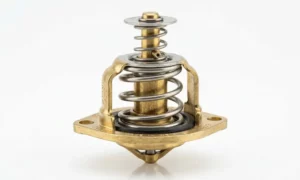
Thermostats: 80,000 to 120,000 miles
Hoses: Every 5-7 years regardless of mileage (rubber degrades with age)
Expansion tanks: 80,000 to 100,000 miles (plastic fatigue and seal deterioration)
These are guidelines, not guarantees. Your driving conditions, climate, and maintenance history all affect component life.
| Component | Typical Lifespan | Warning Signs | Replacement Cost |
|---|---|---|---|
| Water Pump | 60,000-100,000 miles | Grinding noise, leaks | $800-$1,500 |
| Expansion Tank | 80,000-100,000 miles | Visible cracks, seepage | $200-$400 |
| Radiator Hoses | 5-7 years | Cracking, bulging | $50-$200 |
| Thermostat | 80,000-120,000 miles | Overheating, poor heating | $300-$600 |
The Bottom Line on BMW Coolant Issues
Your BMW’s cooling system needs more attention than traditional vehicles. Those plastic components will eventually fail. It’s not if, it’s when.
Regular monitoring catches problems early. Monthly level checks take two minutes and can prevent thousands in damage. Annual professional inspections identify wearing components before they fail catastrophically.
When that warning light appears, take it seriously. Pull over, shut down, and assess the situation. Never ignore coolant warnings hoping they’ll resolve themselves.
Use only BMW-specification coolant mixed properly with distilled water. The few dollars you might save using generic antifreeze aren’t worth the corrosion damage and reduced cooling efficiency.
Keep emergency coolant in your trunk. Make sure it’s the correct type for your BMW, already mixed 50/50 and ready to use. This simple preparation can get you safely off the highway and to a repair facility.
BMW cooling systems aren’t as bulletproof as we’d like. But understanding how they work and what they need keeps your engine running reliably for years. Stay ahead of problems, and that “bmw engine coolant low” warning won’t catch you unprepared.