Getting your BMW’s coolant wrong isn’t just inconvenient—it’s expensive. The right BMW engine coolant type protects your aluminum-intensive engine from corrosion and overheating. The wrong one? That’s a fast track to costly repairs. Here’s everything you need to know about choosing, using, and maintaining the correct coolant for your BMW.
What Makes BMW Coolant Different From Regular Antifreeze
BMW doesn’t use standard off-the-shelf coolant, and there’s a good reason why.
Your BMW’s engine uses way more aluminum than most other cars—we’re talking the block, cylinder heads, and cooling system components. Aluminum reacts differently to coolants than cast iron, so it needs specialized protection.
Regular green coolant (the kind your dad probably used) contains nitrates, amines, and phosphates. BMW engines hate these chemicals. They create deposits in cooling passages and corrode aluminum components faster than you can say “check engine light.”
That’s why BMW engineered specific formulations that are completely NAP-free (no nitrates, amines, or phosphates). This chemistry protects your sophisticated cooling system from the inside out.
The Two Main BMW Engine Coolant Types You’ll Encounter
BMW has used two primary coolant formulations over the past decade, and knowing which one your car needs matters.
G48 Blue Coolant: The Traditional Choice
G48 blue coolant (technically BMW LC-87) was BMW’s go-to formulation for decades. You’ll find it in most BMWs built before 2018-2019.
This coolant uses Hybrid Organic Acid Technology (HOAT), which combines organic acid corrosion inhibitors with silicates. Think of it as a two-pronged defense system for your engine’s aluminum components.
Genuine BMW G48 coolant comes as a concentrate in part numbers like 82 14 1 467 704 (gallon size) or 83 51 2 355 290 (1.5-liter bottle). You’ll need to mix it 50/50 with distilled water before adding it to your system.
HT-12 Green Coolant: The Modern Standard
Around 2018, BMW started transitioning to HT-12 green coolant (BMW LC-18) for most new models. This newer formulation uses Silicate Organic Acid Technology (Si-OAT).
The transition wasn’t instant—different model lines switched at different times. F-series cars typically made the change between July and December 2018, while G20 3-Series models switched around January 2019.
Here’s where it gets confusing: HT-12 was originally magenta-colored before BMW switched it to green. So if you’ve got an early version, don’t panic when the colors don’t match.
The official BMW part number is 83 19 2 468 442.
How to Figure Out Which BMW Engine Coolant Type You Need
Don’t guess. Your engine’s too expensive for that.
The easiest way to determine your correct coolant is checking your vehicle’s production date. You’ll find this on the driver’s door jamb sticker or through BMW’s VIN lookup system.
Built before mid-2018? You probably need G48 blue coolant. Built after? Likely HT-12 green.
Here’s a quick reference for common models:
| Model Series | Approximate Transition Date | Original Coolant |
|---|---|---|
| F30/F31/F32 | July-December 2018 | G48 → HT-12 |
| G20 3-Series | January 2019 | HT-12 |
| F15/F16 X5/X6 | July 2018 | G48 → HT-12 |
| G05 X5 | From production start | HT-12 |
| F90 M5 | Model year dependent | Varies |
Pop your hood and check the coolant reservoir. Blue liquid means G48. Green means HT-12. Brownish or weird colors? Time for a flush.
Can You Mix Different BMW Coolant Types?
Short answer: G48 and HT-12 can mix. Everything else is risky.
BMW’s technical documentation confirms that G48 blue and HT-12 green coolants are compatible. They share similar chemistry and nitrite-free formulations, so mixing them won’t destroy your engine.
But here’s the catch—mixing creates color changes that make monitoring your system harder. You’ll end up with some murky teal situation that tells you nothing about what’s actually in there.
If you’re adding less than a quart to top off, mixing is fine. Planning a complete coolant service? Stick with one type and flush the system completely.
Never, ever mix these:
- BMW coolant with regular green IAT coolant
- BMW coolant with Dexcool (orange stuff)
- BMW coolant with universal coolants
- i3-specific coolant with regular BMW coolants
Mixing incompatible formulations creates gel-like sludge that blocks cooling passages. That’s overheating territory, and you don’t want to go there.
Aftermarket BMW Engine Coolant Type Options That Actually Work
You don’t have to buy BMW-branded coolant at dealer prices, but you do need to be selective.
Zerex G-48: The Budget-Friendly Choice
Zerex G-48 matches BMW’s blue coolant specifications exactly. It’s HOAT-based, NAP-free, and carries BMW approval.
You’ll find Zerex G-48 at most auto parts stores for about half what BMW charges. It comes in both concentrate and pre-diluted 50/50 formulations.
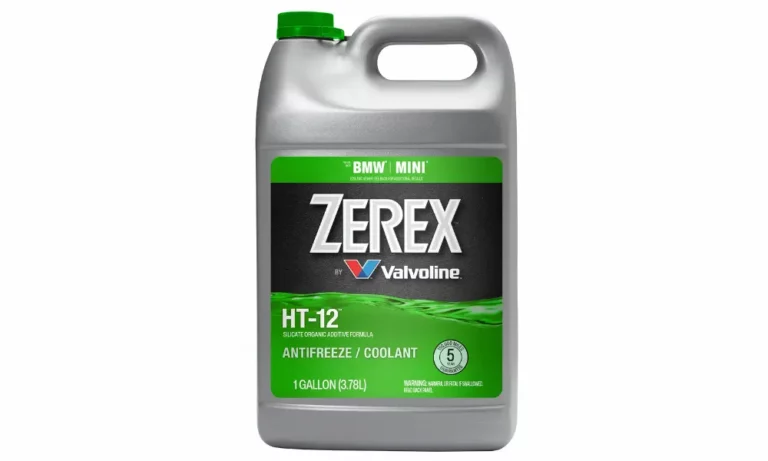
Zerex HT-12: Modern Chemistry Without the Premium
For newer BMWs, Zerex HT-12 provides Si-OAT chemistry identical to BMW’s green coolant. Valvoline manufactures it with BMW’s blessing.
Other Approved Alternatives
Several European coolant manufacturers make BMW-approved formulations:
- Prestone MAX European Blue (meets G48 specs)
- Castrol NF
- Pentosin NF
- BASF Glysantin G48
Whatever you choose, verify it specifically states BMW approval and NAP-free formulation. “Universal” or “works with all cars” coolants are marketing BS—avoid them.
What BMW Won’t Tell You About Coolant Service Intervals
BMW calls their coolant “lifetime fill.” That’s convenient marketing, not engineering reality.
Here’s what happened: Before 2004, BMW recommended coolant changes every 2 years or 30,000 miles. Then it became 3 years. Then 4 years. Then magically “lifetime” right when BMW introduced free maintenance programs.
Coincidence? Independent BMW specialists don’t think so.
The reality is that coolant’s protective additives deplete over time. Thermal cycling, mileage, and engine stress all break down the corrosion inhibitors that keep your aluminum engine safe.
Most experienced BMW techs recommend changing coolant every 3-4 years or 50,000-60,000 miles. That’s for normal driving conditions.
You’ve got an M car or track your BMW? Cut that to 3 years maximum. High-performance driving creates more heat and stress, accelerating coolant degradation.
| Driving Condition | Recommended Change Interval |
|---|---|
| Normal street use | 3-4 years / 50,000-60,000 miles |
| High mileage/age | 3 years / 40,000 miles |
| Performance/M models | 3 years maximum |
| Track/racing use | Annually |
Environmental factors matter too. Extreme heat, extreme cold, and stop-and-go city driving all reduce coolant life.
How to Properly Mix and Add BMW Coolant
BMW coolant concentrates need 50/50 mixing with distilled or deionized water. Not tap water—distilled.
Tap water contains minerals that form deposits in your cooling system. These deposits reduce heat transfer efficiency and can block small passages in aluminum cylinder heads.
The 50% concentration sweet spot protects down to -40°C while maintaining optimal corrosion protection. More concentrate doesn’t mean better protection—it actually reduces freeze protection and heat transfer.
If you’re topping off less than a quart, you can use pre-diluted coolant straight from the bottle. For complete flushes, buy concentrate and mix it yourself to save money.
Mixing procedure:
- Use a clean container
- Add equal parts concentrate and distilled water
- Mix thoroughly
- Add to the expansion tank when engine is cold
Warning Signs Your BMW Needs Coolant Attention
Your BMW’s cooling system talks to you. Listen to it.
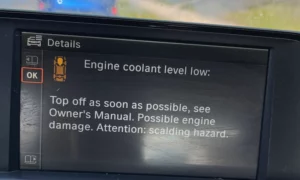
Sweet, syrupy smells around your engine bay mean coolant’s leaking somewhere. Don’t ignore this—even small leaks can lead to overheating.
Overheating warnings on your dash are obvious red flags. But watch for more subtle signs too:
- Temperature gauge climbing higher than normal
- Coolant level dropping between checks
- Discolored or cloudy coolant
- Oily film floating in the expansion tank
- White smoke from the exhaust (head gasket failure)
Modern BMWs have electronic coolant level monitoring, but sensors fail. Check your coolant reservoir visually every month.
The expansion tank sits on the left side of most BMW engine bays with clear min/max markings. Check it when the engine’s cold—coolant expands when hot and gives false readings.
Brown or rust-colored coolant means corrosion’s happening inside your engine. Get it flushed immediately.
DIY vs. Professional Coolant Service
Topping off coolant? That’s easy DIY territory. Complete flushes? That’s where things get tricky.
BMW cooling systems are complex beasts with multiple circuits and notorious air-trapping tendencies. Air pockets cause overheating and can damage your water pump.
Proper bleeding procedures require patience and sometimes special tools. Many newer BMWs need specific bleeding sequences—fill a little, run the engine, burp the system, repeat.
If you’re mechanically inclined and have the time, DIY coolant changes save money. Just follow BMW’s procedures exactly and don’t rush the bleeding process.
Not confident? A professional flush costs $150-250 but includes proper bleeding and system pressure testing. That’s cheap insurance against a $5,000+ engine replacement.
The Bottom Line on BMW Engine Coolant Type
Your BMW’s cooling system isn’t the place to cut corners or experiment.
Stick with G48 blue for older BMWs (pre-2018 production) or HT-12 green for newer ones. Verify your production date to be sure.
Aftermarket options like Zerex save money without sacrificing protection—just confirm BMW approval before buying.
Ignore BMW’s “lifetime fill” marketing and change coolant every 3-4 years. Your engine will thank you with longer life and fewer problems.
The right BMW engine coolant type costs $20-40 per gallon. A new engine costs $15,000. Do the math.
When in doubt, check your owner’s manual, verify your production date, and use approved formulations. It’s not complicated—it just requires paying attention to what your specific BMW actually needs.