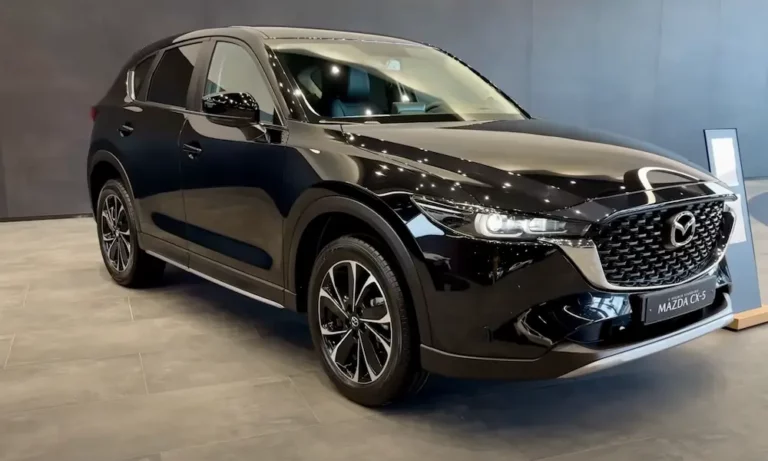
Wondering if a Mazda CX-5 will go the distance? You’re looking at 200,000 to 300,000 miles with proper care—that’s 13 to 20 years of reliable service. This compact SUV punches above its weight in durability, often outlasting pricier competitors. Let’s dig into what makes these vehicles tick and how you can maximize their lifespan.
What’s the Realistic Lifespan of a Mazda CX-5?
Expect 200,000 to 250,000 miles from most CX-5s that follow recommended maintenance schedules. Some exceptionally well-maintained examples push past 300,000 miles, though that requires serious dedication to service intervals.
Here’s what you’ll typically see at different mileage milestones:
100,000 miles: Your CX-5 should still feel nearly new. You’re looking at routine maintenance only—oil changes, tire rotations, and brake inspections.
150,000 miles: Time to replace wear items like brake pads, tires, and possibly the battery. The engine and transmission? They’re just getting warmed up.
200,000 miles: Some suspension components or gaskets might need attention. The powertrain continues chugging along reliably if you’ve stayed on top of maintenance.
Beyond 250,000 miles: You’ll replace minor components more frequently, but the core systems remain dependable.
Real owners back this up. One Reddit user’s 2014 CX-5 hit 183,000 miles without breaking a sweat. Another drove theirs to 232,000 miles before facing the first major engine issue—at which point repair costs exceeded the vehicle’s value, a reasonable stopping point for any car.
The SKYACTIV Difference: Why These Engines Last
Mazda’s SKYACTIV technology isn’t marketing fluff—it’s the foundation of the CX-5’s impressive longevity. Introduced in 2010 and first used in the 2013 CX-5, this engineering approach optimizes everything from the engine to the chassis.
The SKYACTIV-G gasoline engines run high-compression ratios (13:1 to 14:1) that deliver better thermal efficiency while reducing mechanical stress compared to conventional engines. Forum users describe these powertrains as “near-bulletproof” with little to no problems.
Mazda’s recent jump to third place in the 2025 J.D. Power Vehicle Dependability Study—second among mass-market brands—validates what owners already know.
The simplicity matters too. While competitors chase complex eight- or ten-speed transmissions, Mazda sticks with a proven six-speed automatic. The base 2.5-liter engine skips turbocharging complications entirely, delivering straightforward, dependable power.
Reliability Ratings: What the Data Says
Multiple sources confirm the CX-5’s strong reliability profile:
J.D. Power consistently rates the CX-5 between 80 and 85 out of 100—that’s “Great” territory. The 2025 model scored 82/100, ranking second in its class. These ratings come from surveying over 30,000 vehicle owners who’ve had their cars for three years.
Consumer Reports has given the CX-5 high reliability scores since 2013, with most years earning 4 or 5 out of 5.
RepairPal rates the CX-5 at 4.5 out of 5 stars, ranking it first among compact SUVs. The numbers tell the story:
| Metric | CX-5 | Midsize SUV Average | All Vehicles |
|---|---|---|---|
| Annual repair cost | $447 | $573 | $652 |
| Unscheduled repairs per year | 0.28 | — | — |
| Severe repair probability | 8% | 13% | — |
During the first five years, there’s only a 6% chance of major repairs—that’s 22% better than similar vehicles.
Maintenance Costs: What You’ll Actually Spend
Proper maintenance isn’t optional if you want your CX-5 to hit 200,000+ miles. Here’s what Mazda recommends:
Every 8,000-10,000 miles (about six months): Oil changes using synthetic oil, tire rotation, brake inspection.
48,000-60,000 miles: Replace brake fluid, cabin and engine air filters, inspect suspension components.
100,000-120,000 miles: Replace spark plugs, check coolant condition, inspect drive belts and hoses.
The good news? The CX-5 is affordable to maintain. Average annual costs run $400 to $600, with ten-year maintenance totaling roughly $4,700 to $7,935. That’s significantly less than premium or turbocharged SUVs, which can exceed $7,000 in ten-year costs.
Here’s how costs break down year by year:
| Year | Estimated Cost |
|---|---|
| 1 | $330 |
| 2 | $380 |
| 3 | $476 |
| 4 | $604 |
| 5 | $727 |
| 6-10 | $948-$1,264/year |
The first five years typically cost $2,050 to $2,900 total for normal driving conditions.
Model Years to Avoid (and Which to Buy)
Not all CX-5s are created equal. Some years experienced more problems than others.
Skip These Years
2014: The worst year hands down. Transmission issues plagued this model—jerky shifting, hesitation, and total failure before 100,000 miles. Electrical gremlins haunted the infotainment system. The NHTSA documented several recalls for fuel tank, rear hatch, electrical system, and sudden steering loss issues.
2016: Flickering daytime LED lights caused headaches—literally. Gasket degradation released sulfur that damaged LED circuits, affecting 3,676 vehicles. Suspension problems and premature brake wear added insult to injury.
2013: First-year production bugs included engine stalling and oil consumption issues. Not terrible, but better options exist.
2018: Fuel pump failures, harsh transmission shifts, and air conditioning malfunctions hit early production units particularly hard.
Best Years to Buy
2017, 2019, and 2021-2023 are widely considered the most reliable. The 2017 model kicked off the second generation, addressing many first-gen issues with improved refinement and a quieter cabin.
2020 gets the nod from J.D. Power as the most reliable used CX-5 you can buy. If you’re shopping used, start here.
Common Problems You Should Know About
Even reliable vehicles have weak spots. Here’s what CX-5 owners report:
Flickering daytime running lights: Mostly a 2016 problem. Gasket degradation around headlights releases sulfur that damages LED circuits.
Fuel pump failures: Both low- and high-pressure fuel pumps can fail, sometimes causing stalling or engine cutoff while driving. The high-pressure pump replacement isn’t cheap.
Carbon buildup: The SKYACTIV direct-injection engines accumulate carbon on intake valves—though this affects most modern direct-injected engines. Regular PCV valve service helps prevent intake valve clogging and oil dilution.
Delicate mass airflow sensor: This component gets contaminated with dirt, triggering fault codes. Some owners report replacements around 60,000 miles.
Paint quality issues: The CX-5’s paint scratches and chips easily. Highway driving produces excessive rock chips. Many owners install paint protection film on vulnerable areas.
Mirror folding mechanism failures: The passenger-side mirror has a technical service bulletin addressing moisture penetration that corrodes components.
2.5T turbo coolant leaks: The turbocharged engine faces a class-action lawsuit for coolant leaks affecting 2019-2024 models. Mazda issued technical bulletins but hasn’t issued recalls or extended warranties.
Turbo vs. Non-Turbo: Which Lasts Longer?
This debate comes down to complexity versus power.
Naturally Aspirated 2.5-Liter Engine
The standard engine has the proven track record. It’s been used in more vehicles longer, establishing a solid reliability history. You’re avoiding an additional failure point entirely.
Owner experiences are overwhelmingly positive. One 2016 owner reports 130,000+ miles with nothing but wear items—brakes, tires, and oil. They average 25.6 mpg on a 60-mile daily commute.
Benefits of going naturally aspirated:
- Simpler design with fewer failure points
- Higher base compression ratios (13:1 to 14:1)
- Less frequent maintenance requirements
- Better fuel economy (27+ mpg combined)
Turbocharged 2.5T Engine
The turbo delivers serious power—256 hp and 320 lb-ft of torque versus 187 hp and 186 lb-ft for the standard engine. But it introduces complexity.
Turbos require:
- More frequent oil changes
- Proper warm-up and cool-down procedures
- More fuel (typically 18-20 mpg combined)
- Attention to operating conditions (they spin up to 180,000 RPM at extremely high temperatures)
Some early 2.5T models experienced blown exhaust gaskets—a known issue covered under warranty. The turbo runs lower compression ratios (around 10:1) to accommodate boost pressure.
That said, many turbo owners report reliability comparable to naturally aspirated models when properly maintained. One owner notes 27-28 mpg at highway speeds approaching 20,000 miles.
Bottom line: If you don’t need the extra power, the naturally aspirated engine offers simpler, more proven reliability. If you want the performance, the turbo can last just as long with diligent maintenance.
How the CX-5 Stacks Up Against Competitors
The CX-5 competes directly with the Toyota RAV4 and Honda CR-V—two juggernauts known for reliability.
Mazda CX-5 vs. Toyota RAV4
According to Car IQ Report data, the CX-5 is often the more reliable pick compared to even the highly praised RAV4. J.D. Power ratings show the CX-5 earning 82/100, edging out the RAV4’s 80/100.
The RAV4, particularly in hybrid form, can potentially reach up to 300,000 miles—giving it a slight edge in ultimate longevity. But the CX-5 offers superior driving dynamics and a more upscale interior.
RAV4 advantages:
- Larger cargo space (580 liters vs. 438-483 liters)
- Better fuel economy with hybrid options (40 mpg combined)
- Toyota’s legendary reputation for durability
CX-5 advantages:
- More refined, quieter cabin
- Better driving dynamics
- Superior interior materials
- Comparable reliability for most ownership durations
Mazda CX-5 vs. Honda CR-V
The CR-V offers more interior space and slightly better fuel economy (28 city/34 highway versus 23 city/29 highway for the CX-5). However, it uses a CVT transmission that may be less durable long-term than Mazda’s conventional automatic.
The CR-V hybrid achieves exceptional reliability ratings, ranking first among compact SUVs with a 9/10 reliability score from iSeeCars.
CR-V advantages:
- More interior space
- Better fuel economy
- Hybrid option with excellent reliability
CX-5 advantages:
- Superior sound insulation
- More upscale materials
- Conventional automatic transmission (potentially more durable)
- Better driving experience
Most reliability surveys place all three vehicles in the top tier of compact SUVs. Your choice comes down to priorities: the RAV4 for maximum longevity and practicality, the CR-V for space and efficiency, or the CX-5 for driving enjoyment and interior quality.
Resale Value: What to Expect
The CX-5 holds its value reasonably well, though it’s not exceptional in this category.
After five years, a CX-5 retains approximately 58-65% of its original MSRP—a 42% average depreciation. That’s middle-of-the-pack compared to other compact SUVs.
Kelley Blue Book data shows the CX-5 in the top 10-25% for depreciation among all SUVs in its year. A three-year-old CX-5 retains around 60-65% of its value. Five-year resale values hover around $20,500-$22,500 for base models purchased new at approximately $38,000-$39,000.
What Affects Your CX-5’s Resale Value
Trim level matters: Higher trims with more features and premium materials retain value better than base models.
Turbo holds strong: Turbocharged CX-5 models see slower depreciation due to their performance appeal.
Color counts: Neutral colors like black, white, and gray hold value better than bold hues.
Generation makes a difference: The second-generation CX-5 (2017+) generally holds value better than first-generation models due to improved refinement and fewer problem areas.
Among all Mazdas, the CX-5 leads in resale value, holding nearly 5% more value than the average compact SUV after five years. That can mean thousands of dollars in your pocket when you sell or trade.
Is the Mazda CX-5 Worth It for Long-Term Ownership?
The Mazda CX-5 represents a compelling choice if you prioritize longevity and reliability in a compact SUV. With proper maintenance, these vehicles routinely achieve 200,000 to 250,000 miles, with exceptional examples exceeding 300,000 miles.
The combination of SKYACTIV engineering, relatively simple powertrains, high-quality construction, and affordable maintenance costs positions the CX-5 as one of the most durable options in its segment.
You’re not getting Toyota RAV4 legendary longevity, but you are getting a superior driving experience, more upscale interior materials, and comparable reliability for most ownership durations.
Skip the 2014 and 2016 model years. Focus on second-generation models from 2017 onward, particularly the 2020 model year if you’re buying used.
Follow Mazda’s maintenance schedule religiously. Use OEM parts. Drive sensibly. Your CX-5 will reward you with decades of dependable service and an engaging driving experience that makes every commute a little more enjoyable.