Thinking about buying a Mazda 3 but worried it won’t go the distance? Here’s the good news: with proper care, you’re looking at 200,000 to 300,000 miles of reliable service. That’s 13 to 17 years for most drivers, and some owners have pushed well past 400,000 miles. Let’s break down what makes these compact cars so durable and which years give you the best shot at hitting those high-mileage marks.
What’s the Actual Lifespan of a Mazda 3?
When people ask how long do Mazda 3 last, the answer isn’t as simple as a single number. Real-world data shows these cars routinely hit 200,000 to 300,000 miles with proper maintenance, placing them right alongside the Honda Civic and Toyota Corolla for longevity.
The hatchback versions tend to outlast sedans slightly, averaging around 150,396 miles before retirement, while sedans clock in at about 135,050 miles. But here’s the thing: those numbers include poorly maintained cars and early retirements. Well-cared-for Mazda 3 models blow past these averages.
One documented case showed a 2014 Mazda 3 with over 432,000 miles still running strong. The owner reported no major engine or transmission work—just regular maintenance and suspension replacements. That’s not luck. That’s Skyactiv engineering doing exactly what Mazda designed it to do.
For the average driver covering 15,000 miles yearly, you’re looking at 13 to 17 years of service from a single vehicle. Compare that to the industry average of 10.5 years, and the Mazda 3 starts looking like a pretty smart investment.
What Actually Determines How Long Your Mazda 3 Will Last?
Three factors make or break your Mazda 3’s lifespan: maintenance, driving habits, and where you live.
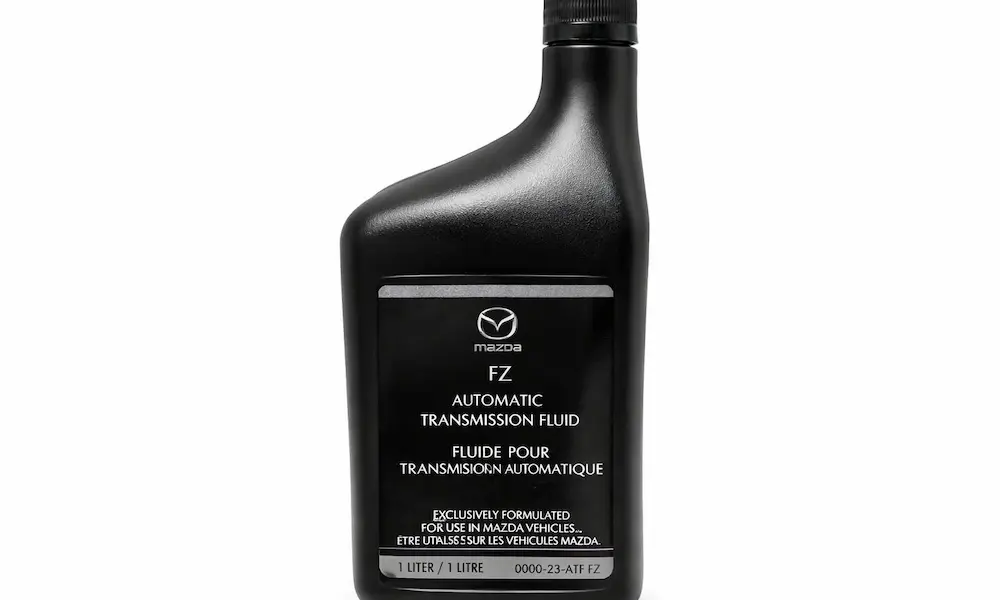
Maintenance is everything. Oil changes every 5,000 to 7,500 miles aren’t optional—they’re required if you want to see 200,000+ miles. The same goes for transmission fluid changes every 50,000 to 75,000 miles, even though Mazda claims it’s “lifetime fluid.” (Spoiler: it’s not.)
Your driving style matters more than you’d think. Smooth acceleration, gentle braking, and letting the engine warm up before demanding full power all add years to your car’s life. If you’re constantly flooring it from stoplights or driving in extreme conditions—dusty roads, mountains, brutal heat or cold—you’ll need to follow the severe service schedule with more frequent maintenance.
Rust is the silent killer, especially for first-generation models (2004-2009). If you live where they salt the roads in winter, you need to wash your wheel arches regularly and consider annual undercoating with products like Fluid Film. Later generations handle rust better, but it’s still worth watching.
Environmental factors don’t discriminate. Salt air near the coast, road salt in snow states, and even prolonged exposure to extreme heat can accelerate wear on critical components.
Which Mazda 3 Years Should You Buy (and Which Should You Avoid)?
Not all Mazda 3 model years are created equal. Here’s what you need to know before buying.
First Generation (2004-2009): The Foundation Years
Skip the 2004 model year. As the first year of a new generation, it had teething problems that Mazda ironed out in later years.
The 2005-2009 models are solid choices if you can find one without rust issues. These early Mazda 3s suffer from wheel arch corrosion in salt-belt regions, but mechanically they’re tough. Common issues include frequent brake pad replacements and occasional transmission control module failures.
One quirk: the 2004, 2005, and 2007 models have a clicking noise from the CV axle shaft and wheel hub connection. It sounds worse than it is—a simple washer installation fixes it cheaply.
Second Generation (2010-2013): The Problem Years
Avoid the 2010 and 2011 models. The 2010 had the most complaints of any Mazda 3 year, including premature clutch failure at just 37,000 miles and the infamous melting dashboard issue. That dashboard problem was bad enough to trigger a recall—adhesive literally seeped through the trim and created a tar-like mess.
The 2012 model had transmission problems, with some owners reporting grinding gears and complete transmission failure requiring replacement.
The 2013 model year improved significantly. If you want a second-generation Mazda 3, this is your year. Mazda introduced Skyactiv technology in 2012, but the 2013 refined it enough to make it reliable.
Third Generation (2014-2018): The Sweet Spot
This is where the Mazda 3 really hit its stride. The 2015-2018 models represent peak reliability, with many owners reporting trouble-free operation past 200,000 miles.
The 2018 model year recorded just 15 complaints—the fewest of the generation. One owner of a 2014 model reported 173,000 miles with only minor repairs beyond regular maintenance, noting the car still drove like new despite New England winters.
Minor issues include paint chipping on the hood, screen delamination on infotainment displays, and occasional electronic glitches that software updates usually fix. Nothing that’ll strand you on the roadside.
This generation benefits from mature Skyactiv technology—high-compression engines (13:1 in North America) with direct injection and lightweight aluminum construction. Mechanics describe these engines as “near-bulletproof,” and owner reports back that up.
Fourth Generation (2019-Present): Too New to Judge
The current generation shares much of the proven third-generation foundation but is too recent for long-term reliability data. Early reports look good, with J.D. Power ratings of 81/100 for 2020 models.
Some specific issues have emerged: auto-light malfunctions in extreme heat, oil consumption in turbocharged models, and differential failures in all-wheel-drive variants. A class-action lawsuit alleges coolant leaks in the Skyactiv-G 2.5T engines from 2021-2024, so if you’re considering a turbocharged model, do your homework.
The naturally aspirated models continue the reliability tradition. Non-turbo variants remain the safer bet for maximum longevity.
How Skyactiv Technology Makes Mazda 3 Last Longer
Mazda’s Skyactiv engines changed everything when they launched in 2011. These aren’t your typical compact car engines.
The Skyactiv-G gasoline engines run a 14:1 compression ratio (13:1 in North America for regular fuel), which sounds like a recipe for engine knock. Mazda prevents this through precise direct injection, redesigned domed pistons with center cavities, and optimized combustion chambers.
This high-compression design delivers better thermal efficiency, improved fuel economy, and—here’s the important part—reduced mechanical stress compared to conventional engines. The engines use lengthier 4-2-1 exhaust headers to reduce heat soak, new pistons and rods with reduced friction, and a lightweight aluminum block that’s 15 pounds lighter than previous versions.
Owner reports consistently praise these engines. Multiple forum discussions show Skyactiv engines surpassing 200,000 miles with no major failures. One owner of a 2012 Mazda 3 with the 2.0-liter Skyactiv-G reported 150,000 miles with only an oil pressure sensor replacement at 111,000 miles.
The 2.0-liter Skyactiv-G in base models has proven particularly reliable, regularly reaching 200,000 to 300,000 miles without major engine work. The 2.5-liter Skyactiv-G offers more power while maintaining similar reliability, though naturally aspirated versions outlast turbocharged variants.
Mazda climbed to third place overall (second among mass-market brands behind Buick) in the 2025 J.D. Power Vehicle Dependability Study. That puts Mazda ahead of Toyota in overall dependability rankings—a stunning achievement.
Common Skyactiv Issues (And How to Prevent Them)
Even reliable engines have weak points. The mass airflow (MAF) sensor tops the list, sometimes getting contaminated with dirt and triggering fault codes. Some owners need replacement around 60,000 miles in affected vehicles.
Carbon buildup affects most direct-injected engines, including Skyactiv. Since fuel doesn’t wash over intake valves anymore, carbon deposits accumulate over time. Regular PCV valve cleaning and servicing prevents this from clogging intake valves and causing oil dilution.
Transmission reliability matches engine durability. Mazda’s six-speed automatic proves robust, but despite Mazda’s “lifetime fluid” claim, experienced mechanics and owners strongly recommend drain-and-fill services every 50,000 to 75,000 miles using correct Mazda M-V fluid (not generic Mercon V). This preventive maintenance prevents expensive failures down the road.
What’ll It Cost You to Keep a Mazda 3 Running?
The Mazda 3 offers one of the cheapest ownership experiences in the compact car segment. Annual maintenance costs average $433, which is nearly $220 less than the compact car average.
First-year costs run around $245 to $250—basically oil changes, filters, and inspections. Years two and three bump up slightly to $280 to $347 as additional routine services come due.
Years four through seven see costs rise to $800 to $1,200 as you replace brake pads, tires, spark plugs, and air filters, plus transmission fluid and coolant services.
The big-ticket period hits years eight through twelve, with annual costs reaching $1,200 to $2,000 for timing components, water pumps, and suspension elements. Still, ten-year total maintenance and repair costs project around $5,684, which remains competitive.
How Likely Are You to Need Major Repairs?
During the first five years, there’s only a 7.39% to 8% probability of needing major repairs. That risk climbs gradually to about 15.80% by year ten.
Compare that to competitors: the Honda Civic averages slightly lower annual costs at $368, while the Toyota Corolla and Hyundai Elantra run higher at $450 and $452 respectively. The Mazda 3 balances reliability with driving enjoyment and an upscale interior for excellent overall value.
Extended warranties probably aren’t worth it for most buyers, given the low probability of major repairs. However, if you’re buying a turbocharged model or all-wheel-drive variant, or a high-mileage used model approaching 100,000 miles, limited coverage on major drivetrain components might provide peace of mind.
How Does the Mazda 3 Stack Up Against Competitors?
Mazda 3 vs Toyota Corolla
The Corolla edges out the Mazda 3 slightly with a J.D. Power reliability rating of 85/100 versus 81/100. Expected lifespan runs 250,000 to 300,000 miles for the Corolla, slightly ahead of the Mazda 3’s 200,000 to 300,000 mile range.
But here’s what the numbers don’t show: the Mazda 3 offers superior driving dynamics, more engaging handling, and a significantly more upscale interior. Annual maintenance costs actually favor the Mazda 3 at $433 versus the Corolla’s $450.
For drivers who want reliability without sacrificing driving enjoyment, the Mazda 3 gives up minimal longevity for substantially better experience.
Mazda 3 vs Honda Civic
The Civic scores 82/100 in reliability ratings, landing between the Mazda 3 and Corolla. Expected lifespan ranges from 200,000 to 250,000 miles, slightly below the Mazda 3’s upper range.
The Civic’s biggest advantage is resale value and lower annual maintenance costs of $368. It typically retains 60-70% of its value over five years versus 40-50% for average cars.
Many enthusiasts prefer the Mazda 3’s more sophisticated interior, better sound insulation, and sportier handling. One Reddit user who owned both a 2010 Civic and 2018 Mazda 3 noted that with preventative maintenance, the Mazda has been “reliable” with full confidence it’ll exceed 200,000 miles.
Mazda 3 vs Hyundai Elantra
The Elantra scores 80/100 in reliability with an expected lifespan of 200,000 to 250,000 miles. Annual maintenance costs run highest among these four at $452.
While Hyundai offers longer warranty coverage (typically 10 years/100,000 miles on the powertrain versus Mazda’s 5 years/60,000 miles), real-world long-term reliability favors the Mazda 3.
The Value Picture
When you divide total cost of ownership by expected lifespan, the Mazda 3 delivers exceptional value. With its 14.1-year expected lifespan and MSRP around $31,849, that breaks down to approximately $2,260 per year. Compare that to the average annual cost of $4,197 across all vehicle segments.
The 2025 Honda Civic takes top honors at $2,028 annually with an 11.9-year lifespan, while the Toyota Corolla falls in between at $2,166 annually over 11.6 years. The Mazda 3’s longer expected lifespan offsets its higher purchase price while delivering a more premium experience.
Should You Buy a High-Mileage Mazda 3?
For buyers considering used Mazda 3 models, mileage alone doesn’t tell the complete story. A well-maintained Mazda 3 with 150,000 miles beats a neglected example with 80,000 miles. The decision threshold generally falls around 100,000 to 120,000 miles, where thorough inspections become critical.
Prioritize maintenance records over odometer readings. Look for evidence of regular oil changes, transmission services, and scheduled maintenance.
Inspect for rust thoroughly, particularly around wheel arches, sills, rocker panels, and undercarriage on first- and second-generation models.
Test drive comprehensively, paying attention to transmission shifting quality, engine smoothness at various RPMs, suspension noises, and brake performance.
Consider generation and model year, avoiding problematic years like 2004, 2010-2011, and 2014 while targeting reliable years like 2005-2009, 2015-2018, and 2019-2020.
Check for recalls and technical service bulletins affecting the specific model year and ensure they’ve been addressed.
Vehicles with mileage over 200,000 miles should only be considered if priced accordingly and showing exceptional maintenance history. Even then, budget for potential major repairs to suspension, wheel bearings, and engine mounts that naturally wear with extreme mileage.
The Sweet Spot for Used Purchases
A well-maintained third-generation Mazda 3 (2014-2018) with 100,000 to 140,000 miles often represents excellent value, having completed most initial depreciation while retaining substantial usable life.
For these moderate-high-mileage purchases:
- Budget for immediate maintenance: Assume transmission fluid service, spark plugs, and other 100,000-mile services if records don’t confirm completion
- Plan for near-term replacements: Brakes, tires, battery, and suspension elements may need attention within the first year
- Consider warranty options: Extended coverage on major components may provide peace of mind, though the Mazda 3’s reliability makes this less critical
- Calculate total ownership cost: Factor purchase price plus anticipated maintenance and repairs over your intended ownership period
For many buyers, a lower-mileage third-generation model (under 80,000 miles) provides the best balance of affordability and remaining lifespan, particularly when purchased from a private seller who maintained it well. These vehicles have substantial life remaining while avoiding the premium pricing of nearly-new fourth-generation models.