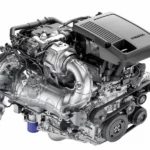
Ever wondered what makes the Mazda RX8 so distinctive in the sports car world? It’s not just the sleek design or balanced handling—it’s the revolutionary rotary engine under its hood. This unique powerplant defies conventional engine design and gives the RX8 its signature character that enthusiasts still celebrate today.
What Makes the RX8’s Rotary Engine Special?
The Mazda RX8 features the 13B-MSP Renesis engine, a masterpiece of engineering that earned the International Engine of the Year award in 2003. Unlike traditional piston engines, the Renesis uses rotating triangular rotors instead of reciprocating pistons.
This unconventional design creates several advantages:
- Incredibly smooth power delivery
- Higher revving capability (up to 9,000 RPM)
- Compact size and lighter weight
- Fewer moving parts
- Distinctive, smooth sound profile
The engine’s name—Renesis—combines “Renaissance” and “Genesis,” reflecting Mazda’s commitment to evolving their rotary technology for a new generation of sports cars.
Rotary Engine Basics: How It Works
The RX8’s engine operates on entirely different principles than the engine in your typical car. Instead of pistons moving up and down, the rotary uses triangular rotors that spin within specially shaped housings.
Each rotor creates three separate combustion chambers, with all four engine strokes (intake, compression, combustion, exhaust) happening simultaneously in different sections. This design allows the Renesis to generate power more smoothly than conventional engines while remaining compact.
Key specifications include:
- Two rotors with three combustion chambers each
- Total displacement: 1,308cc (1.3 liters)
- Equivalent to approximately 2.6 liters in a conventional engine
- Bore radius: 120mm
- Rotor width: 80mm
The Renesis engine’s most significant innovation was its side exhaust port configuration, which eliminated exhaust-intake overlap and reduced emissions by 35-50% compared to previous rotary designs.
Engine Variants and Power Outputs
The RX8 came with different engine configurations depending on the model year, transmission type, and market. Here’s how they break down:
Series 1 (2004-2008) Engines
4-Port Engine:
- Power: 189-192 hp at 7,000 RPM
- Torque: 146 lb-ft at 5,000 RPM
- Redline: 7,500 RPM
- Paired with: 4-speed automatic transmission (North America) and 5-speed manual (Europe)
6-Port Engine:
- Power: 212-231 hp at 8,200-8,500 RPM (depending on transmission)
- Torque: 156-159 lb-ft at 5,500 RPM
- Redline: 7,500 RPM (automatic) / 9,000 RPM (manual)
- Paired with: 6-speed automatic (2006-2008) and 6-speed manual transmissions
The manual transmission versions received more aggressive engine tuning, enabling the higher power output and extended RPM range compared to automatic models.
Series 2 (2009-2011) Improvements
All Series 2 RX8s came with 6-port engines regardless of transmission type:
- Power: 212 hp (automatic) / 232 hp (manual)
- Torque: 159 lb-ft at 5,500 RPM
- Redline: 7,500 RPM (automatic) / 9,000 RPM (manual)
The Series 2 brought significant reliability enhancements, especially to the oiling system. Engineers removed the rear oil pressure regulator, increasing maximum oil pressure from approximately 40 PSI to 120 PSI. This change, combined with additional oil injection ports, substantially improved engine longevity.
Technical Systems That Make It Work
Advanced Fuel System
The Renesis uses a sophisticated multi-point fuel injection system operating at 57 PSI with different injector configurations:
- Primary intake ports: 12-hole injectors
- Secondary ports: 4-hole injectors (6-port engines only)
- Auxiliary ports: 4-hole injectors (6-port engines only)
The engine incorporates Mazda’s Sequential Dynamic Intake System (S-DAIS) that controls when these additional ports activate:
- Secondary ports open at 3,750 RPM
- Auxiliary ports (on 6-port engines) activate at approximately 6,250 RPM
This progressive port opening contributes to the engine’s broader power band and improves both low-end torque and high-RPM horsepower.
Specialized Ignition System
Each rotor chamber uses dual spark plugs—leading and trailing—with different lengths to ensure complete combustion across the larger combustion chamber area. These iridium-tipped plugs are crucial for optimizing power output and minimizing emissions in the rotary’s unique geometry.
The dual-plug design helps address one of the historical challenges with rotary engines: complete combustion of the fuel mixture in the elongated combustion chamber.
Robust Cooling System
Rotary engines generate heat differently than piston engines, with distinctive thermal patterns across the housing. To manage this, the RX8’s cooling system includes:
- Coolant capacity: 10.6 quarts
- Thermostat opening: 82°C (180°F) in Series 1 / 76°C (169°F) in Series 2
- System designed to handle operating temperatures up to 230°F
The Series 2 RX8’s lower thermostat opening temperature was part of Mazda’s improvements to enhance engine reliability and longevity.
Performance Characteristics
Power Delivery and Driving Experience
The RX8’s rotary engine delivers power in a manner unlike conventional engines. While torque figures seem modest on paper, the engine’s character is defined by:
- Linear, smooth power development
- Eagerness to rev high
- Lack of vibration throughout the RPM range
- Sustained power output at high RPMs
Performance metrics vary by configuration:
- 0-60 mph: 5.9 seconds (6-port manual) to 7.2 seconds (4-port)
- Top speed: 139-147 mph depending on configuration
- Fuel economy: 16 mpg city / 22 mpg highway across all variants
The rotary’s unique power delivery creates a distinctly different driving experience compared to conventional engines. Rather than relying on low-end torque, the Renesis rewards drivers who aren’t afraid to rev the engine high and use the full RPM range.
Weight and Balance Advantages
One of the Renesis engine’s biggest advantages is its compact size and light weight:
- Total weight: approximately 247 pounds including standard attachments (dry)
- Significantly lighter than equivalent-power conventional engines
- More compact dimensions allow for optimal weight distribution
This compact nature enabled Mazda’s engineers to position the engine behind the front axle, creating a front-midship layout that contributes to the RX8’s excellent handling balance and near-50/50 weight distribution.
Maintenance and Reliability Considerations
Unique Maintenance Requirements
Rotary engines have specific maintenance needs that differ from conventional engines:
- Oil changes: Required every 3,000 miles using high-quality conventional (not synthetic) oil
- Spark plug replacement: Recommended every 10,000-15,000 miles
- Premium fuel: Required for optimal performance and longevity
- Proper warm-up: Essential before shutdown to prevent flooding
The key to rotary engine longevity is understanding its specific needs. Many reliability issues stem from owners treating it like a conventional engine rather than following rotary-specific maintenance practices.
Common Issues to Watch For
Rotary engines have several known potential failure points:
Apex Seal Wear: The triangular rotors use apex seals at their tips to maintain compression. These typically require replacement every 80,000-150,000 miles in Series 1 engines.
Carbon Buildup: The rotary design is susceptible to carbon accumulation, particularly when using synthetic oils or poor-quality fuel. This can lead to reduced compression and starting difficulties.
Flooding Issues: Rotary engines can flood if shut down before reaching full operating temperature, as unburned fuel accumulates in the combustion chambers.
Oil Consumption: By design, rotary engines inject oil into the combustion chamber for apex seal lubrication. This means they naturally consume oil at a higher rate than conventional engines.
| Issue | Symptoms | Prevention |
|---|---|---|
| Apex Seal Wear | Power loss, rough idle, difficulty starting | Regular compression tests, premix fuel with 2-stroke oil |
| Carbon Buildup | Hard starting, rough idle | Regular redlining, premium fuel, conventional oil |
| Flooding | Won’t start after short drives | Allow proper warm-up, follow deflooding procedure |
| Oil Consumption | Low oil level | Check oil regularly, top up as needed |
Technical Innovations
Revolutionary Engineering Features
The Renesis incorporated several breakthrough technologies:
- Side exhaust ports: Eliminated overlap and improved emissions by 35-50%
- Redesigned apex seals: Lower height design reduced friction
- Lightweight components: Rotors 14% lighter, flywheel 20% lighter than predecessors
- Enhanced port design: 30% larger intake port cross-sectional area
These innovations allowed the naturally aspirated Renesis to achieve performance comparable to the turbocharged 13B-REW from the previous generation RX-7, but with better emissions, improved fuel economy, and broader power delivery.
Recognition in the Industry
The Renesis engine’s technical achievements earned widespread acclaim:
- International Engine of the Year 2003
- Best New Engine Award 2003
- Ward’s 10 Best Engines list in 2004 and 2005
These awards recognized the engine’s successful combination of performance, efficiency improvements, and emissions reductions compared to previous rotary designs.
Evolution from Previous Rotary Engines
The Renesis represented significant advancement over Mazda’s previous flagship rotary, the twin-turbocharged 13B-REW used in the RX-7. While the Renesis produces slightly less peak power (232 hp vs. 255-280 hp), it achieves comparable performance through improved efficiency and broader power delivery.
Key improvements over the 13B-REW include:
- Better fuel economy: Approximately 20% improvement
- Lower emissions: Meeting LEV-II standards
- Higher reliability: Simplified design without turbocharging complexity
- Broader torque curve: More usable power across the RPM range
The naturally aspirated Renesis took a different engineering approach than the turbocharged 13B-REW, focusing on refinement and efficiency rather than maximum power output.
Tuning and Modification Potential
The RX8’s Renesis engine offers substantial tuning potential for enthusiasts seeking additional performance:
Intake and Exhaust Modifications: High-flow air intake systems and performance exhaust headers can unlock additional power, particularly when combined with ECU tuning.
Engine Management: Aftermarket systems like MazdaEdit allow for fuel and ignition timing adjustments while maintaining OBD-II compliance.
Internal Modifications: Porting work can substantially increase power output, with properly built naturally aspirated engines capable of producing 300+ horsepower at high RPM.
Fuel System Upgrades: High-flow fuel pumps like the Walbro 255 LPH provide adequate fuel delivery for modified engines.
The Renesis responds particularly well to port work and careful tuning, allowing enthusiasts to extract significantly more power while maintaining the engine’s high-revving character.
Legacy and Historical Significance
The RX8 represented the final production application of Mazda’s rotary engine technology in a dedicated sports car, with production ending in 2011. Despite development of next-generation rotary engines like the 16X Renesis II, no direct successor has entered production in a sports car application.
The rotary technology continues in limited applications, including the 8C single-rotor generator engine in the 2023 MX-30 e-Skyactiv R-EV hybrid, which incorporates direct injection and achieves an 11.9:1 compression ratio.
The 13B-MSP Renesis stands as the most refined and environmentally compliant rotary engine ever mass-produced. Its combination of improved efficiency, reduced emissions, and maintained performance characteristics represents the culmination of decades of rotary engine development.
While conventional piston engines continue to dominate the automotive landscape, the RX8’s rotary engine remains a fascinating example of alternative internal combustion engine technology that created a driving experience that remains unmatched in the automotive world.
Comparing Series 1 and Series 2 Engines
The evolution from Series 1 to Series 2 RX8 engines brought several meaningful improvements:
| Feature | Series 1 (2004-2008) | Series 2 (2009-2011) |
|---|---|---|
| Oil Pressure | ~40 PSI maximum | ~120 PSI maximum |
| Thermostat | 82°C (180°F) | 76°C (169°F) |
| Engine Options | 4-port and 6-port | 6-port only |
| Oil Metering System | Original design | Enhanced with additional ports |
| Starter Motor | Standard | Upgraded for better starting |
The Series 2 changes were specifically targeted at addressing the reliability concerns that had emerged during the Series 1 production run. The increased oil pressure and enhanced oil delivery system were particularly important for improving apex seal lubrication and extending engine life.
Why Enthusiasts Still Love the Rotary Engine
Despite its challenges, the rotary engine continues to captivate enthusiasts for several compelling reasons:
- Unique Sound Profile: The rotary produces a distinctive sound unlike any piston engine—a smooth, high-pitched whirr that transitions to an aggressive howl at high RPMs.
- Smooth Power Delivery: The continuous rotation creates incredibly smooth power with virtually no vibration, even at the 9,000 RPM redline.
- Compact Size: The rotary’s small dimensions allow for lower hood lines and better weight distribution than comparable-power piston engines.
- Mechanical Simplicity: With fewer moving parts than piston engines, the rotary has an elegant mechanical simplicity that appeals to engineering enthusiasts.
- Exclusivity: As the only major manufacturer to mass-produce rotary engines in recent decades, Mazda’s rotary-powered vehicles offer something truly different in the automotive landscape.
The RX8’s Renesis engine represents the pinnacle of Mazda’s rotary development—the most refined, powerful, and clean naturally aspirated rotary engine ever mass-produced. For enthusiasts who appreciate engineering that dares to be different, the Renesis remains an object of fascination and the heart of what makes the RX8 a unique driving experience.