
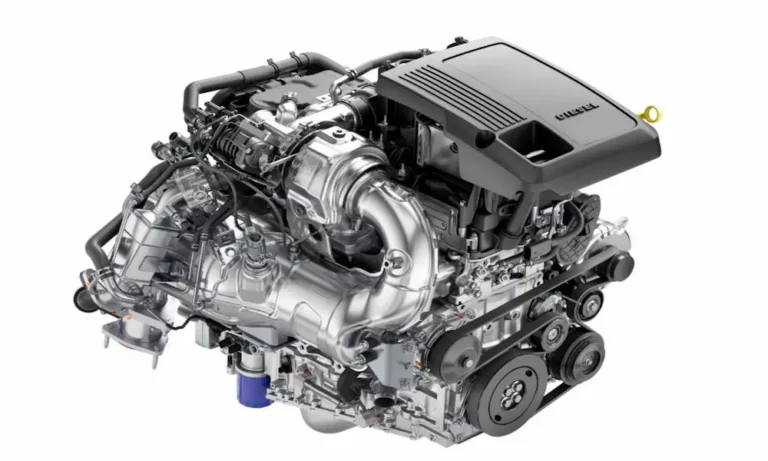
If you’re shopping for a diesel truck or just curious about what’s under the hood of those powerful GM heavy-duties, you’ve probably wondered who’s actually building Duramax engines. The answer isn’t as simple as you’d think. Let’s dig into the manufacturing story behind one of America’s most popular diesel engines.
General Motors Now Makes Duramax Engines (But It Wasn’t Always That Way)
General Motors manufactures Duramax engines through DMAX Ltd., a company it now owns 100%. The main production happens at two facilities in Ohio, with additional manufacturing in Michigan for certain models.
Here’s where it gets interesting. DMAX Ltd. started as a partnership between GM and Isuzu back in 1998. GM held 60% ownership, while Isuzu controlled 40%. This collaboration brought together American manufacturing muscle and Japanese diesel expertise.
But in May 2022, GM bought out Isuzu’s share completely. So if you’re buying a new truck with a Duramax today, it’s a purely GM product. Isuzu’s involvement is now just history.
Where Duramax Engines Are Actually Built
Not all Duramax engines roll off the same assembly line. Different engines come from different plants, and understanding this helps explain why some Duramax variants perform differently.
The Ohio Powerhouses
The original Moraine plant at 3100 Dryden Road has been cranking out Duramax engines since 2000. This 584,000-square-foot facility employs about 800 workers and serves as the birthplace of the Duramax legend.
But GM isn’t standing still. The company just opened a newer facility in Brookville, Ohio, and it’s getting a massive upgrade. We’re talking about a $920 million expansion that’ll quadruple the plant’s size to over 1.1 million square feet. That’s serious money backing diesel technology.
The expansion should wrap up by mid-2025, ahead of schedule. Eventually, most V8 Duramax production will shift from Moraine to Brookville. What happens to the original plant? GM says it has “a good, long future,” but they haven’t spelled out specifics.
The Michigan Connection
The 3.0L “baby Duramax” engines come from GM’s Flint Engine Operations plant in Michigan. This facility produces both the original LM2 variant and the newer, more powerful LZ0 generation.
These smaller Duramax engines were designed entirely by GM without Isuzu’s input. They’re a different animal from their bigger V8 siblings.
The Thailand Chapter (Now Closed)
The 2.8L four-cylinder Duramax had a unique story. GM manufactured these engines at its Powertrain Thailand facility in Rayong, representing GM’s biggest powertrain investment in Southeast Asia.
This plant opened in 2011 and was the first worldwide to build four-cylinder Duramax engines. The 2.8L LWN powered mid-size trucks like the Colorado and Canyon, delivering 181 horsepower and 369 lb-ft of torque.
But here’s the kicker: GM sold the Thailand operations to China’s Great Wall Motors in 2020. That ended production of the smallest Duramax and eliminated the diesel option from GM’s mid-size pickup lineup.
Breaking Down the Duramax Engine Family
The Duramax name covers several distinct engines. They share a brand, but they’re built differently and serve different purposes.
| Engine | Displacement | Horsepower | Torque | Manufacturing Location |
|---|---|---|---|---|
| L5P V8 | 6.6L | 445-470 hp | 910-975 lb-ft | DMAX Ohio |
| LZ0 I6 | 3.0L | 305 hp | 495 lb-ft | Flint, Michigan |
| LM2 I6 | 3.0L | 277 hp | 460 lb-ft | Flint, Michigan |
| LWN I4 | 2.8L | 181 hp | 369 lb-ft | Thailand (discontinued) |
The 6.6L V8 Powerhouse
The current L5P Duramax represents the pinnacle of DMAX engineering. It’s the engine you’ll find in heavy-duty Silverado and Sierra trucks doing serious work.
Production involves sophisticated processes. The engine blocks come from Fritz Winter, a German foundry known for quality castings. Cylinder heads arrive from GM’s approved suppliers. At the Ohio plant, workers machine major components in-house, including blocks, heads, and crankshafts.
Each completed engine gets its own performance test. Every single one spends eight minutes in a dynomometer test cell, where computers verify it hits rated horsepower and torque specs. That’s quality control you can trust.
The 3.0L Inline-Six Alternative
The 3.0L Duramax engines serve a different market. They’re for customers who want diesel efficiency without the cost and size of the 6.6L monster.
The original LM2 produced 277 horsepower and 460 lb-ft. Not bad, but GM improved it. The newer LZ0 variant bumps those numbers to 305 horsepower and 495 lb-ft. That’s a meaningful upgrade for daily driving and moderate towing.
These engines appear in half-ton trucks and full-size SUVs. They’re GM’s answer to customers who want diesel fuel economy in vehicles that don’t need heavy-duty capability.
The GM-Isuzu Partnership That Started It All
Understanding who makes Duramax engines today requires knowing where they came from. The partnership with Isuzu wasn’t just a business deal—it saved GM’s diesel truck program.
By 1999, GM’s diesel market share had crashed to about 5%. Their old diesel engines had serious reliability problems. Truck buyers didn’t trust them anymore.
Enter Isuzu, a company with decades of diesel expertise. The 60-40 joint venture combined Isuzu’s engineering knowledge with GM’s manufacturing scale and market reach.
The Turnaround Success
When the first Duramax 6.6L LB7 hit showrooms in 2001 Silverado HD and Sierra HD trucks, it changed everything. GM’s diesel pickup market share jumped to 30% by 2002. That’s a sixfold increase in three years.
The engine worked. It delivered power, reliability, and refinement that previous GM diesels couldn’t match. Customers who’d sworn off GM diesels gave them another chance.
Why GM Bought Out Isuzu
So why did GM end the partnership after 24 years of success? The official reasons weren’t published, but the timing tells a story.
By 2022, GM had developed its own diesel engineering capabilities. The 3.0L Duramax proved GM could design competitive diesel engines without Isuzu’s help. Owning 100% of DMAX gives GM complete control over technology, production, and profits.
It’s also worth noting that Isuzu had shifted its North American focus away from consumer vehicles. The partnership probably made less strategic sense to both companies than it did in 1998.
Manufacturing Quality and Scale
DMAX Ltd. has built over 3.1 million Duramax engines since production started in 2000. That’s an impressive track record for a diesel program.
The production milestones tell the story:
- 1 million engines by April 2007
- 1.5 million by November 2012
- 2 million by March 2017
- 3 million by mid-2024
That acceleration shows growing demand. Duramax has become one of the most successful diesel engine programs in North America.
Inside the Manufacturing Process
At the Moraine facility, the manufacturing process combines precision machining with careful assembly. Major components get machined to exact specifications in-house. Other parts like connecting rods, camshafts, and manifolds come from qualified suppliers.
Assembly technicians build each engine by hand, following strict procedures. But the real proof comes during testing.
Those dynomometer test cells run each engine through an eight-minute computer-controlled cycle. The tests verify horsepower, torque, oil pressure, and dozens of other parameters. If an engine doesn’t meet specifications, it doesn’t leave the plant.
What the Future Holds for Duramax Manufacturing
GM’s nearly $1 billion investment in Ohio facilities sends a clear message: diesel engines aren’t going anywhere soon.
Sure, GM is investing heavily in electric vehicles. But for heavy-duty work trucks? Batteries can’t yet match diesel’s combination of power, range, and refueling speed. Contractors, farmers, and commercial users need diesel capability.
The Brookville Expansion Strategy
The $920 million Brookville expansion specifically supports next-generation heavy-duty truck engines. GM hasn’t disclosed exact product details, but the investment scale suggests significant improvements coming.
The expanded facility will employ over 800 workers when fully operational. That’s job security for Ohio and confidence in diesel’s future role.
Balancing Diesel and Electric
GM’s powertrain strategy makes sense when you think about it. Electric powertrains work great for daily driving, commuting, and light-duty applications. But try towing 20,000 pounds with a battery-powered truck, and you’ll quickly understand diesel’s advantages.
The company’s balanced approach invests in both technologies where each makes sense. That’s smart business and better for customers who need the right tool for their specific job.
The Bottom Line on Duramax Manufacturing
General Motors makes Duramax engines through its wholly-owned DMAX Ltd. subsidiary, primarily in Ohio with additional production in Michigan. The original partnership with Isuzu ended in 2022 when GM bought complete ownership.
The manufacturing story shows GM’s commitment to diesel technology for applications where it still makes the most sense. With over 3 million engines built and nearly $1 billion in new facility investments, Duramax isn’t just surviving—it’s thriving.
Whether you’re shopping for a heavy-duty truck or just appreciate engineering excellence, knowing who makes Duramax engines helps you understand what you’re getting. It’s a purely American-made product now, built by workers in Ohio and Michigan who’ve perfected the craft over 25 years.
That’s a legacy worth respecting, and a foundation for whatever comes next in Duramax evolution.














