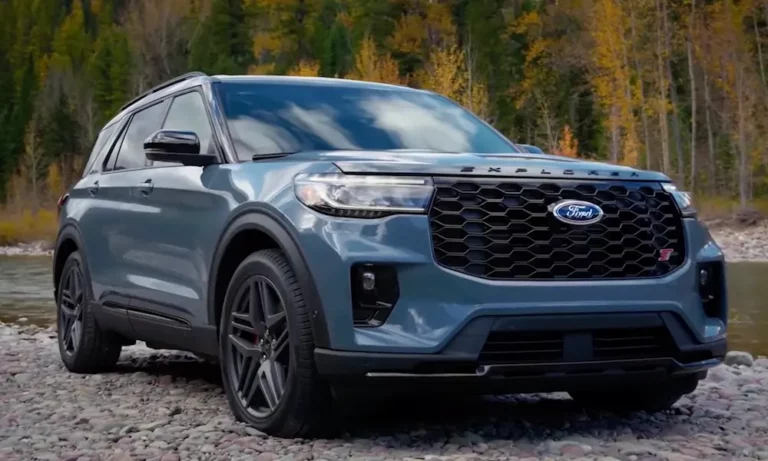
Thinking about buying a Ford Explorer? You’re probably wondering if it’ll still be running when your toddler heads off to college. With over 8 million Explorers on the road since 1990, there’s plenty of data to answer that question. Here’s what you need to know about Explorer longevity—including which years to grab and which to run from.
What’s the Average Lifespan of a Ford Explorer?
Ford Explorers typically last 200,000 to 250,000 miles when you treat them right. That translates to roughly 15 to 20 years for the average driver covering 12,000 to 13,500 miles annually.
But here’s where it gets interesting: those numbers aren’t guarantees. Some Explorers tap out around 80,000 miles, while well-maintained examples cruise past 300,000 miles. The difference? Maintenance habits, driving style, and—this is crucial—which model year you choose.
Owner reports back this up. One 2014 Explorer hit 167,000 miles with only minor repairs beyond oil changes. Another 2013 model reached 157,000 miles without breaking a sweat. The pattern’s clear: stick to the maintenance schedule, and these SUVs deliver.
How Reliable Are Ford Explorers Really?
Let’s cut through the marketing fluff. RepairPal gives the Explorer a 3.5 out of 5 stars, which sits below the midsize SUV average of 3.8. Not terrible, but not stellar either.
Here’s the breakdown: Explorer owners deal with about 0.2 unexpected repairs per year—better than the segment average of 0.4. Sounds good, right? The catch is that serious repairs happen 14 percent of the time versus 13 percent for competitors.
J.D. Power ratings tell a different story depending on the year. The 2024-2025 models score an impressive 87 out of 100. Meanwhile, the 2020 model stumbled with a disappointing 60 out of 100. That’s a massive swing showing Ford’s learned from past mistakes.
What About Maintenance Costs?
Over ten years, you’ll spend roughly $9,768 on maintenance and repairs—averaging $977 annually. That’s $1,560 more than similar SUVs, which stings. The probability of needing a major repair within ten years sits at 27.48 percent, about 2.89 percent worse than competitors.
Translation? Budget accordingly and don’t skip scheduled maintenance.
Generation Breakdown: The Good, The Bad, and The Avoid-at-All-Costs
Not all Explorer years are created equal. Some generations shine while others… well, they’re best left on the dealer lot.
First Generation (1991-1994): Old-School Tough
The original Explorer featured body-on-frame construction—truck-tough and simple. Fewer electronics meant fewer things to break. The 1993 model stands out as particularly durable, thanks to its bulletproof 4.0L V6 engine.
Common issues included brake failures, transmission problems, and overheating. Plus, 14 million vehicles got caught up in tire tread separation recalls. If you’re considering one, verify all recall work’s complete—though finding a well-maintained 30-year-old Explorer is like finding a unicorn.
Second Generation (1995-2001): Rough Patches Ahead
Things got dicey here. The 1998 model racked up 2,248 NHTSA complaints and 14 recalls. A faulty speed control module could literally start fires, affecting 4.5 million vehicles.
Expect transmission failures, oil leaks, climate control headaches, and brakes that sink to the floor without stopping the vehicle. Not exactly confidence-inspiring. These now sell cheap, but you’ll pay for it in headaches.
Third Generation (2002-2005): Run. Away. Now.
Avoid these years like expired milk. The 2002 Explorer holds the dubious honor of receiving 3,618 NHTSA complaints—more than any other Explorer year. CarComplaints.com straight-up calls it their “worst vehicle on record” and recommends you “avoid like the plague.”
Transmission failures dominated, with repairs averaging $2,840. Ford’s brilliant idea to seal the transmission with no dipstick meant you couldn’t even check the fluid. Add cracked panels, wheel bearing failures, and gear shifters falling off, and you’ve got a disaster on wheels.
The 2003-2005 models weren’t much better. Even the 2006, technically fourth-generation, shares enough problems to earn a spot on the avoid list. Don’t care how cheap it is—skip 2002-2006 entirely.
Fourth Generation (2006-2010): The Comeback Story
Ford got serious about fixing their mess. The 2009 and 2010 models shine brightest, with the 2009 receiving just 15 complaints on CarComplaints.com and scoring 85 out of 100 from J.D. Power.
Ford finally sorted out those catastrophic transmission issues. Common problems shrank to minor annoyances: rear wiper motor failures and HVAC blend door actuator issues. Nothing that’ll leave you stranded.
For used buyers, 2009-2010 Explorers offer serious value. They’ve proven themselves reliable while remaining affordable. A well-maintained 2009 can still rack up plenty of miles.
Fifth Generation (2011-2019): Modern But Maintenance-Heavy
This generation brought the biggest redesign—switching from truck-based to unibody construction. Better handling, improved fuel economy, nicer ride. The generation ran nine years, earning an average 75 out of 100 from J.D. Power.
But here’s where things get expensive.
The Water Pump Problem
Explorers with 3.5L V6 and 3.7L V6 engines (2011-2019) feature an internal water pump driven by the timing chain. When it fails around 100,000 miles, you’re looking at $2,000 to $4,000 in repairs.
Why so much? The pump sits inside the timing chain cover. Mechanics must tear apart half the engine to reach it. While they’re in there, they’ll recommend replacing timing chains, guides, tensioners, and gaskets—because doing it later costs just as much.
Symptoms include coolant loss without visible leaks, white exhaust smoke, overheating, or milky oil indicating coolant contamination. One 2011 Explorer at 200,000 miles experienced a seized water pump that broke the cam phaser chain, requiring a complete engine replacement.
Buying a fifth-gen Explorer? Verify water pump replacement status. If it hasn’t been done and the odometer’s pushing 80,000-plus miles, budget for this repair.
PTU (Power Transfer Unit) Failures
All-wheel-drive Explorers use a Power Transfer Unit that frequently fails. Ford’s design places the PTU directly above the exhaust system, exposing it to intense heat that degrades the lubricant.
Multiple design flaws compound the problem. Ford claimed the fluid was “lifetime” with no drain plug or easy service method. The seals fail from heat exposure. When the input seal dies, transmission fluid contaminates the PTU oil, accelerating wear.
Listen for grinding, knocking, or banging noises when turning. Smell something like propane? That’s overheated fluid venting from the drain vent. Replacement PTUs run $500-1,500.
The fix? Change PTU fluid every 20,000-30,000 miles. Many owners add aftermarket drain plugs for easier service. Dorman Products offers an upgraded PTU with a heat shield, better seals, and proper service ports.
Beyond these issues, fifth-generation Explorers dealt with throttle body failures causing sudden power loss, rear suspension toe link fractures prompting major recalls, and finicky Sync infotainment systems.
Despite all this, later years (2016-2019) showed improvement as Ford refined the design.
Sixth Generation (2020-Present): Finally Getting It Right
The current Explorer launched in 2020 with rear-wheel-drive architecture and a complete redesign. Early 2020 “A” build models suffered transmission issues and accumulated 24 recalls. Later 2020 “C” builds and 2021-onward models show massive improvement.
The 2024-2025 Explorers earn that 87 out of 100 J.D. Power rating. The internal water pump problem? Gone. The 2024 model snagged a five-star NHTSA safety rating and IIHS Top Safety Pick+ award.
For new buyers, this is Ford’s best Explorer work yet. For used shoppers, avoid early 2020 models or verify transmission and recall work completion.
Essential Maintenance for Maximum Miles
Want your Explorer to hit 200,000 miles? Maintenance isn’t optional—it’s mandatory.
Critical Service Intervals
Every 5,000-7,500 miles: Oil and filter changes top the list. Modern synthetic oil handles 7,500-mile intervals, but many mechanics recommend 5,000 miles for turbocharged engines and severe driving (short trips, extreme temps, towing). Rotate tires at every oil change.
Every 15,000-30,000 miles: Replace cabin air filter and inspect engine air filter. Check suspension components—shocks, struts, control arms, ball joints, tie rod ends. Thoroughly inspect brakes including pads, rotors, calipers, and lines.
Every 30,000-60,000 miles: Replace engine air filter and fuel filter. Flush and replace coolant to prevent corrosion. Inspect or replace transmission fluid and filter—critical for Explorer longevity. Check differential and transfer case fluid on AWD models.
Every 60,000-100,000 miles: Replace spark plugs (typically at 100,000 miles). Inspect accessory drive belts. For fifth-generation Explorers with 3.5L or 3.7L engines approaching 100,000 miles, strongly consider proactive water pump replacement. The repair costs the same whether done preventively or after failure, but failure risks engine damage.
Every 150,000 miles: Complete transmission fluid and filter change—not just drain and fill. This extends transmission life significantly and prevents many common transmission problems.
Explorer-Specific Attention Points
PTU Fluid Service (AWD): Ignore Ford’s “lifetime fluid” claim. Change PTU fluid every 20,000-30,000 miles on fifth-generation Explorers. This single maintenance item prevents $1,500 PTU replacements. No drain plug? Have one installed or use fluid extraction through the fill port.
Throttle Body Cleaning: Fifth-gen Explorers benefit from periodic throttle body cleaning. Watch for hesitation during acceleration, rough idling, or check engine lights with P2111 or P2112 codes.
Suspension Inspection: Explorers wear out ball joints, control arm bushings, and shocks prematurely. Inspect suspension every 30,000 miles to catch worn components before they compromise safety or cause uneven tire wear.
Electrical System Care: Keep battery terminals clean and tight. Test the charging system annually. Proper battery voltage minimizes electronic gremlins including power window failures, malfunctioning sensors, and infotainment issues.
What Affects How Long Your Explorer Lasts?
Maintenance matters, but it’s not the whole story.
Driving Style Makes a Difference
Aggressive driving—hard acceleration, heavy braking, excessive speed—accelerates wear on everything from the engine to suspension. Gentle driving with smooth inputs consistently extends vehicle life. Frequent towing or heavy loads stress the drivetrain, particularly the PTU on AWD models.
Climate impacts longevity significantly. Cold climates bring road salt causing undercarriage corrosion, seal deterioration from temperature extremes, and strain from cold starts. Extreme heat accelerates fluid degradation, especially affecting PTU fluid and coolant. Coastal salt air increases corrosion rates. Garage storage when possible protects against weather extremes, corrosion, and UV damage.
Highway miles cause less wear than stop-and-go city driving. Short trips where the engine never fully warms increase wear and prevent moisture from evaporating from the exhaust and oil. Former fleet or rental vehicles often accumulated hard city miles with multiple drivers.
Model Year Selection Is Everything
Choosing the right year dramatically affects reliability. The difference between a 2002 and a 2009 can mean 80,000 miles versus 200,000-plus miles. Stick with 2009-2010, 2012, 2016-2019, or 2021-plus for best results.
Maintenance History Tells the Truth
For used buyers, documented maintenance history predicts future reliability better than anything else. An Explorer with complete service records showing regular oil changes and prompt repairs significantly outlasts comparable vehicles with sketchy histories.
Single-owner vehicles with meticulous care typically prove more reliable than multiple-owner vehicles where maintenance practices varied. Request maintenance records, get a pre-purchase inspection, and specifically check water pump replacement status, PTU condition, and transmission fluid appearance.
True Cost of Ownership
Purchase price is just the beginning.
Depreciation Hits Hard
Ford Explorers lose 57 percent of their value after five years, with projected resale around $23,414 from an initial $53,974. First-year depreciation hurts worst—over 33 percent gone in two years.
This creates opportunities for used buyers. A two-year-old Explorer saves roughly $22,700 versus buying new. High availability keeps resale values moderate, though the Explorer maintains stronger value than many competitors thanks to its durability reputation when properly maintained.
Insurance Runs $800-2,200 Yearly
Expect $4,000 to $11,000 over five years for insurance, depending on location, driving history, coverage levels, trim level, and mileage. Strong safety ratings, particularly in recent generations with advanced driver assistance features, help moderate costs.
Maintenance Costs Climb Over Time
That $9,768 over ten years breaks down unevenly. First-year costs start around $400 but increase significantly by years six through ten as major components need replacement. Fifth-gen Explorers face higher costs due to water pump and PTU replacements—potentially $3,000-5,500 between 100,000-150,000 miles.
The Explorer’s maintenance costs run about $1,560 higher than average. Toyota and Honda competitors require less maintenance but command higher purchase prices. Extended warranties make sense for used Explorers approaching 100,000 miles, as major repair probability jumps from 12.85 percent at year five to 27.48 percent by year ten.
Fuel Economy Varies Widely
The most efficient configuration—rear-wheel drive with the 2.3L turbo four-cylinder—achieves 20 MPG city and 29 MPG highway. AWD models and larger engines see reduced economy. Hybrid models in the sixth generation improve efficiency. Over five years, expect $6,200-10,400 in fuel costs depending on prices, mileage, and configuration.
What Real Owners Say
Statistics don’t capture the whole picture. Owner experiences add crucial context.
Multiple owners report exceeding 150,000 miles with minimal issues. One 2013 XLT owner bought their vehicle at 100,000 miles and drove it to 157,000 miles with “absolutely no issues other than some suspension parts getting worn out.” Another detailed their 2014 hitting 167,000 miles with only front valance replacement and an AC actuator motor repair.
But expensive repairs happen. A 2018 Explorer owner faced the dreaded water pump failure requiring $4,500, though the dealership covered labor. A 2016 owner bought around 100,000 miles for $7,000, knowing the water pump hadn’t been serviced and expecting that expense soon.
One committed owner shared experiences across three Explorers—a 2000, 2008, and 2017—all reaching 150,000-plus miles with no major issues. The pattern? Regular maintenance, prompt attention to emerging issues, and selection of reliable model years.
The Bottom Line
Ford Explorers deliver 15 to 20 years of reliable service and 200,000 to 250,000 miles when you choose wisely and maintain consistently. Three factors determine success: selecting reliable model years (avoiding 2002-2006 and early 2020 builds), maintaining diligently according to schedules with attention to Explorer-specific concerns like water pump and PTU service, and addressing issues promptly before minor problems escalate.
The Explorer’s slightly below-average reliability ratings and higher maintenance costs versus competitors deserve consideration. But the combination of space, capability, and value continues attracting millions of buyers. For longevity, the 2009, 2010, 2016-2019, and 2021-plus years provide the best reliability and features. Current sixth-generation Explorers represent Ford’s finest work on this platform, with significant improvements in quality, safety, and durability.
Your Explorer can serve dependably for many years—transporting kids from elementary school through college, handling weekend adventures, and managing daily commutes with confidence. Choose wisely, maintain consistently, and budget appropriately for midsize SUV ownership costs. With the right approach, your Explorer investment delivers the utility, comfort, and capability that made this vehicle America’s best-selling SUV for over three decades.