Seeing that little “O/D OFF” light blinking on your Ford’s dashboard can trigger instant dread. Your transmission might be trying to tell you something important—or it could be a simple fix that won’t cost you thousands. This guide breaks down exactly what that flashing light means, how to diagnose it yourself, and when you actually need to worry.
What the Flashing Overdrive Light Really Means
When your Ford’s overdrive light flashes, it’s not just a polite suggestion to check things out. It’s your truck or car entering a protective mode because the computer has detected something wrong with the transmission.
Here’s the deal: A solid O/D OFF light means you (or someone) pressed the overdrive button to disable that gear. But a flashing light is your Powertrain Control Module (PCM) saying “I found a problem, and I’m protecting your transmission from destroying itself.”
The system forces your transmission into what mechanics call “Failure Mode Effects Management” or “Limp Mode.” You’ll notice harsh shifts, limited gears, and reduced power. It feels terrible, but it’s actually preventing a $4,000 catastrophe.
Your PCM monitors dozens of sensors constantly—speed sensors, fluid temperature, solenoid circuits, and gear ratios. When something drifts outside normal parameters, the flashing light appears.
The Most Common Causes (By Ford Model)
Different Ford transmissions have different weak points. Knowing your transmission type helps you skip straight to the likely culprit.
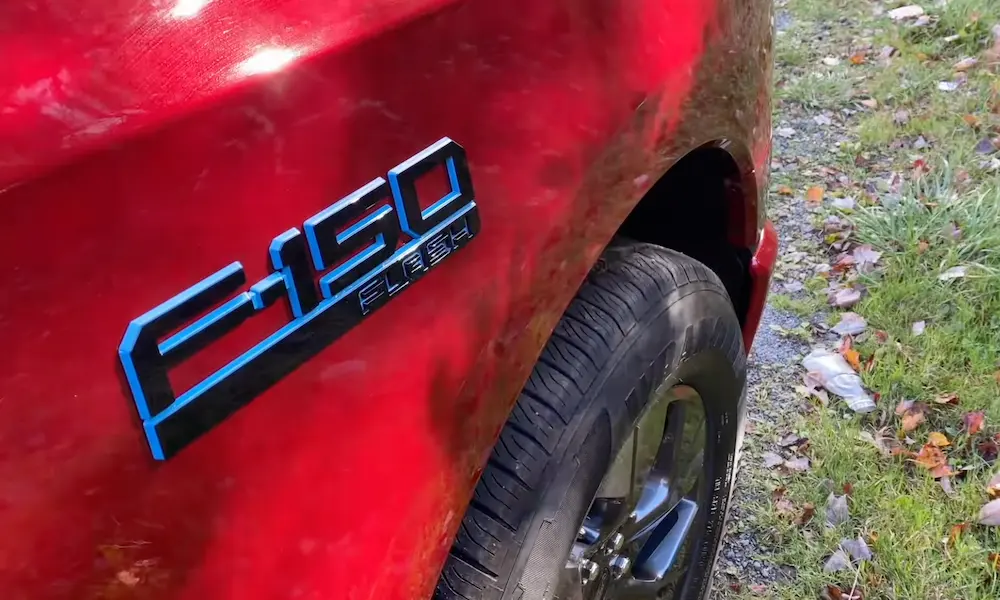
F-150 (2004-2008) with 4R70W/4R75E
If you own an 11th-gen F-150, there’s a notorious issue you need to check first. The main transmission wiring harness routes dangerously close to the exhaust.
Over time, the plastic clips holding the harness break. Gravity pulls the wiring down until it contacts the hot exhaust manifold. The insulation melts, wires short together, and boom—your O/D light starts flashing.
How to check: Pop the hood and look along the passenger-side frame rail near the front O2 sensor. Look for melted, discolored, or burnt wiring. If you find it, you can repair it with solder and heat-shrink tubing for under $20. This fix takes an hour and saves you from a misdiagnosed “bad transmission.”
Other 4R70W issues:
- Shift solenoid failure: These electromagnetic valves control gear changes. When they fail (resistance should be 20-30 Ohms), you’ll see codes P0750 or P0755. Replacement costs $200-400 including labor.
- Torque converter shudder: Feels like driving over rumble strips at highway speed. Usually caused by degraded transmission fluid or wrong fluid type.
Explorer, Ranger, Mountaineer (5R55E/W/S)
The 5R55 series has one killer flaw: servo bore wear. This isn’t a quick fix—it’s a design problem that shows up around 100,000-150,000 miles.
What happens: The aluminum transmission case wears out where the steel servo pistons move back and forth. As the bore becomes oval-shaped, hydraulic fluid leaks instead of applying the bands that hold gears.
Symptoms:
- Engine RPM flares (spikes) during the 2-3 shift
- Loss of overdrive under load
- Code P0775 (Pressure Control Solenoid)
- Works fine when cold, fails when hot
The old repair: Remove transmission, machine the case, install brass sleeves. Cost: $2,000-4,000.
The new solution: Aftermarket servo bore fix kits use modified pistons with O-rings that seal the worn bore. Cost: $200-500. You can access the servos without removing the transmission on most models.
This single innovation has saved countless Explorers from the scrapyard.
Super Duty (1999-2003) with 4R100
The beefy 4R100 transmission (found behind 7.3L Powerstrokes and V10 engines) has two main failure points:
Solenoid pack connector corrosion: The connector passes through the case on the passenger side. Road spray and salt cause water intrusion. You’ll get erratic shifting, speedometer fluctuation, and a flashing overdrive light.
Check this first—just unplug the connector and look for green corrosion or moisture. Clean it with electrical contact cleaner and apply dielectric grease. Five-minute fix.
Torque converter clutch wear: Ford used pulse-width modulation (PWM) for smooth lockup. The constant slipping generates heat and wears the friction material. You’ll see code P0741. Many builders install “Tugger” kits to eliminate the PWM slip and extend converter life.
Modern Fords (2009+) with 6R80
The six-speed 6R80 brought new technology and new problems. The most common issue is the molded lead frame failure.
Inside the transmission sits a plastic frame holding multiple sensors—output speed, turbine speed, fluid temp, and range sensor. The output shaft speed (OSS) sensor fails when metal shavings stick to it or thermal stress cracks the circuit.
The danger: Early software versions would misinterpret a lost OSS signal as “vehicle stopped” and command a downshift to 1st gear at highway speeds. This caused rear-wheel lockup and multiple accidents.
Ford issued recall 16S19 to update the PCM software. Now, if the OSS fails, the transmission goes to neutral or a safe high gear instead of causing a crash.
Replacing the lead frame costs $650-950 including labor. The part runs $150-300 but requires dropping the pan and valve body.
How to Read the Codes Yourself
That flashing light is just the alarm. The actual diagnostic information is stored as trouble codes in your PCM.
For 1996+ Models (OBD-II)
Any auto parts store will scan your codes for free. But generic readers often miss Ford-specific codes or transmission details.
Common transmission codes you’ll see:
| Code | What It Means | Likely Cause |
|---|---|---|
| P0700 | Generic transmission fault | Start here—means there are transmission codes stored |
| P0750 | Shift Solenoid A malfunction | Solenoid circuit open/short |
| P0755 | Shift Solenoid B malfunction | Solenoid circuit open/short |
| P0732 | Incorrect 2nd gear ratio | Slipping clutches or servo bore wear |
| P0741 | Torque converter clutch stuck off | TCC solenoid or converter failure |
| P0775 | Pressure control solenoid | Often indicates servo bore wear on 5R55 |
For Pre-1996 Models (OBD-I)
Older Fords (Broncos, early F-150s, Rangers) use EEC-IV diagnostics. You can read codes without any scanner—just a paperclip or jumper wire.
The paperclip test:
- Find the diagnostic connector near the brake booster (trapezoidal shaped)
- Use a paperclip to bridge the “Self-Test Input” pin to the “Signal Return” (ground) pin
- Turn the key to “Run” (don’t start the engine)
- Watch the Check Engine or O/D light flash in sequences
- Count the flashes: Six flashes, pause, three flashes = Code 63
This method gives you transmission fault codes from the 1980s-1995 era without spending a dime on tools.
The Hidden Engineering Test Mode
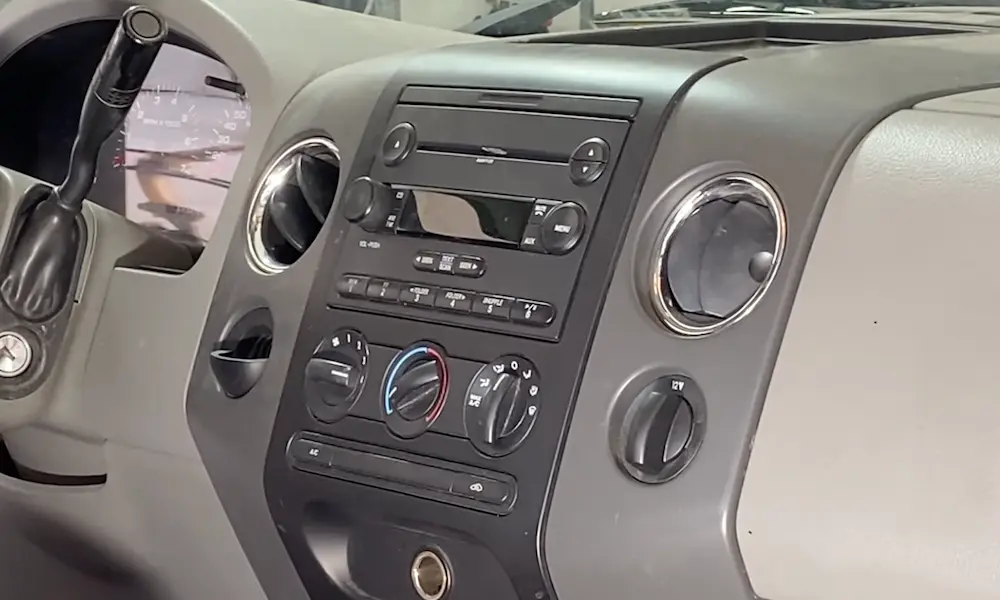
Ford vehicles with digital clusters (2004-2008 F-150s, Mustangs, Explorers) have a secret diagnostic mode built into the gauge cluster.
How to access it:
- Press and hold the RESET button on your dash
- Turn the key to RUN (keep holding the button)
- Wait 5 seconds until “tESt” appears on the odometer
- Release and press RESET to cycle through data screens
Useful screens:
- dtc: Shows diagnostic codes in hexadecimal
- bAt: Battery voltage (should be 12V+ key-on, 13.5V+ running)
- dEGC: Engine coolant temperature
Low battery voltage can trigger false transmission codes. If your voltage is under 12V, fix that first.
Advanced Diagnostics: FORScan
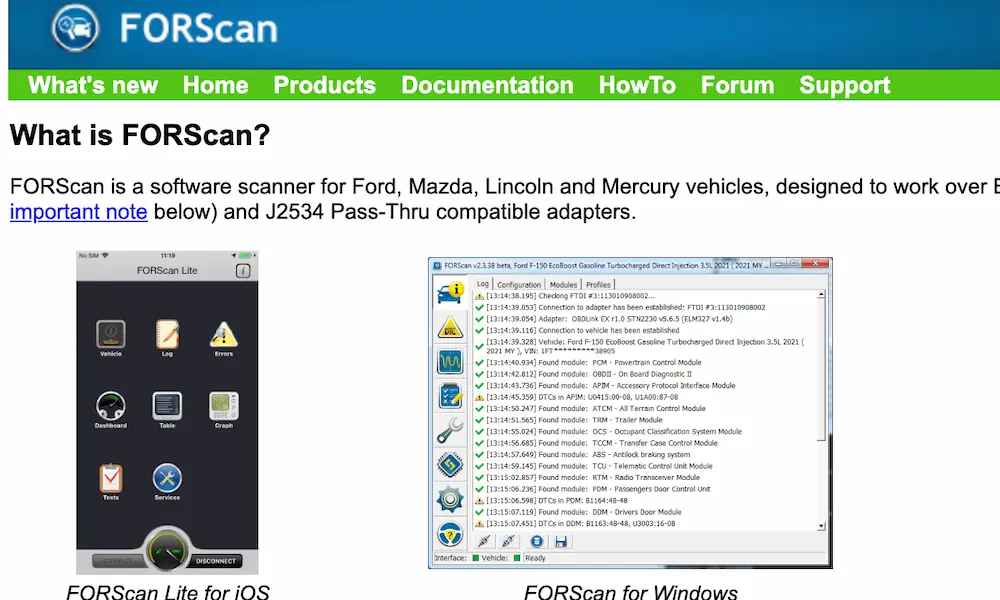
For serious diagnosis, FORScan software connects your laptop or phone to your Ford using a $25 OBD adapter. It gives you dealer-level access.
What FORScan can do:
- Read all manufacturer-specific codes
- Command individual solenoids on/off (hear them click to verify circuits)
- Graph line pressure vs. throttle position
- Clear adaptive learning tables after repairs
- Read live sensor data while driving
This level of diagnosis lets you pinpoint exactly which solenoid failed or whether you have a wiring issue vs. mechanical failure.
The Fluid Factor: Don’t Mix Your Mercons
Using the wrong transmission fluid is a guaranteed way to trigger problems. Ford has used different fluid specifications over the years, and they’re not interchangeable.
Mercon V vs. Mercon LV
Mercon V (high viscosity):
- Used in: 4R70W, 4R100, 5R55 series
- Introduced in the mid-1990s
- Has specific friction modifiers for torque converter clutch
Mercon LV (low viscosity):
- Used in: 6R80 and newer transmissions
- Thinner for improved fuel economy
- Required for proper shift timing in modern units
Don’t swap them:
- Mercon LV in a Mercon V transmission = leaks past seals, pressure drops, slipping
- Mercon V in an LV transmission = cavitation, slow cold shifts, damage
Ignore “universal” or “multi-vehicle” fluids. Stick with Motorcraft fluid specified for your exact transmission. The $10 savings isn’t worth a $3,000 rebuild.
Checking Your Fluid Condition
When the O/D light flashes, checking fluid is step one.
What to look for:
- Bright red: Healthy fluid
- Brown/smells burnt: Oxidized—needs changing
- Black/burnt smell: Failure imminent—friction material is suspended in the fluid
Fluid level matters: Low fluid causes aeration (bubbles). Air compresses; fluid doesn’t. Aerated fluid means low pressure and slipping clutches.
Check your level with the engine running and transmission in Park on level ground. Most Ford transmissions don’t have dipsticks anymore—you need to check from underneath at the fill plug when at operating temperature.
What Limp Mode Actually Does to Your Transmission
When the PCM triggers Failure Mode Effects Management, it’s making calculated sacrifices to save your transmission.
Maximum Line Pressure
Under normal operation, the Electronic Pressure Control (EPC) solenoid modulates hydraulic pressure for smooth, barely-noticeable shifts.
In Limp Mode, the PCM cuts the signal to the EPC solenoid, forcing the main regulator valve wide open. This applies maximum hydraulic clamping force to clutches and bands.
You’ll feel: Harsh, slamming shifts. A violent clunk when shifting from Park to Drive. It’s uncomfortable, but it’s preventing your clutches from slipping and welding themselves together from heat.
Limited Gear Selection
The transmission may lock into one or two gears:
- 4R70W: Usually defaults to 2nd or 3rd gear
- 5R55: Locks out 5th (overdrive) and sometimes 2nd
- 6R80: Defaults to 3rd or 5th depending on the fault
By eliminating complex synchronized shifts, the PCM reduces the chance of a compromised component failing catastrophically.
The “Turn It Off and On Again” Phenomenon
Here’s something odd: Many people report their transmission works perfectly for a few minutes after restarting the truck, then the light starts flashing again.
This happens because turning the key off resets the PCM’s immediate monitor status. The computer hasn’t “forgotten” the problem, but it needs to complete its self-test drive cycle again before re-triggering Limp Mode.
This intermittency actually confirms the issue is electronic (computer-monitored) rather than catastrophic mechanical (like a snapped shaft). A broken hard part wouldn’t improve with a key cycle.
DIY Fixes vs. Shop Repairs
Not all flashing O/D lights require a transmission rebuild. Here’s what you can tackle yourself.
You Can Fix This Yourself
Wiring harness repair (F-150): If you find melted wires, cut out the damaged section, solder in new wire, use marine-grade heat shrink, and secure away from heat with metal zip ties. Cost: $10-20.
Solenoid replacement (4R70W): Drop the transmission pan (messy but not hard), unbolt the solenoids from the valve body, replace, reinstall. Test resistance first to confirm which one failed. Cost: $200-400 total.
Connector cleaning (4R100): Unplug the external solenoid pack connector, spray with electrical contact cleaner, dry thoroughly, apply dielectric grease, reconnect. Cost: $5.
Fluid and filter change: If your fluid is brown or burnt-smelling but not black, a complete drain, filter change, and refill with the correct Mercon specification might restore function. Cost: $150-200 DIY.
When You Need a Professional
Servo bore repair (5R55): While the fix kit is affordable, you need transmission knowledge to access the servos and install the modified pistons correctly. Expect 3-4 hours of skilled labor.
Lead frame replacement (6R80): Requires dropping the pan, removing the valve body, and careful sensor installation. If you’ve never been inside a transmission, don’t start here.
Torque converter replacement: Requires transmission removal. This is a weekend project for experienced DIYers with a lift, but most people will benefit from a shop’s expertise.
Full rebuild: If you have metal shavings in the pan, black fluid, or multiple hard part failures, you’re past the point of simple fixes.
The Economics: Repair or Replace?
When facing a flashing O/D light, you need to weigh repair costs against vehicle value.
| Repair Type | Parts Cost | Labor Hours | Total Cost | Best For |
|---|---|---|---|---|
| Wiring repair | $10-20 | 1 hour | $150-200 | F-150 harness melt |
| Shift solenoid | $50-100 | 1-2 hours | $200-400 | 4R70W electrical |
| Servo bore kit | $200-300 | 2-3 hours | $500-750 | 5R55 slip/flare |
| Lead frame | $200-350 | 3-4 hours | $650-950 | 6R80 sensor |
| Torque converter | $300-600 | 6-8 hours | $1,200-1,800 | Shudder/slip |
| Full rebuild | $1,500-2,500 | 8-12 hours | $3,000-5,000 | Multiple failures |
The game-changer: Targeted repairs like the servo bore kit have transformed Ford transmission ownership. Ten years ago, a flashing O/D light on an Explorer meant junkyard time. Today, it’s often a $500 fix.
Before You Panic
A ford overdrive light flashing doesn’t automatically mean you need a new transmission. Here’s your action plan:
First 24 hours:
- Check transmission fluid level and condition
- Look for obvious wiring damage (especially on 04-08 F-150s)
- Get the codes read—free at most parts stores
If codes point to electrical issues (P0750, P0755, P0973):
- Test solenoid resistance with a multimeter
- Inspect wiring harness near exhaust
- Check connector for corrosion
- These are often cheap fixes
If codes point to mechanical issues (P0732, P0735, P0741):
- Research your specific transmission model’s known failures
- Get quotes from transmission specialists, not general mechanics
- Ask about targeted repairs (servo kits, converters) before agreeing to full rebuilds
The restart test: If cycling the ignition makes everything work temporarily, your issue is likely electronic/sensor-related rather than catastrophic mechanical failure. That’s actually good news.
The flashing overdrive light is your transmission’s way of protecting itself. Respect the warning, but don’t assume the worst. With proper diagnosis, many of these issues cost hundreds, not thousands, to fix.
Your Ford is trying to tell you something specific. Now you know how to listen.