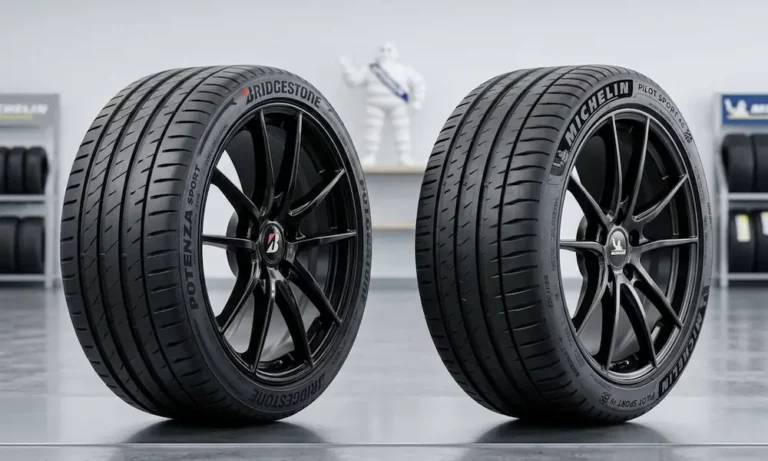
You’re about to spend $400–$1,200 on a set of tires. Getting this decision wrong is an expensive mistake. This Bridgestone vs Michelin breakdown cuts through the marketing noise and tells you exactly what each brand delivers — and which one fits your driving life. Stick around to the end, because the answer might surprise you.
The Big Picture: Where These Two Brands Actually Stand
Let’s start with the numbers that matter.
According to 2025 U.S. tire market share data, Michelin holds roughly 11.7% of the U.S. market by dollar share. Bridgestone sits at 9.2% — but here’s the twist. Michelin is actually losing unit share year-over-year, while Bridgestone gained 1.3 percentage points, the highest jump among top brands.
That’s not a small detail. It tells you Bridgestone is winning over more American drivers right now.
On the global stage, brand valuation reports put Michelin at $7.9 billion and Bridgestone at $7.6 billion — essentially neck-and-neck. These are two elite brands separated by razor-thin margins.
| Performance Metric | Michelin | Bridgestone |
|---|---|---|
| Global Brand Value | $7.9 Billion | $7.6 Billion |
| U.S. Dollar Market Share | 11.7% | 9.2% |
| Year-Over-Year Dollar Change | Unit share loss | +1.3 percentage points |
| Retail Shelf Share | 16% | Rising challenger |
How Each Brand Thinks About Tires
Michelin and Bridgestone don’t just make different tires — they think about tires differently. Understanding their engineering philosophies saves you from buying the wrong product entirely.
Michelin’s Philosophy: Refinement Without Trade-Offs
Michelin, founded in 1889, invented the radial tire. Its current approach — what they call “Total Performance” — aims to improve safety, fuel efficiency, and longevity at the same time rather than sacrificing one for another.
Here are the technologies that define Michelin tires today:
- EverGrip: Hidden grooves emerge as tread wears down, maintaining wet-weather traction throughout the tire’s life
- EnergySaver Construction: Specialized rubber compounds run cooler, reducing energy loss and potentially saving up to $400 in fuel costs over a set’s lifetime
- Piano Acoustic Technology: Tread patterns neutralize specific sound frequencies, cutting highway hum
- Cushion Guard: An internal layer that absorbs road vibrations before they reach your suspension
Bridgestone’s Philosophy: Toughness and Traction Specialization
Bridgestone — which incorporates Firestone’s American heritage — focuses on real-world durability across varying road surfaces. Its tires are built to take a beating and keep performing.
Key Bridgestone technologies include:
- 4-Belt Design: Creates a rigid, impact-resistant casing that handles heavy loads and rough roads
- Stone Rejector Platforms: Tread grooves actively eject debris to protect the steel belts underneath
- NanoPro-Tech: Manages rubber compounds at the molecular level to reduce internal friction and improve tread life
- Multicell Compound (Blizzak series): Microscopic bubbles act like tiny suction cups on ice — widely considered the industry benchmark for winter traction
Head-to-Head: The Tires You’ll Actually Buy
Philosophy is nice. Let’s talk about the specific products competing for your money.
All-Season Touring: Michelin Defender 2 vs. Bridgestone Turanza QuietTrack
This is the most important category for most American drivers. Both tires carry an 80,000-mile treadwear warranty, so the fight comes down to what they do with that lifespan.
The Michelin Defender 2 earns its reputation as the “Gold Standard” for longevity. Its MaxTouch Construction distributes the forces of acceleration, braking, and cornering evenly across the tread. That even wear is why it consistently outlasts competitors in real-world testing.
The Bridgestone Turanza QuietTrack takes a different angle. Its ComfortCruise technology delivers a noticeably softer ride over road imperfections. Many testers actually prefer the Turanza’s highway comfort over the Michelin’s firmer, more “planted” feel.
Quick verdict: If you drive city streets and value wet braking confidence, go Defender 2. If you log serious highway miles and want a quieter, cushier ride, the QuietTrack competes well.
All-Weather Showdown: Michelin CrossClimate 2 vs. Bridgestone WeatherPeak
This category is for drivers who want year-round capability without swapping to dedicated winter tires. Both carry the severe-snow mountain/snowflake rating — but they perform very differently.
| Metric | Michelin CrossClimate 2 | Bridgestone WeatherPeak |
|---|---|---|
| Dry Braking Distance | 13.9% shorter | Baseline |
| Wet Braking Distance | 8.6% shorter | Baseline |
| Snow Acceleration | High performance | 2.4% faster |
| Tread Pattern | Directional V-shape | Symmetric touring |
| Treadwear Warranty | 60,000 miles | 70,000 miles |
The CrossClimate 2’s V-shaped directional tread channels water and slush away aggressively. It stops shorter in both dry and wet conditions — and that’s not a small margin.
But the WeatherPeak has real advantages. Its symmetric tread allows more flexible rotation patterns for more even wear. It also offers a longer warranty and delivers a more traditional, comfortable touring feel. For drivers in heavy snow belt regions who don’t want the slight noise or aggressive character of a directional tire, the WeatherPeak makes a strong case.
What Independent Testing Actually Says
Marketing claims are easy to make. Let’s look at what Consumer Reports and J.D. Power found.
Consumer Reports: Michelin Dominates
In the 2025–2026 testing cycles, Michelin ranked #1 overall, earning top marks for grip, handling, and tread life across nearly every category. Every Michelin model tested earned a “Recommended” badge.
Bridgestone landed at 10th place. Some models — particularly the Turanza and Potenza lines — drew criticism for wear rates that decline noticeably after the first two years of ownership.
J.D. Power: Michelin Leads, Bridgestone Holds Its Own in Trucks
J.D. Power’s 2026 U.S. Original Equipment Tire Customer Satisfaction Study shows Michelin earning the top spot in three of four major segments:
| Vehicle Segment | Michelin Rank | Bridgestone Rank |
|---|---|---|
| Luxury Vehicle | #1 (833 points) | Below average |
| Passenger Car | #1 (816 points) | Below average |
| Performance Sport | #1 (818 points) | Below average |
| Truck/Utility | #3 | #3 (786 points) |
Bridgestone’s strongest ground is the truck and SUV segment — a fitting result for a brand built on ruggedness. If you drive a pickup or large SUV, the gap between these two brands narrows considerably.
Warranties: Which Brand Has Your Back?
Both brands offer strong protection programs, but the structures are different.
Michelin Promise Plan includes:
- 60-day satisfaction guarantee — return the tires if you don’t love them
- 3 years of roadside assistance, including flat tire service and free towing up to 150 miles
- 6-year workmanship coverage
Bridgestone’s “90-Day Buy & Try” includes:
- 90-day satisfaction guarantee — the longest trial period in the industry
- Up to 80,000-mile treadwear warranty on touring models
- 5–6 years of manufacturing defect coverage
| Feature | Michelin | Bridgestone |
|---|---|---|
| Satisfaction Guarantee | 60 days | 90 days |
| Roadside Assistance | 3 years (with towing) | Varies by retailer |
| Max Treadwear Warranty | 80,000 miles | 80,000 miles |
| Workmanship Coverage | 6 years | 5–6 years |
Bridgestone wins on trial period. Michelin wins on roadside support. Neither has a clear knockout here.
Price, Promotions, and Where to Buy
Michelin consistently costs more. A typical sedan tire runs $115–$200, while a comparable Bridgestone sits at $85–$150. For SUV owners, Michelin’s premium lines can reach $300 per tire.
Here’s what makes that gap manageable: both brands match each other on promotional activity, each accounting for roughly 10% of total U.S. market discounts. “Buy four, get a $70–$110 rebate” deals appear regularly from both brands during peak seasons.
Where you shop also matters:
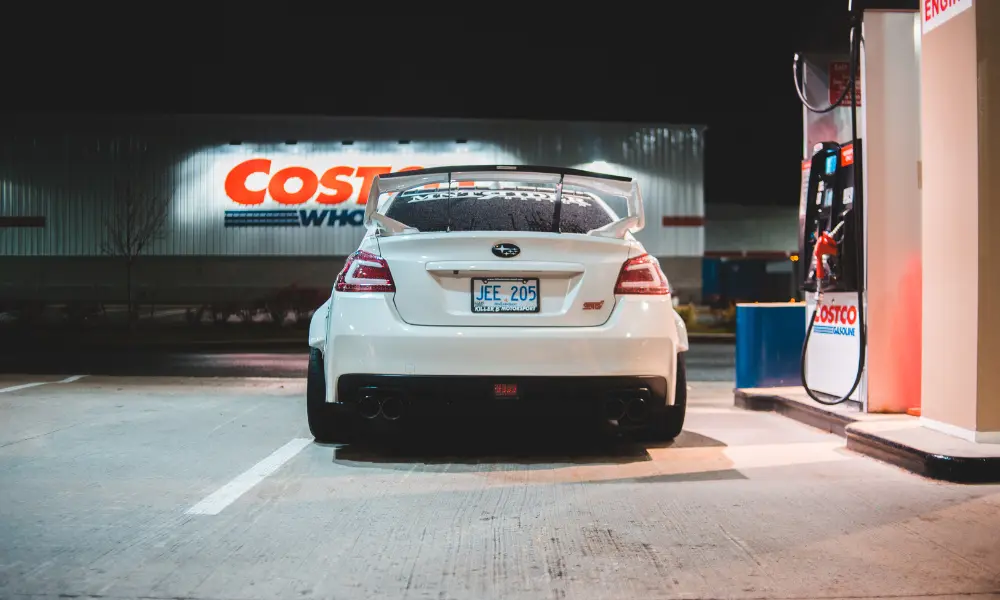
- Costco strongly favors Michelin and bundles installation ($20/tire) with lifetime balancing, nitrogen inflation, and flat repair
- Discount Tire offers a broader Bridgestone selection, price-matching policies, and its own road hazard certificate program
Fuel Efficiency and the EV Question
Electric vehicles are heavier and produce more torque. That combination chews through tires faster and cuts into range. Both brands have answers, but Michelin’s lead is measurable.
| Category | Michelin (Energy Saver) | Bridgestone (Ecopia) |
|---|---|---|
| Estimated Annual Fuel Savings | $100–$150 | $75–$125 |
| Lifetime Potential Savings | Up to $400 | Competitive |
| Rolling Resistance | Category leader | High performance |
Michelin’s e.Primacy and Energy Saver A/S lines can improve EV range by up to 10%. Bridgestone’s Turanza EV and Ecopia EP422 Plus deliver strong results too — just slightly below Michelin’s ceiling. If you drive an EV or a gas-electric hybrid and fuel costs matter to you, Michelin edges ahead.
Run-Flat Technology: Safety When It Counts
Both brands offer run-flat options that let you travel up to 50 miles after a puncture. Bridgestone’s DriveGuard stands out because it works on vehicles that didn’t originally come with run-flat capability — a significant practical advantage. It uses a reinforced sidewall and cooling fins to manage heat while running airless.
Michelin’s Zero Pressure (ZP) technology is excellent but typically integrated into its high-performance Pilot Sport lineup. Testing shows that run-flat tires from both brands trade a slightly firmer, noisier ride and a small fuel economy penalty for the peace of mind of no roadside tire changes.
The Final Call: Which Brand Is Right for You?
Choose Michelin if you:
- Drive a luxury, passenger, or performance vehicle
- Prioritize wet braking performance and long-term tread life
- Own or plan to buy an EV
- Value comprehensive roadside assistance
Choose Bridgestone if you:
- Drive a pickup truck or full-size SUV
- Live in a serious snow belt and rely on winter tires (the Blizzak is genuinely the best in class)
- Want a longer trial window before committing (90 days vs. 60)
- Need strong performance at a lower upfront cost
The Bridgestone vs Michelin debate doesn’t have one universal winner. Michelin is the better everyday tire for most passenger car drivers — full stop. But Bridgestone earns its place for truck owners, winter drivers, and anyone who wants strong performance without Michelin’s premium price tag.
Both brands are closing the gap fast. Bridgestone’s market momentum in 2025 tells you this rivalry isn’t settled — and that’s good news for your wallet either way.