Ever wondered who actually makes Subaru engines? The answer is more interesting than you’d think — and it involves warplanes, a Japanese mountain prefecture, and a factory in Indiana. Stick around because this gets good.
Subaru Makes Its Own Engines — Here’s Where
Subaru makes its own engines. Almost all of them come from one specific place: the Oizumi Plant in Gunma Prefecture, Japan. This factory casts, machines, and assembles every gasoline boxer engine and transmission the brand produces.
That’s not a small operation. The Oizumi Plant covers over 304,000 square meters and employs close to 3,000 workers. It’s been running since 1983 and has expanded several times to keep up with global demand.
So when you buy a Subaru Outback in Ohio or a Forester in Florida, the engine inside almost certainly started its life in Gunma.
The History You Didn’t Know About
Subaru’s engine-making roots go back further than most people realize — all the way to aviation.
Subaru’s predecessor, the Nakajima Aircraft Company, built aircraft engines before World War II. After the war ended, the Allied Occupation government dissolved the company. Five firms later merged to form Fuji Heavy Industries in 1953, which eventually became Subaru Corporation in 2017.
One of those five founding companies — Omiya Fuji Kogyo — brought dedicated engine manufacturing expertise into the group. That aeronautical DNA is why Subaru engineers became obsessed with balance, symmetry, and lightweight power. It’s also why they adopted the horizontally opposed “boxer” engine layout in 1966 with the original Subaru 1000.
They’ve stuck with it ever since.
Why the Boxer Engine Is a Big Deal
The boxer engine isn’t just a quirky engineering choice. It directly shapes how every Subaru drives, handles, and protects you.
Here’s what makes it different:
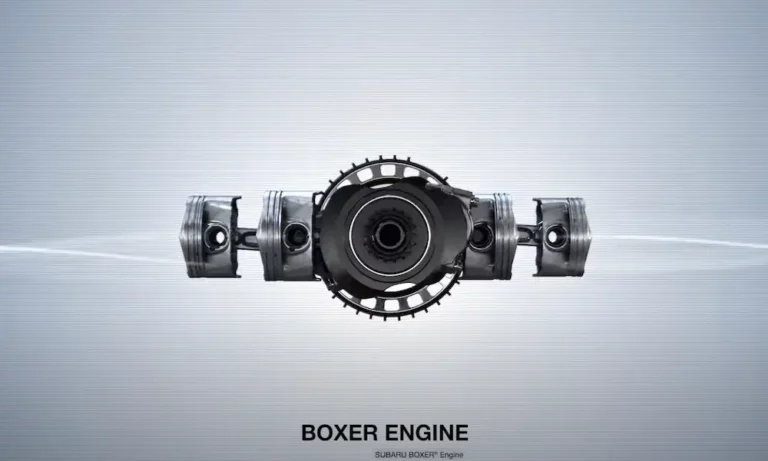
- Pistons move horizontally, not vertically. They punch outward from a central crankshaft, like a boxer throwing two punches at once.
- Natural vibration cancellation. Each piston’s movement cancels out its opposite, so Subaru doesn’t need heavy balance shafts to smooth the engine out.
- Lower center of gravity. The flat engine sits lower in the chassis than an upright inline engine. That means less body roll and better stability — especially useful in rain and snow.
- Crash safety advantage. In a serious frontal collision, the low-mounted engine drops below the passenger compartment rather than being pushed into it. This design choice consistently earns Subaru high safety ratings.
Machining this layout requires specialized equipment. Because the two cylinder banks face away from each other, the tooling must maintain perfect symmetry across the crankshaft axis. That’s part of why Subaru keeps this manufacturing centralized in Oizumi rather than farming it out.
What the Oizumi Plant Actually Produces
| Oizumi Plant Specification | Details |
|---|---|
| Established | 1983 |
| Site Area | ~304,000 square meters |
| Building Area | ~238,000 square meters |
| Primary Output | Gasoline Boxer Engines & Transmissions |
| Workforce | ~2,872 employees |
The fifth factory at Oizumi, commissioned in July 2010, was built specifically for third-generation boxer engines. It uses advanced mist lubrication systems and precision machine tools to run continuous, high-efficiency production.
Once engines leave Oizumi, they travel a short distance to Subaru’s Subaru-cho and Yajima vehicle assembly plants — also in Gunma. That tight regional loop keeps logistics simple and quality control tight.
What Happens at the Indiana Plant
You’ve probably heard of Subaru of Indiana Automotive (SIA) in Lafayette. It’s Subaru’s only manufacturing plant outside Asia, and it builds roughly half the vehicles sold in North America.
But here’s the key distinction: SIA assembles vehicles. It doesn’t manufacture engines from raw materials.
The boxer engines and transmissions arrive from Oizumi as completed units. SIA’s Powertrain Building — nearly 300,000 square feet on its own — finalizes the engines, mates them to transmissions, and delivers them to the final assembly line. From there, they go into the Outback, Ascent, Crosstrek, and Forester bodies rolling through the plant.
| SIA Department | Area (Square Feet) |
|---|---|
| Stamping | 474,233 |
| Body Assembly | 703,995 |
| Paint Facilities | 1,760,510 |
| Trim & Final Assembly | 1,474,327 |
| Powertrain Building | 299,276 |
| Logistics Center | 500,000 |
This setup lets Subaru keep full engineering control over the boxer engine in Japan while cutting the cost and time of delivering finished vehicles to US customers. SIA has also earned recognition as a zero-landfill facility, which is worth noting.
Current Engine Families: What’s Under Your Hood
Subaru’s Oizumi Plant produces several engine families. The code names tell you a lot — “FB25” means FB-series, 2.5-liter displacement.
The FB Series: Everyday Workhorse
The FB series is what most Subaru owners drive. It replaced the older EJ series starting in 2010 and was engineered for better fuel economy and broader everyday torque.
- FB25 (2.5-liter): Powers the Forester, Outback, and upper Crosstrek trims. Uses a timing chain instead of a belt, which means lower long-term maintenance costs.
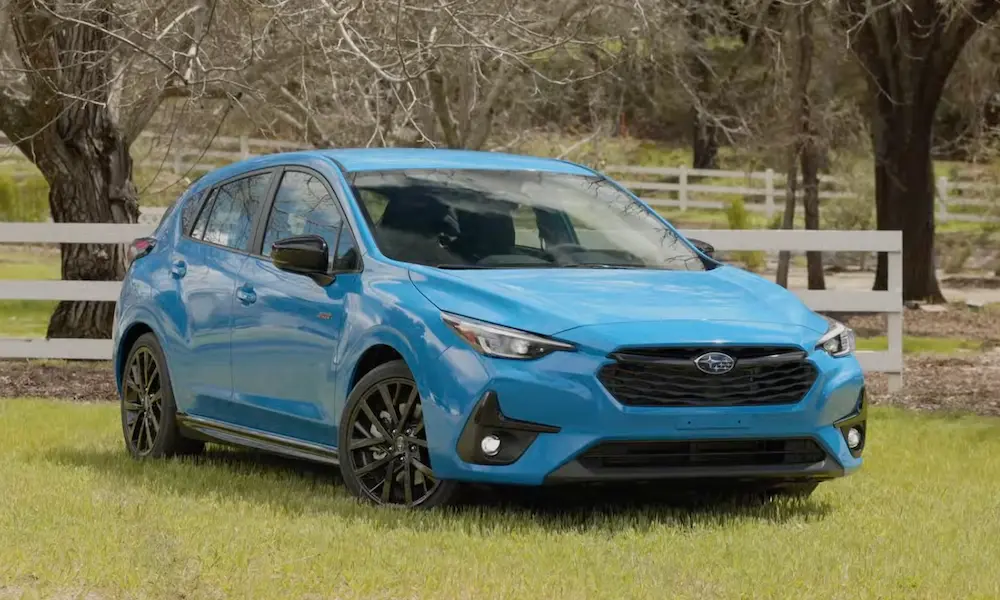
- FB20 (2.0-liter): Found in the Impreza and base Crosstrek. Smaller, more efficient, same boxer layout.
The FA Series: When You Want More
The FA series handles performance duty and turbocharging.
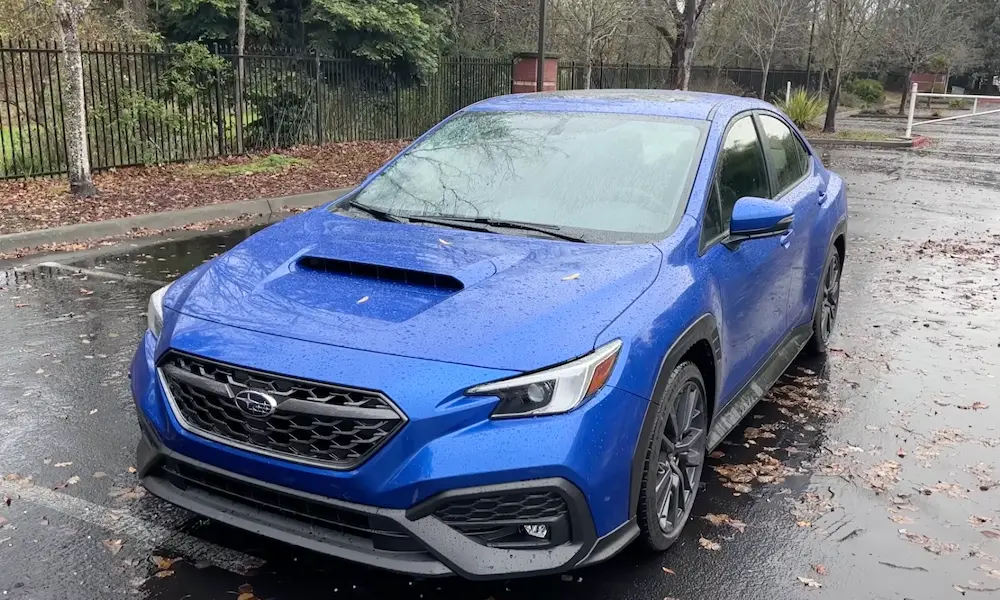
- FA24F (2.4-liter Turbo): This engine goes into the Ascent, WRX, turbocharged Outback, and Legacy. It delivers V6-like torque from a compact four-cylinder package.
- FA24D (2.4-liter Naturally Aspirated): Built for the Subaru BRZ and Toyota GR86. It’s tuned for higher engine speeds and uses Toyota’s D-4S dual-injection system for better combustion efficiency.
The Suppliers Behind the Engine
Subaru makes the engine blocks and internal assemblies at Oizumi. But it relies on a network of specialized suppliers for critical components.
| Supplier | Primary Parts |
|---|---|
| Aisin | Transmissions (CVT, manual), water pumps, braking systems |
| Denso | Ignition coils, fuel pumps, sensors, thermal systems |
| Hitachi Astemo | Throttle bodies, MAF sensors, EyeSight cameras |
| NGK | Spark plugs, oxygen sensors |
| Mitsubishi Electric | Alternators, starters, electronic control units |
Aisin supplies the Lineartronic CVT used across most Subaru models, plus manual gearboxes for the WRX and BRZ. Denso covers ignition, fuel delivery, and sensors. Hitachi Astemo handles throttle bodies and the hardware behind EyeSight driver assistance. NGK supplies the spark plugs — which need to be specifically designed to work in the boxer engine’s horizontal cylinder orientation.
The Toyota Partnership You Should Know About
Subaru and Toyota share more than a casual business relationship. Their engineering collaboration directly affects what’s inside certain Subaru engines.
The FA24D engine in the BRZ uses Toyota’s D-4S dual-injection system. This puts two injectors per cylinder to work — one for direct injection into the combustion chamber and one for port injection into the intake. The result is cleaner combustion, better efficiency, and more power without increasing engine size.
The partnership also extended into electric vehicles. The Subaru Solterra was co-developed with Toyota and is manufactured on Toyota’s production lines at the Motomachi Plant in Japan. Two more EVs — the Trailseeker and Uncharted — are set for 2026 and will deepen that collaboration.
STI and Specialty Engine Builds
Subaru Tecnica International (STI), founded in 1988, handles motorsport and high-performance development. Most STI-tuned engines are assembled within Subaru’s Gunma facilities. But two notable external collaborations deserve a mention.
Cosworth partnered with Subaru to produce the Impreza STI CS400. Cosworth manufactured custom forged pistons, connecting rods, and specialized cylinder heads that pushed the boxer engine close to 400 horsepower while maintaining factory durability standards.
Prodrive has been a long-term rally partner, developing bespoke race-specification engines for World Rally Championship campaigns. These aren’t production engines — they’re purpose-built for competition.
What’s Changing in 2026
Subaru is shifting its manufacturing footprint to meet growing US demand and reduce trans-Pacific shipping costs.
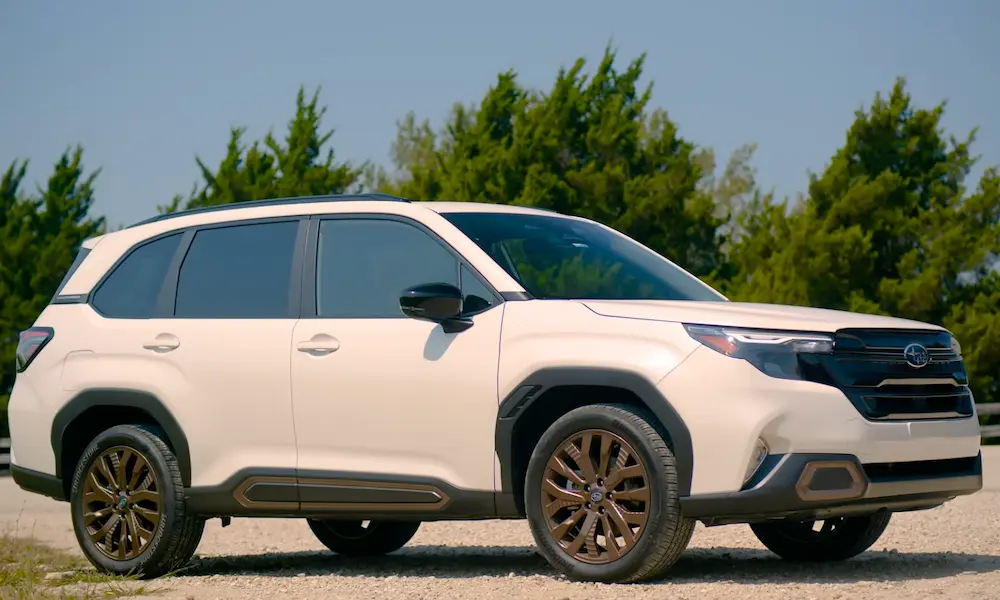
- Forester moves to Indiana. For the first time ever, the North American Forester will be built at SIA starting with the 2026 model year.
- Outback moves back to Japan. The 2026 Outback is heading to the Yajima Plant in Gunma, freeing up Indiana capacity for the Forester and Ascent.
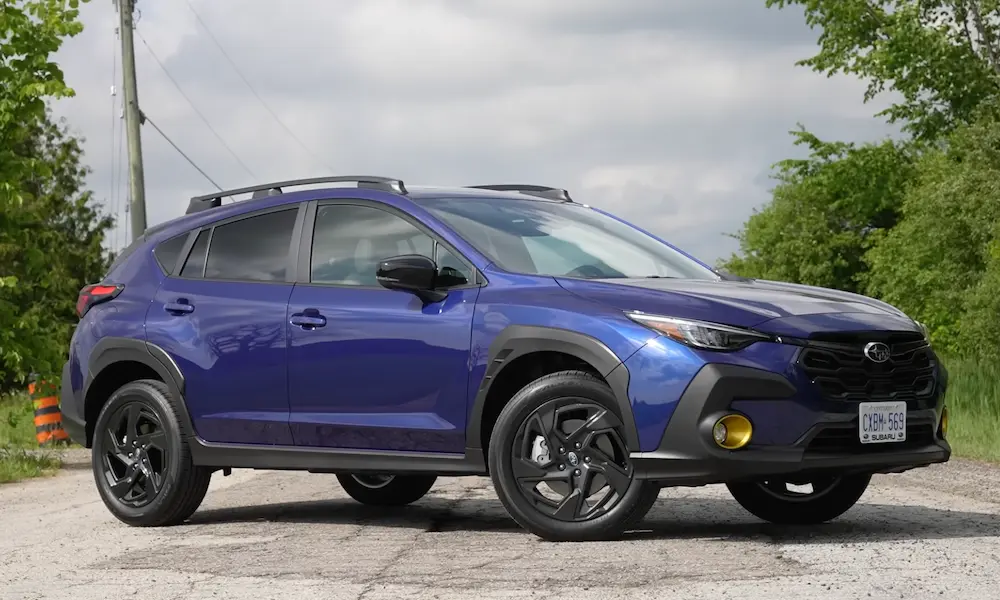
- Crosstrek splits. Higher trims with the 2.5-liter engine now assemble in Indiana. Base 2.0-liter models still come from Japan.
- WRX and BRZ stay in Japan. Performance models continue building exclusively in Gunma for tighter quality control.
- EV expansion. Subaru’s Gunma complex now runs a mixed-model production line that handles internal combustion, hybrid, and battery-electric vehicles on the same floor — giving the company flexibility as the market shifts.
The core story doesn’t change, though. Subaru designs and manufactures its own engines. The boxer architecture comes from one plant in Japan. And that plant’s roots trace back to aircraft engineers who cared deeply about balance, precision, and power-to-weight ratios. That’s not marketing — it’s just where Subaru comes from.