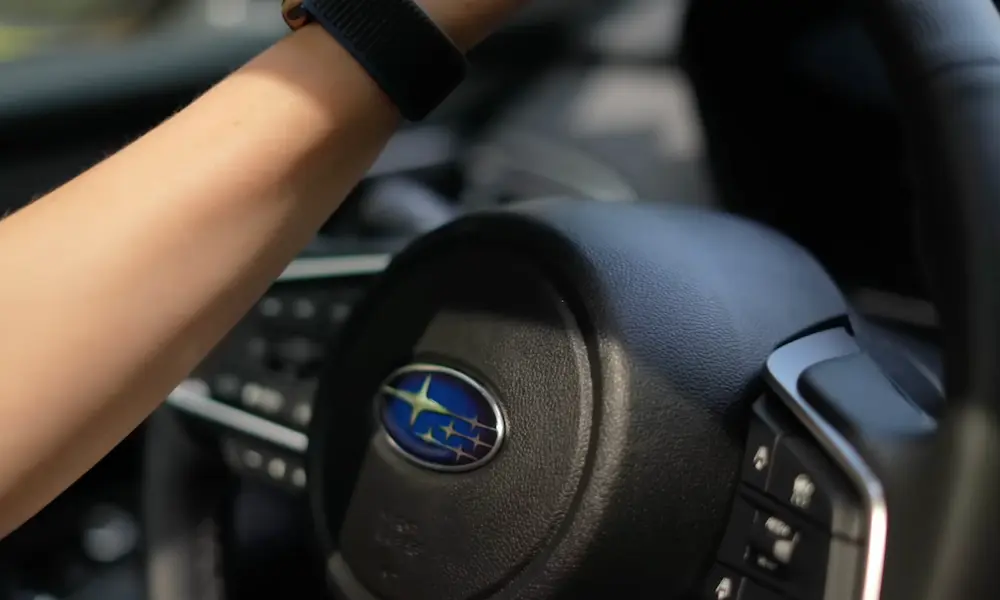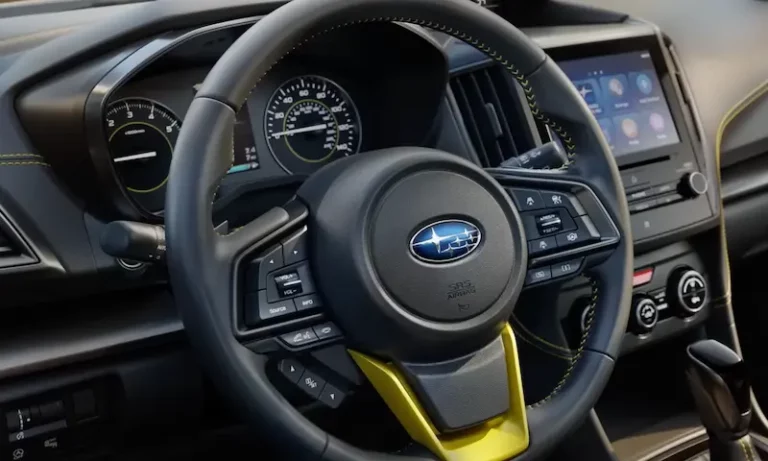
You grip your Subaru’s steering wheel and feel something weird—a sticky patch, maybe a small bubble. Within weeks, chunks of the “leather” are peeling off like a bad sunburn. If you’re dealing with Subaru steering wheel peeling, you’re not imagining things, and you’re definitely not alone. This issue has hit thousands of Forester, Outback, Crosstrek, WRX, and Legacy owners hard, turning what should be a premium touch point into a crumbling mess.
What’s Actually Causing Your Steering Wheel to Fall Apart
Let’s cut through the corporate speak: your Subaru’s steering wheel isn’t wrapped in real leather. It’s a synthetic polyurethane coating over a base layer—basically fancy plastic pretending to be leather.
The Chemistry of Failure
That coating breaks down through a process called hydrolysis. Water molecules (from your sweat, humidity, even morning dew on your hands) literally break apart the chemical bonds in the polyurethane. Once those bonds weaken, the oils from your palms seep into the micro-pores of the material.
Your hands naturally produce sebum—a mix of oils and waxes. In quality leather, a protective topcoat prevents this infiltration. But on affected Subaru models from 2013-2024, those oils plasticize the coating, making it swell and soften. When you turn the wheel, especially during parking maneuvers, the shear forces rip that weakened top layer right off the base.
Hand Sanitizer Made Everything Worse
If you bought your Subaru around 2020 or later, you’ve probably noticed accelerated deterioration. The culprit? Alcohol-based hand sanitizers.
Ethanol and isopropanol are aggressive solvents. When you transfer them from your hands to the wheel, they:
- Dissolve the plasticizers in the polyurethane
- Pull moisture out of the material, causing shrinkage and cracking
- Turn the surface sticky or “gummy” before it completely disintegrates
One 2017 Forester owner described their wheel becoming tacky to the touch before chunks started peeling off—classic polymer breakdown.
Why the 12 O’Clock Position Goes First
Notice how the top of your steering wheel looks worst? That’s not random. This section gets hammered by UV radiation streaming through your windshield.
UV photons have enough energy to break the carbon-carbon bonds in polyurethane (a process called photo-oxidation). This makes the material brittle. Add in thermal cycling—your car baking in the sun, then cooling down with AC—and you’ve got expansion and contraction creating internal stress at the glue line between layers.
Over thousands of cycles, that stress causes separation. Owners who garage their vehicles report lower failure rates, but even some garaged Subarus still peel, pointing to fundamental material defects.
Which Subaru Models Get Hit Hardest
The peeling epidemic isn’t evenly distributed. Certain models and trim levels suffer way more than others.
The Premium Trim Paradox
Here’s the kicker: higher trim levels with “leather-wrapped” steering wheels actually fail more often than base models with plain molded plastic wheels. The Forester XT from 2014-2018, WRX and STI from 2015-2021, and premium Outbacks from 2015-2019 dominate complaint forums.
Base model Foresters with basic urethane wheels? They just wear smooth over time—no delamination because there’s no laminated construction. The “premium” leather is ironically the less durable option.
Performance models like the WRX face unique stress. Aggressive driving means higher grip pressures, rapid steering inputs, and more hand perspiration. When your steering wheel starts falling apart on a car built for precision handling, that’s a legitimate safety concern.
The Danger Zone: 2013-2019
Model years 2013-2019 represent peak failure frequency:
- Subaru Outback (2015-2019): Reports of peeling at just 15,000-40,000 miles
- Subaru Crosstrek (2013-2017): First-gen XV models heavily represented in peeling complaints
- 2020-2022 Models: Despite design changes, 2022 models still peel, suggesting the fundamental material chemistry didn’t improve enough
The Warranty Nightmare You Need to Know About
Getting Subaru to cover Subaru steering wheel peeling is like navigating a minefield. The company’s warranty structure creates systematic confusion about what’s actually covered.
The Basic 3-Year/36,000-Mile Warranty
Your factory warranty covers “defects in material or workmanship.” A steering wheel peeling at 20,000 miles sure sounds like a defect, right?
In practice, success depends on your dealership’s interpretation. Service advisors scrutinize claims for “outside influence”—a scratch from a ring, lotion residue, anything they can blame on you rather than defective materials. Some owners get free replacements under warranty, while others face denials for the exact same issue.
The Gold Plus Extended Warranty Trap
Subaru’s marketing for their Gold Plus Extended Service Agreement is explicit: it covers “wear and tear” of covered components, unlike third-party warranties. The official brochure lists “Steering” as a covered system.
But here’s where things get shady. When you file a claim for your peeling wheel, the adjuster often classifies the leather wrapping as “upholstery” or “interior trim” rather than a mechanical steering component. This lets them deny coverage based on the contract’s exclusion of “soft trim” and “appearance items.”
A 2022 WRX owner with only 15,000 miles got warranty denied for interior peeling—on a nearly new car. The service advisor literally said it wasn’t “a matter for warranty.”
How to Fight Back and Win
The inconsistency is the tell. Owners who bypass their dealership and contact Subaru of America directly often get approved for “Goodwill” repairs. This proves corporate knows the “trim exclusion” argument is weak—they’d rather fix the wheel than fight you in small claims court.
Your battle plan:
- Document early: Take photos when the wheel first gets sticky, before visible peeling
- Challenge the classification: Request written explanation of why “Steering” system coverage excludes the steering wheel itself
- Use the smoking gun: Reference TSB 12-236-23, Subaru’s own Technical Service Bulletin acknowledging steering wheel design defects on 2018-2021 Crosstreks and 2019-2021 Foresters
- Escalate to corporate: Call Subaru of America’s customer service line and open a case number—dealerships have financial incentive to deny; SOA has budget for brand loyalty
Technical Service Bulletin: Subaru’s Quiet Admission
Subaru hasn’t issued a recall for steering wheel peeling, but they did publish TSB 12-236-23 titled “Leather Wrapped Steering Wheel – Design Change.”
What the Bulletin Actually Says
The bulletin applies to 2018-2021 Crosstrek and 2019-2021 Forester models. Subaru describes the problem as an “uncomfortable feel” caused by “loose material or stitching.” Notice what they don’t say: “peeling,” “delamination,” or “disintegration.”
This language is strategic. “Uncomfortable feel” sounds minor. “Delamination” implies structural failure.
The fix? Replace the wheel with a part featuring “refined tailoring and stitching.” Translation: the original manufacturing process was inadequate.
Why This Matters for Your Claim
For owners of listed models, this TSB is ammunition during warranty negotiations. It’s Subaru’s written admission that the original wheel design was flawed. Even if your VIN falls slightly outside the TSB’s range, presenting this document forces your dealer to acknowledge a known defect pattern.
For owners of older models (like 2015 Outbacks) or different models (WRX), the TSB still establishes that Subaru has struggled with steering wheel vendor quality control across multiple model lines.
You’re Not the Only Brand With This Problem
Mazda issued TSB 06-001/25 for “Pre-Mature Wear on Leather Steering Wheel” on 2017-2024 Mazda3 vehicles. This suggests an industry-wide trend, possibly linked to shared suppliers or cost-cutting in synthetic leather formulations.
Your Fix-It Options: From Cheap to Premium
When warranty coverage fails or your Subaru ages out, you’ve got several paths. Quality and cost vary wildly.
| Solution | Cost | Time Investment | Durability | Best For |
|---|---|---|---|---|
| OEM Replacement at Dealer | $600-$1,000+ | 2-4 hours | Low (same defective material) | People with money to burn |
| Professional Reupholstery | $250-$1,300+ | 1-2 weeks (shipping) | Very High | Quality obsessives |
| DIY Stitch-On Cover | $40-$90 | 3-5 hours labor | High (if done right) | DIY-ers who follow directions |
| Used/Junkyard Wheel | $150-$300 | 1-2 hours | Unknown gamble | Budget-conscious risk-takers |
| Slip-On Cover | $15-$30 | 5 minutes | Poor | Temporary band-aid only |
The OEM Replacement Trap
Dealers quote $600-$1,000 to replace your peeling wheel with… another wheel made of the same material. Unless the part number has been superseded with an improved design (like in the Crosstrek TSB), you’re paying premium price to restart the peeling cycle in 3-4 years.
Professional Reupholstery: The Quality Play
Companies like Albo Restoration (Chicago), Craft Customs (Texas), and Creative Colors International specialize in automotive upholstery. They strip the old material down to the core and wrap it in genuine Nappa leather or Alcantara.
Basic re-wraps start around $250-$350. Custom work with carbon fiber or contrasting stitching can hit $1,320. The major barrier is logistics—you need to remove and ship your steering wheel, leaving your car unusable for days or weeks unless you source a loaner.
DIY Stitch-On Covers: The Sweet Spot
The most popular solution among Subaru owners is the custom-fit stitch-on leather wrap. These aren’t generic slip-on covers—they’re precisely patterned skins designed for specific Subaru steering wheel geometries.
Top providers:
- East Detailing: Community favorite for WRX/STI owners, offering extensive customization (thread color, 12 o’clock stripe, perforated leather vs. suede). Kits run $50-$90.
- XuJi: High-volume eBay seller with OEM-style replacements that mimic factory appearance, around $40-$70
- RedlineGoods: Premium European leathers requiring you to strip off old material first for thinner grip diameter, $60-$100
How to Install a Stitch-On Cover (The Right Way)
Most people can handle this install, but it requires patience. Budget 3-5 hours for your first attempt.
The process:
- Remove the steering wheel (optional but recommended): Disconnect your battery and wait 10 minutes for airbag capacitor discharge. Use a trim tool to release airbag spring clips. This lets you work comfortably at a table instead of cramped in your car.
- Position the cover: Use the included double-sided tape to secure the leather skin. Alignment is critical—if the spokes aren’t perfectly centered, your stitch pattern will be visibly skewed.
- The “tuck” technique: This separates amateurs from pros. Use a plastic pry tool to force excess leather edges underneath the plastic trim around spokes and button clusters. This creates seamless transitions that look factory-installed.
- Stitch it up: Thread the supplied needle through pre-existing loops on the cover’s edge (you’re not piercing leather). This part is tedious and mindless—throw on a podcast.
- Result: When done correctly, you’ll have a wheel that’s better than OEM, using real leather resistant to hand oils. Poor execution looks amateurish, so don’t rush it.
One WRX owner noted their East Detailing cover took 3 hours but was “definitely worth the time.” Another Impreza owner was so happy with their install they told Reddit: “Don’t tell me how I fucked up. I did it, it feels good, I’m happy with it!”
Skip the Slip-On Covers
Generic slip-on covers from AutoZone increase rim diameter significantly, making them uncomfortable for smaller hands. They slip during hard cornering (safety risk) and trap moisture underneath, actually accelerating degradation of remaining factory material. They’re a temporary mask, not a solution.
Your Next Move
If you’re dealing with Subaru steering wheel peeling right now, you’ve got three realistic paths:
Path 1 – Fight for warranty coverage: Use TSB 12-236-23 as evidence, document the damage progression with photos, and escalate to Subaru of America if your dealer denies the claim. This works best for vehicles under 60,000 miles with documented service history.
Path 2 – Professional restoration: If you’ve got budget and want permanent quality, send your wheel to a reputable upholstery shop. You’ll pay $250-$500 but get genuine automotive leather that’ll outlast the car.
Path 3 – DIY stitch-on cover: For under $100 and an afternoon of work, you can transform your wheel to better-than-factory quality. East Detailing and XuJi are proven choices with thousands of satisfied Subaru owners.
Don’t waste money on an OEM replacement unless it’s fully warranty-covered with a confirmed updated part number. You’ll just be paying $800 to restart the peeling clock.
The good news? This problem is fixable. The bad news? You’re probably fixing it yourself, because Subaru’s warranty apparatus is designed to shift this burden to you. But armed with the right information and strategies, you can get your steering wheel sorted for reasonable cost—and make it better than it ever was from the factory.