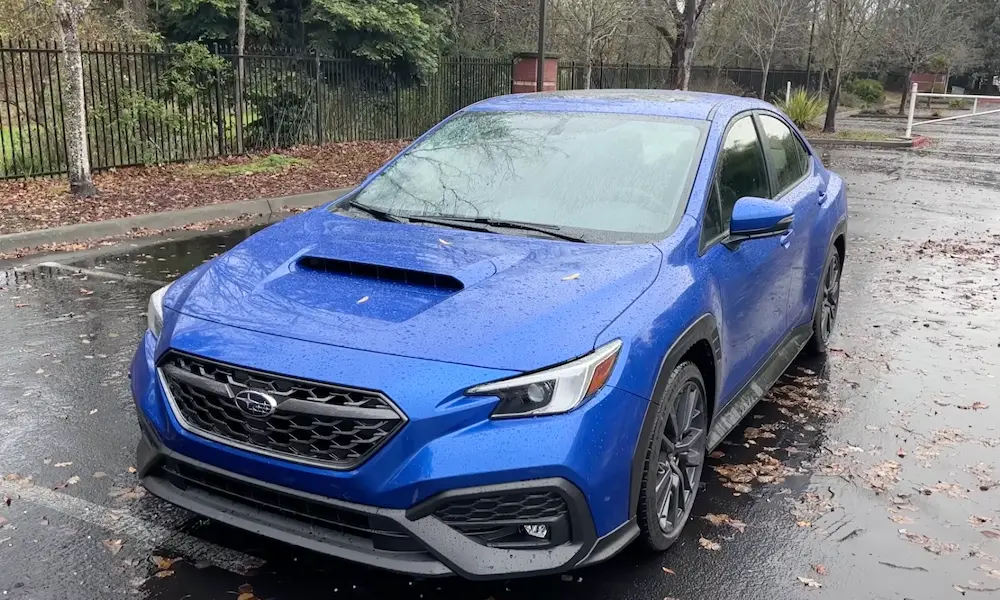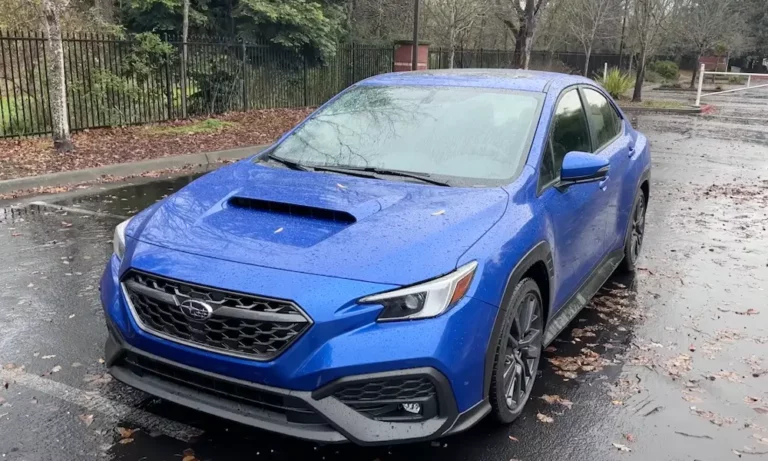
So you’ve got a WRX and you want more. More power, better handling, sharper response — the whole package. The good news? The WRX is one of the most mod-friendly platforms out there. The bad news? It’s also one of the easiest to break if you skip steps. This guide walks you through every major category of Subaru WRX modifications, in the right order, so you build something fast and reliable.
First, Know Which Engine You’re Working With
Before you buy a single part, you need to know if you’re running an EJ or FA engine. These two platforms behave very differently under boost, and the modification approach for each one is completely distinct.
The EJ series (found in older WRXs and STIs) uses port injection, a timing belt, and a single-scroll turbo. It needs more aggressive tuning to overcome turbo lag. The FA series (FA20DIT in 2015–2021, FA24DIT in 2022+) runs direct injection, a twin-scroll turbo, and a dual timing chain. It spools boost as early as 2,000 RPM and responds well to simple airflow upgrades.
| Engineering Feature | EJ Series | FA Series |
|---|---|---|
| Fuel Delivery | Port Injection | Direct Injection |
| Timing Drive | Rubber Belt | Dual Chain |
| Turbo Type | Single-scroll | Twin-scroll |
| Exhaust Headers | Unequal Length | Equal Length |
| Compression Ratio | ~8.2:1–8.5:1 | ~10.6:1 |
| Valvetrain | Bucket-style | Rocker Arm |
One real-world consequence of direct injection on FA motors: carbon builds up on the intake valves because there’s no fuel spray to wash them clean. An air-oil separator and periodic walnut blasting are your defense against this.
Reliability Mods Come First — Always
Here’s where most people go wrong. They tune for power before they protect the engine. Don’t do that.
Install an Air-Oil Separator Immediately
An Air-Oil Separator (AOS) is the single most important reliability modification for any modified WRX. Under high boost, the PCV system pushes oil mist into the intake manifold. That oil lowers fuel octane and causes knock. An AOS catches the vapor, returns oil to the crankcase, and keeps clean air going into combustion. On FA engines, it also slows down intake valve carbon buildup.
Fix the Oiling System Before Track Use
The boxer engine’s horizontal layout makes it sensitive to oil starvation during hard cornering. Oil sloshes away from the pickup tube under high lateral G-forces. On some models, the factory oil pickup tube can crack at the flange — and when that happens, you lose oil pressure instantly and destroy your rod bearings.
Upgrading to a reinforced oil pickup (Killer B Motorsport makes a popular one) and a baffled oil pan keeps oil where it needs to be regardless of how hard you corner. If you’ve got a 2022+ FA24, it’s also worth dropping the oil pan to check for RTV sealant debris near the oil pickup screen — it’s a known factory assembly issue.
Upgrade the Radiator
Factory WRX radiators use plastic tanks that crack under pressure as the car ages. A quality aluminum radiator from Koyo or CSF handles heat more effectively and lasts significantly longer in high-stress environments.
The Stage System: How Power Builds Work
Subaru WRX modifications follow a “stage” framework. Each stage builds on the last, and each one requires an ECU retune to stay safe.
Stage 1: Software First
Stage 1 is primarily an ECU reflash. Factory Subaru tunes are conservative by design — they account for bad fuel and extreme temperatures. A retune via the COBB Accessport smooths the power delivery, fixes the annoying rev-hang on manual transmissions, and unlocks 20–35 whp.
Adding a cold air intake at this stage is common, but there’s a catch. Subarus use a Mass Airflow (MAF) sensor to calculate fueling. Change the intake diameter without retuning the MAF scaling and you risk running lean — which means engine failure. A “Stage 1+ Intake” tune is mandatory if you add an intake.
Stage 2: Exhaust and Intercooler
Stage 2 replaces the factory downpipe (or J-pipe on FA cars) with a high-flow unit. Removing the restrictive catalytic converters right after the turbine lets the turbo spool faster and hold higher boost.
At this power level, the factory intercooler starts struggling. Compressed air heats up fast (adiabatic heating), and once the factory TMIC is heat-soaked, it can’t cool the charge air effectively. An upgraded TMIC or a front-mount intercooler (FMIC) is standard at Stage 2. The FMIC provides better cooling but adds slightly more lag due to the larger intake volume.
| Stage | Main Components | Estimated Power Gain | Key Supporting Mods |
|---|---|---|---|
| Stage 1 | ECU Tune, Drop-in Filter | +20–35 whp | Accessport |
| Stage 1+ | CAI + ECU Tune | +30–45 whp | MAF Recalibration |
| Stage 2 | J-Pipe, Intercooler, Tune | +50–80 whp | High-flow Fuel Pump |
| Stage 2+ E85 | Flex Fuel Kit, LPFP/HPFP | +100–140 whp | Ethanol Content Sensor |
| Stage 3 | Big Turbo, Injectors, Built Block | +150–300 whp | Forged Internals, Head Studs |
E85 and Advanced Fueling
Ethanol has an octane rating around 105 and cools the combustion chamber during the burn. That means more timing, more boost, and significantly more power. The FA24 platform responds especially well to E85.
The trade-off: ethanol requires 30–40% more fuel volume than gasoline. The factory low-pressure fuel pump can’t keep up on full E85. A high-flow LPFP (like the DeatschWerks 340lph unit) is required to run high ethanol blends safely.
Drivetrain and Shifter Feel
The 2015+ WRX switched to cable-actuated shifters, which feel vague and rubbery compared to older rod-shifted cars. There’s a clean three-part fix.
- Shift Stop: A small bracket that removes horizontal slop in 1st and 2nd gear gates
- Shifter Plate: Installed at the transmission, reduces throw by changing the lever ratio — easier install, keeps stock shifter height
- Shifter Bushing: Replaces soft factory rubber for a crisper, more defined engagement
Don’t combine a shifter plate and a short-throw lever without testing first — it can create an overly stiff, notchy shift feel in cold weather.
Pitch Stop Mount Warning for 2015–2017 WRX
A stiffer pitch stop mount significantly reduces engine movement under hard acceleration. But if you own a 2015–2017 VA WRX, installing a stiff aftermarket pitch stop without a Pitch Stop Brace can tear the firewall bracket — and that’s a repair that runs into the thousands. Subaru reinforced the bracket mid-2017, so later cars are less vulnerable.
CVT-Equipped WRX: Keep It Cool
If you’ve got a CVT, heat is your enemy. Excessive temperatures cause chain slip and torque converter damage. A dedicated CVT oil cooler is mandatory for any modified CVT WRX, and most tuners recommend keeping torque under 300–315 lb-ft to protect the transmission long-term.
Suspension: Handling Without Killing the Ride
Lowering Springs vs. Coilovers
Lowering springs drop the car 0.5″–1.0″, tighten turn-in, and cost less. The downside: they’re paired with factory dampers, and if spring rate doesn’t match strut valving, the ride gets bouncy.
Coilovers give you adjustable ride height, spring preload, and damping. High-end units allow corner balancing for perfect weight distribution across all four wheels. The trade-offs are cost and maintenance — threads seize in salty climates, and ride quality is noticeably harsher.
| Suspension Mod | Primary Effect | Best For |
|---|---|---|
| Lowering Springs | Fixed drop, firmer spring | Daily driving, aesthetics |
| Coilovers | Adjustable height + damping | Track, canyon runs |
| Sway Bars | Reduces body roll | Improved cornering, no harshness |
| Roll Center Kit | Corrects geometry | Cars lowered more than 1.5 inches |
Sway Bars: The Underrated Upgrade
A thicker rear sway bar is one of the most effective ways to tune the WRX’s handling balance. It fights the WRX’s natural understeer tendency and helps the car rotate better mid-corner — without wrecking ride quality the way stiff springs can.
Wheel and Tire Fitment
The 2015+ WRX uses a 5×114.3 bolt pattern with a 56.1mm hub bore. Older 2002–2014 WRX models run 5×100, which limits your options for reusing wheels from newer generations.
| Generation | Bolt Pattern | Ideal Offset | Recommended Tire |
|---|---|---|---|
| GD (2002–2007) | 5×100 | +40 to +48 | 225/45R17 |
| GR/GV (2008–2014) | 5×114.3 (STI) | +38 to +45 | 245/40R18 |
| VA (2015–2021) | 5×114.3 | +35 to +38 | 255/35R18 |
| VB (2022+) | 5×114.3 | +38 to +40 | 255/35R18 |
The sweet spot for most VA and VB builds is 18×9.5″ with a +35–+40mm offset. Stick with 18″ — going to 19″ or 20″ adds unsprung weight that hurts both acceleration and braking feel.
Aerodynamics: What Actually Works
A front splitter creates downforce by accelerating airflow under the car, building low-pressure vacuum at the nose. A rear diffuser manages the turbulence exiting from under the chassis. CFD analysis from Verus Engineering shows a quality rear diffuser reduces aerodynamic lift by over 80% on the VA chassis — that’s the difference between a planted rear end and the “floating” feeling at highway speeds.
If you’re doing an STI wing swap, know that the wing adds nearly 50 lbs to the trunk lid. Swap the torsion bars too, or the trunk won’t open properly. Add wing stabilizers to eliminate flutter at speed.
Your Warranty and the Law
The Magnuson-Moss Warranty Act of 1975 makes it illegal for a manufacturer to void your entire warranty just because you added aftermarket parts. But they can deny a specific claim if they prove the modification caused the failure. A tuned turbo that grenades? That’s on you. A failed window motor on a car with a performance exhaust? They can’t touch that claim.
One bonus worth knowing: a quality Stage 1 or Stage 2 tune often improves highway fuel economy by 1–2 MPG by optimizing fuel mapping and removing conservative factory ignition retard. Whether you actually see those gains depends on how hard your right foot works after the tune.
The Right Order of Operations
The WRX is a connected system. Boost without cooling causes heat soak. Power without oil protection causes bearing failure. Lowering without geometry correction causes handling that’s worse than stock.
Build in this order:
- Reliability first — AOS, oil pickup, radiator
- Refinement second — shifter kit, pitch stop, mounts
- Power third — ECU tune, intake, exhaust, intercooler, E85
Follow that sequence and your Subaru WRX modifications will reward you with a car that’s genuinely fast and actually stays together.