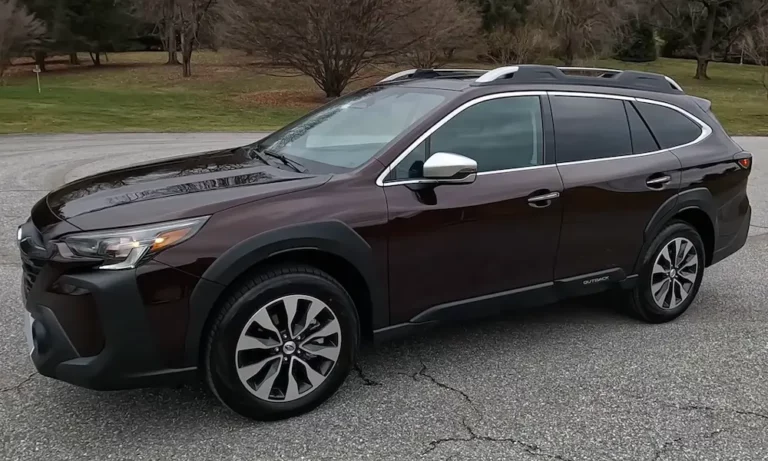
Hearing that rhythmic clicking from your wheel well? Or feeling a shudder through the floor when you pull away from a stop? Your Subaru Outback is probably telling you the CV axle needs attention. This guide walks you through everything — from diagnosing the problem to torquing the final nut — so you know exactly what you’re dealing with before you touch a wrench.
What Does a CV Axle Actually Do?
A CV (constant velocity) axle transfers power from your transmission to your wheels. Simple enough. But here’s the clever part: it does this while the suspension bounces up and down and your wheels turn left and right — all without changing the speed of rotation.
Each axle has two joints:
- Inboard joint — sits near the transmission. It can “plunge” (change length) as the suspension moves, protecting the transmission internals from axial stress.
- Outboard joint — sits at the wheel hub. It doesn’t plunge, but it articulates up to 45 degrees to handle steering angles.
Both joints are packed with molybdenum-based grease and sealed inside a rubber or thermoplastic boot. That boot is everything. Once it tears, the grease flies out, dirt gets in, and the joint grinds itself to pieces fast.
How to Tell Your CV Axle Is Failing
The symptoms are pretty hard to miss once you know what to listen for:
- Clicking or snapping when turning — classic sign of a worn outboard joint
- Shuddering on acceleration — usually points to a failing inboard joint
- Grease splattered inside the wheel well — torn boot, joint exposure, clock is ticking
- Vibration at highway speed — could be axle, but rule out wheel balance first
A quick visual check tells you a lot. Get under the car and look at the CV boots. Grease on the suspension components nearby means the boot is already gone.
Know Your Generation: Roll Pin vs. Snap Ring
This is the most important thing to figure out before you start. Subaru used two completely different axle retention systems across the Outback’s production history, and the tools and methods for each are totally different.
1990–2004: The Roll Pin Design
On these older models, the transmission has a male stub shaft. The inboard axle cup slides over it, and a roll pin (also called a spring pin) locks the two together through a drilled hole.
To remove it, you need a 3/16-inch (5mm) drift punch. Here’s the catch: the hole isn’t perfectly centered on the splines. The axle only fits in one of two orientations, and the pin only aligns in one of them. If the pin won’t go in during reassembly, rotate the axle 180 degrees — you’re out of phase. Also drive the pin out from the non-beveled side and back in from the beveled side. Otherwise you’ll mushroom the ends and create a nightmare.
2005–Present: The Snap Ring Design
Subaru flipped the design for modern models. Now the axle has a male splined shaft that inserts into the differential. An internal C-clip near the spline tip expands into a groove inside the differential side gear to lock it in place.
Removal needs a firm, sharp pry with a pry bar between the axle cup and the transmission case. Installation needs a quick, confident shove to compress the snap ring and seat it fully. A half-seated snap ring means the axle can back out while you’re driving. Don’t rush this step.
Tools You’ll Actually Need
Don’t underestimate this job’s tool requirements. Salt, rust, and age make everything harder than it looks on paper.
| Tool | Spec | What It’s For |
|---|---|---|
| Breaker bar | 3/4″ drive | Breaking the axle nut loose |
| Deep socket | 32mm, 34mm, or 36mm (check your year) | Axle nut removal |
| Drift punch | 3/16″ or 5mm | Roll pin extraction on older models |
| Pry bar | 24″–36″ | Snap ring release, control arm separation |
| Drill + titanium bits | — | Removing broken pinch bolts |
| Torque wrench | 200 ft-lb capacity | Final axle nut and suspension torque |
| Scribe or paint marker | — | Marking strut cam bolt position |
One non-negotiable: use a 6-point socket for the axle nut. A 12-point socket rounds the corners on a nut that’s been on the car for a decade. Use a 3/4″ drive setup for maximum rigidity — 1/2″ drive tools flex too much and lose force before the nut moves.
Front Axle Removal: Two Methods
You need to create clearance between the hub and the transmission to pull the axle out. Two ways to do it:
Method 1: Lower Ball Joint (Preferred)
Disconnect the steering knuckle from the lower control arm at the ball joint. The knuckle swings outward while staying attached to the strut. This keeps your camber settings intact.
Start by removing the 14mm pinch bolt at the base of the knuckle. Fair warning: in any state that uses road salt, this bolt seizes into the cast iron knuckle and snaps often. If it breaks, you’re drilling it out — that’s why the titanium bits are on the tool list. Once the bolt’s out, pry the slot open slightly and tap the ball joint stud free. Now you’ve got room to push the outer axle shaft through the hub.
If the splines are rusted into the hub, use a hub puller. Don’t hammer directly on the axle end — you’ll damage the threads or the wheel bearing.
Method 2: Strut Bolts (Faster, Needs Alignment After)
Remove the two 19mm bolts connecting the knuckle to the strut. The top bolt is an eccentric cam that sets camber. Mark its exact position with a scribe before you pull it. This is only a reference — you’ll still need a proper alignment after reassembly.
With those bolts out, tilt the knuckle outward and pull the axle free from the hub.
Handling the Inboard Side and Protecting Your Differential
Once the outer end is free, you deal with the inboard joint based on your retention type (roll pin or snap ring as covered above).
When the axle comes out of the differential, some fluid will leak. This is a perfect time to inspect the differential seal. If it looks hard, cracked, or shows any weeping, replace it now. A leaking seal leads to low fluid and eventual differential failure — a much worse repair bill than a $15 seal.
Rear Axle: More Links, More Patience
The rear suspension on Outbacks from 2000 onward uses a multi-link setup. More arms means more to disconnect, and more to torque back properly.
Here are the rear torque specs you need:
| Component | Fastener Size | Torque Spec |
|---|---|---|
| Rear axle nut | 32mm | 77–140 ft-lb (year dependent) |
| Lower control arm to knuckle | 19mm | 89 ft-lb |
| Trailing arm to knuckle | 17mm | 67 ft-lb |
| Toe arm to knuckle | 17mm | 44 ft-lb |
| Sway bar end links | 12mm | 34 ft-lb |
Critical point on rear suspension: don’t final-torque the suspension bolts with the car in the air. Snug everything up, lower the vehicle onto its wheels or onto ramps, then do the final torque. The rubber bushings are designed to sit in a neutral position at ride height. Torquing them while the suspension hangs stretches the rubber under constant stress and kills them prematurely.
The Aftermarket Vibration Problem
Here’s something a lot of shops miss. After a Subaru Outback CV axle replacement, some owners notice a new vibration at idle in gear — even though the car drove fine before. The new axle gets blamed, but that’s usually not the real culprit.
Subaru’s horizontally-opposed Boxer engine vibrates in a unique plane compared to inline or V engines. Subaru designs their OEM axles with specific internal geometry to absorb these harmonics. Many aftermarket axles are stiffer — different tripod designs, tighter boots — and they transmit vibration straight into the chassis instead of absorbing it.
Add worn transmission mounts to the mix, and the stiff aftermarket axle becomes a bridge for engine vibration directly into your steering wheel and floor.
The fix many Subaru specialists recommend: source a used OEM axle from a salvage yard and regrease it with fresh OEM-spec boots. You get genuine Subaru joint geometry at a fraction of new part prices.
Choosing Replacement Parts
| Source | Type | Pros | Cons |
|---|---|---|---|
| Subaru OEM | New | Perfect fit, no vibration issues, best durability | Most expensive — often 2–3x aftermarket cost |
| TRQ / Moog | New aftermarket | Good fit, solid warranty, mid-range price | Possible idle vibration on worn mounts |
| Duralast / NAPA | New or remanufactured | Cheap, widely available, lifetime warranty | Variable quality, boot failures reported |
| Salvage OEM | Used | Genuine Subaru joint, very low cost | Unknown history, regrease recommended |
Torque Specs and Final Reassembly
Getting the axle nut torque right matters more than any other step. Too loose and the wheel bearing develops play and fails. Too tight and you crush the bearing races.
Axle Nut Torque by Year
| Model Year | Front Axle Nut Torque |
|---|---|
| 1995–2004 | 137–145 ft-lb |
| 2005–2014 | 162 ft-lb |
| 2015–2025 | 162 ft-lb |
Wheel Lug Nut Torque by Year
| Model Year | Lug Nut Torque |
|---|---|
| 1995–2004 | 58–72 ft-lb |
| 2005–2010 | 74–89 ft-lb |
| 2011–2025 | 89 ft-lb |
Staking the Nut
Once the axle nut is torqued, you need to stake it. The nut has a thin metal collar — hammer it into the keyway groove on the axle shaft. This mechanical lock stops the nut from backing off under heat and vibration. Always use a new axle nut. Staking and un-staking stresses the collar, and a reused nut can crack or fail to hold.
Before reinstalling the wheel, wire-brush the hub face and rotor mounting surface clean. Any rust or debris between those surfaces makes the wheel seat unevenly — and that causes brake pulsation that feels exactly like a bad axle or warped rotor. Save yourself a second diagnosis.
The Subaru Outback CV axle replacement is genuinely doable with the right prep. Know your generation, have the right tools, respect the torque specs, and don’t skip the staking step. Do it properly once, and you won’t be back under this car again for years.