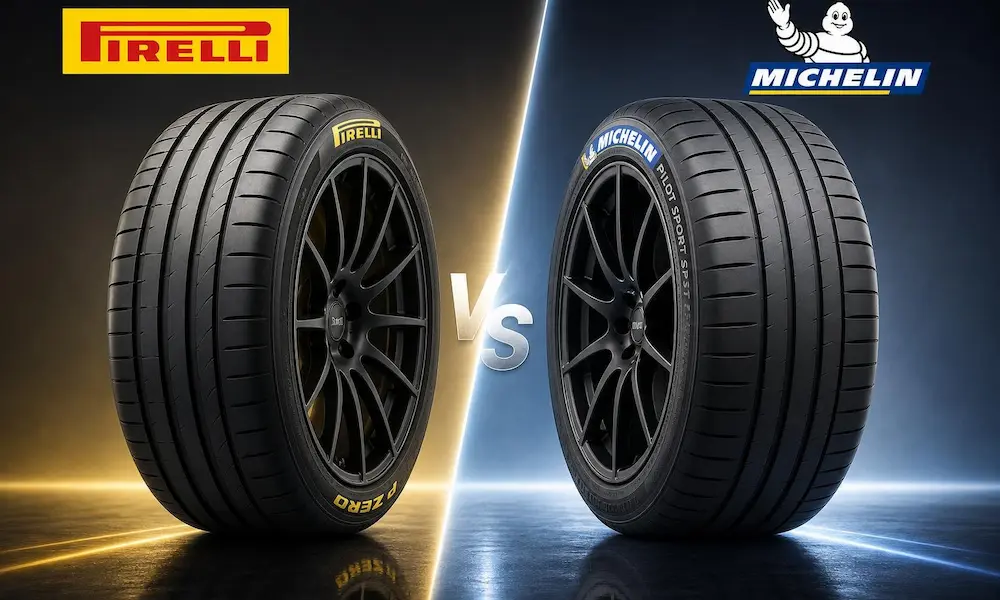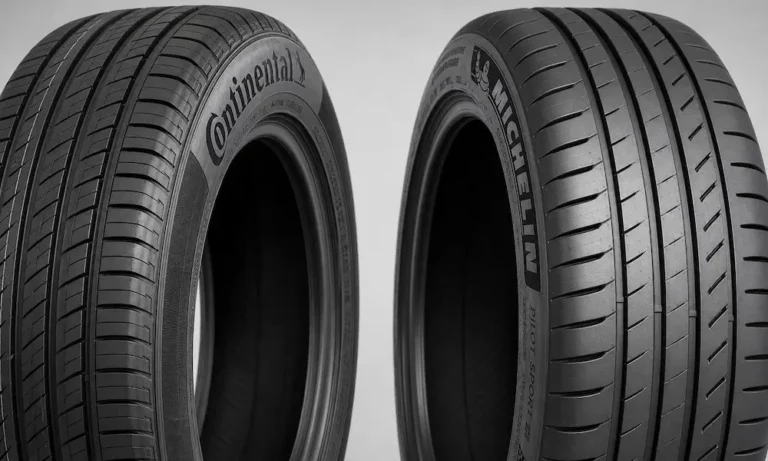
Choosing between Continental tires vs Michelin feels like picking sides in a heated debate. Both brands make excellent tires — but they’re built around very different ideas of what “excellent” means. This guide breaks down every major category so you walk away knowing exactly which brand fits your driving life. Stick around — the performance data might surprise you.
Two Brands, Two Very Different Philosophies
Before comparing tread life and stopping distances, you need to understand what each brand actually stands for.
Michelin, founded in France in 1889, invented the radial tire in 1946 — a technology that changed the industry forever. Their “Total Performance” philosophy says a tire must be great at everything: safety, longevity, and fuel efficiency, all at once. No trade-offs.
Continental, founded in Germany in 1871, views the tire as one piece of a bigger safety system. They build braking systems, chassis components, and electronics too — so their tires are engineered to work with the vehicle. Their focus leans toward precision, active safety, and tactical performance in tough conditions.
In short? Michelin plays the long game. Continental wins the moment.
How Do They Stack Up in the U.S. Market?
The numbers tell an interesting story about where each brand stands today.
According to 2025 U.S. tire market data, Michelin holds 11.7% dollar share — second only to Goodyear at 13.9%. But their unit share is shrinking year-over-year. Meanwhile, Continental is the biggest brand gainer in unit sales, picking up 0.3 percentage points.
Why? Because 52% of tire buyers say competitive pricing drives their decision. Continental charges roughly 80% of what Michelin does while delivering about 90% of the performance. That math works for a lot of drivers.
Michelin’s 16% shelf share — the highest of any brand — shows retailers still believe in them. But Continental is quietly winning over budget-conscious shoppers who do their research online.
| Metric | Michelin | Continental |
|---|---|---|
| Dollar Share (2025) | 11.7% (Ranked #2) | Gaining in unit share |
| Unit Share Trend | Decreasing YoY | +0.3 ppt (Top gainer) |
| Shelf Share | 16% (Market leader) | Strong regional presence |
| Avg. Net Price Paid | $230+ | $180+ |
| Brand Value | $8.8 billion | $3.9 billion |
Continental Tires vs Michelin: All-Season Touring Head-to-Head
This is the category that matters most for everyday drivers. Most Americans want a reliable all-season tire that handles rain, light snow, and 15,000 miles a year without drama.
The main matchup here: Michelin Defender 2 vs. Continental TrueContact Tour.
Tread Life: Michelin Wins — and It’s Not Close
The Michelin Defender 2 vs Continental TrueContact Tour comparison shows a massive gap in projected mileage. Michelin’s real-world estimate sits at 94,400 miles. The Continental clocks in at 59,400 miles. That’s a 58% advantage for Michelin.
For someone driving 15,000 miles a year, the Michelin set lasts over six years. The Continental needs replacing after about four. Michelin’s “MaxTouch Construction” distributes wear evenly across the contact patch — that’s the secret to their longevity lead.
Wet and Snow Safety: Continental Fights Back Hard
Here’s where things flip. In a 60-0 mph wet braking test, the Continental stopped in 153 feet vs. Michelin’s 156 feet. That’s 3 feet shorter — small on paper, but meaningful at speed.
On a wet handling course, Continental scored 6.47/10 for subjective grip vs. Michelin’s 5.82/10. Drivers felt more confident with the Continental in their hands.
Snow performance? Continental dominates. In snow braking from 25 mph, the Continental stopped in 73.4 feet. The Michelin needed 84.5 feet — an 11-foot difference that matters at an icy intersection. Continental also pulls away from a standstill on snow 16% faster.
| Performance Metric | Michelin Defender 2 | Continental TrueContact Tour |
|---|---|---|
| Real-World Mileage | 94,400 miles | 59,400 miles |
| Wet Braking (60-0 mph) | 156 feet | 153 feet |
| Snow Braking (25-0 mph) | 84.5 feet | 73.4 feet |
| Snow Acceleration (0-12 mph) | 36.4 feet | 31.5 feet |
| Ice Braking Distance | 55.0 feet | 53.2 feet |
| Wet Grip Score | 5.82/10 | 6.47/10 |
| UTQG Rating | 840 B/B | 840 A/A |
Bottom line: If you live in the Sun Belt and want tires that last forever, buy the Michelin. If you see real winters, the Continental keeps you safer when it counts.
High-Performance Tires: Who Builds the Better Summer Tire?
Enthusiasts and sports car owners care less about tread life and more about grip, feel, and response at the limit. This is where the Michelin Pilot Sport 4S meets the Continental ExtremeContact Sport O2.
Michelin Pilot Sport 4S: The Refinement King
The Pilot Sport 4S has been the gold standard for high-performance street tires for years. BMW’s M Division and Mercedes-AMG both spec it from the factory — that’s not a coincidence. It uses bi-compound technology that blends dry grip and wet grip without compromise.
Drivers describe the Michelin as “precise and refined.” It handles hard driving but stays quiet and comfortable on the daily commute. It has a UTQG treadwear rating of 300.
Continental ExtremeContact Sport O2: The Wet Weather Challenger
The Continental ExtremeContact Sport O2 carries a slightly higher UTQG rating of 340 — meaning it potentially lasts a bit longer. It’s also consistently praised for outstanding wet traction and hydroplaning resistance.
Continental’s SportContact 7 — their flagship UHP tire — has won 21 of 24 independent tests since its 2022 launch. Continental has seen a 15-percentage-point surge in UHP sales between 2019 and 2024. That growth doesn’t happen without results.
| Feature | Michelin Pilot Sport 4S | Continental ExtremeContact Sport |
|---|---|---|
| UTQG Treadwear | 300 | 340 |
| Steering Character | Precise and responsive | Predictable and stable |
| Ride Comfort | Superior, quieter | Competitive, more feedback |
| Best Application | Track and spirited driving | Wet safety and value |
| Approx. Price Per Tire | ~$275 | ~$250 |
All-Weather Tires: CrossClimate 2 vs. Continental’s Best
All-weather tires carry the Three-Peak Mountain Snowflake (3PMSF) certification. That means certified severe-snow performance without the hassle of seasonal swaps.
Michelin CrossClimate 2: Sets the Bar
The CrossClimate 2’s V-shaped directional tread and “Thermal Adaptive” compound stay flexible in freezing temps and firm in summer heat. Its EverGrip technology keeps wet braking consistent even on worn tread — up to 56 feet shorter than worn competitors in testing.
Projected mileage? 95,000 miles. That’s extraordinary for an all-weather tire.
Continental DWS 06 Plus: The Accessible Alternative
The Continental ExtremeContact DWS 06 Plus offers year-round versatility with an asymmetric tread pattern that allows cross-rotation — useful for extending wear on some vehicles. It delivers class-leading wet stability and costs about 16% less than the CrossClimate 2 in popular sizes.
The trade-off: its projected mileage of 50,000 miles is significantly lower. And it only carries an M+S rating, not full 3PMSF certification.
| Feature | Michelin CrossClimate 2 | Continental DWS 06 Plus |
|---|---|---|
| Winter Certification | 3PMSF (Severe Snow) | M+S (Mud and Snow) |
| Projected Mileage | 95,000 miles | 50,000 miles |
| Wet Performance | Excellent (EverGrip) | Class-leading stability |
| Snow Performance | Benchmark for category | Adequate for light snow |
| EV Range Benefit | +5% more range | Competitive |
Dedicated Winter Tires: VikingContact 7 vs. X-Ice Snow
Drivers in the Snow Belt or Mountain West need more than all-season tires. This matchup — Continental VikingContact 7 vs. Michelin X-Ice Snow — matters for anyone dealing with serious ice and deep snow.
Continental VikingContact 7: The Snow Specialist
Independent testers widely consider the VikingContact 7 the “undisputed champion” of Nordic friction tires. It wins five out of seven major evaluations in head-to-head comparisons. Its balanced performance across snow, slush, and ice — combined with a subjective noise score of 5/5 — makes it the top pick for winter driving overall.
Michelin X-Ice Snow: The Efficiency Leader
Where Michelin pulls ahead is on ice braking (1.91% shorter stops) and rolling resistance. The X-Ice Snow is the most fuel-efficient winter tire in its class — critical for fleet operators and highway commuters who don’t want to sacrifice mpg. It also maintains its performance over more seasons, making it the smarter long-term buy.
| Metric | Continental VikingContact 7 | Michelin X-Ice Snow |
|---|---|---|
| Dry Braking | 2.95% shorter stop | — |
| Wet Braking | 2.04% shorter stop | — |
| Snow Handling | 1.16% faster lap | — |
| Ice Braking | — | 1.91% shorter stop |
| Noise Rating | 5/5 (Quietest) | 3/5 |
| Rolling Resistance | Higher | Best in class |
The Technology Behind Each Brand
Both brands use clever engineering to solve the same problems differently.
Michelin’s standout innovations:
- EverGrip Technology — Grooves that are narrow at the surface and wider at the base, so water evacuation stays consistent as tread wears
- 3D SipeLock — Sipe edges lock together for dry stiffness, then open up to bite into snow and ice
- Acoustic Technology — Polyurethane foam bonded inside the tire reduces cabin noise on luxury vehicles
Continental’s active protection approach:
- ContiSeal — A viscous sealant layer seals punctures up to 5mm on the spot, without affecting ride quality
- ContiSilent — Similar PU foam technology to reduce highway hum
- Active Braking Technology — Tread blocks expand during hard braking to increase the contact patch and shorten stopping distances
What Each Warranty Actually Covers
Warranties matter — especially when tire prices keep climbing. Here’s how the two programs compare.
The Continental Total Confidence Plan includes a 12-month road hazard replacement, three years of roadside assistance (requires online registration), and a standout feature: Emergency Trip Interruption Coverage. If you break down more than 100 miles from home, Continental covers meals and lodging up to $200 per day, with a $500 annual maximum. That’s a genuine perk for road-trippers.
The Michelin Promise Plan matches the 60-day satisfaction trial and three-year roadside assistance. Michelin’s road hazard coverage varies by retailer rather than being built into the plan. Their mileage warranties — often reaching 80,000 miles on the Defender 2 — reflect real confidence in their tread life claims.
| Feature | Continental Total Confidence | Michelin Promise Plan |
|---|---|---|
| Satisfaction Trial | 60 days | 60 days |
| Road Hazard | 12 months (included) | Varies by retailer |
| Roadside Assistance | 3 years (registration req.) | 3 years |
| Trip Interruption | $200/day, $500 max | Not included |
| Standard Warranty | 72 months | 6-year limited |
Continental vs Michelin for Electric Vehicles
EVs are heavier, generate instant torque, and wear tires faster than gas-powered cars. Both brands have adapted — but Michelin currently leads on range.
Testing shows the CrossClimate 2 delivers 13 extra miles per charge compared to the Continental DWS 06 Plus — a 5% efficiency gain. For EV drivers anxious about range, that’s real money over time.
Continental fights back with high-load (HL) rated tires built to handle battery-pack weight, plus low-rolling-resistance compounds in their AllSeasonContact 2 lineup. Their focus on cabin quietness also pairs well with EVs, where road noise becomes far more noticeable without an engine drowning it out.
So Which Brand Should You Actually Buy?
Here’s the honest answer — it depends on your priorities.
Choose Michelin if you:
- Drive high annual mileage and want to replace tires as rarely as possible
- Value ride refinement and want a tire that stays safe even when worn
- Drive an EV and want to maximize range
- Prefer the peace of mind that comes with 133 years of consistent performance and over 100 J.D. Power awards
Choose Continental if you:
- Live in a region with serious winters, heavy rain, or wet roads
- Want premium safety performance without the Michelin price tag
- Need puncture protection built into the tire (ContiSeal)
- Plan to drive the vehicle for three to four years, making the lower initial cost a smarter play
Neither brand makes a bad tire. The real question is whether you’re optimizing for how long your tires last or how well they perform in dangerous conditions. Michelin wins the first debate. Continental wins the second.