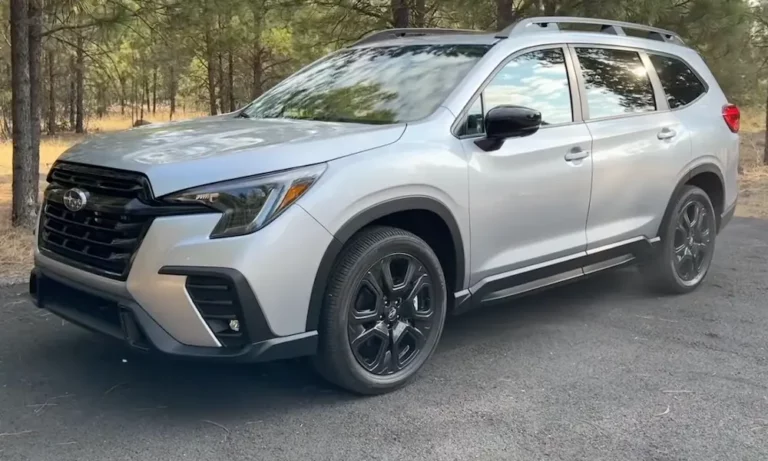
Thinking about towing a camper, boat, or utility trailer with your Subaru Ascent? You’ve got questions — and this guide has answers. We’ll cover the hitch hardware, cooling system, trim differences, maintenance rules, and a few things Subaru really doesn’t want you to ignore. Stick around to the end, because one mistake could cost you a $7,500 transmission.
What Makes the Subaru Ascent Towing Package Tick
The Ascent doesn’t tow 5,000 pounds by accident. Subaru built this capability into the vehicle’s core from day one — not as an afterthought. Three systems work together to make it happen:
- A reinforced structural hitch that replaces the rear bumper beam
- An auxiliary transmission oil cooler that keeps the CVT from overheating
- Trailer Stability Assist that catches sway before you even feel it
Miss any one of these, and you’re either under-equipped or asking for trouble.
The OEM Hitch: Why It’s Not Just a Bolt-On Part
The official Subaru trailer hitch (SKU L101SXC005) is a Class III receiver rated for 5,000 lbs of trailer weight and 500 lbs of tongue weight. But here’s what makes it different from a typical aftermarket hitch — it actually replaces the factory bumper beam entirely.
That’s right. The hitch assembly becomes the structural rear bumper. Subaru engineers designed it this way so the hitch manages crash energy just like the original component it replaced. It’s not just a towing accessory. It’s a safety part.
OEM vs. Aftermarket: What’s the Real Difference?
A lot of Ascent owners wonder whether a cheaper aftermarket hitch gets the job done. Here’s the honest breakdown:
| Feature | OEM Integrated Hitch | Common Aftermarket Hitch |
|---|---|---|
| Mounting Point | Replaces bumper beam | Bolts under frame |
| Crash Performance | Engineered safety component | Ancillary attachment |
| Ground Clearance | Maximized (hidden in bumper) | Reduced (sits 2–3″ lower) |
| Departure Angle | Preserved | Potentially compromised |
| Weight Rating | Validated for 5,000 lbs | Varies by brand |
That 2–3 inch drop with aftermarket hitches matters more than you’d think. Steep driveways, gravel boat ramps, campsite entries — these become scraping hazards fast.
What the Hitch Kit Doesn’t Include
The hitch kit comes with the receiver and mounting hardware. It does not include a ball mount or hitch ball. You’ll need to pick those based on your trailer’s coupler size and height.
The Transmission Cooler: The Real Hero of 5,000-lb Towing
Here’s something most buyers don’t realize: the towing capacity limit on any vehicle isn’t usually about engine power. It’s about how much heat the transmission can shed.
The Ascent’s CVT (Continuously Variable Transmission) uses a heavy-duty steel chain and pulley system. Under towing stress, friction heats the transmission fluid fast. Without a way to cool it down, that fluid breaks down — and a broken-down CVT is an expensive problem.
Why the Old Base Trim Could Only Tow 2,000 lbs
The original Base trim (sold through 2024) lacked the auxiliary transmission oil cooler that every other trim had. Push it to 5,000 lbs and you’d trigger the “AT OIL TEMP” warning light and need to pull over immediately. The cooler isn’t optional equipment on a hard-towing vehicle. It’s the system that makes hard towing possible.
| Capacity Tier | Standard Equipment | Limiting Factor |
|---|---|---|
| 2,000 lbs | Basic radiator cooling | Thermal fluid capacity |
| 5,000 lbs | Auxiliary oil cooler | Structural/suspension limit |
What Happens If You Ignore Fluid Maintenance
Subaru’s own master technicians are clear on this: CVT fluid is the lifeblood of the transmission. Despite the “lifetime fluid” myth, the severe duty schedule — which applies to anyone who tows regularly — calls for fluid inspection and likely replacement.
Transmissions that never get a fluid change often show failure signs between 60,000 and 100,000 miles. Vehicles that get fluid changes every 30,000–40,000 miles regularly hit 200,000+ miles on the original transmission. A fluid service runs about $400. A full transmission replacement? Closer to $7,500.
Trim Levels and Towing Capacity: What Year and Trim You Have Matters
2019–2024: The Two-Tier System
During these years, the hierarchy was straightforward:
- Base trim: 2,000 lbs (no auxiliary cooler)
- All other trims (Premium, Onyx, Limited, Touring): 5,000 lbs with the optional hitch installed
2025–2026: The Clean Slate
Starting in 2025, Subaru dropped the Base trim entirely. The Premium trim is now the entry point, which means every 2025 and 2026 Ascent sold in the US is mechanically capable of towing 5,000 lbs. No more checking whether your trim has the right cooler.
| Model Year | Base Trim Capacity | Premium and Above | Key Change |
|---|---|---|---|
| 2019–2024 | 2,000 lbs | 5,000 lbs | Base trim limits entry buyers |
| 2025 | N/A (discontinued) | 5,000 lbs | Premium becomes the new base |
| 2026 | N/A (discontinued) | 5,000 lbs | Universal 5,000-lb mechanicals |
2025 Trim Lineup at a Glance
All eight 2025 configurations use the same 2.4-liter turbocharged Boxer engine and Symmetrical AWD. Here’s the quick rundown:
- Premium (8-passenger): Second-row bench, cloth seats, 8-way power driver’s seat
- Premium (7-passenger): Captain’s chairs in row two
- Onyx Edition: 20-inch black wheels, StarTex water-repellent upholstery, panoramic moonroof
- Limited (8-passenger): Leather seats, 14-speaker Harman Kardon audio, DriverFocus system
- Limited (7-passenger): Captain’s chairs, heated second-row seats
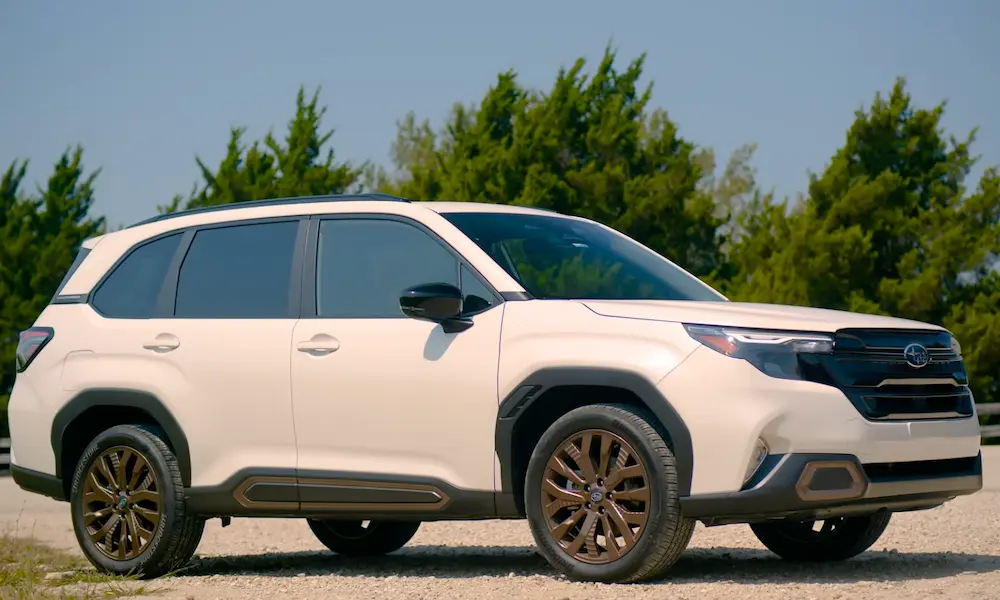
- Bronze Edition: 20-inch bronze wheels, matching interior stitching
- Touring: Nappa leather, ventilated front seats, 360-degree surround-view camera, 120V outlet
- Onyx Edition Touring: Blacked-out Onyx styling meets Touring-level luxury
Every single one tows 5,000 lbs. Choose your trim based on seats and features, not mechanical anxiety.
Wiring: 4-Pin or 7-Pin?
The Ascent comes factory pre-wired behind the rear fascia. Which connector you need depends on your trailer:
- 4-Pin flat connector: For small trailers without electric brakes. Covers taillights, turn signals, and brake lights.
- 7-Pin round connector (H771SXC002): Required for trailers with electric brakes. Adds circuits for trailer brakes, reverse lights, and a constant 12V power line to charge your trailer’s battery while you drive.
Most state regulations require trailer brakes for loads over 1,000 lbs. If you’re running anywhere near 5,000 lbs, you’ll need the 7-pin harness and an aftermarket brake controller. Check the difference between 4-way and 7-way connectors if you’re not sure which applies to your setup.
The Weight Distribution Hitch Rule You Can’t Break
This is the one rule that trips up experienced towers. Subaru explicitly prohibits weight distribution hitches on the Ascent. Full stop.
Weight distribution hitches use spring bars to lever tongue weight forward onto the front axle. On a body-on-frame truck, that’s a practical solution. On a unibody vehicle like the Ascent, those levering forces can exceed what the chassis and hitch mounting points are designed to handle — potentially causing frame distortion or failure.
There’s also a software conflict to consider. The spring bars can mask the physical cues that Trailer Stability Assist uses to detect sway, creating a fight between your mechanical hitch and the vehicle’s electronic safety systems.
If your trailer causes the rear to sag too much, the fix is simple: either redistribute cargo forward in the trailer or choose a lighter trailer. The 500-lb tongue weight limit is the only validated option.
Electronic Safety: Trailer Stability Assist and X-MODE
How Trailer Stability Assist Works
Trailer sway is one of the most dangerous things that can happen on a highway. The Ascent’s Trailer Stability Assist system monitors yaw sensors continuously. The moment it detects rhythmic swaying, it applies individual wheel brakes and cuts engine torque — faster than any human reaction time. It’s standard across all trims.
X-MODE for Off-Pavement Situations
X-MODE handles what Trailer Stability Assist doesn’t — low-speed, slippery terrain. It coordinates five systems simultaneously:
- Engine throttle — softens initial response to prevent wheelspin
- Transmission — holds a lower ratio for maximum pulling power
- AWD coupling — increases front-to-rear torque distribution
- Vehicle Dynamics Control — applies brakes to slipping wheels faster
- Hill Descent Control — holds a constant safe speed downhill without using the brake pedal
Upper trims get Dual-Function X-MODE with separate “Snow/Dirt” and “Deep Snow/Mud” settings. For anyone backing a boat trailer down a wet ramp or pulling out of a soft campsite, this system earns its keep.
Turn Off Blind-Spot Detection When Towing
Radar-based safety features like Blind-Spot Detection and Rear Cross-Traffic Alert can’t see through your trailer. They’ll either throw constant false warnings or stop working entirely. Turn them off before you pull out. The smart rear-view camera on Touring trims is a much better tool for seeing behind a tall trailer anyway.
Towing Maintenance: The Severe Duty Schedule
Subaru officially classifies regular towing as Severe Duty, which triggers a stricter maintenance schedule. Here’s what that means in practice:
| Component | Standard Interval | Severe Duty / Towing Interval |
|---|---|---|
| Engine oil | 6,000 miles | 6,000 miles (strict, no exceptions) |
| CVT fluid | “Lifetime” (inspect only) | Service at 30,000 miles |
| Differential oil | Inspect at 30,000 miles | Replace every 30,000–36,000 miles |
| Brake fluid | 30,000 miles | 24,000–30,000 miles |
| Spark plugs | 60,000 miles | 60,000 miles |
Brake fluid deserves special attention here. A loaded Ascent and trailer can weigh over 10,000 lbs combined. All that mass generates serious heat during braking. Moisture-contaminated brake fluid boils under that heat, which causes brake pedal fade right when you need it most.
Break-In Period: Don’t Skip This Step
If your Ascent is brand new, Subaru requires a 1,000-mile break-in period before towing heavy loads. The engine’s piston rings and cylinder walls are still seating. The CVT components are adjusting to each other. Towing 4,000 lbs in the first 500 miles can cause premature wear and increased oil consumption that follows the vehicle for its entire life. Vary your driving speeds, keep RPMs under 4,000, and hold off on serious towing until you’re past that first 1,000 miles.
How the Ascent Stacks Up Against the Competition
The Ascent’s consistent all-wheel-drive and 5,000-lb towing capacity gives it a real edge in the midsize SUV class:
- Honda Pilot: Matches 5,000 lbs, but only with optional AWD. Front-wheel-drive models top out at 3,500 lbs.
- Toyota Highlander: The V6 hits 5,000 lbs, but the popular hybrid drops to 3,500 lbs.
- Hyundai Santa Fe: Most trims cap at 3,500 lbs. Only the XRT reaches 4,500 lbs.
The Ascent’s advantage is consistency. One engine, one AWD system, one towing capacity across every 2025–2026 trim. There’s no version that surprises you with a lower number at the dealership.
Loading Your Trailer the Right Way
The electronics can only do so much. Proper trailer loading is your first line of defense:
- Place heavy items low in the trailer and just forward of the trailer axle
- Target tongue weight between 8–11% of total trailer weight — too low causes sway, too high overloads the rear suspension
- Never exceed 500 lbs of tongue weight on the Ascent, regardless of trailer size
Get a tongue weight scale if you’re serious about towing. They cost around $30 and take the guesswork out completely.