Ever wondered about the connection between GMC and Chevrolet when shopping for trucks or SUVs? You’ve probably noticed similarities between models like the GMC Sierra and Chevy Silverado, which might make you question if one brand owns the other. Let’s clear up the confusion and explore how these iconic American automakers actually relate to each other.
The Simple Answer: Neither Brand Owns the Other
No, GMC doesn’t own Chevy. And Chevy doesn’t own GMC either. Both brands are divisions of General Motors (GM), one of the world’s largest automotive manufacturers. They’re essentially siblings under the same corporate parent, each with their own identity and market focus.
The General Motors Family Tree
General Motors operates as a parent company to multiple vehicle brands. Its current North American portfolio includes:
- Chevrolet (mass-market vehicles)
- GMC (premium trucks and SUVs)
- Buick (near-luxury vehicles)
- Cadillac (luxury vehicles)
This structure allows GM to target different customer segments without brands directly competing against each other. Instead, each division aims at specific market niches.
The Historical Connection
Understanding how these brands came together helps explain their current relationship.
Chevrolet’s Origins
Louis Chevrolet and William C. Durant founded Chevrolet Motor Company in 1911. Interestingly, Durant had previously founded General Motors in 1908 but lost control of the company to bankers. He established Chevrolet as a separate company and used its success to purchase enough GM stock to regain control of General Motors by 1918.
When Durant brought Chevrolet into GM, it was positioned as the company’s mainstream, affordable brand – a position it still holds today.
GMC’s Beginnings
GMC traces its roots to the Rapid Motor Vehicle Company (founded in 1902) and the Reliance Motor Car Company, both of which William Durant acquired when forming General Motors. These companies were consolidated into the General Motors Truck Company in 1911 and later renamed GMC.
Unlike Chevrolet, GMC has always existed as a GM division, focusing initially on commercial trucks before expanding into consumer vehicles.
Platform Sharing: Why GMC and Chevy Seem Similar
One of the main reasons people wonder if GMC owns Chevy (or vice versa) is the obvious similarity between their trucks and SUVs. This isn’t coincidence – it’s strategic platform sharing.
What Is Platform Sharing?
Platform sharing is when multiple vehicle models use the same basic structural components, engines, transmissions, and technology. The practice allows automakers to:
- Reduce development costs
- Streamline manufacturing
- Achieve economies of scale
- Maintain consistent quality across brands
GMC and Chevy Platform Siblings
Here are some prominent examples of platform sharing between GMC and Chevrolet:
| GMC Model | Chevrolet Model | Shared Platform |
|---|---|---|
| Sierra | Silverado | T1XX |
| Yukon | Tahoe/Suburban | T1XX |
| Terrain | Equinox | D2XX |
| Canyon | Colorado | 31XX |
| Acadia | Traverse | C1XX |
These vehicles share mechanical underpinnings but feature distinct styling, features, and branding. This strategy allows General Motors to efficiently produce vehicles while maintaining separate brand identities.
Brand Differentiation: How GMC and Chevy Differ
Despite sharing platforms, GM has created clear distinctions between GMC and Chevrolet.
Chevrolet: The Everyday American Brand
Chevrolet positions itself as an accessible, mainstream brand with:
- More diverse vehicle lineup (sedans, hatchbacks, trucks, SUVs, sports cars)
- Lower starting prices
- Focus on value and variety
- Marketing that emphasizes reliability and accessibility
A visit to any Chevrolet dealership showroom will reveal everything from economical Spark hatchbacks to high-performance Corvettes – a breadth GMC doesn’t match.
GMC: The Premium Truck and SUV Specialist
GMC has a more focused positioning:
- Trucks and SUVs only (no cars or small crossovers)
- Premium materials and finishes
- “Professional Grade” branding
- Higher starting prices
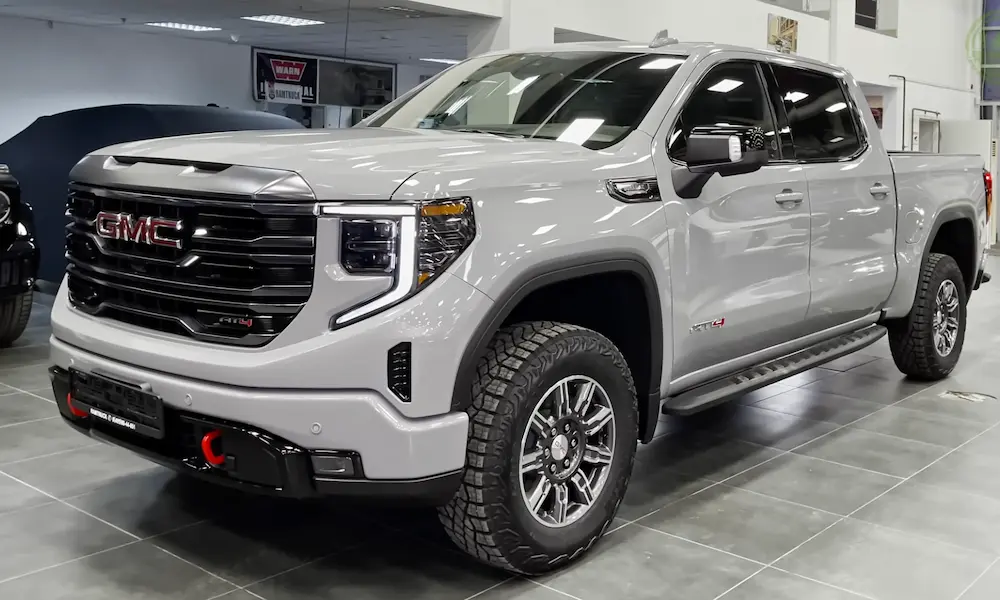
- Upscale Denali and AT4 sub-brands
GMC’s exclusivity is most evident in its Denali sub-brand, which offers luxury features like higher-grade leather, real wood trim, and advanced technology packages.
Price and Positioning Differences
The price difference between comparable GMC and Chevrolet models tells the story of their market positioning.
| Vehicle Type | GMC Model & Starting MSRP | Chevrolet Model & Starting MSRP | Price Difference |
|---|---|---|---|
| Full-size Truck | Sierra: $37,200 | Silverado: $35,600 | $1,600 |
| Full-size SUV | Yukon: $57,400 | Tahoe: $54,200 | $3,200 |
| Mid-size Truck | Canyon: $36,900 | Colorado: $29,200 | $7,700 |
| Compact SUV | Terrain: $30,100 | Equinox: $26,600 | $3,500 |
These price premiums reflect GMC’s more upscale position in the marketplace and justify the brand’s existence alongside Chevrolet.
Manufacturing Integration
Adding to the confusion around ownership, GMC and Chevrolet vehicles are often produced at the same assembly plants:
- Fort Wayne Assembly (Indiana) builds both Silverado and Sierra trucks
- Wentzville Assembly (Missouri) produces Colorado and Canyon trucks
- Arlington Assembly (Texas) manufactures Tahoe, Suburban, and Yukon SUVs
This manufacturing integration further demonstrates how these brands operate as divisions within the same parent company rather than one owning the other.
The Marketing Approach: Different Messages for Different Buyers
GM has developed distinct marketing strategies for each brand to appeal to different consumer segments.
Chevrolet’s Approach
Chevy emphasizes:
- Family-friendly features
- Value proposition
- Variety of options for different needs
- “Find New Roads” campaign focusing on adventure and possibilities
GMC’s Approach
GMC focuses on:
- Premium quality and craftsmanship
- “Professional Grade” positioning
- Rugged capability with refined features
- Appeal to successful professionals and affluent buyers
These different marketing approaches help create separation between the brands despite their shared corporate parent and similar products.
The Global Perspective
Internationally, the relationship between GMC and Chevrolet varies:
- GMC operates primarily in North America and the Middle East
- Chevrolet has a much broader global presence
- In many international markets, Chevrolet serves as GM’s only truck and SUV brand
- Some GMC models are sold as Chevrolets in certain countries
This global strategy further demonstrates that neither brand owns the other – they’re strategic tools used by General Motors for different markets and customer segments.
Why This Corporate Structure Matters to Buyers
Understanding the relationship between GMC and Chevy offers practical benefits for vehicle shoppers:
- Cross-shopping opportunities: You can compare similar models from both brands to find the best fit for your needs and budget
- Maintenance advantages: Parts compatibility and shared service networks mean easier maintenance
- Resale considerations: GMC vehicles typically command higher resale values due to their premium positioning
- Feature selection: Identifying which brand offers the specific features you prioritize
For instance, if you want a basic work truck, Chevrolet likely offers a more affordable option. If premium interior materials and distinctive styling matter more, GMC might justify its higher price point.
The Future of GMC and Chevrolet Under General Motors
Looking ahead, GM has announced plans to transition to an all-electric future, with both GMC and Chevrolet playing key roles:
- GMC has launched the Hummer EV and will expand electric offerings
- Chevrolet offers the Bolt EV/EUV and is introducing electric versions of the Silverado, Equinox, and Blazer
- Both brands will continue sharing platforms while maintaining distinct identities
This electric transformation reinforces that both brands will remain separate divisions under GM’s umbrella, rather than one owning the other.
The Bottom Line on GMC and Chevy Ownership
So, does GMC own Chevy? No. Both are divisions of General Motors, operating as sister brands with distinct market positions. They share technology, platforms, and manufacturing facilities while maintaining separate identities targeting different customer segments.
This corporate structure allows GM to maximize its market coverage without unnecessary competition between its own brands. Understanding this relationship helps shoppers make more informed decisions when considering vehicles from either brand.
Next time someone asks you if GMC owns Chevy, you’ll have the full story to share!