Got a misfire code, a tune-up coming up, or just swapped into a Ford platform from a GM background? The Ford 4.6 firing order trips up a lot of people — and getting it wrong can destroy your catalytic converters in minutes. This guide breaks down everything you need: the firing sequence, cylinder numbering, ignition systems, and how to diagnose problems fast.
What Is the Ford 4.6 Firing Order?
The Ford 4.6 firing order is 1-3-7-2-6-5-4-8.
This sequence applies to every version of the 4.6-liter Modular V8 — whether it’s a two-valve, three-valve, or four-valve dual overhead cam setup. It doesn’t change between the Mustang GT, F-150, Crown Victoria, or Lincoln Navigator. The firing order stays the same.
Ford picked this specific sequence to spread combustion events evenly across the crankshaft. That balance prevents torsional twisting, protects the main bearings, and gives the engine its smooth idle. It’s why well-maintained 4.6 engines routinely pass 250,000 miles in fleet service.
How Ford Numbers the Cylinders (And Why It’s Different)
Here’s where most people get confused — especially technicians coming from GM or Chrysler backgrounds.
Ford uses a sequential, bank-by-bank numbering system. Stand at the front of the vehicle and look toward the engine. Ford numbers the passenger side cylinders first, front to back, then the driver side cylinders, also front to back.
Passenger side (right side):
- Cylinder 1 — front
- Cylinder 2 — second position
- Cylinder 3 — third position
- Cylinder 4 — rear
Driver side (left side):
- Cylinder 5 — front
- Cylinder 6 — second position
- Cylinder 7 — third position
- Cylinder 8 — rear
GM and Chrysler engines alternate odd numbers on the driver side and even numbers on the passenger side. Ford doesn’t do that. If you cross those two systems in your head, you’ll route wires to the wrong cylinders and the engine won’t run.
Bank 1 vs. Bank 2 on the Ford 4.6
Bank 1 always lives on the same side as cylinder 1. On the Ford 4.6, that’s the passenger side.
- Bank 1 = Passenger side, cylinders 1–4
- Bank 2 = Driver side, cylinders 5–8
This matters every time you read a diagnostic trouble code. A P0304 misfire? That’s cylinder 4 — passenger side, rear position. A Bank 2 catalyst efficiency code? Start looking at the driver side exhaust and the spark delivery on cylinders 5–8.
Ford vs. GM vs. Chrysler: Cylinder Mapping at a Glance
| Engine Platform | Numbering Method | Bank 1 Location | Firing Order |
|---|---|---|---|
| Ford Modular 4.6L V8 | Sequential per bank | Passenger side | 1-3-7-2-6-5-4-8 |
| GM LS V8 | Alternating left to right | Driver side | 1-8-7-2-6-5-4-3 |
| Chrysler Hemi V8 | Alternating left to right | Driver side | 1-8-4-3-6-5-7-2 |
| Ford Coyote 5.0L V8 | Sequential per bank | Passenger side | 1-5-4-8-6-3-7-2 |
Note that even the 5.0 Coyote uses a different firing order than the 4.6 Modular. Don’t assume they’re the same just because both are Ford V8s.
The Early Ignition System: Waste Spark Coil Packs (1991–1998)
Older 4.6 engines — think 1996–1998 Mustang GT, early F-150, and mid-90s Crown Victoria — use a dual coil pack waste spark ignition system. Two large coil packs mount near the front timing cover. Each pack has four wire towers but only two internal coils.
The system fires companion cylinders simultaneously. One cylinder is on the compression stroke. Its companion is on the exhaust stroke at the same moment. Both spark plugs fire at once — the compression cylinder does the work, while the companion wastes a harmless spark into burnt exhaust gases.
Here are the companion cylinder pairs for the 4.6:
| Coil Pack Location | Cylinders Served | Companion Pairings |
|---|---|---|
| Passenger side coil pack | 1, 6, 3, 5 | 1 paired with 6 / 3 paired with 5 |
| Driver side coil pack | 4, 7, 8, 2 | 4 paired with 7 / 8 paired with 2 |
When you replace these coil packs, be careful. Many aftermarket packs don’t have terminal numbers molded into the housing like the OEM parts do. Tag every wire with tape before you pull anything off. Swap wires to the wrong towers and the engine will backfire, stumble badly, or refuse to start.
Wire Routing Tips for Waste Spark Systems
- Remove one wire at a time. Replace it before touching the next one.
- Label everything first. Masking tape and a marker take 90 seconds and save hours of frustration.
- Apply dielectric grease inside the boot before seating each wire on the plug.
- Separate parallel wires. Two high-voltage wires running parallel and touching each other can trigger inductive cross-fire — one wire fires the other by magnetic field alone. Use the factory wire looms and separators.
- On 1996–1998 Mustang GTs, pull the cold air intake tube and filter housing to reach the passenger side plugs. The shock tower eats your hand clearance if you don’t.
The Modern Ignition System: Coil-On-Plug (1999 and Later)
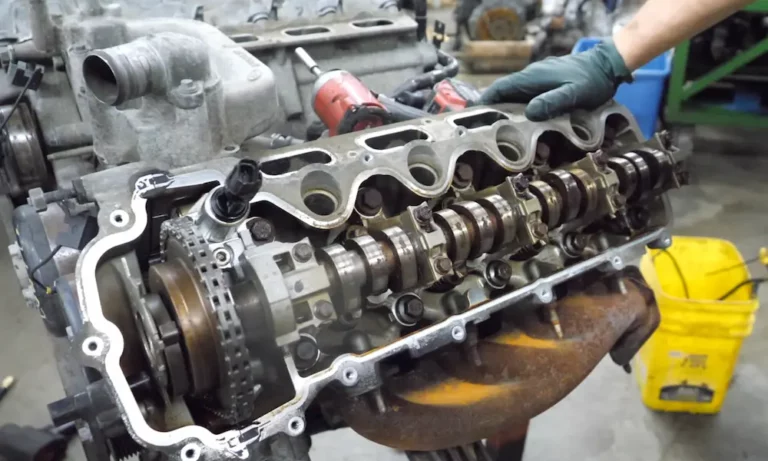
Starting with the 1999 Mustang GT, Ford ditched the coil packs and moved to a Coil-On-Plug (COP) system. One small coil sits directly on top of each spark plug, mounted through the valve cover with a single fastener.
This change eliminates long spark plug wires entirely. No wire resistance. No electromagnetic cross-fire between parallel wires. The engine computer controls each coil independently, which means it can:
- Retard timing on one specific cylinder if the knock sensor detects pre-ignition
- Optimize coil dwell time based on engine load and RPM
- Deliver a hotter spark under hard acceleration without affecting other cylinders
Despite the hardware change, the firing order stays exactly the same: 1-3-7-2-6-5-4-8. The computer just sequences eight individual coils instead of two coil packs.
The 2005+ three-valve Mustang GT uses longer COP assemblies that reach deep through redesigned valve covers. The four-valve SVT Cobra transitioned from wire-fed coil packs to COP as well. Same firing sequence across all of them.
Diagnosing Misfires Using the Firing Order
A misfiring cylinder punches unburnt fuel straight into the exhaust. That fuel hits the hot catalytic converter substrate and ignites. Your cats can melt within minutes. Don’t ignore a flashing check engine light.
Reading P0300 Series Misfire Codes
| Diagnostic Code | Meaning |
|---|---|
| P0300 | Random or multiple cylinder misfire — check vacuum leaks, fuel pressure |
| P0301–P0308 | Misfire in cylinder 1 through 8 respectively |
| P0351–P0358 | Ignition coil circuit malfunction for cylinders 1 through 8 |
Map the cylinder number back to the engine layout and you know exactly where to look. P0304 = cylinder 4, passenger side rear. P0306 = cylinder 6, driver side second position.
Testing Coils With a Multimeter
Pull the coil and test both windings:
- Primary winding: Probe across the two low-voltage terminals in the connector. A healthy factory coil reads 0.3 to 1.0 ohms. Open circuit (infinite resistance) or short (zero ohms) both mean the coil is dead.
- Secondary winding: Probe between the high-voltage output terminal and a primary pin. Factory spec is approximately 5,500 ohms. High-performance aftermarket coils often test between 8,500 and 13,700 ohms due to their aggressive winding ratios.
The Infrared Thermometer Trick
No scanner? No problem. Let the engine idle, then point a non-contact infrared thermometer at each exhaust manifold runner. A dead cylinder acts like an air pump — its runner runs hundreds of degrees cooler than the others. Find the cold runner, match it to the sequential cylinder numbering layout, and you’ve isolated your problem without codes.
Romeo vs. Windsor: Why the Block Origin Matters
Ford built 4.6 engines at two plants: the Romeo Engine Plant in Michigan and the Windsor Engine Plant in Ontario, Canada. The firing order is identical. But many physical parts don’t interchange between them.
Key differences include:
- Valve cover bolt patterns differ
- Front timing cover bolt patterns differ
- Romeo engines use bolt-on camshaft gears
- Windsor engines use pressed-on camshaft gears
Check the eighth character of your VIN or look for casting marks on the block before ordering valve covers, timing components, or anything that interfaces with the spark plug and coil hardware. Getting the wrong gasket set because you assumed both plants built identical engines wastes money and time.
Oxygen Sensors and Bank Identification
Your O2 sensors organize themselves around the same bank logic as the firing order.
- Bank 1, Sensor 1 — upstream passenger side, before the catalytic converter. Controls fuel trim for cylinders 1–4.
- Bank 1, Sensor 2 — downstream passenger side, after the catalytic converter. Monitors catalyst efficiency.
- Bank 2, Sensor 1 — upstream driver side, before the cat. Controls fuel trim for cylinders 5–8.
- Bank 2, Sensor 2 — downstream driver side, after the cat.
When the PCM flags a catalyst efficiency code on Bank 1, you know to inspect the passenger side converter and check spark delivery on cylinders 1 through 4. The firing order gives you the roadmap. The bank designation tells you which side of the engine to walk to.
Two-Valve, Three-Valve, Four-Valve: What Changes (And What Doesn’t)
The 4.6 went through three distinct valvetrain configurations over its production life. Here’s what that means for service work:
- Two-valve (1991–2004): Single overhead cam per head. Early heads (pre-1999) flow less air. Post-1999 Performance Improved heads can be bolted onto earlier blocks for a nice compression bump. Firing order: 1-3-7-2-6-5-4-8.
- Three-valve (2005–2010): Variable cam timing, two intake valves and one exhaust valve per cylinder. The redesigned valve covers require longer COP assemblies. Variable valve timing phasers don’t change the firing order.
- Four-valve DOHC (Lincoln Mark VIII, SVT Cobra, Mercury Marauder): Two cams per bank, four valves per cylinder, higher redline, significantly more power. Firing order: still 1-3-7-2-6-5-4-8.
The Ford Modular platform evolved constantly, but the combustion sequence never moved. Master the 1-3-7-2-6-5-4-8 firing order and the passenger-side-first cylinder numbering, and you’re equipped to handle any version of this engine.