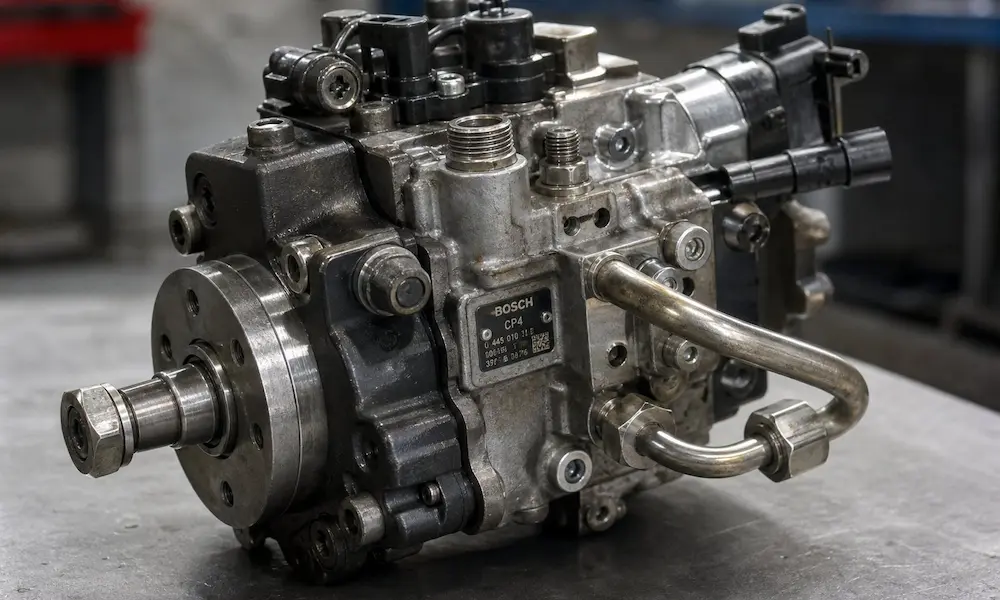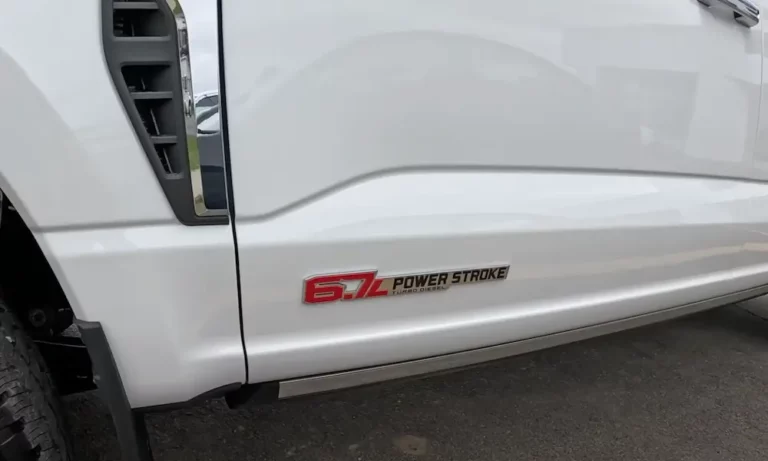
Your Ford 6.7 Power Stroke has a ticking time bomb buried in its engine valley. The Bosch CP4 high-pressure fuel pump fails at alarming rates in the US — and when it goes, it takes your injectors, fuel rails, and tank with it. A ford 6.7 disaster prevention kit is the smartest $400 you’ll ever spend. Keep reading to understand exactly why — and which kit actually protects you.
Why the CP4 Pump Is a Disaster Waiting to Happen
Ford introduced the 6.7 Power Stroke in 2011 across the F-250, F-350, F-450, and F-550 Super Duty lineup. It’s a genuinely impressive diesel engine. But Ford chose the Bosch CP4 high-pressure fuel pump to feed it, and that decision has cost thousands of owners dearly.
Here’s the core problem: Bosch engineered the CP4 for European diesel fuel. European fuel carries far more natural lubrication than what’s available at American pumps. In the US, Ultra-Low Sulfur Diesel regulations stripped sulfur from highway diesel to cut emissions — which was great for the environment but terrible for the CP4.
The refining process that removes sulfur also strips the fuel of naturally occurring nitrogen and oxygen compounds. Those compounds are what gave diesel its lubricity. Without them, the fuel can’t maintain the microscopic fluid film the CP4’s internals desperately need.
The Numbers That Tell the Whole Story
The diesel industry measures fuel lubricity through a standardized High Frequency Reciprocating Rig test. A steel ball rubs against a steel disk submerged in diesel fuel. The resulting wear scar diameter tells you how protective the fuel actually is.
| Regulatory Standard | Region | Max Wear Scar Diameter | CP4 Risk Level |
|---|---|---|---|
| EN 590 | European Union | 460 microns | Low — aligns with Bosch design specs |
| ASTM D975 | United States | 520 microns | High — exceeds safe operating limits |
| World Wide Fuel Charter | Global Recommendation | 400 microns | Minimal metal-to-metal wear |
Bosch designed the CP4 around the 460-micron European standard. In Europe, CP4 failure rates stay below 1%. In the US, where fuel legally reaches 520 microns of abrasiveness, failure rates hit 7%. That’s not a coincidence — that’s physics.
How the CP4 Destroys Itself (and Everything Around It)
Understanding the failure sequence makes it crystal clear why a containment system is non-negotiable.
Inside the CP4, high-pressure pistons are driven by a rotating camshaft through roller lifters called tappets. These tappets ride the cam lobes smoothly — but only when a fluid film separates metal from metal. The pump has no dedicated oil circuit. Diesel fuel is the only lubricant.
When the fuel film breaks down — from low lubricity, aeration, or water contamination — the tappet starts to slide instead of roll. Because nothing mechanically prevents the piston from rotating in its bore, the tappet rotates 90 degrees. Now its edge slams into the cam lobe at a perpendicular angle instead of rolling smoothly over it.
Metal grinds on hardened metal. Fine steel shavings, microscopic fragments, and abrasive dust pour into the fuel pooling in the pump’s crankcase.
The Contamination Cascade
This is where a single pump problem becomes a total fuel system catastrophe.
In the factory configuration, the same fuel that lubricates the crankcase flows directly up into the high-pressure heads. The pump then pressurizes this metallic slurry to tens of thousands of PSI and injects it straight into the fuel rails and injectors. Simultaneously, excess fuel carries debris through the return circuit and back into the main fuel tank.
Modern fuel injectors operate on tolerances measured in fractions of a micron. They simply can’t survive this. The shrapnel scores internal passages, sticks pintles open, and destroys each injector in seconds.
| Component | Damage Mechanism | Required Action |
|---|---|---|
| High-Pressure Fuel Pump | Internal cam and tappet disintegration | Total replacement |
| All Eight Fuel Injectors | Precision nozzles scored by metal debris | Total replacement |
| High-Pressure Fuel Rails | Abrasive damage; trapped particulate matter | Total replacement |
| High-Pressure Fuel Lines | Internal abrasion and contaminated fittings | Total replacement |
| Low-Pressure Lift Pump | Contaminated by returning debris | Total replacement |
| Primary Fuel Tank | Metallic dust coating internal baffles | Intensive flushing or replacement |
The average repair invoice runs $8,000 to $12,000, with heavy commercial configurations exceeding $15,000. The truck typically sits in the shop for two to three weeks.
Warning Signs You Can’t Ignore
Many CP4 failures strike without warning. But some trucks do show early symptoms worth knowing.
- Hard starts and long cranking times — the pump struggles to build adequate rail pressure
- Sudden power loss under load — injectors clogging with preliminary debris
- Rough or surging idle — erratic fuel pressure regulation
- Metallic ticking from the engine valley — tappets striking cam lobes perpendicularly
- Metallic glitter inside the fuel filter housing — the most definitive visual confirmation
Your engine control module will also flag specific trouble codes. Watch for P0087 (fuel rail pressure too low), P0088 (fuel rail pressure too high), P0191, and P0193 — all pointing to a struggling or failing CP4 pump.
What a Ford 6.7 Disaster Prevention Kit Actually Does
Here’s something important to understand upfront: a ford 6.7 disaster prevention kit doesn’t prevent the CP4 from wearing out. The pump will still fail eventually. What the kit does is contain the damage so that a failing pump only destroys itself — not your $8,000 fuel system.
The key is rerouting the fuel to break the contamination pathway.
How the Bypass Rerouting Works
In stock form, crankcase fuel flows directly up into the high-pressure pumping heads. A bypass kit intercepts that pathway and splits it into two isolated circuits.
Circuit 1 — Clean Fuel Supply: A precision-machined billet aluminum adapter block mounts directly to the top of the CP4, beneath the fuel control actuator. This block pulls fresh, fully filtered fuel straight from the primary fuel filter and feeds it independently to the metering unit and high-pressure heads. Clean fuel reaches the injectors — completely bypassing the contaminated crankcase.
Circuit 2 — Isolated Crankcase Evacuation: The original supply line still feeds the crankcase to maintain lubrication. But the adapter block permanently seals the internal vertical passage that previously connected the crankcase to the high-pressure heads. Crankcase fuel now exits through a new dedicated return line — straight to a bypass filter — never touching the rails or injectors.
Why the Return Filter Is Non-Negotiable
Without a return-side filter, contaminated crankcase fuel flows back into the main fuel tank, coating the internal baffles with metallic sludge and destroying the lift pump. Second-generation bypass kits route that crankcase return through a dedicated high-efficiency filter — a quarantine zone that traps all metallic debris before it reaches the tank.
The result? If the CP4 fails on a truck with a properly installed bypass kit, the repair involves replacing the pump, swapping the bypass filter, and flushing a short section of hose. Your injectors, rails, and tank survive completely intact.
Comparing the Best Ford 6.7 Disaster Prevention Kits
Not all kits are equal. Here’s how the leading options stack up.
S&S Diesel Motorsport Gen 2.1
S&S Diesel was founded by former Bosch fuel system engineers and pioneered the CP4 bypass concept. Their Gen 2.1 kit is the benchmark most aftermarket options are measured against.
The defining feature is where the fuel split happens. S&S moved it 25 inches away from the pump, not just one inch as in older designs. That distance prevents back-feeding contamination into the clean supply line if a massive failure creates a pressure restriction. The return-side filter uses a commercially available Donaldson spin-on element rated at 9 microns with 99% efficiency. Fuel connections use OE-style quick-connect nylon fittings — no line cutting, no compression fittings that vibrate loose. The kit also carries a CARB executive order, making it 50-state legal without engine software modifications.
SPE Motorsport Disaster Prevention 2.0
SPE’s kit takes a different approach with its patented ExoFilter system. Instead of a disposable spin-on element, it uses a washable 20-micron stainless steel mesh screen inside a billet aluminum housing with a clear sight-glass lid. You can see if metallic debris is present without cracking a fitting or spilling fuel.
The real standout feature is an integrated pressure sensor that plugs into the factory wiring harness. If a CP4 failure clogs the 20-micron screen instantly, the sensor detects the restriction and alerts the driver in real time — letting them shut down the engine immediately to stop further debris circulation. The fuel lines use custom-molded factory-style push-on nylon, keeping the engine bay looking completely stock.
Budget and Generic Options
EGR Performance and similar companies offer budget-friendly kits in the $70–$190 range that operate on the same fundamental principles. Reputable budget options can offer basic protection for price-sensitive owners.
However, the lowest-tier generic kits found on broad e-commerce platforms carry real risks: cast aluminum blocks that warp and leak under pressure, rubber hose with screw-type clamps that loosen from diesel vibration, and unrated filtration media that lets micron-level metallic dust pass straight through to the tank.
| Feature | S&S Gen 2.1 | SPE Motorsport 2.0 | Generic Budget Kits |
|---|---|---|---|
| Return Filtration | 9-micron Donaldson spin-on | 20-micron washable stainless | Varies — often unrated |
| Fuel Line Connections | OE-style quick connects | Molded OE-style push-on nylon | Cut rubber with clamps |
| Visual Monitoring | Open filter to inspect | Clear sight-glass lid | None |
| Electronic Sensor | No | Yes — integrated clog detection | No |
| Emissions Status | CARB compliant, 50-state legal | 50-state compliant | Varies widely |
| Average Cost | ~$400 | ~$400 | $70–$190 |
Additional Layers of Protection Worth Stacking
A ford 6.7 disaster prevention kit is your primary defense. These additions strengthen it further.
Fuel Lubricity Additives
Since poor fuel lubricity is the root cause, addressing it chemically at every fill-up makes direct sense. Premium additives from brands like Archoil use advanced lubrication compounds that coat the CP4’s internal metal surfaces. Independent HFRR testing shows targeted additives can drop the wear scar diameter of base US diesel from a damaging 614 microns down to approximately 347 microns — well inside Bosch’s safe operating window.
Low-Pressure Filtration Upgrades
Systems like the FASS Titanium Signature Series provide advanced external filtration rated down to 2 microns before fuel ever reaches the CP4. Critically, they also remove entrained air from the fuel supply. Aeration is a primary trigger for tappet rotation — eliminating air bubbles keeps a solid liquid column feeding the pump at all times.
The Exergy System Saver
For budget-constrained owners, Exergy’s upgraded inlet metering valve replaces the factory’s flimsy 80-micron plastic screen with a dual-layer stainless steel screen rated at 10 or 25 microns. If the crankcase starts shedding metal, this fine screen deliberately clogs, starving the high-pressure heads and stalling the engine fast. It reportedly increases injector survival rates by over 85% by cutting the contamination window dramatically.
The DCR Pump Conversion: The Permanent Fix
If you want to eliminate the CP4 entirely, S&S Diesel’s DCR pump conversion replaces the factory pump with a heavy-duty two-piston unit built on a commercial-grade design. The DCR uses pressure-lubricated eccentric drive technology with captured internal bushings — no free-floating tappets. It tolerates US low-lubricity diesel without self-destructing.
The DCR also delivers 1,250 cubic millimeters of fuel per revolution, which is 25% more capacity than the factory CP4. It’s a direct drop-in replacement that requires no custom tuning or software changes. At roughly $2,400 in hardware alone, it’s not cheap — but it’s a permanent cure, not a containment strategy.
Installing Your Bypass Kit: What to Expect
Installing a ford 6.7 disaster prevention kit requires moderate-to-high mechanical skill. The CP4 sits buried under the intake manifolds, so accessing it takes time and patience.
You’ll need to remove the air intake tubing from the filter housing to the turbocharger inlet, then pull the upper plastic intake manifold secured by 15 eight-millimeter bolts. Several of these bolts hide near the firewall and need quarter-inch drive tools with universal joints to reach. After that, the lower cast aluminum intake manifold comes out — but move carefully here, as the plastic crankcase breather hoses become extremely brittle with age and heat cycling and shatter easily.
Once the pump is exposed, cleanliness is everything. Blow out the engine valley with compressed air and wipe down surrounding surfaces with brake cleaner before opening any fuel connections. A single speck of shop grit entering an open fuel line can destroy the precision components you just installed the kit to protect.
Before fitting the new bypass block, visually inspect the factory metering screen. If you see metallic glitter, the pump is already failing — install the bypass kit, but budget for a new CP4 immediately.
Torque the actuator down to 60 inch-pounds. Push quick-connect fittings until you hear an audible click, then tug gently to confirm a lock. Route all new hoses away from EGR components and secure them with zip-ties to prevent chafing against hot surfaces.
The Smart Strategy for 6.7 Power Stroke Owners
The CP4 failure epidemic isn’t a mystery. It’s a documented, predictable consequence of installing a European pump in an American fuel environment — then letting them meet without protection.
For most 6.7 Power Stroke owners, the layered defense looks like this:
- Install a premium bypass kit (S&S Gen 2.1 or SPE Motorsport 2.0) immediately
- Add a lubricity additive at every fill-up to push fuel quality back toward Bosch’s design specs
- Upgrade to a FASS-style filtration and lift pump system if you tow heavily or log high miles
- Consider the DCR conversion when the CP4 eventually needs replacement anyway
A $400 bypass kit protecting an $8,000–$15,000 fuel system is one of the most straightforward value propositions in diesel ownership. The pump will wear. The question is whether it takes everything else with it — or fails alone.