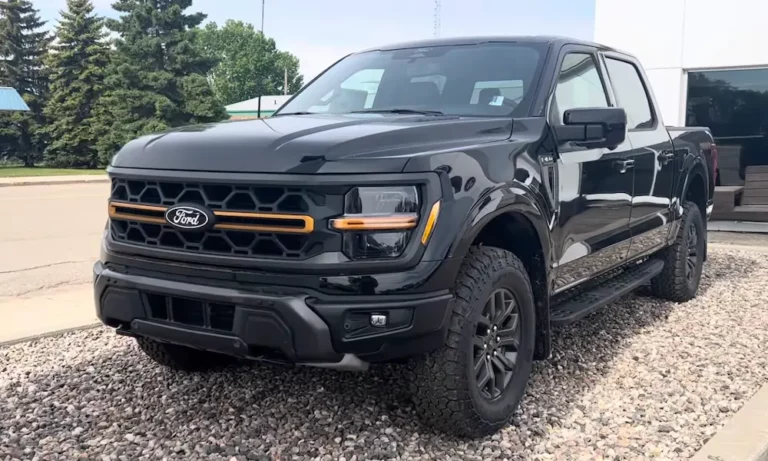
Your F-150’s brakes might be part of an active recall — and you might not even know it. Ford has issued multiple brake-related recalls covering hundreds of thousands of trucks since 2016. This post breaks down every major Ford F-150 brake recall, what’s actually wrong, and exactly what you’re entitled to as an owner. Read to the end, because the legal stuff matters more than most people realize.
The Ford F-150 Brake Recall Problem Runs Deep
This isn’t a one-time fix story. The Ford F-150 brake recall history spans nearly a decade, hitting different model years with different defects. Some involve leaking master cylinders. Others involve parking brakes activating at highway speeds. The newest ones involve electronic brake booster software failures.
Here’s the bottom line: if you own an F-150 built between 2013 and 2025, there’s a solid chance your truck appears on at least one NHTSA recall list.
The Master Cylinder Leak Recalls (2016–2025): Four Rounds of the Same Problem
This is the longest-running chapter in the Ford F-150 brake recall story — and it’s still not fully closed.
Recall 16V-345: Where It All Started
In early 2016, Ford’s warranty data flagged an alarming rate of brake failure complaints tied to 2013–2014 F-150s with the 3.5L EcoBoost engine. The culprit? A rear cup seal inside the step-bore master cylinder that physically rolled out of its groove.
When that seal failed, brake fluid leaked directly into the vacuum brake booster. The booster sucked the fluid right in — so no puddle formed on the ground, and owners had no visible warning. The fluid reservoir quietly emptied until the front brakes lost all hydraulic pressure.
Ford issued Recall 16V-345 in May 2016 covering 225,012 vehicles. The fix was replacing the master cylinder and brake booster if fluid had already leaked in.
Recall 20V-332: A Second Failure Mode Emerges
After the 2016 recall closed, new complaints kept rolling in. NHTSA opened a Recall Query (RQ16-001) when 25 new brake loss reports surfaced in 2015–2016 model year trucks that weren’t even covered by the original recall.
Engineers discovered a separate failure mechanism: chemical contamination of the brake fluid. The contamination degraded the cup seal differently — causing a slower leak instead of a sudden blowout. Because this leak developed gradually, the fluid level dropped slowly enough for the truck’s warning system to catch it:
- A red brake warning light
- An audible warning chime
- A full message center alert reading “Brake System Service Required”
But if the driver ignored those warnings, the result was identical — total loss of front braking power. Ford issued Recall 20V-332 in June 2020 covering 292,311 trucks from the 2014–2017 model years. Seven low-speed accidents and two injuries were already linked to this defect at recall time.
Recall 22V-150: The Problem Spreads to Other Platforms
By late 2021, warranty data showed the same Hitachi Astemo-built master cylinders were failing in additional Ford and Lincoln vehicles. Ford issued Recall 22V-150 in March 2022, pulling in 195,864 more vehicles — including 2016–2018 F-150s and 2016–2017 Ford Expedition and Lincoln Navigator models.
Recall 25V-236: Still Going in 2025
In early 2025, NHTSA contacted Ford about a fresh wave of brake fluid leak complaints in 2017 Expedition and Navigator vehicles built just after the 22V-150 cutoff date. Recall 25V-236, issued in April 2025, captured another 123,611 vehicles — including 87,738 F-150s built between February and June 2017.
| NHTSA Recall | Model Years Affected | Vehicles Covered | Core Defect |
|---|---|---|---|
| 16V-345 | 2013–2014 F-150 | 225,012 | Cup seal rolls out, rapid fluid loss into booster |
| 20V-332 | 2014–2017 F-150 | 292,311 | Fluid contamination causes slow seal failure |
| 22V-150 | 2016–2018 F-150, Expedition, Navigator | 195,864 | Same Hitachi master cylinder defect, expanded platforms |
| 25V-236 | 2017 F-150, Expedition, Navigator | 123,611 | Persistent elevated warranty claims trigger fourth action |
The Class Action Lawsuits: Ford Knew More Than It Said
The repeat recalls triggered serious legal action. Multiple civil suits consolidated in federal court as Weidman, et al. v. Ford Motor Company, filed in the Eastern District of Michigan.
The Internal Bypass Allegation
Plaintiffs’ engineering experts raised a claim that goes beyond the external leak issue. They argued a second internal seal — the “middle seal” inside the step-bore master cylinder — was also prone to failure. When that middle seal fails, it creates an internal bypass condition.
Here’s why that’s scarier than a standard leak:
- No fluid escapes the reservoir
- No warning light triggers
- No chime activates
- The brake pedal drops straight to the floor with zero resistance
Plaintiffs alleged Ford knew about this internal bypass defect as early as 2011 — years before the first public recall. They also alleged that early recall repairs replaced defective Hitachi master cylinders with identical Hitachi parts carrying the same design flaw.
Judge Gershwin A. Drain dismissed some warranty claims on technical grounds but preserved the core fraud and deceptive trade practice allegations. He noted Ford’s own engineers gave sworn testimony suggesting the 2016 recall didn’t permanently resolve the braking vulnerabilities.
California Lemon Law Implications
These repeated failed repairs have fueled a surge of individual Lemon Law claims, especially under California’s Song-Beverly Consumer Warranty Act. The law is straightforward: if a manufacturer can’t fix a substantial defect after a reasonable number of attempts, you’re entitled to a buyback, replacement vehicle, or cash compensation. Law firms tracking F-150 brake problems are actively filing these claims.
The Electric Parking Brake Recall: 870,000 Trucks at Risk
While older F-150s were leaking hydraulic fluid, the newer generation had a completely different brake crisis developing in the electrical system.
Recall 23V-509: The Parking Brake That Engages at Highway Speed
In July 2023, Ford issued Recall 23V-509 covering 870,701 F-150 trucks from model years 2021–2023 — specifically those equipped with a single exhaust system.
The defect: the rear axle wiring harness, which controls the electric parking brake (EPB) motors, was routed in a position where it directly contacted the metal axle housing. Normal road vibration slowly wore through the harness insulation. In cold climates, road salt corroded the axle housing into an abrasive, sandpaper-like surface that accelerated the damage dramatically.
Once the bare copper wire touched the metal axle housing, it created a short-to-ground. That short sent the exact electrical signal to engage the parking brake motors — while the truck was moving at speed.
The result:
- Rear wheels lock suddenly
- Vehicle loses control
- Severe skidding risk
- Jackknife potential if towing
By recall time, Ford had logged 299 reports of unexpected parking brake activation, with 19 occurring while the truck was actively being driven. Ford immediately placed a Demonstration/Delivery Hold on all unsold inventory — federal law prohibits selling new vehicles with open safety recalls.
How Dealers Fixed the EPB Recall
The repair path depended on the severity of the harness damage:
- Wear-through detected: Full harness replacement with a newly designed service harness (1.8 hours labor)
- No wear-through: Heavy-duty tie strap and additional tape wrap to permanently reposition the harness away from the axle housing (0.4 hours labor)
Ford also authorized mobile repair units to travel to owners’ homes for the preventative inspection — a rare but genuinely customer-friendly move.
Electronic Brake Booster Failures in 2025 Models
The newest chapter in the Ford F-150 brake recall story hits the 2025 lineup and involves software, not metal.
Recall 25V-239: A Software Logic Error Kills Power Braking
In August 2025, Ford issued Recall 25S77 (NHTSA Campaign 25V-239) covering 312,120 vehicles across the 2025 F-150, Bronco, Ranger, Expedition, and Lincoln Navigator.
The Electronic Brake Booster (EBB) module — which replaces the old vacuum-powered booster with an electric motor — contained a manufacturing deviation in its circuit board. Specifically, gain resistors in the pump motor circuit had an electrical resistance mismatch. That variance made the module hypersensitive to the normal voltage fluctuations that happen constantly in modern vehicles.
When a minor voltage dip and surge occurred, the EBB’s logic board misread its own current data and concluded it was experiencing a catastrophic internal failure. It immediately shut down the pump motor entirely — killing all power brake assist while the truck was in motion.
When this happens, you feel it immediately:
- Brake pedal becomes extremely stiff
- Pedal travel distance increases dramatically before brakes engage
- All ADAS features (automatic emergency braking, adaptive cruise) shut off
- ABS, stability control, and brake warning lights all illuminate simultaneously
Because the root cause was a software logic error, Ford didn’t need to replace any hardware. Instead, engineers recalibrated the fault-detection parameters through an Over-the-Air (OTA) update — owners received the safety patch remotely while their truck sat parked at home.
Trailer Brake Controller Failures: A Serious Towing Hazard
Towing safety took a direct hit from Recall 22V-193 (later expanded in 2025 and again in 2026), affecting 2021–2022 F-150 models.
A digital routing error in the vehicle’s CAN bus caused the Integrated Trailer Brake Module (ITRM) to suddenly lose communication with the truck’s braking network. When that happened mid-drive:
- The trailer’s brakes stopped working entirely
- A 10,000-pound trailer free-wheeled with no stopping power
- The truck’s brakes carried all the stopping load alone, overheating rapidly
- Jackknife crash risk spiked significantly
- Trailer brake lights and turn signals went dark, violating FMVSS 108 federal lighting standards
The fix required a complete software re-flash of the trailer module at the dealership, or an OTA update where available.
Your Federal Rights as an F-150 Owner
The 15-Year Free Repair Rule
Under 49 U.S.C. § 30120, manufacturers must fix safety recall defects at zero cost to the owner — covering parts, labor, software updates, and diagnostics. This right lasts 15 years from the original sale date and transfers to every subsequent owner regardless of mileage or title changes. An expired warranty doesn’t change this.
Open Recalls on Used F-150s
Here’s what most buyers don’t know: federal law doesn’t ban the sale of used vehicles with open recalls. Private sellers and independent dealers can legally sell an F-150 with an unrepaired brake master cylinder recall. Before you buy any used F-150, check the VIN through NHTSA’s free recall lookup tool. It takes 30 seconds and could save you from a very bad day.
Frequently Asked Questions
How does reimbursement work if I paid for a brake repair before the recall was announced?
Ford is required to establish a reimbursement plan for pre-recall repairs. You’ll need an itemized invoice showing the repair date, the specific parts replaced by part number, your VIN, and proof of payment. Submit this directly to Ford or an authorized dealer. Keep in mind: getting reimbursed doesn’t automatically close the recall on your VIN. Your truck may still need a formal dealer inspection to confirm the third-party repair meets current factory standards.
Can the dealer charge me a diagnostic fee if my brake problem isn’t related to the recall?
No diagnostic fee applies to inspecting the specific recalled component. But if the technician determines the recalled master cylinder or wiring harness is fine and your brake issue comes from worn pads, a leaking line, or a seized caliper, the dealer can charge standard diagnostic and repair fees for those separate items.
What’s the difference between a Safety Recall and a Technical Service Bulletin (TSB)?
A safety recall is federally mandated, free for up to 15 years, and triggers owner notification by mail. A TSB is an internal communication to dealers about non-safety issues like rattles or minor software bugs. TSB repairs only happen for free while your factory warranty is active. After that, you pay.
Does my aftermarket lift kit affect my recall rights?
Not automatically. Under the Magnuson-Moss Warranty Act, a dealer can’t deny recall coverage just because you modified the truck. However, if the dealer can prove the modification directly interfered with the recalled component — for example, a custom suspension lift altered the routing of the rear axle wiring harness — they may require you to pay labor costs to remove the aftermarket parts before performing the free recall repair.
Does Ford have to give me a loaner car during a recall repair?
Federal law doesn’t require it. The legal obligation covers parts and labor only. That said, if NHTSA issues a “Do Not Drive” advisory or parts are severely backordered, Ford will often authorize dealers to provide loaner vehicles or transportation stipends as a liability management move rather than a legal requirement.