Ever wondered why your GM truck sometimes feels different when cruising on the highway? That smooth transition you barely notice is actually cutting your fuel costs. GM’s cylinder deactivation technology is quietly working behind the scenes, shutting down cylinders you don’t need when driving under light loads.
But what exactly is this technology? How has it evolved? And why do some owners love it while others install kits to disable it? Let’s dive into the world of GM cylinder deactivation and uncover what makes this fuel-saving technology tick.
What Is GM Cylinder Deactivation?
GM cylinder deactivation is a fuel-saving technology that temporarily deactivates (shuts down) some engine cylinders when full power isn’t needed. Think of it like using only half your stove burners when cooking a small meal—you’re saving energy without sacrificing the ability to cook.
This technology works by stopping the valve movement in selected cylinders, effectively turning a V8 engine into a V4 or a V6 into a V3 when you’re cruising at steady speeds or under light loads. The engine computer makes these transitions seamlessly, often without drivers noticing any change.
The system has evolved significantly since GM’s first attempts in the early 1980s, with two primary versions now recognized:
- Active Fuel Management (AFM): The earlier system that switches between full cylinder operation and a fixed reduced-cylinder mode
- Dynamic Fuel Management (DFM): The newer, more flexible system that can run on any combination of cylinders
The Evolution of GM Cylinder Deactivation
From V8-6-4 to Modern Systems
GM’s cylinder deactivation journey began with the infamous Cadillac V8-6-4 engine in 1981. This pioneering system was ahead of its time—unfortunately, too far ahead. The computers of that era simply weren’t powerful enough to manage the complex transitions between cylinder patterns.
After that early stumble, GM took a long break before reintroducing the concept:
2005: GM launched Active Fuel Management (AFM) on several V8 engines
2007: AFM expanded to certain V6 engines
2019: Dynamic Fuel Management (DFM) debuted as the next generation of the technology
These modern systems benefit from decades of computer advancement, allowing for much smoother operation than the original attempt.
Active Fuel Management (AFM) Explained
Active Fuel Management was GM’s first successful implementation of cylinder deactivation. This system operates in a binary fashion—it’s either running on all cylinders or on a predetermined set of reduced cylinders.
For V8 engines, AFM typically deactivates cylinders 1, 4, 6, and 7, effectively turning the V8 into a V4 when cruising. On V6 engines, it deactivates cylinders 2, 3, and 6, converting to a V3.
The AFM system includes:
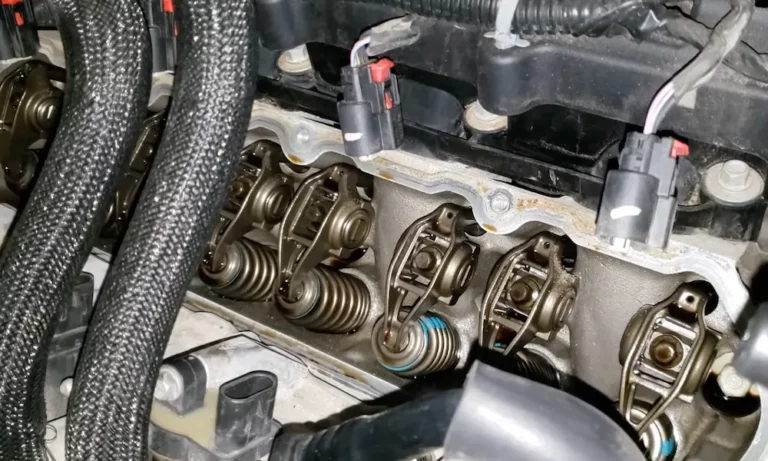
- Special hydraulic lifters that can collapse to prevent valve actuation
- A valve lifter oil manifold that controls oil pressure to the lifters
- Sophisticated computer algorithms that determine when to switch modes
AFM can improve fuel economy by 5-12% in real-world driving conditions.
Dynamic Fuel Management (DFM): The Next Generation
In 2019, GM introduced Dynamic Fuel Management as the successor to AFM. While the basic concept remains the same, DFM represents a significant advancement in flexibility and efficiency.
Rather than simply switching between two modes (all cylinders or a fixed set of reduced cylinders), DFM can fire cylinders in 17 different patterns. This allows the engine to run on anywhere from 1 to 8 cylinders, depending on exactly how much power is needed at any given moment.
DFM evaluates driving conditions 80 times per second and can make cylinder activation decisions on each firing opportunity. As Green Car Journal reports, this system can even run a V8 on just a single cylinder under very light loads.
The result is improved fuel economy without sacrificing power or drivability. Motor Authority confirms that DFM can reduce fuel consumption by up to 20% compared to engines without cylinder deactivation.
How GM Cylinder Deactivation Works
The Mechanics Behind the Magic
The mechanics of cylinder deactivation are fascinating. Here’s what happens when a cylinder deactivates:
- The engine control module determines that full power isn’t needed
- Oil pressure is directed to special collapsible valve lifters
- The outer portion of the lifter separates from the inner portion
- With the lifter collapsed, the valves remain closed
- Fuel injection to that cylinder is cut off
- The cylinder effectively becomes “dead” but continues to move with the engine
When power is needed again, the process reverses in milliseconds. The cylinder reactivates so quickly that most drivers never feel the transition.
AFM vs. DFM: Technical Differences
While AFM and DFM share the same basic principle, their implementation differs significantly:
| Feature | Active Fuel Management (AFM) | Dynamic Fuel Management (DFM) |
|---|---|---|
| Cylinder patterns | 2 patterns (all on or specific cylinders off) | 17 different firing patterns |
| Decision frequency | Several times per second | 80 times per second |
| Minimum active cylinders | 4 on V8, 3 on V6 | Can run on as few as 1 cylinder |
| Control mechanism | Lifter Oil Manifold Assembly (LOMA) | Integrated oil control valves |
| Fuel economy improvement | 5-12% | Up to 20% |
DFM’s more flexible approach allows it to maximize efficiency across a wider range of driving conditions compared to the simpler AFM system.
Benefits of Cylinder Deactivation
Fuel Economy Improvements
The primary benefit of cylinder deactivation is improved fuel economy. By running on fewer cylinders when full power isn’t needed, these engines can significantly reduce fuel consumption:
- 5-12% improvement with AFM systems
- Up to 20% improvement with DFM systems
These numbers might not sound dramatic, but they add up. Over the lifetime of a vehicle, cylinder deactivation can save hundreds or even thousands of gallons of fuel.
Environmental Impact
The fuel savings translate directly to reduced emissions. Auto Industria reports that DFM technology can reduce CO₂ emissions by 7-12% in EPA testing.
For automakers like GM, these emissions reductions help meet increasingly stringent government regulations while allowing them to continue offering powerful V6 and V8 engines.
Power When You Need It, Efficiency When You Don’t
Perhaps the most appealing aspect of cylinder deactivation is that it requires no compromise from the driver. You get the full power of all cylinders during acceleration, towing, or climbing hills, but the efficiency of a smaller engine during steady cruising.
This represents the best of both worlds—power and efficiency in a single package. That’s why GM has expanded the technology across much of its lineup of trucks, SUVs, and performance cars.
Common Issues and Concerns
Lifter Failures and Engine Problems
Despite its benefits, cylinder deactivation hasn’t been trouble-free. One of the most common issues involves the special lifters that enable the system:
- Lifter failures can occur, particularly in high-mileage vehicles
- When lifters fail, they can cause engine misfires, ticking noises, or check engine lights
- In severe cases, lifter failure can cause additional engine damage
Approximately 8% of AFM engines experience lifter issues by 150,000 miles.
Oil Consumption Concerns
Some owners have reported excessive oil consumption in engines equipped with cylinder deactivation. The issue appears more common in AFM-equipped engines, where oil consumption of 1-2 quarts per 1,000 miles has been reported by some owners.
The deactivation system can allow oil to enter combustion chambers through the piston rings when cylinders are deactivated. Over time, this can lead to carbon buildup and accelerated oil consumption.
AFM/DFM Disablers: Why Some Owners Choose to Disable the System
Due to concerns about reliability and longevity, some owners choose to disable cylinder deactivation. This can be done through:
- Electronic modules: Devices like Range AFM Disabler that plug into the diagnostic port and prevent cylinder deactivation from activating
- Delete kits: Mechanical modifications that replace the special lifters with conventional ones
- ECU programming: Custom engine tuning that disables the feature in the engine computer
These solutions typically cost between $200 for electronic modules to $3,000+ for complete mechanical delete kits.
Maintaining a Vehicle with Cylinder Deactivation
Best Practices for Longevity
To maximize the reliability of a GM vehicle with cylinder deactivation, consider these maintenance tips:
- Use high-quality synthetic oil: GM recommends 5W-30 synthetic for most AFM/DFM engines
- Change oil frequently: Every 5,000 miles is ideal, rather than stretching to the maximum interval
- Drive regularly at highway speeds: This helps ensure all cylinders activate periodically
- Address warning signs early: Unusual sounds or check engine lights should be investigated promptly
Following these practices can help prevent many of the issues associated with cylinder deactivation systems.
Signs of Potential Problems
Watch for these warning signs that might indicate issues with your cylinder deactivation system:
- Ticking or knocking noises, especially during acceleration
- Engine misfires or rough running
- Excessive oil consumption (more than 1 quart per 2,000 miles)
- Check engine light illuminated with specific cylinder misfire codes
- Reduced power or hesitation during acceleration
If you notice any of these symptoms, it’s worth having your vehicle checked by a qualified technician who understands GM’s cylinder deactivation systems.
Future of GM Cylinder Deactivation Technology
Integration with Electrification
As GM moves toward an electrified future, cylinder deactivation will likely play an important transitional role. In hybrid vehicles, the technology allows combustion engines to operate more efficiently when they are running.
GM’s Ultium platform already integrates DFM with hybrid systems. The upcoming 2025 Chevrolet Tahoe Hybrid pairs a 3.0L DFM V6 with a 100 kW electric motor, achieving an impressive 28 MPG combined.
Ongoing Improvements
GM continues to refine its cylinder deactivation technology. Recent improvements include:
- DLC-coated lifters in 2021+ models to reduce wear
- Revised valve covers with improved baffles to reduce oil aeration
- Updated ECU programming for smoother transitions between cylinder patterns
The company that licenses the Dynamic Skip Fire technology to GM, future iterations may achieve even greater efficiency gains.
Vehicles Equipped with GM Cylinder Deactivation
Current GM Models with AFM/DFM
GM has deployed cylinder deactivation across much of its lineup. Here are some popular current models equipped with the technology:
Chevrolet:
- Silverado (5.3L and 6.2L V8)
- Tahoe and Suburban (5.3L and 6.2L V8)
- Camaro (6.2L V8)
- Colorado (3.6L V6)
GMC:
- Sierra (5.3L and 6.2L V8)
- Yukon (5.3L and 6.2L V8)
- Canyon (3.6L V6)
Cadillac:
- Escalade (6.2L V8)
- CT4-V and CT5-V (3.0L V6)
Newer Chevy trucks and SUVs have mostly transitioned to DFM, while some car models still use AFM.
Identifying If Your Vehicle Has Cylinder Deactivation
Not sure if your GM vehicle has cylinder deactivation? Here’s how to find out:
- Check your vehicle’s window sticker or owner’s manual
- Look for a “V4” mode indicator in the driver information center display
- Consult a GM dealer with your VIN
- Watch for the subtle feeling of transition between modes during steady cruising
Most V6 and V8 engines in GM vehicles built after 2005 include some form of cylinder deactivation, though there are exceptions, particularly in performance-oriented models.
Real-World Performance and Owner Experiences
What Owners Say About Fuel Economy
Real-world experiences with cylinder deactivation vary widely. Some owners report significant fuel economy improvements:
“My 2021 Silverado with the 5.3L V8 consistently gets 23 MPG on highway trips. That’s impressive for a full-size truck.”
Others see more modest gains:
“I notice about a 1-2 MPG improvement when highway driving, but in city driving, the system rarely activates enough to make a difference.”
Your driving habits significantly influence how much benefit you’ll see from cylinder deactivation.
Reliability Reports: The Good and Bad
Reliability experiences also vary:
Many owners report trouble-free operation throughout their ownership:
“150,000 miles on my Sierra with AFM and zero issues. Regular oil changes seem to be the key.”
Others have faced significant problems:
“Had to replace lifters at 60,000 miles when one failed. Decided to install a delete kit to prevent future issues.”
The variation in experiences suggests that maintenance practices, driving habits, and possibly manufacturing tolerances all play a role in the long-term reliability of these systems.
Making an Informed Decision
Is Cylinder Deactivation Right for You?
When considering a GM vehicle with cylinder deactivation, weigh these factors:
Reasons to embrace the technology:
- Improved fuel economy (5-20% depending on the system and driving habits)
- Reduced emissions without sacrificing power
- Continuous improvements in reliability with newer models
Reasons for caution:
- Potential for increased maintenance costs in high-mileage vehicles
- Reports of oil consumption in some models
- Additional complexity compared to non-deactivating engines
Your driving habits matter too—those who frequently drive highway miles at steady speeds will see more benefit than those who primarily drive in stop-and-go traffic.
Questions to Ask When Buying a GM Vehicle
If you’re shopping for a GM vehicle with cylinder deactivation, ask these questions:
- Is it equipped with the older AFM or newer DFM system?
- Has the vehicle had any lifter-related repairs or issues?
- What oil consumption has been observed (if a used vehicle)?
- Are there any extended warranties available that cover the lifters specifically?
- What is the dealer’s experience with cylinder deactivation reliability in this model?
Getting answers to these questions can help you make a more informed purchase decision.
The Bottom Line on GM Cylinder Deactivation
GM’s cylinder deactivation technology represents an innovative approach to improving fuel economy while preserving the power and performance that many drivers desire. From its rocky start with the V8-6-4 to today’s sophisticated DFM system, the technology has evolved significantly.
For most owners, the fuel economy benefits outweigh potential concerns, especially with newer models that have benefited from years of refinement. Proper maintenance—particularly regular oil changes with quality synthetic oil—goes a long way toward preventing issues.
Whether you embrace the technology or choose to disable it, understanding how GM cylinder deactivation works helps you make informed decisions about your vehicle. And as GM continues pushing toward an electrified future, these systems will likely serve as an important bridge technology, helping improve efficiency during the transition.