Does your GM vehicle have a check engine light with knock sensor codes that won’t go away? You might need a knock sensor relearn. This process isn’t as complicated as it sounds, but skipping it after replacing knock sensors can lead to ongoing problems, poor performance, and potential engine damage.
Let’s dive into everything you need to know about properly completing the GM knock sensor relearn procedure to get your vehicle running smoothly again.
What Is a GM Knock Sensor and Why Does It Need Relearning?
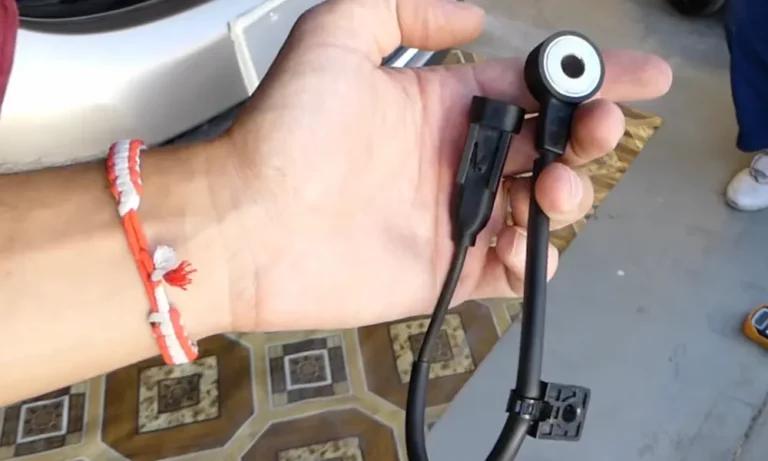
Knock sensors are small but mighty devices mounted on your engine block that detect abnormal combustion sounds (engine knock). These piezoelectric sensors pick up high-frequency vibrations and send voltage signals to your Powertrain Control Module (PCM), which then adjusts ignition timing to prevent engine damage.
When you replace knock sensors in your GM vehicle, the PCM needs to “relearn” the new sensor’s baseline readings. Without this crucial step, you’ll likely face:
- Persistent check engine lights
- Poor fuel economy
- Reduced engine power
- Potential long-term engine damage
Common GM Knock Sensor Problems
Before jumping into the relearn procedure, it’s worth understanding what typically goes wrong with these sensors in the first place.
Failure Patterns in GM Vehicles
GM knock sensors commonly fail due to:
- Water and coolant intrusion: Especially in LS-based engines (4.8L, 5.3L, 6.0L), where sensors sit in a valley under the intake manifold
- Wiring harness damage: Heat exposure makes connectors brittle over time
- Incorrect installation: Improper torque settings can alter signal accuracy
The most common trouble codes you’ll see with knock sensor issues are P0327 (Knock Sensor 1 Circuit Low) and P0332 (Knock Sensor 2 Circuit Low).
Step-by-Step GM Knock Sensor Relearn Procedure
The relearn process involves two main steps: resetting the PCM and completing a drive cycle to allow the computer to establish new baseline parameters.
Method 1: Battery Disconnect Procedure
This is the simplest method that works for most GM vehicles:
- Turn off the ignition and all accessories
- Disconnect the negative battery terminal using a 10mm wrench
- Wait 10-15 minutes to ensure the PCM completely loses power and resets
- Reconnect the battery and tighten the terminal securely
- Turn the key to the “ON” position (don’t start the engine) for 30 seconds
- Start the engine and let it idle for 2-3 minutes
Method 2: Fuse Removal Technique
If you prefer not to disconnect the battery, try this alternative:
- Locate the PCM fuses in your underhood fuse box (typically labeled PCM-IGN and PCM-BAT)
- Turn the key to “ON” position without starting the engine
- Remove both PCM fuses and wait 5-10 minutes
- Reinstall the fuses
- Turn the ignition off completely
- Restart the engine and let it idle
For both methods, the critical next step is completing the drive cycle for the PCM to establish new baseline parameters.
The Essential Post-Reset GM Drive Cycle
After resetting the PCM, your vehicle needs to complete a specific driving pattern to recalibrate knock sensor thresholds. Follow this standard GM drive cycle sequence:
Complete Drive Cycle Instructions
- Start with a cold engine (below 122°F/50°C and within 11°F/6°C of ambient temperature)
- Idle for 2-3 minutes with A/C and rear defrost on
- Accelerate gradually to 55 mph at approximately ¾ throttle
- Maintain 55 mph for 3-5 minutes at steady cruise
- Coast down to 20 mph without using the brakes
- Accelerate again to highway speed and maintain for another 5 minutes
- Complete a few more normal acceleration/deceleration cycles
This entire process allows the PCM to collect data across different driving conditions and properly calibrate the knock sensor response.
| Drive Cycle Phase | Duration | Vehicle Action | What’s Happening |
|---|---|---|---|
| Cold Start | 0 min | Start engine | Initial sensor readings |
| Idle | 2-3 min | Idle with A/C on | O₂ sensor and fuel trim calibration |
| Acceleration | ~2 min | Gradual to 55 mph | Misfire detection and knock calibration |
| Steady Cruise | 3-5 min | Maintain 55 mph | Catalytic efficiency and knock response |
| Deceleration | ~1 min | Coast to 20 mph | EGR and fuel trim adaptations |
| Highway Cruise | 5 min | 55-65 mph steady | Final knock sensor threshold setting |
Verifying Successful Relearn Completion
How do you know if the relearn procedure worked? Here are signs of success:
- Check engine light goes off and stays off
- Smoother engine operation with no hesitation
- No reappearance of knock sensor codes when scanned
- Better fuel economy returns to normal
If you have access to an OBD-II scanner, you can check if all monitors have been set to “Ready” status, which indicates the relearn procedure was completed successfully.
When Knock Sensor Codes Keep Coming Back
If you’ve replaced the sensors and completed the relearn procedure but still have trouble codes, don’t panic. Here’s what to check next:
Troubleshooting Persistent Knock Sensor Codes
-
Check the wiring harness for damage, corrosion, or poor connections
-
Verify proper sensor installation – are they torqued correctly (typically 15-20 lb-ft)?
-
Inspect for mechanical issues that might trigger false knock readings:
- Loose heat shields
- Worn rod bearings
- Incorrect spark plug gaps
- Improper fuel quality
-
Test sensor resistance – should be between 93-107 kΩ for most GM knock sensors
Sometimes the PCM itself needs more advanced programming. If you’ve tried everything else, you might need to consider professional diagnostics from a qualified technician with access to manufacturer-specific scan tools.
Using Scan Tools for Forced Relearns
If you have access to professional scan tools, you can speed up the relearn process:
Professional-Grade Scan Tool Options
Advanced bi-directional scan tools like GM’s Tech2, Autel MaxiSys, or Snap-On Verus can manually trigger the knock sensor recalibration using manufacturer-specific procedures. These tools can:
- Directly reset adaptive fuel values
- Initiate knock sensor relearn routines
- Monitor knock sensor voltage in real-time
- Reset all readiness monitors
This approach can save significant time compared to the traditional battery disconnect and drive cycle method.
Special Considerations for Specific GM Models
Different GM vehicle families may have slightly different relearn requirements:
Model-Specific Information
- Silverado/Sierra trucks (1999-2007): More prone to knock sensor wiring issues due to valley cover design
- Corvette and Camaro: May require additional performance mode driving cycles
- Tahoe, Suburban, Yukon: Often need longer drive cycles due to their weight
- LS-based engines: Check for TSB #03-06-04-037 regarding updated harness routing
Preventing Future Knock Sensor Issues
The best way to avoid knock sensor problems is through preventive maintenance:
Preventative Maintenance Tips
- Use OEM sensors and harnesses whenever possible
- Protect the sensor valley from moisture with proper gaskets and seals
- Apply dielectric grease to electrical connections when replacing sensors
- Follow proper torque specifications during installation
- Use high-quality fuel with the appropriate octane rating
- Keep your cooling system in good condition to prevent overheating
The Importance of Proper Installation
The installation process itself can make or break successful knock sensor operation:
Critical Installation Steps
- Clean the mounting surface thoroughly before installation
- Apply anti-seize compound sparingly to threads if recommended
- Use a torque wrench to achieve the exact specification (typically 15-20 ft-lbs)
- Route wiring away from heat sources and secure with proper clips
- Check connectors for corrosion or damage before plugging in
Proper torque is particularly important as overtightening can damage the sensor while undertightening can cause false readings.
The Mechanics Behind Knock Sensor Relearns
Understanding the technical side helps explain why the relearn procedure matters:
The PCM uses baseline readings from knock sensors to create a “noise curve” that distinguishes normal engine sounds from actual detonation. When you replace sensors, this baseline needs to be reestablished.
During the relearn process, the PCM:
- Collects data across multiple engine speeds and loads
- Establishes minimum and maximum voltage thresholds
- Creates a reference map for normal engine operation
- Sets new parameters for when to retard timing
This sophisticated calibration process requires various driving conditions to be accurate.
Final Thoughts on GM Knock Sensor Relearn
The knock sensor relearn procedure may seem like an extra step, but it’s essential for maintaining your GM vehicle’s performance and longevity. By following the proper reset and drive cycle procedures, you’ll ensure your engine management system functions correctly with your new knock sensors.
Remember that patience is key—the complete relearn process can take 50-100 miles of mixed driving to fully complete in some vehicles. If problems persist, don’t hesitate to consult with a professional who has the specialized tools and knowledge to address more complex issues.
Have you completed a knock sensor relearn on your GM vehicle? What method worked best for you?