Your Honda’s dashboard just lit up with a cryptic alphanumeric code, and you’re wondering what it means and what it’ll cost you. This guide breaks down exactly what Honda’s Maintenance Minder is telling you, why your engine air filter matters more than you think, and how to handle honda engine filter replacement yourself — saving serious money in the process. Stick around, because the DIY section alone could save you $160 or more.
What Is the Honda Maintenance Minder System?
Forget the old “change your oil every 3,000 miles” rule. Honda’s Maintenance Minder system — introduced around the 2006 model year — is smarter than that. It monitors real-time data like engine temperature, driving speed, engine load, and trip duration to calculate when your car actually needs service.
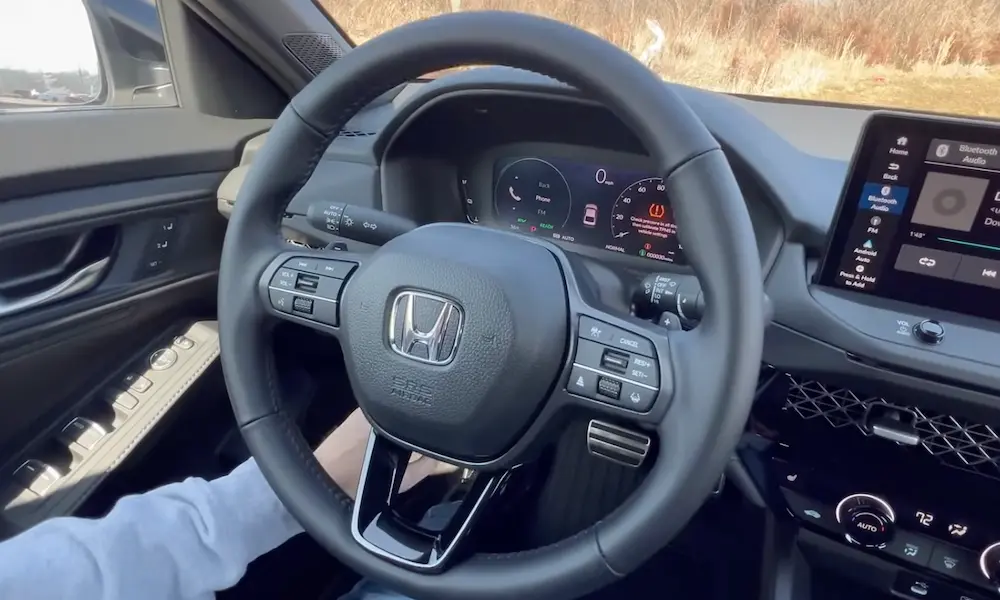
When your oil life drops to 15%, a yellow wrench icon appears on your dashboard alongside a service code. These codes split into two types:
- Main Codes (A or B): Core services like oil changes and inspections
- Sub-codes (1–7): Additional tasks bundled alongside the main service
The system stacks these codes together — think “A12” or “B2” — so you handle everything in one visit instead of three.
What Does Sub-Code 2 Mean?
Sub-code 2 is Honda’s signal to replace both your engine air filter and cabin air filter, plus inspect the engine’s drive belt. These three items share nearly identical wear curves based on mileage and atmospheric exposure, so Honda bundles them together smartly.
Here’s a full breakdown of all Maintenance Minder sub-codes:
| Sub-Code | Service Required | Typical Interval | Why It Matters |
|---|---|---|---|
| 1 | Tire rotation and pressure check | 7,500–10,000 miles | Prevents uneven wear, especially on front-wheel-drive models |
| 2 | Engine air filter, cabin air filter, drive belt inspection | 15,000–30,000 miles | Maintains airflow efficiency and cabin air quality |
| 3 | Transmission and transfer case fluid | 30,000–60,000 miles | Protects clutch materials and hydraulic pressure |
| 4 | Spark plugs, valve clearance, timing belt/water pump | 60,000–105,000 miles | Maintains combustion and prevents catastrophic belt failure |
| 5 | Engine coolant replacement | 60,000–120,000 miles | Replenishes anti-corrosion additives |
| 6 | Rear differential fluid | 15,000 miles initially, then every 30,000 | Applies to AWD models only |
| 7 | Brake fluid replacement | Every 3 years regardless of mileage | Brake fluid absorbs moisture and can boil under heavy use |
Why Your Engine Air Filter Is More Important Than You Think
Your engine works like a massive air pump. For every gallon of fuel it burns, it pulls in thousands of gallons of air. That air carries dirt, silica, road debris, and organic matter — all of which your engine air filter intercepts before they reach the combustion chamber.
Without a clean filter, those microscopic particles act as an abrasive compound against your cylinder walls, piston rings, and engine bearings. Over thousands of miles, that micro-abrasion destroys engine compression and accelerates mechanical failure.
Standard Honda filters — like OEM part number 17220 — use heavily pleated cellulose or synthetic fiber media to trap massive volumes of debris without immediately choking airflow. Over time, though, those pleats clog up, and the filter starts suffocating your engine.
Signs Your Engine Air Filter Is Failing
Don’t wait for the check engine light. Watch for these symptoms:
- Sluggish acceleration: The mass airflow sensor detects less incoming air, so the ECU cuts fuel injection proportionally
- Worse fuel economy: A restricted intake forces the engine to work harder for every mile
- Rough idle or misfires: Disrupted airflow causes stumbling and hesitation
- Unusual intake noises: Wheezing or whistling from the airbox as the engine gasps for air
- Black exhaust smoke: Incomplete combustion from a fuel-rich, air-starved mixture creates sooty emissions
- Dirt on the “clean” side of the housing: Proof that the filter’s capacity has been breached and dirt is entering your engine
A quick visual inspection tells the whole story. Hold the filter up to light — if no light passes through the pleats, it’s time for a replacement.
The Cabin Air Filter: Protecting You, Not Just Your Engine
Sub-code 2 also covers your cabin air filter, tucked behind the passenger-side glovebox. Every cubic foot of air flowing through your heater, AC, or defroster passes through this filter first, catching pollen, road dust, exhaust particles, and allergens.
A saturated cabin filter creates two problems:
- Reduced airflow from your vents — even on maximum fan speed — which strains your blower motor and can lead to premature motor failure
- Musty odors in the cabin caused by moisture and mold growing inside the clogged filter media
Replacing it isn’t just about comfort. It protects a component that costs significantly more to replace than a $15 filter.
How Your Environment Affects Filter Lifespan
Honda’s baseline Sub-code 2 interval runs between 15,000 and 30,000 miles under normal conditions. But “normal” depends heavily on where you drive.
- Desert Southwest or rural unpaved roads: Heavy silica and dust can clog your filter by 10,000 miles
- West Coast wildfire zones: Airborne ash and soot can blind a filter within weeks during fire season
- Dense urban areas: Stop-and-go traffic concentrates exhaust, tire, and brake dust without accumulating much odometer mileage
- Northeast and Midwest winters: Aerosolized road salt spray coats filter media, hardening into a crusty barrier over winter months
- Mountain driving: Higher engine loads at altitude pull air through the filter faster, accelerating degradation
The rule: If your environment is harsh, don’t wait for the Maintenance Minder. Physically inspect your filter at every oil change.
Dealership Cost vs. DIY: The Real Numbers
Here’s where it gets interesting. Dealerships charge labor rates ranging from $125 to $175 per hour in 2026. Even a five-minute filter swap gets billed at a minimum labor fraction — often 0.3 to 0.5 hours — stacked on top of full retail parts markup.
Some customers report being quoted up to $170 for both filters combined during a routine oil change visit.
Here’s what the math actually looks like:
| Service | Dealership Cost | DIY Cost | Your Savings | Time Required |
|---|---|---|---|---|
| Engine Air Filter | $50–$100 | $10–$40 | $40–$65 | 5–10 minutes |
| Cabin Air Filter | $60–$150 | $10–$50 | $50–$75 | 5–10 minutes |
| Both Combined | $110–$250+ | $20–$90 | $90–$160+ | 10–20 minutes |
Figures based on current U.S. market estimates.
Over a vehicle’s lifetime, assuming a replacement every 20,000 miles, doing this yourself saves hundreds — potentially thousands — of dollars.
Does DIY Void Your Honda Warranty?
No — and this is a common misconception worth squashing. The federal Magnuson-Moss Warranty Act legally prohibits manufacturers from voiding your warranty simply because you didn’t use a dealership for routine maintenance.
The catch: the burden of proof is on you. Keep every receipt for filters, oil, and parts. Log the date and mileage of each service in a notebook or spreadsheet. That paper trail protects you if a warranty claim ever gets challenged.
How to Replace Your Honda Engine Air Filter (Step-by-Step)
Honda engineers designed the airbox for easy owner access. You need no mechanical experience and usually no tools — or at most, a basic screwdriver.
This process covers a wide range of Honda models including the Accord, Civic, CR-V, Odyssey, Pilot, Ridgeline, Element, Fit, Crosstour, and Acura counterparts like the MDX, TL, RSX, and Integra.
Step 1: Park on a level surface, turn the engine off, and open the hood.
Step 2: Locate the black plastic airbox near the front or driver’s side of the engine bay.
Step 3: Unclip the metal spring clips or loosen the airbox fastener screws securing the lid. Many models use four captive bolts around the perimeter.
Step 4: Carefully lift the airbox lid. A large corrugated rubber intake hose attaches to the back — handle it gently to avoid tearing aging rubber.
Step 5: Pull the old filter straight up and out of the lower housing.
Step 6: Check the housing interior for leaves, pebbles, or debris. Remove any contaminants before installing the new filter.
Step 7: Drop the new filter into the lower housing. Filters are directional — the trapezoidal shape or angled corner prevents backward installation. Make sure the rubber gasket sits completely flush in the housing channel.
Step 8: Lower the lid carefully into position. This step is critical. If the lid doesn’t align perfectly and you force the clips shut, you create a gap that bypasses the filter entirely. Unfiltered air will coat your mass airflow sensor with dirt, causing immediate drivability problems, stalling, and check engine codes.
Step 9: Once aligned, secure all clips or tighten all fastener bolts firmly.
How to Reset the Honda Maintenance Minder After Replacement
The Maintenance Minder can’t detect a new filter physically. You must reset it manually after every service. Skipping this corrupts future maintenance calculations — and the dashboard warning will keep flashing indefinitely.
Pre-2012 Models (Analog Dash)
- Turn the ignition key to the ON position (Position II) without starting the engine
- Press the Select/Reset knob until “Engine Oil Life” appears on the display
- Press and hold the knob for 10 seconds until it flashes
- Release, pause briefly, then press and hold again for 5 seconds
- The system resets to 100% oil life and clears Sub-code 2
2012–2016 Models (Multi-Information Display)
- Turn ignition to ON without starting
- Use steering wheel arrows or the Info button to navigate to the Maintenance Minder screen
- Press and hold the Enter or Reset button on the steering wheel for approximately 10 seconds
- Select individual items (like Sub-code 2) or choose “All Due Items”
- Press Enter to confirm — oil life returns to 100%
2017–2025 Models (Touchscreen Interface)
- Without pressing the brake, press the Engine Start/Stop button twice to activate accessory power
- On the touchscreen, tap Home → Settings → Vehicle → Maintenance Info
- Tap “Select Reset Items” or the wrench icon
- Choose individual codes or “All Due Items”
Important: On 10th-generation Civics (2016–2022) and some CR-Vs, a known software bug may cause the system to confirm resetting all codes even when only one is due. Select individual items to stay precise.
If the reset fails repeatedly, disconnect the negative battery terminal for five minutes to force a hard module reboot as a last resort.
FAQs
How do altitude changes affect filter performance and the Maintenance Minder?
At higher elevations — like crossing the Rockies — air density drops significantly. Your engine pulls a larger volume of air to maintain power output. If the filter is already partially clogged, thin mountain air combined with restricted media creates a severe, immediate performance drop. The Maintenance Minder tracks engine load and fuel trim data, but heavy altitude restriction degrades performance long before the algorithm triggers a mileage-based warning. Inspect your filter before and after extended mountain driving.
How do you dispose of a used engine air filter legally in the U.S.?
Standard dry paper engine air filters aren’t classified as hazardous waste by the EPA. Unlike used motor oil or car batteries, you can legally dispose of them in standard household trash. Shake excess dirt into a sealed bag first to reduce airborne dust before tossing it.
Can rodents damage a Honda air filter before any warning code appears?
Absolutely. Mice, rats, and squirrels love the warm, enclosed airbox housing during cold months. They’ll build nests of leaves, chewed paper, and fibers directly on top of the filter media — creating an immediate, catastrophic airflow blockage the Maintenance Minder can’t predict. If your car has been parked outdoors or in a barn for any extended period, physically inspect the airbox regardless of what the dashboard says.
Do aftermarket cold-air intakes interfere with the Maintenance Minder?
Yes, indirectly. A cold-air intake removes the factory airbox entirely, replacing it with a conical high-flow filter. The Maintenance Minder will still calculate a Sub-code 2 based on mileage and load, but its baseline assumptions are built around the factory filter’s specific flow characteristics. High-flow aftermarket filters degrade differently, making the algorithm unreliable for service timing. If you’re running a cold-air intake, switch to manual visual inspections to determine your cleaning and replacement schedule.