Your engine is making a ticking noise, or your service manual just flagged a valve adjustment. Now you’re staring at a repair quote and wondering if it’s legit. How much does a valve adjustment cost — and is skipping it really that risky? This post breaks down every cost factor so you know exactly what to expect before you hand over your keys.
What Is a Valve Adjustment and Why Does It Cost Money?
A valve adjustment — also called a valve lash adjustment — corrects the tiny gap between your camshaft and valve stem. This gap isn’t a flaw. It’s a deliberate engineering requirement that accounts for metal expanding as your engine heats up.
Get it wrong in either direction and you’ve got problems:
- Too much gap: Engine ticks loudly, valves open late, power drops
- Too little gap (or zero gap): Valves can’t close fully, heat builds up, metal burns
According to JD Power, worn valve seats cause the valve to sink deeper into the cylinder head over time, silently killing that critical clearance. No noise. No warning. Just damage building quietly.
The cost of a valve adjustment depends heavily on your engine’s layout, the type of lifters it uses, and who does the work.
Hydraulic vs. Mechanical Lifters: The Biggest Cost Factor
Before you panic about pricing, check what type of lifters your engine uses. This single factor determines whether you ever need a valve adjustment at all.
| Feature | Hydraulic Lifters | Mechanical (Solid) Lifters |
|---|---|---|
| Self-adjusting? | Yes — uses engine oil pressure | No — needs manual adjustment |
| Routine valve service needed? | Generally no | Yes, every 12K–110K miles |
| Engine noise | Very quiet | Audible ticking at idle |
| High-RPM performance | Limited by fluid pump-up | Excellent — no hydraulic limits |
| Common applications | Most modern passenger cars | Performance cars, classics, motorcycles |
Most modern passenger vehicles use hydraulic lifters, which means they self-adjust and require no manual valve service. If your car uses mechanical (solid) lifters, routine adjustments are non-negotiable.
How Much Does a Valve Adjustment Cost by Vehicle Type?
Here’s the honest answer: it depends entirely on your engine. Let’s break it down by platform.
Honda Inline Four-Cylinder Engines: $300–$700
Honda is the most common example of a mainstream brand requiring routine valve adjustments. Models like the Civic, Accord, Fit, and CR-V use inline four-cylinder engines with solid lifters and a simple screw-and-locknut adjuster.
The flat-rate labor time runs 1.5 to 3 hours, making this one of the more straightforward jobs a shop can do. Parts costs are minimal — just a valve cover gasket and spark plug tube seals, typically $89 to $131.
Smart tip: Combine the valve adjustment with a spark plug replacement. Both jobs require removing the ignition coils and accessing the cylinder head. Doing them together eliminates overlapping labor charges.
Reddit users report Honda Fit owners getting independent shop quotes of $300–$400, while metropolitan dealerships push $598–$700 for the same service.
Honda V6 Engines (Odyssey, Pilot, Accord V6): $600–$1,300
A V6 layout changes everything. In a front-wheel-drive vehicle, one cylinder bank faces the firewall — and you can barely reach it. To get there, a technician must completely remove the upper intake manifold.
That extra work pushes flat-rate labor to 4–6 hours, and the total bill climbs to $600–$900. Some Honda Odyssey owners have reported dealership quotes as high as $1,300 when adjacent components like the spool valve or PCV valve get replaced at the same time.
Add in a new intake manifold gasket at up to $179 retail, and you can see how the invoice grows fast.
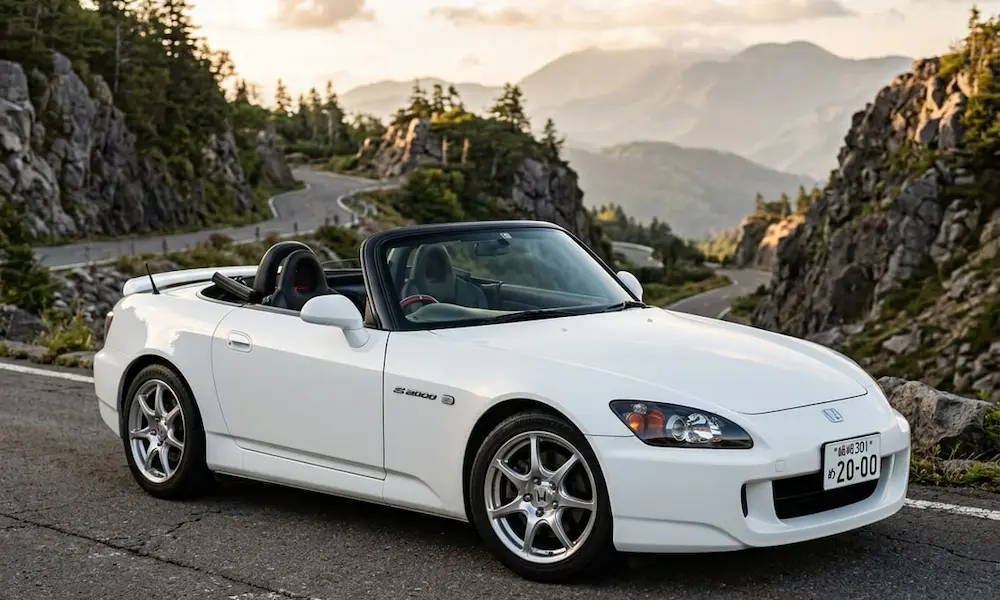
Honda S2000 (High-Performance): $200–$600
The S2000’s F20C and F22C engines rev to 9,000 RPM. That means precise valve lash isn’t just about performance — it prevents pistons from smashing into valves.
Enthusiast mechanics familiar with the platform quote $200–$300 for the labor. Dealerships unfamiliar with the aging platform can quote upward of $600. Choosing the wrong shop here isn’t just expensive — a too-tight exhaust valve triggers misfires and a check engine light, meaning the entire job needs repeating.
Subaru Boxer Engines (WRX, STI, Legacy GT): $1,500–$3,600
This is where things get expensive fast. Subaru’s horizontally opposed “boxer” engines sit inches from the frame rails. There’s almost no room for feeler gauges, let alone wrenches.
Worse, many Subaru DOHC turbo engines use a shim-under-bucket design. If a clearance is out of spec, the mechanic can’t just turn an adjustment screw. They must remove the timing belt or chain, pull the camshafts, extract the shim buckets, measure each shim with a micrometer, and reassemble the entire timing system.
On most DOHC Subarus, the engine must be physically pulled from the chassis to do this job properly. That alone can push flat-rate labor to 36 hours in extreme diagnostic cases, with total costs reaching $1,500–$3,600.
Many Subaru owners skip the service entirely — and then face burnt exhaust valves past 100,000 miles. That’s a far more expensive lesson.
One exception: Older SOHC naturally aspirated Subaru engines use a simpler screw adjuster and can be serviced with the engine in the car, dramatically reducing cost.
Classic Air-Cooled Porsche 911 (964, 930 Turbo): $400–$800
Air-cooled Porsches don’t have liquid coolant to stabilize engine temperatures, so they’re subject to extreme heat swings. Porsche specialists mandate a valve adjustment every 12,000 miles — one of the shortest intervals in the automotive world.
The intake and exhaust valves both require exactly 0.10mm (0.004 inches) of clearance. The procedure involves dropping the exhaust pipes, draining up to 12 quarts of oil, and removing the aluminum valve covers.
Labor rates at Porsche specialists can exceed $200 per hour, and the job typically takes 2–3 hours. That puts the total at $400–$800 including new valve cover gaskets.
Skip this service on a classic 911? A top-end rebuild starts at $5,000–$10,000. A full case-split rebuild runs $15,000–$30,000. The $600 adjustment looks pretty good by comparison.
Motorcycle Valve Adjustment Costs: $170–$1,000+
Motorcycles rev harder than cars, which means hydraulic lifters won’t survive. Nearly every performance motorcycle uses solid lifters and needs routine valve checks.
Sportbikes (Kawasaki ZX-14, Yamaha R1): $650–$850
Before a mechanic touches the engine on a fully faired sportbike, they must remove the fairings, seat, fuel tank, airbox, and sometimes the radiator. The industry standard for a major valve service on a sportbike runs $650–$850, covering disassembly, valve checks, new gaskets, and spark plugs.
If clearances need adjustment, the technician must remove the camshafts, swap out shims, and re-time the engine — effectively doubling the labor. A novice attempting this at home should expect 30–60 hours of garage time, which puts the professional $850 fee in a very different light.
BMW Boxer Twins: ~$170–$400
BMW’s boxer twins have cylinder heads that stick out into the open air — no fairings to remove, no tight spaces to navigate. A dealer technician can complete a valve check in roughly 1.3 hours at $129–$140 per hour, making the initial inspection about $170. If shim adjustments are required, add 1.7 hours for a total near $400. BMW owners get a genuine bargain here.
Ducati Desmodromic Systems: $1,000+
Ducati uses a proprietary valve system with no closing springs — a secondary rocker arm physically pulls the valve shut. This Desmodromic design means twice as many clearances to measure and adjust per cylinder. Historically, a full Desmodromic service required up to 12 hours of specialized labor, pushing routine maintenance well past $1,000 at dealerships.
What Affects the Price You’ll Actually Pay?
Beyond engine type, a few key variables push quotes up or down:
Shop type matters enormously.
- Independent shops: $70–$120/hour
- Franchise dealerships: $125–$250/hour
- National average shop rate: $142.82/hour
Flat-rate billing is how shops calculate your bill. If the labor guide says a job takes 4.6 hours, you pay for 4.6 hours — whether the mechanic finishes in three or takes seven. You can check repair estimates through tools like Kelley Blue Book’s repair pricing before agreeing to any quote.
The cold engine requirement adds time. Valve measurements must be taken at below 100°F. Measuring a warm engine produces inaccurate readings, so many shops require an overnight drop-off. Factor in transportation costs if your car needs to stay overnight.
Regional cost of living shifts prices significantly. The same Honda valve adjustment runs $300–$400 at a rural independent shop and $598–$700 at an urban dealership.
What Happens If You Skip the Valve Adjustment?
Skipping a valve adjustment doesn’t just hurt performance. It destroys hardware.
As the valve sinks deeper into the seat, clearance shrinks toward zero. When it hits zero, the camshaft holds the valve permanently open. Combustion gases squeeze past the gap. The valve can’t transfer heat to the cylinder head. The metal overheats, melts at the edges, and burns away.
You’ll notice: rough idle, severe misfires, a rich exhaust smell, check engine lights, and lost acceleration. Superheated gases escaping past an open valve cause the metal to literally burn.
What a Burnt Valve Actually Costs
Once a valve burns, an adjustment won’t fix it. You need a full cylinder head rebuild. Here’s what that looks like financially:
| Repair Component | Estimated Cost (USD) |
|---|---|
| Replacement engine valves (full set of 8) | $160–$400 |
| Valve stem seals | $30–$80 |
| Cylinder head gasket set | $100–$350 |
| Machine shop services (grinding, seat cutting) | $150–$350 |
| Mechanic labor (7–10+ hours) | $840–$1,500+ |
| Total for a four-cylinder engine | $1,280–$2,680+ |
For a V6, the number climbs to $3,500–$6,000 because you’re dealing with two separate cylinder heads and 12–18 labor hours. At a national average shop rate of $142.82/hour, labor alone can push past $2,500.
The entire teardown — draining fluids, removing the intake manifold, pulling the timing chain, extracting the cylinder head, sending it to a machine shop, and reassembling everything with new gaskets and head bolts — is a major operation. Parts account for only 15–25% of a valve job’s total cost. Labor drives 75–85% of the bill.
A skipped $300–$400 valve adjustment routinely turns into a $2,500–$4,500 repair. On a high-performance or classic platform, it can hit five figures.
Should You DIY a Valve Adjustment?
For simple inline four-cylinder engines, a competent home mechanic can save real money with the right tools. You’ll need:
- Precision feeler gauges (0.001–0.010 inch range)
- A digital micrometer for measuring shim thickness
- A specialized valve adjustment wrench for screw-type lifters
- A torque wrench to avoid stripping aluminum threads
The biggest risk is error. Failing to identify top dead center for each cylinder produces completely inaccurate measurements. Setting the locknut too loose causes the adjuster to back out while the engine runs, which instantly destroys the valvetrain. Setting the valves too tight burns them — sending you straight to that $2,500+ repair you were trying to avoid.
For V6s, Boxer engines, Desmodromic Ducatis, or any shim-under-bucket system, the honest advice is: pay the professional. The complexity and the consequences of a mistake make DIY a bad bet on these platforms.
Quick Cost Summary: Valve Adjustment by Vehicle
| Vehicle Type | Estimated Valve Adjustment Cost |
|---|---|
| Honda inline 4-cylinder (Civic, Fit, Accord) | $300–$700 |
| Honda V6 (Odyssey, Pilot, Accord V6) | $600–$1,300 |
| Honda S2000 | $200–$600 |
| Subaru DOHC boxer (WRX, STI) | $1,500–$3,600 |
| Subaru SOHC naturally aspirated | $300–$600 |
| Classic air-cooled Porsche 911 | $400–$800 |
| Sportbike (ZX-14, R1) | $650–$850 |
| BMW boxer twin | $170–$400 |
| Ducati Desmodromic | $1,000+ |
| Heavy-duty commercial diesel | Varies; critical at 250–1,000 hrs |
The bottom line on how much a valve adjustment costs: plan for $300–$700 on a straightforward inline four-cylinder, $600–$1,300 on a V6, and potentially $1,500–$3,600 on complex architectures like a Subaru boxer. Pay attention to your service manual’s intervals. The cost of the adjustment is almost always a fraction of what you’ll pay if you ignore it.