Self-driving cars aren’t science fiction anymore — but they’re not what Hollywood promised either. If you’re shopping for a car with autonomous driving tech, the options are genuinely impressive. Stick around and we’ll break down exactly what’s available, what it actually does, and what it’ll cost you.
What Does “Autonomous Driving” Actually Mean Right Now?
Before diving into specific cars, let’s clear up a common misconception. “Autonomous driving” covers a huge range of capabilities — from basic cruise control to fully driverless robotaxis.
The Society of Automotive Engineers defines six levels of automation:
- Level 0 — No automation. You do everything.
- Level 1 — Basic assistance (adaptive cruise OR lane centering, not both).
- Level 2 — Simultaneous steering and speed control. You still supervise.
- Level 2+ / 2++ — Advanced Level 2. Handles complex city driving, lane changes, intersections. Still needs your attention.
- Level 3 — Car drives itself in specific conditions. You can look away briefly.
- Level 4 — Fully driverless within a defined area.
- Level 5 — Fully autonomous everywhere. Doesn’t exist yet.
Here’s the honest truth about 2026: nearly every consumer car sits at Level 2 or Level 2+. You stay legally responsible. You keep watching the road. The car just does a lot of the physical work for you.
True Level 4 driving? That’s robotaxis — Waymo, Zoox, and a small Tesla fleet operating in select cities. More on those shortly.
What Cars Have Autonomous Driving? The Full 2026 Breakdown
General Motors: Super Cruise
GM’s Super Cruise is arguably the most proven hands-free system on the market. By spring 2026, GM customers had logged over one billion hands-free miles — roughly 2,100 trips to the moon and back. Nearly half of those miles happened in the past year alone, showing how fast adoption is accelerating.
How it works:
- Uses precision LiDAR map data, cameras, radar, and an infrared camera watching your eyes
- Operates hands-free on approximately 750,000 miles of mapped highways across the US and Canada
- A green light bar on the steering wheel tells you the system is active
- Seat vibrates and light turns red when you need to take over
Automatic lane changes let Super Cruise pass slower traffic and return to your lane. It even works while towing a trailer — a genuine first.
2026 GM vehicles with Super Cruise:
| Brand | Models |
|---|---|
| Chevrolet | Equinox EV, Blazer EV, Silverado, Silverado EV, Traverse, Tahoe, Suburban |
| GMC | Sierra, Sierra EV, Yukon, Hummer EV Pickup, Hummer EV SUV, Acadia |
| Cadillac | Escalade, Vistiq |
| Buick | Enclave |
That’s 23 different models total. GM is using the data from a billion hands-free miles to train next-gen “eyes-off” technology, slated for the 2028 Cadillac Escalade IQ.
Ford: BlueCruise
Ford’s BlueCruise competes directly with Super Cruise in the hands-free highway space. It covers over 130,000 miles of pre-mapped “Blue Zones” — about 97% of controlled-access highways in the US and Canada.
Ford offers two versions in 2026:
- BlueCruise 1.4 (F-150, Expedition) — Hands-free driving, but you tap the turn signal to trigger lane changes
- BlueCruise 1.5 (Explorer, Mustang Mach-E) — Fully automatic lane changes, no input needed from you at all
Both versions include in-lane repositioning — the system automatically nudges the car away from large trucks in adjacent lanes. Small detail, big comfort improvement on long highway drives.
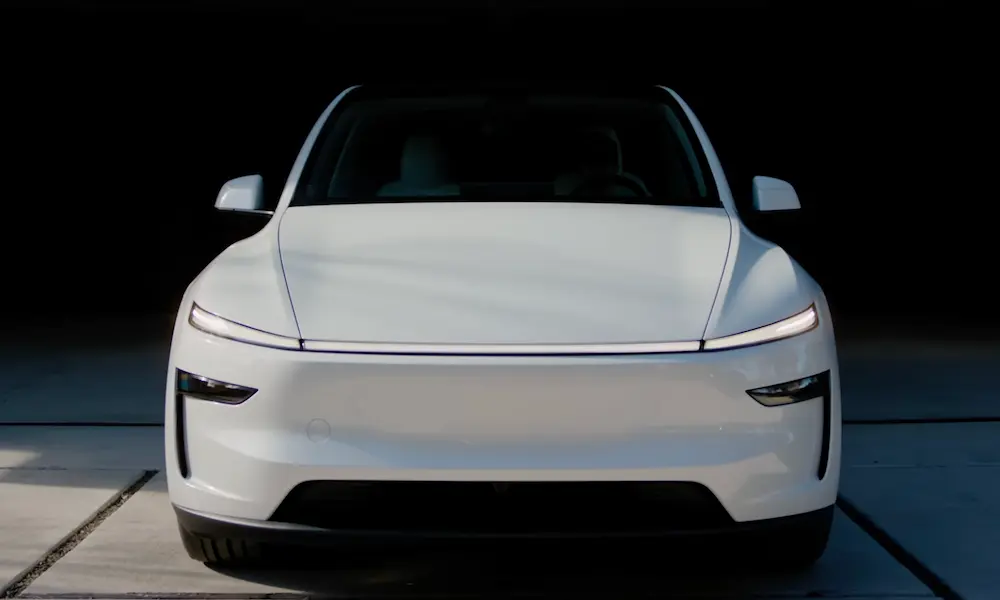
Tesla: Full Self-Driving (Supervised)
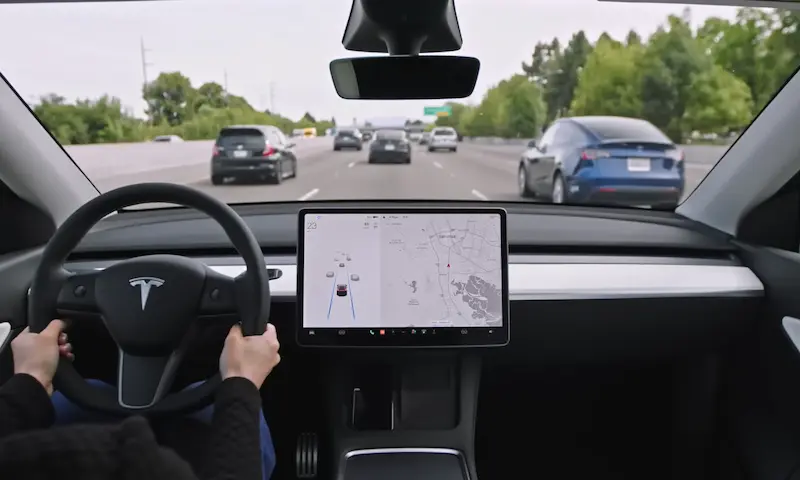
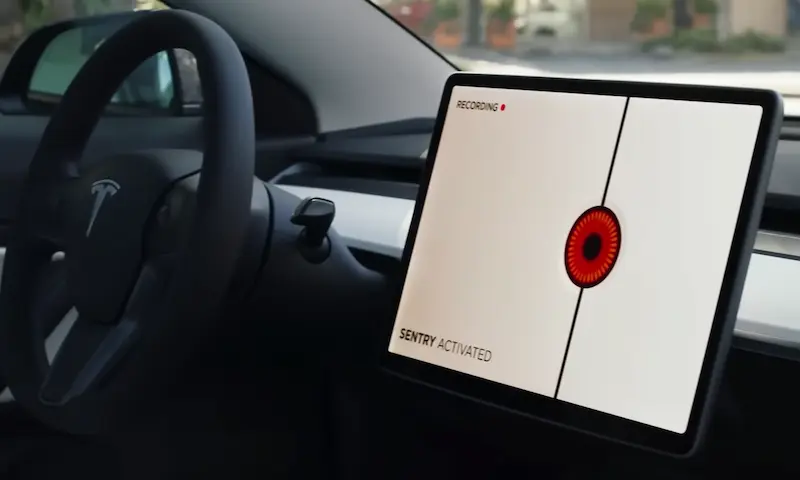
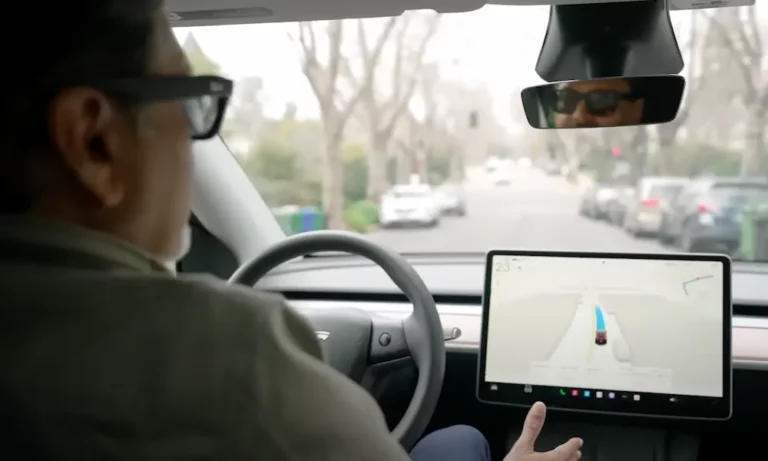
Tesla’s approach is the most ambitious — and the most controversial. Full Self-Driving (Supervised) attempts point-to-point navigation across city streets, not just highways. It handles traffic lights, unprotected left turns, roundabouts, and even dirt roads.
By 2026, Tesla FSD had logged over 6.8 billion miles globally — an enormous dataset used to train its neural networks. The latest software (Version 14) uses an end-to-end AI model that translates camera footage directly into steering and braking decisions.
The big catch? Tesla uses cameras only. No LiDAR. No radar. The company argues that because humans drive using vision, AI should too. Critics argue this approach struggles in fog, heavy rain, and low-light conditions.
Despite the “Full Self-Driving” name, the NHTSA classifies it as Level 2. You must supervise constantly. Tesla is available on the Model S, Model 3, Model X, Model Y, and Cybertruck.
Rivian: Universal Hands-Free
Rivian made a bold move in 2026 — expanding hands-free driving well beyond mapped highways. Universal Hands-Free works on over 3.5 million miles of roads across North America, including rural two-lane roads and suburban surface streets.
The hardware behind it is impressive. Rivian unveiled its proprietary Rivian Autonomy Processor (RAP1), a custom chip that processes five billion pixels of sensor data per second across eleven cameras and five radars.
One important limitation: Universal Hands-Free doesn’t stop for traffic lights or stop signs. It handles lane centering and adaptive cruise control beautifully, but intersections are still your job.
Currently available on second-generation R1T trucks and R1S SUVs, with the upcoming R2 also confirmed.
BMW: Highway Assistant
BMW’s Highway Assistant lets you drive hands-free at up to 85 mph on compatible divided highways. BMW owners have collectively logged over 200 million kilometers using it — a strong signal of reliability.
The standout feature? Eye-activated lane changes. When the car suggests overtaking a slower vehicle, you simply glance into the corresponding side mirror to approve. No touching the wheel or tapping the stalk needed.
BMW also focuses on what it calls “Symbiotic Drive” — keeping transitions between system control and human control smooth, so minor steering adjustments don’t abruptly cancel the system.
2026 BMW models with Highway Assistant:
- 5 Series, 7 Series, iX, X5, X6, X7, XM, iX3
Mercedes-Benz: The Level 3 Retreat
Mercedes-Benz made headlines as the first automaker to achieve certified Level 3 status with its Drive Pilot system — legally allowing drivers to take their eyes off the road. That technology now exists only on paper for most US buyers.
The reality? Drive Pilot only worked under 40 mph, only in California and Nevada, only in clear weather, only in traffic jams, only on specific freeways. The cost and constraints were simply too high for mainstream adoption.
So Mercedes dropped Level 3 from the 2026 S-Class in the US and replaced it with MB Drive Assist Pro — a Level 2++ system built with NVIDIA’s DRIVE AGX platform and 30 sensors. It handles complex urban navigation, intersections, cyclists, and delivery vehicles — but requires your attention at all times.
It’s actually a more useful system for most people, even if it sounds like a step backward on paper.
Other Notable Systems
Several other manufacturers offer strong Level 2 options worth knowing:
- Genesis (GV70, G90) — Highway Driving Assist 2 learns your personal driving habits, like your preferred following distance and how hard you accelerate
- Volvo (XC90, EX90) — Pilot Assist prioritizes smooth, predictable behavior tightly integrated with collision avoidance
- Lexus (LS) — Teammate takes a collaborative approach, suggesting maneuvers rather than executing them without input
- Nissan (Ariya, select Leaf trims) — ProPilot 2.0 offers hands-free single-lane highway cruising on mapped roads
The Full Comparison Table: Autonomous Driving Systems in 2026
| Manufacturer | System | Level | Key Models | Hands-Free Roads |
|---|---|---|---|---|
| GM | Super Cruise | 2+ | Silverado, Tahoe, Escalade, Hummer EV | 750,000 mapped miles |
| Ford | BlueCruise 1.4 / 1.5 | 2+ | F-150, Explorer, Mach-E, Expedition | 130,000 Blue Zones |
| Tesla | Full Self-Driving (Supervised) | 2 | Model 3, Y, S, X, Cybertruck | Any road (hands-on required) |
| Rivian | Universal Hands-Free | 2+ | R1T, R1S Gen 2, upcoming R2 | 3.5 million dynamic miles |
| BMW | Highway Assistant | 2+ | 5 Series, X5, iX, 7 Series | Divided highways, up to 85 mph |
| Mercedes-Benz | MB Drive Assist Pro | 2++ | S-Class, CLA | Urban + highway |
| Volvo | Pilot Assist | 2 | XC90, EX90 | Highway lane centering |
| Genesis | HDA 2 | 2 | GV70, G90 | Highway, habit-learning |
| Lexus | Teammate | 2+ | LS | Mapped highways |
| Nissan | ProPilot 2.0 | 2+ | Ariya, Leaf | Mapped highway lanes |
Robotaxis: Where Level 4 Actually Lives
Truly driverless driving isn’t in your driveway — it’s operating as a commercial service in specific cities.
Waymo Dominates the Robotaxi Market
Waymo is the clear leader. By mid-2026, the company provides over 500,000 paid rides per week and has logged more than 200 million fully autonomous miles. Their fleet of roughly 4,000 vehicles — primarily Jaguar I-Paces, with Hyundai Ioniq 5s joining the fleet — operates across 14 US cities including San Francisco, Phoenix, Los Angeles, Austin, Denver, Las Vegas, and Tampa.
Waymo’s safety approach is meticulous: map thoroughly, test with safety drivers, validate against federal safety standards, then go fully driverless. It’s slow, but it works.
Expansion isn’t without friction though. In Washington D.C., local lawmakers have proposed $5 million operational permit fees, per-mile taxes, and 250,000 miles of mandatory pre-deployment testing — pushing any DC launch to 2028 at the earliest.
Zoox: The Wildcard Purpose-Built Robotaxi
Amazon-owned Zoox built its vehicle from scratch — no steering wheel, no pedals, bidirectional movement, sliding doors. It currently offers free public rides in Las Vegas and employee-only testing in San Francisco.
In summer 2026, Zoox issued a voluntary software recall after a vehicle failed to recognize heavy smoke and drove into an active fire scene. A human employee had to physically guide it out. It’s a reminder that edge cases can be genuinely strange — and dangerous.
Tesla’s Robotaxi Reality Check
Tesla’s robotaxi ambitions are significant. The actual fleet? Tiny. Austin started with 17 cars. Tampa and Orlando launches followed, but the combined unsupervised fleet remains in the dozens, not thousands.
More concerning: NHTSA data revealed that Tesla’s remote human operators — who can take direct joystick control over the car via a cellular link — have caused crashes. One drove a vehicle into a tree stump in Houston. Another hit a construction barricade.
Waymo’s remote operators can’t do that. They draw suggested paths on a screen; the car’s AI decides whether to follow them. That’s a meaningful safety distinction.
What Does Autonomous Driving Cost in 2026?
The subscription model has officially taken over. Tesla ended its one-time FSD purchase option in February 2026, killing what was previously a $15,000 upfront option. Competitors followed the same playbook.
| System | Model | 2026 US Pricing |
|---|---|---|
| Tesla FSD | Subscription only | $99/month |
| Rivian Universal Hands-Free | Subscription or one-time | $49.99/month or $2,500 flat |
| Ford BlueCruise | Subscription or one-time | $49.99/month, $495/year, or $2,495 flat |
| GM Super Cruise | Subscription via OnStar | ~$25/month after trial |
The shift makes sense from a business perspective — continuous AI training requires continuous funding. A one-time fee can’t sustain a decade of software updates. For consumers, subscriptions lower the barrier to entry. You can activate BlueCruise for a summer road trip and cancel in winter.
The LiDAR vs. Camera Debate Still Isn’t Settled
Two philosophies dominate autonomous vehicle hardware in 2026.
Multi-modal stacks (GM, BMW, Mercedes, Waymo, Rivian) combine cameras, radar, and LiDAR. This redundancy is considered essential for reliability in fog, heavy rain, glare, and darkness. Rivian is actively adding LiDAR to its Gen 3 hardware for the R2 platform.
Camera-only (Tesla) bets that AI trained on billions of miles of real footage can infer depth and speed from visuals alone. It slashes hardware costs. Critics argue it struggles in conditions where human vision also struggles.
Neither approach has definitively won. But commercial robotaxi operators — where safety failures carry enormous legal and reputational consequences — have universally chosen multi-modal stacks.
The Bottom Line on Cars With Autonomous Driving
The question isn’t really which cars have autonomous driving anymore. It’s what kind of autonomy do you actually need?
For long highway commutes, GM’s Super Cruise and Ford’s BlueCruise are mature, reliable, and genuinely reduce fatigue. For urban complexity and wider road coverage, Rivian’s Universal Hands-Free and Tesla’s FSD push the boundaries — with tradeoffs. For a true driverless experience today, you’re hailing a Waymo.
The global autonomous vehicle market sits at $2.6 trillion and is heading toward $8.4 trillion by 2035. The technology is real, it’s here, and it’s getting better fast. Just keep your eyes on the road for a little while longer.