Thinking about towing with your Model Y? You’ve got questions — capacity limits, range loss, software quirks, charging headaches. This guide covers everything you need to know about the Tesla Model Y tow package, from hardware specs to real-world range math. Stick around to the end — the charging section alone could save your next road trip.
What’s Actually in the Tesla Model Y Tow Package?
The factory tow package isn’t just a hitch bolted to the bumper. It’s a full system.
Here’s what you get:
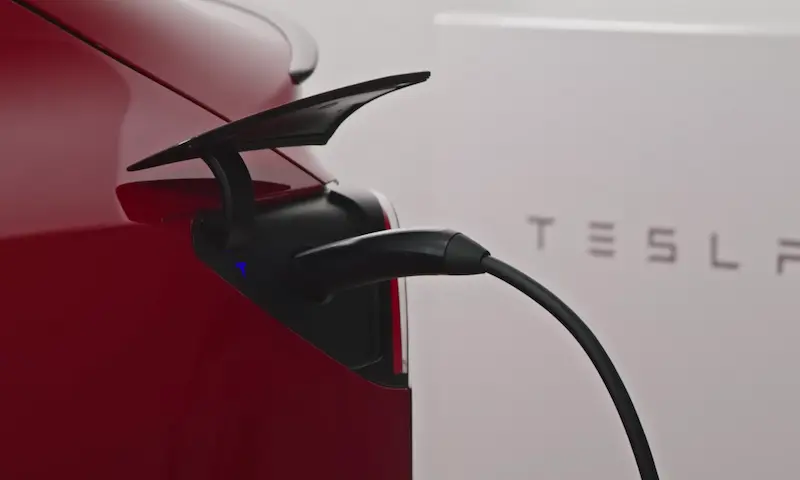
- High-strength steel tow bar with a Class II hitch receiver
- 2-inch by 2-inch square receiver opening — the standard size for most towing gear and bike racks
- 7-pin connector for trailer lighting, brakes, and auxiliary power
- Trailer Mode software that automatically activates when you plug in
During installation, technicians remove the entire rear bumper beam and replace it with the tow bar assembly. This means the tow bar does double duty — it’s both your crash structure and your tow point. The forces transfer directly into the car’s primary structural members, not just the bumper skin.
One thing that surprises many owners: the hitch receiver handles a 350-pound tongue weight when towing a trailer, but drops to only 160 pounds for accessory carriers like bike racks. Why? A cargo rack extends several feet behind the car, creating a leverage arm that multiplies stress on the mounting bolts. Keep that in mind before you load up a heavy bike carrier.
Tesla Model Y Towing Capacity by Configuration
The headline number is 3,500 pounds, but that’s not the whole story. Your actual limit depends on wheel size and how many people are in the car.
| Model Y Variant | Wheel Size | Occupants | Max Trailer Weight (lbs) | Max Tongue Weight (lbs) |
|---|---|---|---|---|
| 5-Seater / Performance | 18″, 19″, 20″, 21″ | Up to 5 | 3,500 | 350 |
| 7-Seater Premium | 19″ | Up to 6 | 3,500 | 350 |
| 7-Seater Premium | 19″ | 7 | 2,000 | 200 |
| 7-Seater Premium | 20″ | Up to 4 | 3,500 | 350 |
| 7-Seater Premium | 20″ | 5 | 3,100 | 310 |
| 7-Seater Premium | 20″ | 6 | 2,000 | 200 |
| 7-Seater Premium | 20″ | 7 | Not Permitted | N/A |
| 7-Seater Premium | 21″ | Up to 7 | 1,200 | 120 |
The 7-seat model with 20-inch wheels is the trickiest configuration. Fill all seven seats, and towing is completely prohibited. The tire load index on those wheels simply can’t handle both a full cabin and trailer tongue weight at the same time. If you regularly carry a full load of passengers and need to tow, the 5-seat configuration gives you far more flexibility.
How the 7-Pin Connector Works
The Model Y uses a standard 7-pin SAE J2863 connector — the same plug you’d find on most trucks. Here’s the function of each wire:
- Yellow — Left turn and stop lights
- White — Ground
- Blue — Trailer brake controller output
- Green — Right turn and stop lights
- Orange — 12V (or 16V) auxiliary power
- Brown — Tail and running lights
- Gray — Reverse lights
Important detail: the blue wire is there, but the Model Y doesn’t have a built-in brake controller. For trailers over 1,650 pounds, you’ll need a separate aftermarket brake controller. Many owners use wireless plug-and-play units that work off the existing 7-pin signals — no interior wiring required.
Also worth noting for newer Model Ys: Tesla transitioned from a 12V lead-acid auxiliary battery to a 16V lithium-ion unit. Some vehicles with this newer battery may not supply auxiliary power through the orange pin. That means your trailer’s lights and brakes work fine, but you can’t charge a trailer’s house battery or run interior accessories in transit. Check your specific hardware config if auxiliary power matters to you.
The Body Control Module Issue You Need to Know About
If you’re retrofitting a tow package on a 2021 or 2022 Model Y, there’s a potential snag. Some vehicles from those production years shipped with a left-hand Body Control Module that lacks the internal circuitry to power the trailer harness.
Tesla issued service bulletin SB-22-17-014 to address this. When technicians install a retrofit tow package, they check the existing module. If it’s a non-tow-capable version, it must be replaced with a premium module that includes the trailer controller hardware. That replacement involves pulling interior trim, instrument panel components, and footwell covers — it’s a significant job. Factor this into your expectations if you’re scheduling a retrofit on an early build.
How Trailer Mode Changes the Way Your Model Y Drives
Trailer Mode isn’t just a badge on the screen. It actively changes how the car behaves.
What changes when Trailer Mode activates:
- Stability control recalibrates to detect and dampen trailer sway before it gets dangerous
- Automatic emergency braking softens significantly — an aggressive stop could cause a heavy trailer to jackknife
- Traffic-Aware Cruise Control adds extra following distance to account for longer stopping distances
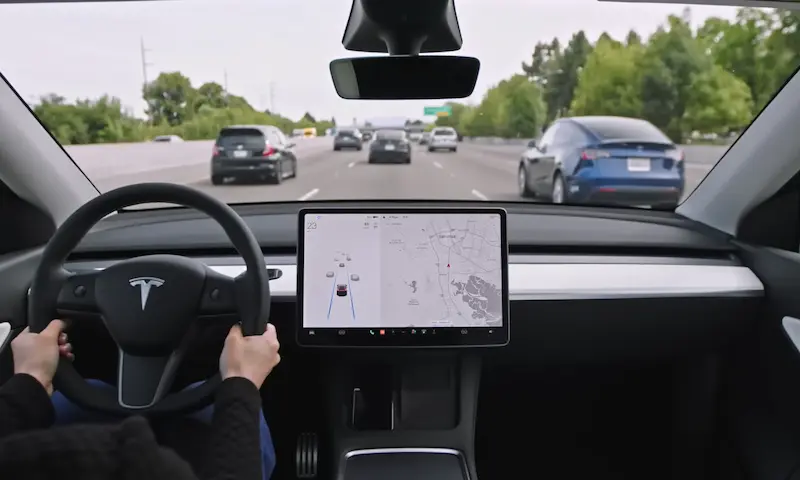
- Autosteer and Autopark disable — the cameras can’t accurately read the environment with a trailer blocking the rear view
- Rear parking sensors turn off — no constant beeping from the trailer sitting right there
The car detects the trailer automatically when you plug the harness in while in Park. One quirk: it doesn’t always disengage automatically when you unplug. You may need to manually toggle it off through the Controls menu.
How the Car Estimates Range While Towing
The Model Y doesn’t ask you to type in your trailer’s weight. Instead, the trip planner uses a learning approach. Over the first few miles, it monitors actual energy consumption and compares it against what an unladen car would use. From that data, it calculates the drag and weight penalty of your specific trailer and adjusts the estimated arrival battery percentage in real time.
It’s a smart system, but it means your energy estimate during the first few miles of a trip will be less accurate. Keep a larger buffer than usual until the car gets its bearings.
Real-World Range Loss: What to Actually Expect
This is the number everyone wants. The honest answer is: trailer shape matters more than trailer weight.
Aerodynamic drag grows exponentially with speed. Because the Model Y is so slippery on its own, adding a tall boxy trailer absolutely hammers efficiency.
| Towing Scenario | Energy Use (Wh/mi) | Practical Range (miles) |
|---|---|---|
| Unladen Highway Driving | 300–350 | 220–250 |
| Light Utility Trailer (1,000 lbs) | 500–600 | 140–170 |
| Aerodynamic Camper (2,500 lbs) | 650–750 | 110–140 |
| Boxy Travel Trailer (3,500 lbs) | 850–1,000 | 80–110 |
A low-profile teardrop camper sits mostly in the Model Y’s slipstream — you’ll lose around 30–40% of your range. A full-height travel trailer at max capacity can cut range by 50–60%.
The single most effective thing you can do to extend range while towing: slow down. Dropping from 75 mph to 65 mph can improve energy economy by 15–20%. That often means the difference between comfortable Supercharger stops and arriving on fumes.
The other upside of electric towing: going downhill actually helps. Regenerative braking turns the trailer’s momentum into battery charge on descents, while also keeping the mechanical brakes cool on long grades.
Charging on a Road Trip: The Pull-Through Problem
Most Supercharger stalls are back-in only. With a trailer attached, backing in blocks the drive aisle or adjacent stalls. The practical result: unhitch the trailer in a nearby parking spot, pull the car to a stall, charge, then rehitch. That cycle easily adds 20–30 minutes to every charging stop.
Tesla has been working on this. Newer Supercharger locations increasingly include pull-through stalls that work like a traditional gas station pump. And in late 2024, Tesla rolled out a software update that shows “Trailer-Friendly” indicators on the navigation map when Trailer Mode is active. The map highlights stations with pull-through stalls or enough space to accommodate a trailer without blocking traffic. Plan your route around those stations and your stops get dramatically easier.
Factory Tow Package vs. Aftermarket Hitch
You’ve got two main paths here.
Factory Tesla tow package:
- Ordered at build: ~$1,000
- Retrofitted after delivery: ~$1,300 (includes parts, shipping, and labor)
- Full software integration — Trailer Mode activates automatically
- Requires service center installation
Aftermarket hitches (Curt, Draw-Tite, Stealth Hitches):
- Often cheaper upfront
- Can sometimes be self-installed or done by a local shop
- Major drawback: no automatic Trailer Mode activation
Without the factory harness triggering Trailer Mode, the car won’t adjust stability control, the rear sensors will keep beeping, and range estimates won’t adapt to your trailer’s drag. Some advanced users have manually enabled Trailer Mode via Tesla’s Toolbox diagnostic software, but that requires a paid subscription and solid technical know-how.
For most owners, the factory package is worth the premium specifically because of the software integration.
Legacy vs. Juniper Model Y: Hitch Cover Differences
One small but genuinely annoying difference between model years:
Legacy Model Y (2020–2025): The hitch cover uses 15 plastic clips. Getting it off often means a flathead screwdriver, a specialized pry tool, and a fair amount of frustration. Scratched plastic and broken clips are common.
Juniper Model Y (2026+): Tesla redesigned the cover with a locking cylinder — insert a flat tool, rotate 90 degrees, and the cover pops out cleanly. It’s the same mechanism used on the Model X. A small change that makes a real difference if you’re attaching and removing a hitch regularly.
Towing Safety Checklist
Before every trip with a trailer, run through these:
- Tire pressure — 42 psi cold, all four tires. Tongue weight loads the rear axle hard.
- Ball mount lock — confirm it’s seated and the cotter pin is in place
- Safety chains — cross them under the tongue to form a cradle that catches it if it disconnects
- Trailer lights — test brake lights, turn signals, and running lights before you leave
- Brake pads — if you tow frequently, do an occasional brake burnish (several firm stops from highway speed) to keep the friction surfaces clean. The Model Y leans heavily on regen braking, so pads can develop surface oxidation over time.
What’s Coming: Features the Cybertruck Has That the Model Y Doesn’t (Yet)
The Cybertruck already runs a more advanced towing software suite. It’s a useful preview of what the Model Y might gain through over-the-air updates down the road.
| Feature | Model Y (Current) | Cybertruck |
|---|---|---|
| Trailer Detection | Auto on plug-in | Auto on plug-in |
| Trailer Profiles | Not supported — uses live learning | Saves specific mass, dimensions, and name |
| Brake Controller | Aftermarket only | Integrated, software-based |
| Brake Gain Adjustment | Not supported | Adjustable via touchscreen |
| Trailer Alarm | Standard security | Alerts if trailer unplugs while locked |
The Trailer Profiles feature is the most requested for Model Y. Right now the car learns your trailer’s drag on the fly each trip. Saved profiles would give you accurate range estimates from mile one. Tesla’s track record with over-the-air updates suggests these features could land on existing hardware — but there’s no confirmed timeline yet.