Tesla’s $12.99 monthly supercharging membership lets non-Tesla EV owners access the same rates as Tesla drivers. But is it actually worth the cost? I’ve crunched the numbers and analyzed real-world usage patterns to help you decide if you should subscribe or save your money.
How Tesla’s Supercharging Membership Works
Tesla’s Supercharger network operates on a two-tier pricing system. Tesla vehicle owners automatically get lower “member” rates, while drivers of other EVs pay a premium of 25-35% per kilowatt-hour — unless they subscribe to the membership.
For $12.99 monthly, non-Tesla EV owners can eliminate this price difference and charge at the same rates Tesla owners enjoy. This typically means paying around $0.32-0.48 per kWh instead of the non-member rates of $0.50-0.64 per kWh, saving roughly $0.10-0.20 per kWh depending on location.
The membership has no long-term commitment — you can activate it for a single month of travel and cancel afterward without penalties.
The Break-Even Point: How Much Charging Makes It Worthwhile
Let’s cut to the chase: Is the membership worth it for you? It depends entirely on how much you charge.
To break even on the $12.99 monthly fee, you’ll need to charge between 65-130 kWh per month at Tesla Superchargers. This translates to approximately:
| Vehicle Type | Approx. kWh to Break Even | Typical Sessions Per Month |
|---|---|---|
| Chevy Bolt | 85-90 kWh | 2-3 sessions |
| Ford Mustang Mach-E | 70-75 kWh | 1-2 sessions |
| Rivian R1T | 65-70 kWh | 1 large session |
For context, a typical charging session might add 20-80% battery capacity to your vehicle. Larger EVs with bigger batteries reach the break-even point faster than smaller vehicles since they take on more energy per session.
Who Benefits Most from the Membership
The membership delivers clear value for specific types of users:
Road trip warriors: If you frequently travel long distances, the savings add up quickly. One Rivian owner reported easily exceeding 100 kWh of charging during a multi-day trip, making the membership immediately profitable.
Drivers without home charging: If you rely primarily on public charging, the membership can save $14-68 monthly depending on your usage patterns.
Strategic users: Many drivers activate the membership only during months they plan road trips, then cancel afterward — maximizing savings without ongoing costs.
The Reliability Factor: Tesla’s Hidden Value Proposition
Beyond just price, Tesla’s Supercharger network offers something competitors can’t match: reliability. Recent studies show Tesla Superchargers maintain a 96% success rate, dramatically outperforming other networks:
| Charging Network | Problem Rate | Reliability Score |
|---|---|---|
| Tesla Supercharger | 4% | 96% |
| Electrify America | 34% | 66% |
| EVgo | 43% | 57% |
| Shell Recharge | 48% | 52% |
Tesla claims 99.9% uptime for its network since 2018, though this measures stations with at least 50% functional capacity rather than individual charger availability.
This reliability factor becomes crucial during road trips, where a failed charging session can mean hours of delays and significant inconvenience.
Comparing Tesla to Other Charging Networks
How does Tesla’s membership stack up against competitors? Let’s compare:
Electrify America offers a cheaper membership at $7.00 monthly, providing member pricing of $0.48 per kWh compared to $0.64 for non-members. However, Tesla’s member rates typically range from $0.32-0.48 per kWh, often making Tesla more economical despite the higher membership fee.
EVgo and ChargePoint generally charge $0.45-0.56 per kWh without membership options, putting Tesla’s member rates on par or better in most markets.
When you factor in the reliability difference, Tesla’s value proposition becomes even more compelling for regular travelers.
Smart Strategies for Maximizing Membership Value
To get the most from Tesla’s membership, consider these approaches:
Time-limited activation: Purchase the membership specifically for road trips, then cancel afterward. The membership activates immediately, so you can sign up the day of your trip.
Seasonal planning: Maintain membership only during peak travel seasons like summer vacations when you’ll exceed the break-even threshold.
Batch your charging: If you’re close to the break-even point, try to consolidate charging into specific months when you have the membership active.
One user documented saving approximately $9 on a single road trip while retaining 30+ days of membership benefits for additional travel.
Vehicle-Specific Considerations
Your specific vehicle can impact the membership’s value in several ways:
Charging port location: Some non-Tesla vehicles may occupy multiple Supercharger spaces due to port positioning, potentially creating access challenges during peak periods.
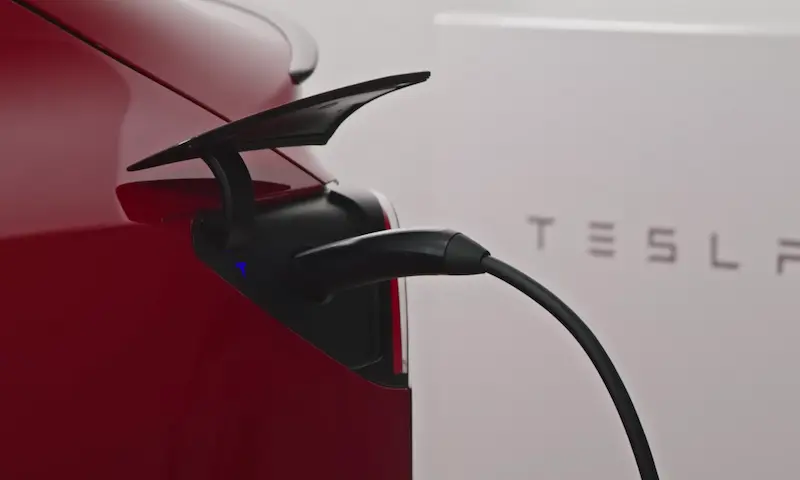
App requirements: Users must initiate charging through the Tesla app to receive membership pricing; plug-and-charge functionality defaults to non-member rates.
Adapter needs: While Ford, Rivian, and other manufacturers now provide free NACS adapters to customers, availability remains limited. This eliminates the $150-200 adapter cost that could extend payback periods.
The Future of Tesla Supercharging
Tesla’s membership strategy reflects broader industry shifts as major automakers like Ford, GM, Rivian, and Volvo adopt Tesla’s NACS standard. Soon, the Supercharger network will accommodate over 70% of U.S. EV sales.
This expansion creates both opportunities and challenges:
Network growth: Tesla continues expanding with over 25,000 ports globally and plans for 500kW charging capabilities, though recent team layoffs temporarily disrupted expansion plans.
Potential congestion: Increased non-Tesla usage may lead to longer wait times at popular locations, which Tesla is addressing through expansion and virtual queuing systems.
Evolving pricing: As competition increases, Tesla may adjust membership pricing or introduce new tiers to balance revenue and accessibility.
The Verdict: Is Tesla Supercharging Membership Worth It?
After analyzing the numbers and real-world usage patterns, here’s who should and shouldn’t subscribe:
Definitely worth it if you:
- Take regular road trips (2+ per month)
- Lack reliable home charging
- Travel in areas with few alternative fast-charging options
- Value charging reliability during critical travel
Probably not worth it if you:
- Charge at Superchargers less than twice monthly
- Have reliable home charging for daily needs
- Live in areas with abundant alternative charging options
- Only take occasional road trips (less than monthly)
The sweet spot lies in strategic usage — activating the membership for travel-heavy months and canceling during periods of minimal Supercharger use.
For most drivers, the decision comes down to simple math: Will you charge more than 85-90 kWh per month at Superchargers? If yes, the membership makes financial sense. If not, you’re better off paying the non-member rates for occasional use.
What’s your typical charging pattern? Have you found the Tesla membership worthwhile for your driving habits?