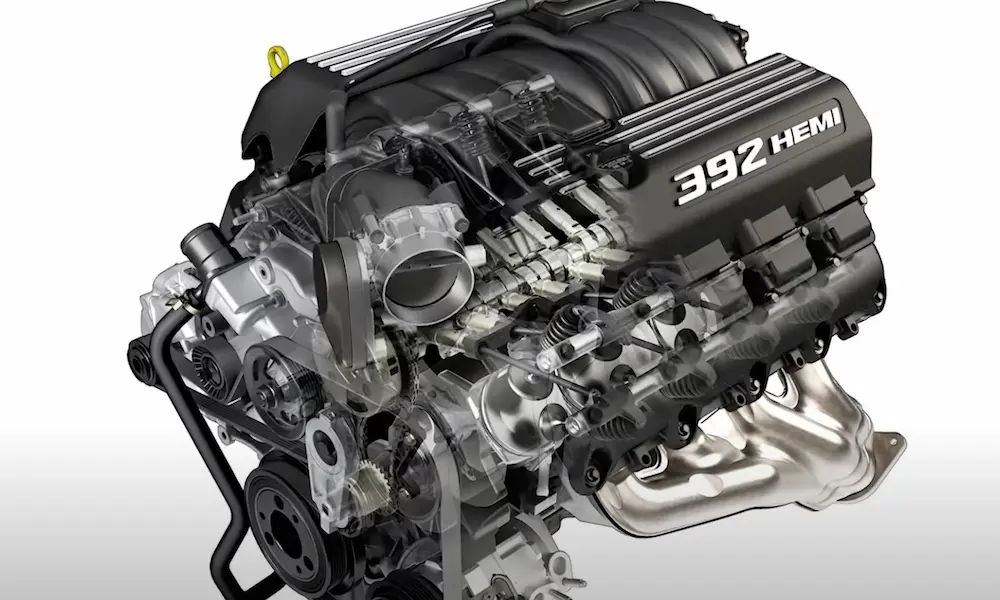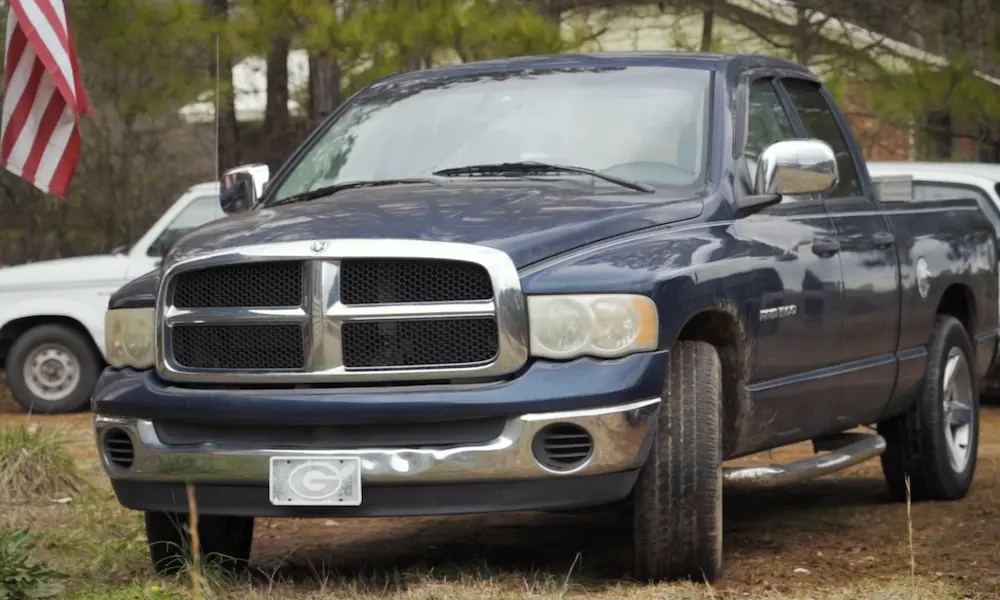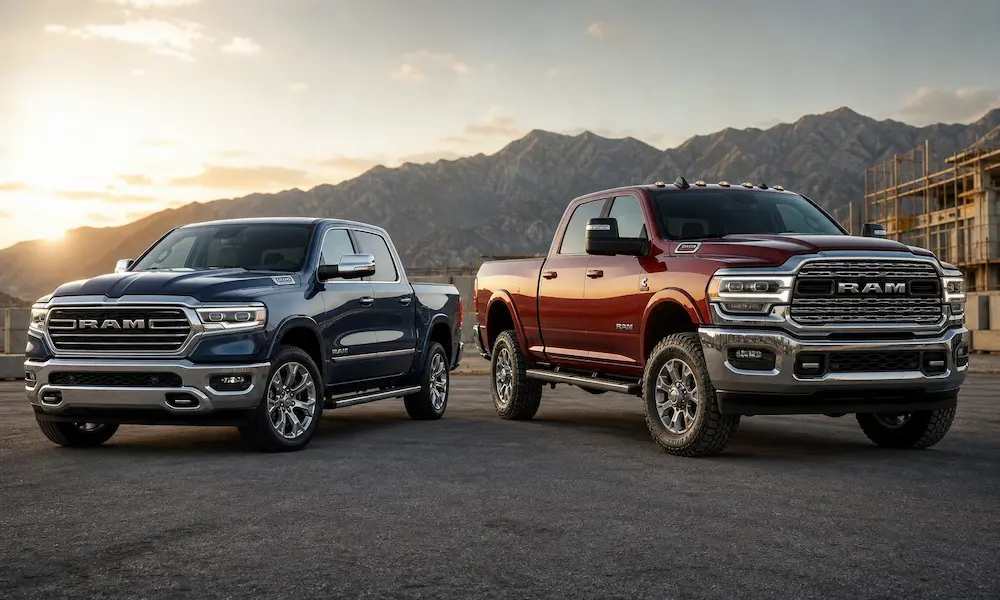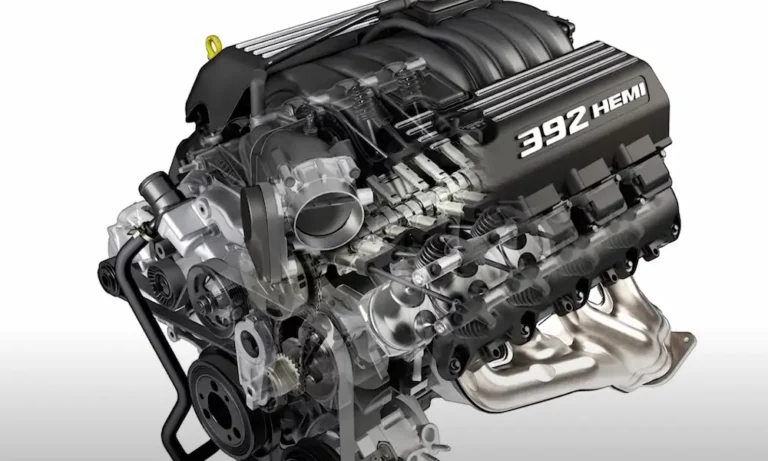
The 5.7 Hemi is one of the most recognizable engines in American automotive history. Whether you own a Ram 1500, a Dodge Challenger, or a Jeep Grand Cherokee, this engine sits at the heart of it. Want to know exactly what makes it tick — from bore and stroke to spark plug count? Keep reading.
What Is the 5.7 Hemi Engine?
The 5.7 Hemi is Chrysler’s third-generation hemispherical V8, debuting in 2003 as a clean-sheet replacement for the aging Magnum engine family. It powers vehicles across the Dodge, Ram, Jeep, and Chrysler lineups — and it’s still going strong today.
The core 5.7 Hemi engine specs break down like this:
| Spec | Detail |
|---|---|
| Engine Type | 90-Degree V8, Pushrod (OHV) |
| Displacement | 345 cubic inches (5.7 liters) |
| Bore | 3.917 inches (99.5 mm) |
| Stroke | 3.578 inches (90.9 mm) |
| Block Material | Cast Iron, Deep Skirt |
| Head Material | Cast Aluminum, Hemispherical |
| Compression Ratio | 9.6:1 (early) / 10.5:1 (post-2009) |
| Fuel System | Sequential Multi-Port Electronic Injection |
| Horsepower Range | 340–395 hp |
| Torque Range | 375–410 lb-ft |
Manufactured at the Saltillo Engine plant in Mexico, this engine was designed for high-volume reliability and heavy-duty use right from the start.
The Engine Block: Cast Iron and Cross-Bolted
The 5.7 Hemi’s foundation is a deep-skirt cast iron block that extends below the crankshaft centerline. That gives the rotating assembly a rock-solid base and cuts down vibration at high RPM.
One standout feature? The cross-bolted main caps — four bolts per main bearing cap (two vertical, two horizontal). This design comes straight from the legendary 426 Hemi of the 1960s. It dramatically improves crankshaft stability under hard load.
| Block Spec | Detail |
|---|---|
| Main Cap Style | 2 vertical + 2 lateral cross-bolts |
| Deck Height | 9.25 inches |
| Bore Spacing | 4.46 inches |
| Block Color | Black |
| Identification Mark | “5.7” cast on driver’s side above oil pan rail |
Early Block vs. Eagle Block
The 2009 “Eagle” revision brought a new block casting to support variable valve timing. Early blocks (2003–2008) carry casting numbers like 53021319AG. The later Eagle blocks, such as 53021319DK, include three additional oil passages and a modified front cam bearing to feed the camshaft phaser.
Rotating Assembly: Crank, Rods, and Pistons
The rotating assembly balances mass and strength for both street driving and towing.
Crankshaft
The standard crankshaft is cast nodular iron with a 3.58-inch stroke. It’s tough enough for everyday use, but performance builders often swap in a forged 6.1 Hemi crank — they share the same stroke. The crankshaft also carries a reluctor ring (32-tooth on early engines, 58-tooth on late) that helps the ECU track engine position for fuel and ignition timing.
Connecting Rods and Pistons
| Component | Material | Key Spec |
|---|---|---|
| Connecting Rods | Powdered Metal, Cracked-Cap | 6.242-inch length |
| Pistons | Hypereutectic Aluminum | Flat-top with valve notches |
| Wrist Pin | Steel Alloy | 0.9456 inches |
| Early Ring Pack | — | 1.5 mm / 1.5 mm / 3.0 mm |
| Late Ring Pack (2009+) | — | 1.2 mm / 1.2 mm / 2.0 mm |
The cracked-cap rod design snaps the cap off a single forged unit, creating a unique mating surface. When it reassembles around the crankshaft journal, the fit is perfect every time — no alignment dowels needed.
The narrower ring pack in post-2009 engines reduces friction against the cylinder wall, improving fuel economy and lowering operating temperatures.
The Hemispherical Cylinder Heads
This is where the “Hemi” name earns its keep. The dome-shaped combustion chamber creates a high surface-area-to-volume ratio that maximizes airflow and fuel burn.
Two large valves sit on opposite sides of each chamber, producing a cross-flow effect that boosts volumetric efficiency.
Head Specifications: Pre-2009 vs. Eagle
| Spec | Pre-2009 (Early) | Post-2009 (Eagle) |
|---|---|---|
| Material | Cast Aluminum | Cast Aluminum |
| Intake Valve Diameter | 2.000 inches | 2.050 inches |
| Exhaust Valve Diameter | 1.550 inches | 1.550 inches |
| Chamber Volume | 85 cc | Redesigned Closed Chamber |
| Spark Plugs per Cylinder | 2 | 2 |
The Eagle heads also moved the top casting upward by about 0.200 inches to make room for redesigned exhaust ports. This change required longer valves and pushrods — about 0.150 inches longer than early versions.
16 Spark Plugs: Why the Hemi Uses Two Per Cylinder
Here’s the spec that surprises most people: the 5.7 Hemi uses 16 spark plugs total — two per cylinder.
A wide hemispherical chamber makes it hard for a single plug to ignite the entire air-fuel mixture fast enough. Two plugs fire simultaneously from opposite sides, creating a faster, more complete flame front. This improves efficiency, gives better control over ignition timing, and reduces octane sensitivity.
| Spark Plug Spec | Detail |
|---|---|
| Total Quantity | 16 |
| Gap Specification | 0.044 to 0.045 inches |
| Torque Specification | 18.5 to 22 ft-lbs |
| Pre-2014 Replacement Interval | Every 30,000 miles (nickel/copper) |
| Post-2014 Replacement Interval | Every 100,000 miles (iridium/platinum) |
| Ignition Type | Coil-on-Plug (modern) |
The switch to iridium plugs in 2014 extended the service interval to 100,000 miles — a major win for long-term maintenance costs.
Multi-Displacement System (MDS): Cylinder Deactivation
In 2005, Chrysler introduced the Multi-Displacement System, letting the 5.7 Hemi run on four cylinders during low-load driving — like steady highway cruising.
Here’s how it works: four solenoids sit in the engine’s valley. Under low load, the ECM sends pressurized oil to those solenoids, collapsing the hydraulic lifters on cylinders 1, 4, 6, and 7. The valves stay closed. Trapped air acts as a spring, cutting pumping losses and improving fuel economy by 5 to 20 percent depending on conditions.
The transition happens in roughly 40 milliseconds — you shouldn’t feel it at all. One important note: MDS isn’t available on manual transmission models, like some Dodge Challenger R/T variants.
Variable Valve Timing: The 2009 Eagle Revision
The Eagle revision added Variable Valve Timing to the 5.7 Hemi lineup. A hydraulic cam phaser uses pressurized oil to rotate the camshaft relative to the timing gear — advancing timing at low RPM for torque, retarding it at high RPM for horsepower.
To keep that phaser fed, the oil pump got a 22 percent capacity increase. The engine also requires 5W-20 full synthetic oil to ensure fast hydraulic response across all temperatures. Heavier oil can cause the MDS solenoids to hesitate, triggering engine codes.
eTorque Mild-Hybrid System
Starting in 2019, the Ram 1500’s 5.7 Hemi gained eTorque mild-hybrid capability. A belt-driven motor-generator unit replaces the traditional alternator and connects to a 48-volt lithium-ion battery pack.
| eTorque Spec | Detail |
|---|---|
| System Voltage | 48 Volts |
| Supplemental Torque (V8) | 130 lb-ft |
| Battery Weight | ~30 pounds |
| Total System Weight Addition | ~90 pounds |
| Engine Restart Time | ~70 milliseconds |
| City Fuel Economy Gain | 2–3 MPG |
The system does four things:
- Regenerative braking — captures kinetic energy and charges the battery
- Torque assist — adds up to 130 lb-ft during initial acceleration
- Smoother start-stop — restarts the engine in 70 milliseconds, far faster than a traditional 12-volt starter
- Shift smoothing — delivers small torque bursts during gear changes for a seamless feel
Power Output by Vehicle
The 5.7 Hemi engine specs vary slightly by vehicle because each application targets a different performance goal.
| Vehicle (Late Model) | Horsepower | Torque (lb-ft) | Max Towing |
|---|---|---|---|
| Ram 1500 (2024) | 395 | 410 | 12,750 lbs |
| Dodge Challenger R/T | 375 | 410 | N/A |
| Dodge Durango R/T | 360 | 390 | 8,700 lbs |
| Jeep Grand Cherokee | 357 | 390 | 7,200 lbs |
| Chrysler 300C | 363 | 394 | N/A |
The Ram 1500’s 395 hp and 410 lb-ft make it a genuine workhorse. The Challenger R/T gets a slightly different tune focused on street feel and exhaust character — but the torque number stays the same.
Maintenance Requirements
Proper maintenance keeps a 5.7 Hemi running well past 200,000 miles. Owners frequently report 200,000 to 300,000-mile lifespans with consistent upkeep.
| Maintenance Item | Requirement |
|---|---|
| Oil Weight (1500/Cars) | 5W-20 Full Synthetic (MS-6395) |
| Oil Weight (2500/3500 HD) | 5W-30 Full Synthetic |
| Oil Capacity | 7 quarts (6.6 liters) |
| Oil Change Interval | 6,000–10,000 miles (or oil life monitor) |
| Spark Plug Interval (pre-2014) | Every 30,000 miles |
| Spark Plug Interval (post-2014) | Every 100,000 miles |
Heavy-duty applications — Ram 2500 and 3500 trucks with a GCWR above 14,000 lbs — need 5W-30 instead of 5W-20. These trucks run under far more thermal stress, and the heavier oil provides the extra film strength the bearings need.
Common Issues to Watch For
The Hemi Tick
The infamous “Hemi Tick” has two main causes. The first — and more common — is broken exhaust manifold bolts. The iron block and aluminum heads expand at different rates. That stress shears the stainless steel bolts over time, creating a small exhaust leak that sounds like a mechanical tick.
The second cause is more serious: failed needle bearings inside the hydraulic roller lifters. If the bearings seize, the lifter grinds down the camshaft lobe. This typically traces back to extended oil change intervals or using the wrong oil weight.
Valve Seat Failures (2003–2008 Only)
Early engines had a known issue where valve seats could drop out of the cylinder head after an overheat event. The redesigned heads in the 2009 Eagle revision fixed this problem.
5.7 Hemi vs. 6.4 Hemi: What’s Different?
Both engines share the same external dimensions, but they’re built for different missions.
| Feature | 5.7L Hemi | 6.4L Hemi |
|---|---|---|
| Block | Cast Iron | High-Strength BGE Iron |
| Crankshaft | Cast Nodular Iron | Forged Steel |
| Connecting Rods | Powdered Metal | Redesigned Performance Rods |
| Minimum Fuel Octane | 89 (mid-grade) | 91+ |
| Primary Goal | Efficiency & Utility | Maximum Performance |
The 5.7 Hemi runs fine on 89 octane — a real advantage for daily drivers and truck owners watching fuel costs. The 6.4 Hemi demands 91 octane or higher. For towing and everyday use, the 5.7 delivers everything most drivers need without the premium fuel bill.
Aftermarket Potential
The 5.7 Hemi’s strong block and large displacement make it a popular platform for performance builds. Forged stroker kits can push displacement to 392 or even 410 cubic inches by swapping in a longer-throw crankshaft.
Adding forced induction? The stock engine handles boost reasonably well, but most experts recommend keeping it under 6 to 8 psi on an unopened engine. The factory piston ring gaps are set tight for emissions compliance. Under boost heat, tight gaps cause rings to bind and shatter the piston land. Forged pistons with wider ring gaps are mandatory for serious boost builds.
Transmission Pairings
The 8-speed ZF TorqueFlite (8HP70) transformed how the 5.7 Hemi drives. Closer gear ratios keep the engine in its power band longer during acceleration. Multiple overdrive gears lower highway RPMs, making the MDS cylinder deactivation more effective.
For manual transmission fans, the 6-speed Tremec is available in the Challenger R/T. Just know that manual-equipped cars skip the MDS system entirely — you get full V8 power all the time, but fuel economy takes a small hit compared to the automatic.
The 5.7 Hemi started as a clean-sheet design built to replace an aging engine family. Two decades later, it’s still powering muscle cars, full-size trucks, and three-row SUVs with the same fundamental architecture — just smarter, cleaner, and more refined with every generation.