Thinking about towing with your Model 3? You’ve got questions — and the answers aren’t always easy to find. This guide covers the factory tow package specs, weight limits, Trailer Mode quirks, range impact, and your aftermarket options. Stick around, because the details here could save you money and a headache on the road.
The Short History: Why North America Waited So Long
For years, Tesla sold a Model 3 in Europe with a factory-approved tow hitch. North American buyers? They got nothing official.
From 2017 through 2023, Tesla’s owner’s manual explicitly stated the Model 3 wasn’t approved for towing in the US. Using a third-party hitch risked voiding parts of your warranty. Meanwhile, European models rolled off the same assembly lines with a 50mm ball coupling rated for 1,000 kg.
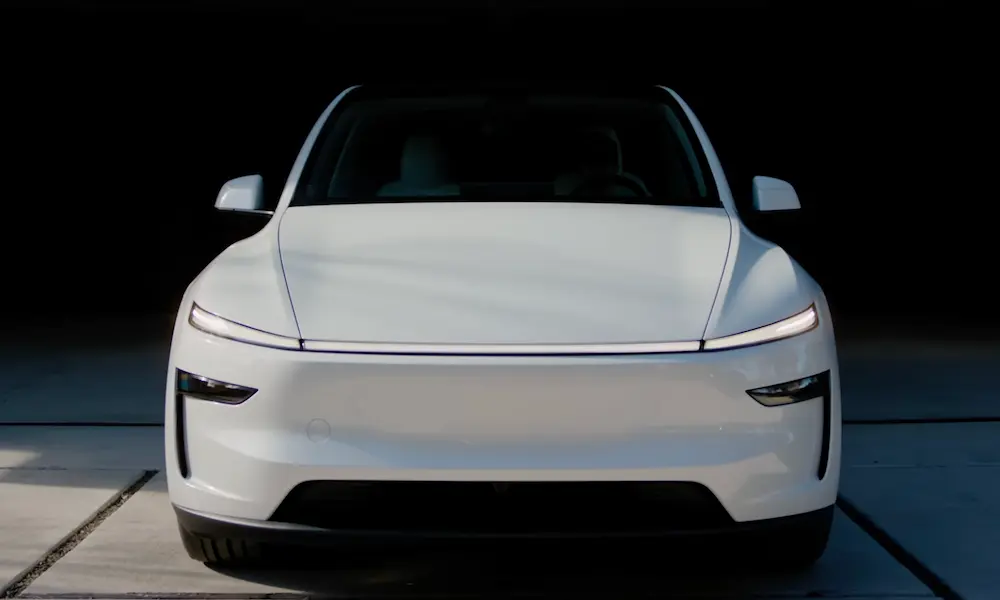
The 2024 Highland refresh changed everything. Tesla finally launched an official Tesla Model 3 tow package for North America, ending years of aftermarket workarounds and warranty anxiety.
What’s Actually in the Tesla Model 3 Tow Package
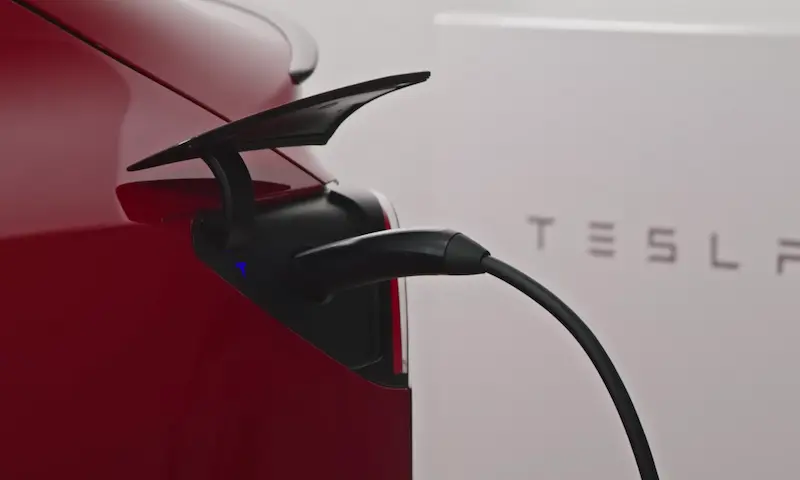
The Tesla Model 3 tow package costs $1,300 and it’s not just a bolt-on hitch. It replaces the rear bumper reinforcement beam entirely with a high-strength steel tow bar secured by six bolts torqued to 60 Newton-meters. That makes it a structural part of the car — not an accessory hanging off the back.
Here’s what you get:
| Component | Specification |
|---|---|
| Main Tow Bar Material | High-strength structural steel |
| Receiver Size | Standard 2-inch square |
| Electrical Connector | 7-pin North American standard |
| Mounting Points | 6 bolts integrated into rear crash structure |
| Installation | Tesla Service Center only |
The 2-inch receiver is a big deal for US drivers. It works with the full range of American ball mounts, cargo trays, and bike racks. European models use a swan-neck style hitch that’s far less compatible with domestic gear.
When you’re not towing, you can remove the receiver and snap a plastic cover back into place. The car looks stock. No dangling steel. No aerodynamic penalty.
Weight Limits: Don’t Guess, Know Your Numbers
Tesla defines the towing limits clearly, and they depend on one thing: whether your trailer has its own brakes.
| What You’re Towing | Max Weight | Max Weight (kg) |
|---|---|---|
| Braked trailer | 2,200 lbs | 1,000 kg |
| Unbraked trailer | 1,650 lbs | 750 kg |
| Max tongue weight | 200 lbs | 100 kg |
| Accessory carrier (bike rack, etc.) | 121 lbs | 55 kg |
The Tesla owner’s manual also stresses that these numbers assume the car isn’t already loaded up. Carry four passengers and a full trunk, and your allowable tongue weight drops. Total vehicle weight must stay within the Gross Vehicle Weight Rating no matter what.
Inflate your rear tires to 42 psi before towing. Higher pressure reduces sidewall flex and heat buildup — both of which matter a lot on long hauls.
Trailer Mode: The Software That Makes It All Work
Here’s what separates the factory Tesla Model 3 tow package from every aftermarket option: Trailer Mode software.
Plug a trailer’s 7-pin connector into the car while in Park and Trailer Mode activates automatically. A blue trailer icon appears on the display. The car now knows it’s hauling something.
What Trailer Mode Actually Does
- Trailer sway detection: The car’s accelerometers watch for oscillating movement from the trailer. If it detects sway, it applies individual wheel braking and adjusts motor torque to stabilize the combination faster than you can react.
- Traffic-Aware Cruise Control: Still works, but the following distance automatically increases to account for longer stopping distances.
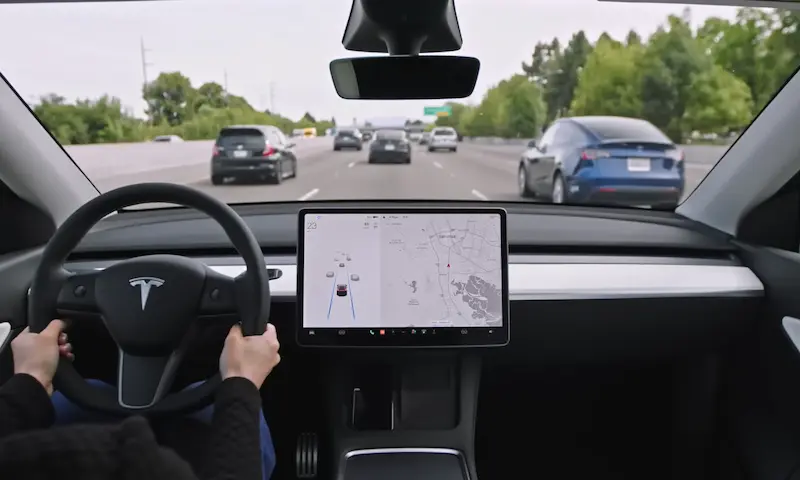
- Autosteer and Autopilot: Disabled. Sudden lane-keeping corrections at highway speed could destabilize a trailer.
- Parking sensors: Suppressed near the rear so the trailer doesn’t trigger constant warnings.
- Automatic Emergency Braking: Stays active but may limit maximum braking force to prevent an uncontrolled trailer skid.
You can also toggle Trailer Mode manually through the Dynamics or Service menus on the touchscreen — useful if you’re using a trailer without lights.
The Real-World Range Hit: Prepare to Stop More Often
This is the part most people don’t want to hear. Towing significantly cuts your driving range — and the aerodynamics of your trailer matter more than its weight.
At highway speeds, a tall boxy trailer can increase drag by 200–300%. That’s not a typo. Even a light trailer that acts like a wall of air costs you enormously.
| Towing Scenario | Avg Consumption (Wh/mi) | Estimated Range (miles) |
|---|---|---|
| Solo cruising at 65 mph | 250 | 240–270 |
| Low-aero teardrop trailer | 350 | 160–180 |
| Small utility trailer at 65 mph | 400 | 140–160 |
| Tall box trailer at 70 mph | 500+ | 100–120 |
The single best thing you can do to stretch your range while towing? Slow down. The relationship between speed and drag is non-linear. Dropping from 75 mph to 60 mph can eliminate an entire charging stop on a long trip.
Regenerative Braking Still Helps Going Downhill
Electric towing has one genuine advantage over gas vehicles on mountain roads. When you descend a long grade, the motors act as generators and feed energy back into the battery while slowing both car and trailer. Traditional cars just heat up their brake pads.
The caveat: if the battery is nearly full or too cold, it can’t accept that regenerated current. The car will automatically blend in friction brakes to maintain smooth deceleration. Trailer Mode manages this transition so the trailer stays stable.
Finding Trailer-Friendly Superchargers
Old-style Supercharger layouts are “back-in” stalls — a nightmare with a trailer attached. For years, drivers had to unhitch, charge, and rehitch. It was exhausting.
Tesla’s software update 2024.44.1 fixed that. When Trailer Mode is active, the navigation and Tesla app now highlight trailer-friendly Supercharger locations:
- Pull-through stalls: Drive straight in, drive straight out — no unhitching needed
- End-of-row stalls: Designated spots with extra maneuvering room
- Real-time availability: Tap any Supercharger pin to see how many trailer-compatible stalls are open before you arrive
Tesla has confirmed it’s building more pull-through stalls into new Supercharger locations globally. The infrastructure is catching up with the capability.
Aftermarket Options for Pre-2024 Model 3 Owners
If you own a 2017–2023 Model 3, the factory package isn’t available for your car. But the aftermarket has solutions — just know what you’re signing up for.
The Top Three Options
Torklift EcoHitch: Available in stainless steel from Torklift Central, this stealth-style hitch uses recycled materials and is manufacturer-rated for 3,500 lbs of towing and 350 lbs of tongue weight. The receiver hides behind a removable panel in the rear diffuser.
Stealth Hitches: The Stealth Hitch design uses a latching mechanism that lets you detach the entire receiver block when you’re done towing. Nothing visible under the bumper.
etrailer Custom Receivers: The etrailer option for 2024 Model 3 is a more traditional bolt-on steel unit. More visible from the rear, but easy to install and typically cheaper.
The Warranty Reality
The Magnuson-Moss Warranty Act protects you from having your entire warranty voided by an aftermarket part. However, Tesla can deny specific claims if they can prove the aftermarket hitch or the act of towing caused the damage. For pre-2024 models, towing is “off-label” use. If your rear drive unit fails and Tesla finds evidence you were towing, that repair could be on you.
The other gap: aftermarket hitches don’t unlock Trailer Mode. No sway control. No optimized range estimates. No software safety net.
Maintaining Your Hitch the Right Way
The factory hitch isn’t maintenance-free. Tesla’s service documentation recommends three regular tasks:
- Clean and lubricate: Apply non-resinous grease to the receiver channels and lock cylinder to prevent seizing
- Check the lock: The key should only release when the hitch is fully locked. If you can pull the key while the hitch is loose, it’s not secure
- Inspect rear tires: Towing stresses the rear tires heavily. Check for uneven wear or overheated sidewalls after long sessions
The trailer wiring harness uses torque specs as precise as 2.5 Newton-meters for the smallest connectors. That’s intentional — too loose and vibration loosens them, too tight and you crush the plastic housing. Leave the initial installation to a Tesla Service Center.
A Few Safety Rules Worth Knowing
Parking on a grade with a trailer: Tesla recommends a two-person process. One holds the brake pedal while the other places wheel chocks under the trailer tires. Only shift into Park once the chocks are confirmed to hold.
Speed and power: During a long climb in hot weather, the car may temporarily reduce peak power output to protect the battery and drive units from overheating. You’ll see less available acceleration on the power meter. That’s normal. It’s the car protecting itself.
Don’t splice wires: Tesla explicitly prohibits splicing into the trailer harness or using non-approved adapters. The car’s low-voltage electrical system is sensitive — a short circuit from trailer wiring can cause serious damage to the vehicle’s computers.
The 2024 Model 3 Highland finally gives North American drivers a legitimate, factory-supported path to electric towing. The hardware is solid, the software is genuinely clever, and the charging network is getting better at supporting trailers every month. Just plan your stops, watch your speed, and pick your trailer shape wisely.