You’ve heard the horror stories about GM lifter failures. The ticking noise. The $15,000 repair bill. The class-action lawsuits. If you’re researching how common GM lifter failure really is, you’re asking the right questions before dropping serious cash on a truck or SUV. This guide cuts through the noise with real data, mechanic insights, and what it means for your wallet.
What Makes GM Lifters Fail?
GM’s lifter problem isn’t random bad luck. It’s a design trade-off that went wrong.
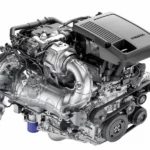
To meet fuel economy standards, GM equipped its V8 engines with cylinder deactivation systems called Active Fuel Management (AFM) and Dynamic Fuel Management (DFM). These systems shut down cylinders under light loads to save fuel—about 5-7 percent in ideal conditions.
The catch? This required replacing GM’s simple, bulletproof hydraulic lifters with complex multi-part components filled with springs, oil passages, and internal locking pins. These pins must retract perfectly to deactivate cylinders. When they don’t, everything falls apart.
The failure starts with oil problems. GM’s own Technical Service Bulletins point to “oil aeration” and contaminated oil damaging the locking pins. Aerated oil (oil with air bubbles) can’t provide the solid hydraulic pressure needed. When a pin doesn’t fully retract, the spinning camshaft smashes into it, shearing it over time.
Once that pin fails, you’re on borrowed time. The damaged lifter collapses or sticks, creating that infamous ticking noise. Then the pushrod bends. The cam lobe gets wiped flat. Metal fragments circulate through your engine. What started as a $2,000 lifter job becomes a $15,000 engine replacement.
Which GM Vehicles Are Affected?
This isn’t a niche problem—it hits GM’s money-makers hard.
Engines with the defect:
- 5.3L V8 (L82, L83, L84)
- 6.2L V8 (L86, L87)
- 6.0L V8 (L96)
Vehicles in the class-action lawsuit:
- Chevrolet Silverado 1500
- GMC Sierra 1500
- Chevrolet Tahoe and Suburban
- GMC Yukon and Yukon XL
- Cadillac Escalade
- Chevrolet Corvette and Camaro
The primary class-action lawsuit covers 2014-2021 models, but complaints keep rolling in for 2022, 2023, and 2024 trucks. Despite updated lifter part numbers after 2022, the problem hasn’t disappeared.
And here’s the kicker: if you’re looking at a 2021-2024 model with the 6.2L V8, you’ve got a second problem. GM issued NHTSA recall 25V-274 for catastrophic crankshaft and connecting rod failures affecting 597,630 vehicles. That’s two separate ways the engine can grenade.
How Common Is GM Lifter Failure Really?
Here’s where it gets tricky. You won’t find GM publishing exact failure rates, but we can piece together the reality.
The “it’s not that common” argument: GM sells hundreds of thousands of these trucks yearly. Even a 2-5% failure rate creates thousands of vocal, angry owners online. The internet amplifies the problem because nobody posts “my truck worked fine today.”
The “it’s absolutely common” evidence: Talk to mechanics. In one revealing Reddit thread, two GM technicians debated which engine fails more often—the 5.3L or 6.2L. They weren’t arguing if failures happen, but which one keeps them busier. One tech said shops fixing GM engines are “doing so due to lifter failures” as routine work.
The class-action lawsuit alleges GM “knowingly” concealed a “defective AFM and/or DFM valve train system.” That’s lawyer-speak for “they knew about it and sold them anyway.”
One analysis put the failure rate at around 4.7% based on reported complaints. Another estimate suggested 2-5%. Let’s use the lower number: 5%.
| Scenario | Failure Rate | What It Means |
|---|---|---|
| Low estimate | 2% | 1 in 50 trucks will fail |
| Mid estimate | 5% | 1 in 20 trucks will fail |
| Mechanic consensus | Common enough to be routine shop work | Not an anomaly |
Here’s the brutal truth: when the consequence is a $15,000 catastrophic failure, even a 5% failure rate isn’t “low risk.” It’s a 1-in-20 gamble on your most expensive component.
Warning Signs Your Lifters Are Failing
The failure follows a predictable timeline with clear symptoms.
Stage 1: The Tick
You’ll hear it first—a ticking, tapping, or chirping noise from the engine, especially during cold starts. GM’s Technical Service Bulletin 19-NA-218 specifically notes this morning tick. Don’t ignore it. This is your wallet’s early warning system.
Stage 2: The Misfire
As the lifter collapses, the cylinder stops firing correctly. You’ll notice:
- Rough idling
- Hesitation when accelerating
- Loss of power
- Check Engine Light
The diagnostic code will almost always be P0300 (random misfire) or cylinder-specific codes like P0301 through P0308.
Stage 3: The Cascade
This is where moderate repairs become catastrophic. The damaged lifter bends its pushrod. The roller bearing stops spinning and grinds the camshaft lobe flat. Metal shavings circulate through your oil system, destroying bearings and clogging passages.
At this point, you’re not fixing lifters anymore—you’re replacing the engine.
What This Failure Costs You
The financial hit depends on when you catch it and whether you’re under warranty.
| Repair Type | What’s Involved | Cost Range |
|---|---|---|
| AFM Disabler (prevention) | Plug-in device that keeps engine in V8 mode | $40 – $200 |
| AFM Delete (permanent fix) | New cam, lifters, valley pan, ECU tune | $4,000 – $7,000 |
| Best-case repair | One bank of lifters/pushrods, no cam damage | $1,000 – $2,500 |
| Typical lifter job | All 16 lifters, guides, pushrods, new camshaft | $5,000 – $9,200 |
| Engine replacement | Full engine due to metal contamination | $12,000 – $17,000+ |
Here’s the pattern that’ll make you sick: failures cluster just outside GM’s 5-year/60,000-mile powertrain warranty. Owner complaints document failures at 70,000 miles, 83,000 miles, 95,000 miles, and 110,000 miles. That’s not coincidence—that’s when you’re paying out of pocket.
One owner on a GMC Sierra forum called their extended warranty “the best money I had ever spent” after a 97,000-mile lifter failure was covered. Without it, they’d have eaten the whole bill.
What GM Has Done About It
Spoiler: not enough.
GM hasn’t issued a recall for lifter failures. A recall would mean GM admits a safety defect and pays for all repairs. Instead, they’ve issued Technical Service Bulletins—internal repair guides for dealerships that only cover warranty-period vehicles.
The smoking gun: TSB N212353840 instructed dealerships to replace lifters on unsold 2021 vehicles before they left the lot. That means GM knew specific batches were defective before customers bought them. That’s powerful evidence in the ongoing class-action lawsuit.
The lawsuit, Harrison v. General Motors LLC, is active and ongoing as of 2025. In early 2023, the court denied GM’s motion to dismiss, allowing the case to proceed. Plaintiffs are in the discovery phase, digging through GM’s internal documents.
Are Newer Models Fixed?
Maybe. Maybe not. Probably not.
A GM technician claimed on Reddit that “post 2022 the DFM system appears to be quite reliable” and that GM changed the lifter design, evidenced by new part numbers like 12698945, 12698946, and 12740071.
But complaints keep coming. When asked if they’d buy a 2024 or 2025 Silverado, one Reddit user said “many 2023’s have experienced this at low and high mileage.” Another prospective buyer said they’re “afraid to pull the trigger because of the lifter issues. Frankly it’s absurd to have to worry about this when you’re spending nearly 60k on a new truck.”
The new parts haven’t been in service long enough to prove long-term durability. And that separate 2024 crankshaft recall? That adds a whole new layer of risk.
The real fix might be coming in 2026-2027. Reports suggest GM is developing an all-new Gen VI V8 that eliminates cylinder deactivation entirely. If true, that’s GM tacitly admitting the AFM/DFM experiment failed.
How to Protect Yourself
If you own one of these vehicles, you’re not helpless.
If you’re still under warranty:
At the first tick, get to the dealership. Document everything. Reference TSB 15-06-01-002L or 19-NA-218 by number. If they diagnose a bent pushrod, demand they inspect the lifters and camshaft before approving the repair. A pushrod is a symptom, not the cause.
If you’re out of warranty:
-
Change your oil religiously. Ignore the oil life monitor. Switch to 5,000-mile intervals with full synthetic oil and a premium filter with a quality anti-drainback valve.
-
Install a disabler. For $100-200, an AFM/DFM disabler keeps the engine in V8 mode permanently. It prevents the locking pins from ever actuating, which prevents the most common failure mode. It won’t protect against the “bad batch” lifters that were defective from the factory, but it’s cheap insurance.
-
Budget for a delete. If you plan to keep the truck long-term, save for a full AFM delete ($4,000-$7,000). It’s invasive—new cam, lifters, valley pan, ECU tune—but it’s a permanent, bulletproof solution.
If you’re shopping for one:
Don’t buy without an extended warranty. Period. It should be a mandatory line item on your deal sheet, not an optional upsell.
Better yet? Wait. If the 2026-2027 Gen VI V8 really does eliminate AFM/DFM, that’s the truck you want. Buying a 2024-2025 means gambling on unproven fixes while facing two separate catastrophic failure modes (lifters and crankshafts).
Consider alternative powertrains. The 3.0L Duramax diesel or 2.7L turbo four-cylinder don’t have this specific issue, though they have their own quirks.
The Bottom Line on GM Lifter Failures
So how common is GM lifter failure? Common enough that it’s not if you should worry, but how much.
This isn’t internet hysteria. It’s a documented, systemic design flaw affecting millions of GM’s most popular vehicles. The failure mechanism is well-understood. The repair costs are catastrophic. The lawsuit is ongoing. And mechanics treat these repairs as routine work.
Even if the failure rate is “only” 5%, that’s a 1-in-20 chance your $60,000 truck will need a $15,000 engine. That’s not acceptable risk—that’s a lottery you don’t want to win.
The saddest part? This entire mess stems from chasing a 5-7% fuel economy gain to meet regulatory standards. GM sacrificed legendary V8 reliability on the altar of CAFE compliance, and truck owners are paying the price.
If you already own one of these trucks, maintain it aggressively, install a disabler, and keep that warranty active. If you’re shopping, think twice, read the fine print on your warranty, and maybe wait for the next generation.
Your wallet will thank you.