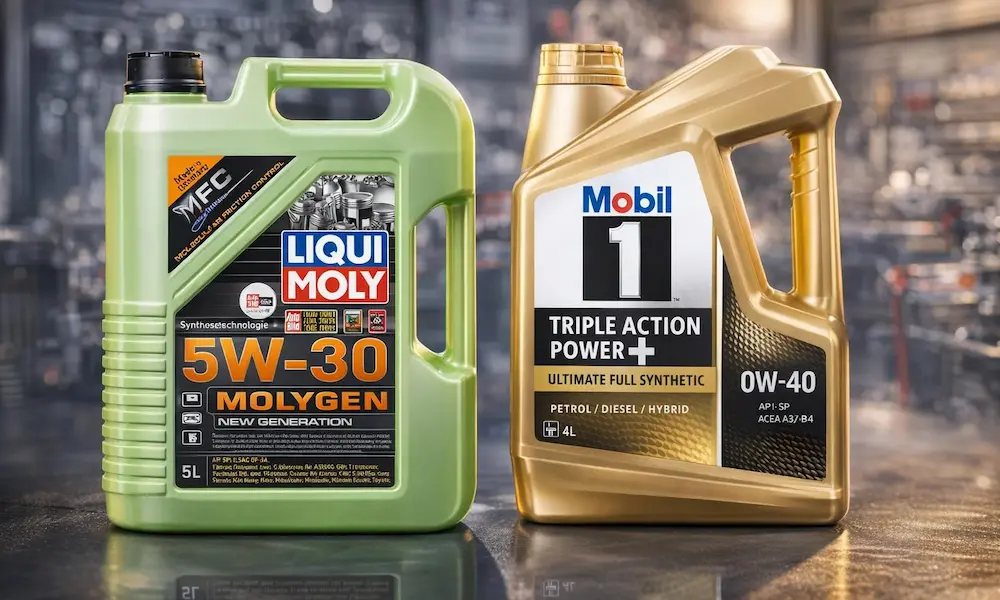
You’ve seen that distinctive green bottle at the auto parts store with the premium price tag. Now you’re wondering if Liqui Moly actually delivers on its German engineering promises, or if you’re just paying for fancy marketing. Let’s cut through the hype and look at what independent testing really shows.
What Makes Liqui Moly Different?
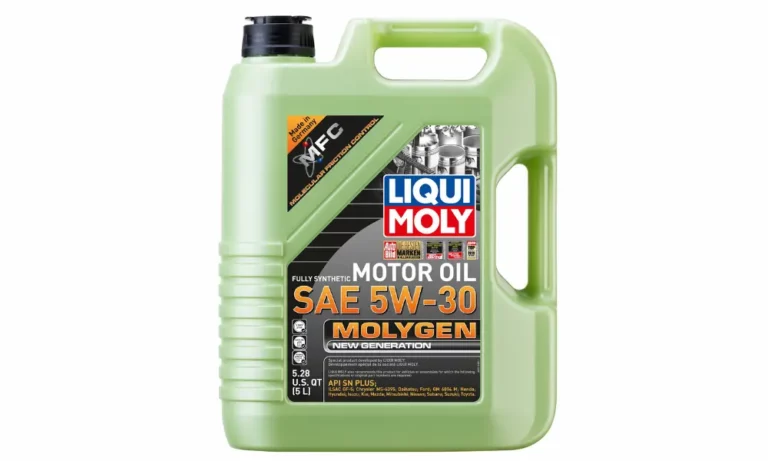
Liqui Moly built its reputation on German engineering and proprietary additive technology. The flagship Molygen line features what they call Molecular Friction Control (MFC) technology—a blend of tungsten and molybdenum additives that supposedly reduces friction by 15% and wear by 30%.
Sounds impressive, right?
Here’s what you’re actually getting. Independent lab analysis found Molygen contains about 157 ppm molybdenum and elevated tungsten levels. That’s higher than many conventional oils, but lab testing reveals the base stocks aren’t true synthetics despite marketing claims.
The company offers several product lines:
- Molygen New Generation: The green-tinted flagship with MFC technology
- Special Tec AA: Designed for American and Asian engines
- Leichtlauf High Tech: Premium European formula
- Top Tec: Latest technology applications
Each line targets specific engines and applications, but performance varies wildly across the range.
How Liqui Moly Performs in Independent Testing
This is where things get interesting—and not in a good way.
Lab Results Don’t Match the Hype
Project Farm’s rigorous testing compared Liqui Moly against major competitors like Mobil 1. The results? Liqui Moly consistently showed higher wear rates and reduced film strength. European comparison studies found similar issues, with Liqui Moly showing 7.6% higher wear marks than Motul.
When Blackstone Labs analyzed virgin Molygen 5W-30, they found adequate but unexceptional additive packages. The Total Base Number hit average levels—nothing special for a premium-priced oil.
The AAA’s comprehensive synthetic oil study established benchmarks that most premium oils should meet. Liqui Moly’s inconsistent performance across different product lines raises concerns about quality control.
Film Strength Tests Show Weaknesses
Film strength determines how well oil protects metal surfaces under pressure. Multiple independent tests revealed moderate performance from various Liqui Moly formulations. Some products handled substantial loads before breakdown, but others failed prematurely.
This inconsistency makes it tough to recommend Liqui Moly with confidence. You’re gambling on which batch or product line actually performs as advertised.
Real-World Performance: What Drivers Experience
The Good Feedback
Let’s be fair—plenty of drivers report positive experiences. Volvo owners particularly praise Liqui Moly for reducing valvetrain noise and oil consumption. BMW enthusiasts note improved engine smoothness, with some claiming 1-2 mpg fuel economy gains.
The distinctive green color of Molygen oils actually provides a practical benefit: leak detection. You’ll spot oil loss sources quickly, which helps with troubleshooting.
Racing teams have used Liqui Moly products successfully in three-hour endurance events, suggesting decent high-temperature stability under demanding conditions.
The Critical Issues
Here’s where the story gets complicated.
BMW forum discussions reveal that Molygen lacks proper BMW LL-01 certification. One comprehensive 20,000-kilometer test concluded that Molygen “sedates” BMW inline-six engines by 10-15% across the power band. That’s the opposite of what you’d expect from a performance oil.
Professional mechanics who’ve tested multiple brands consistently note that while Liqui Moly is “safe,” it rarely justifies its premium pricing. Blackstone Labs data suggests major brand synthetics generally provide superior protection.
Certification and Approval Problems
This matters more than you might think.
Liqui Moly’s approval portfolio shows gaps. While products like Special Tec AA carry current API SP and ILSAC GF-7A certifications, the flagship Molygen line notably lacks many critical OEM approvals. For European vehicles where specific approvals are mandatory, this creates real problems.
North American formulations may differ from European versions. This raises questions about whether you’re getting the same product that built the brand’s reputation in Germany.
| Product Line | API Certification | ACEA Rating | OEM Approvals |
|---|---|---|---|
| Molygen | Limited | Varies | Missing key BMW/Mercedes specs |
| Special Tec AA | SP/ILSAC GF-7A | ACEA C2/C3 | Current Asian/American standards |
| Leichtlauf High Tech | SP | A3/B4 | Multiple European OEM |
| Top Tec | SP | C3 | Latest specifications |
Always verify your specific vehicle’s requirements before purchasing.
The Price Premium: Is It Justified?
Let’s talk money.
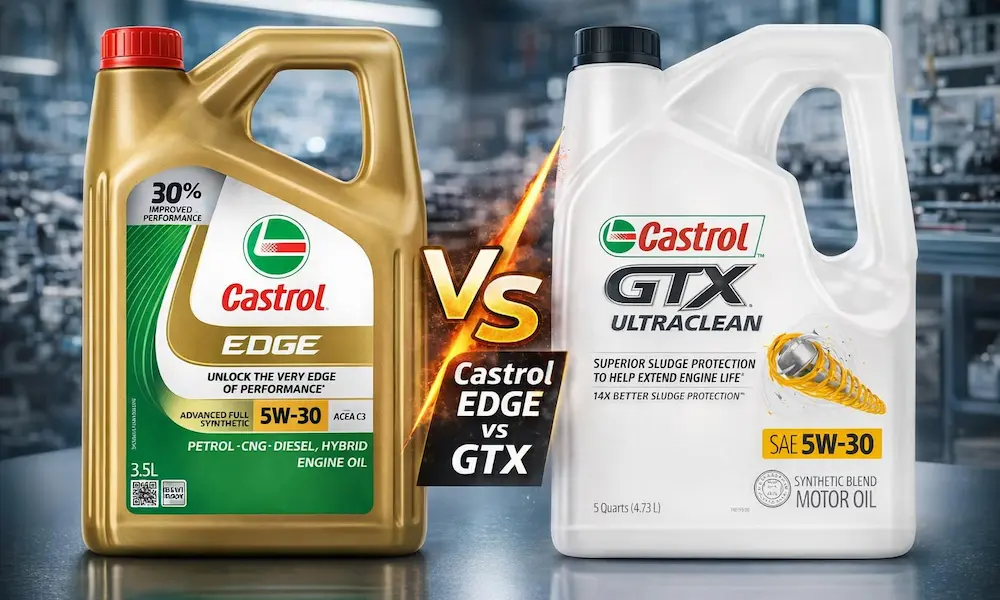
A five-liter container of Molygen typically runs $48-50 at Walmart, compared to $25-35 for Mobil 1 or Castrol Edge. That’s a 40-60% premium for oil that independent testing shows often underperforms these cheaper alternatives.
Individual liter bottles from AutoZone range from $18-25. If you’re doing frequent oil changes on a performance car, these costs add up fast.
What You’re Paying For
The premium reflects:
- German manufacturing overhead
- Extensive R&D investment
- Boutique market positioning
- Brand prestige
What you’re NOT necessarily paying for: superior protection or measurable performance advantages over mainstream brands.
Where Liqui Moly Actually Makes Sense
Despite the criticisms, some applications suit Liqui Moly well.
European Vehicles (With Cautions)
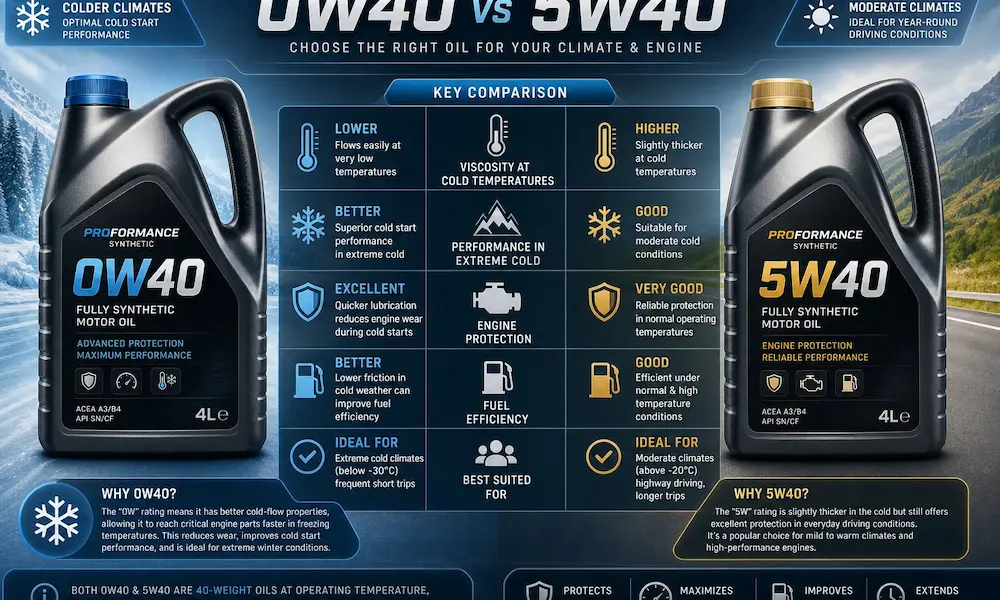
Leichtlauf High Tech 5W-40 receives praise for BMW and Mercedes-Benz applications—but only when the specific product carries proper approvals for your vehicle. Don’t assume all Liqui Moly oils work equally well.
Some Golf GTI owners swear by the 5W-40 formulation for their turbocharged engines, reporting smoother operation and reduced consumption.
High-Mileage Engines
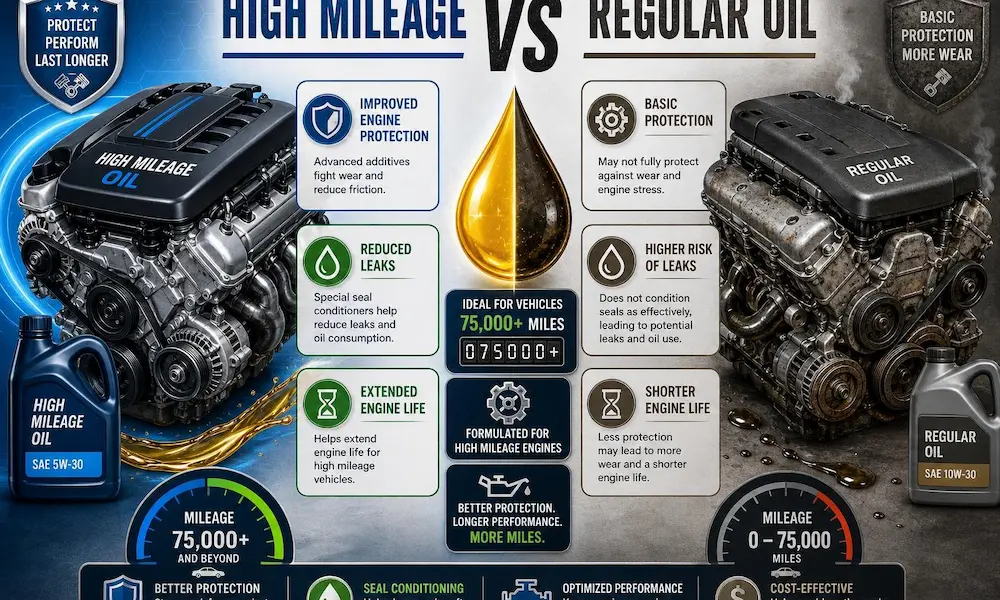
Older engines show better results with Liqui Moly than newer ones. Drivers report reduced oil consumption and valve noise in worn engines, particularly when combined with the brand’s additives like MoS2 or Cera Tec.
The friction-reducing properties may benefit engines with worn tolerances where thicker film strength helps compensate for increased clearances.
Specialty Applications
If you value the visual differentiation and leak detection capabilities of green oil, Molygen delivers. Just don’t expect performance miracles.
The Marketing vs. Reality Gap
Here’s what frustrates mechanics and oil enthusiasts most.
Laboratory analysis repeatedly contradicts marketing claims about synthetic content, friction reduction percentages, and superior protection. The gap between promotional materials and actual performance raises credibility questions.
Quality control processes appear robust, with comprehensive testing protocols and German manufacturing standards. So why the inconsistent results?
Regional variations between North American and European formulations likely explain some discrepancies. But that doesn’t help you choose the right product for your car.
Better Alternatives for Most Drivers
Unless you’ve got specific reasons to choose Liqui Moly, consider these options:
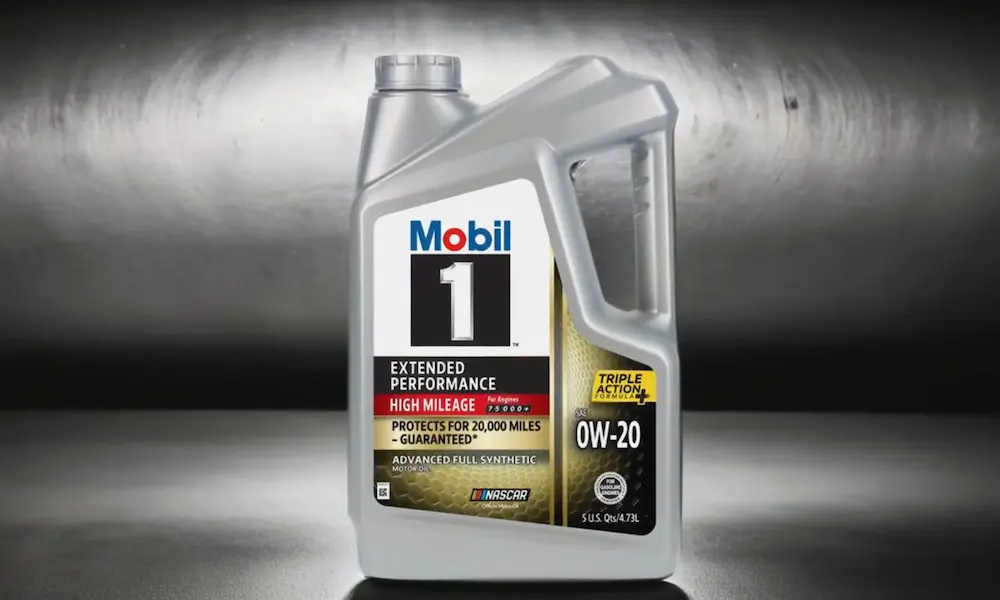
For mainstream vehicles: Mobil 1, Castrol Edge, or Pennzoil Platinum deliver proven protection at lower costs. Independent testing consistently shows these oils meeting or exceeding Liqui Moly’s performance.
For European cars: If your vehicle requires specific approvals, verify them before purchasing ANY oil. Shell Rotella Gas Truck, Castrol Edge European Formula, and Mobil 1 ESP all carry proper certifications.
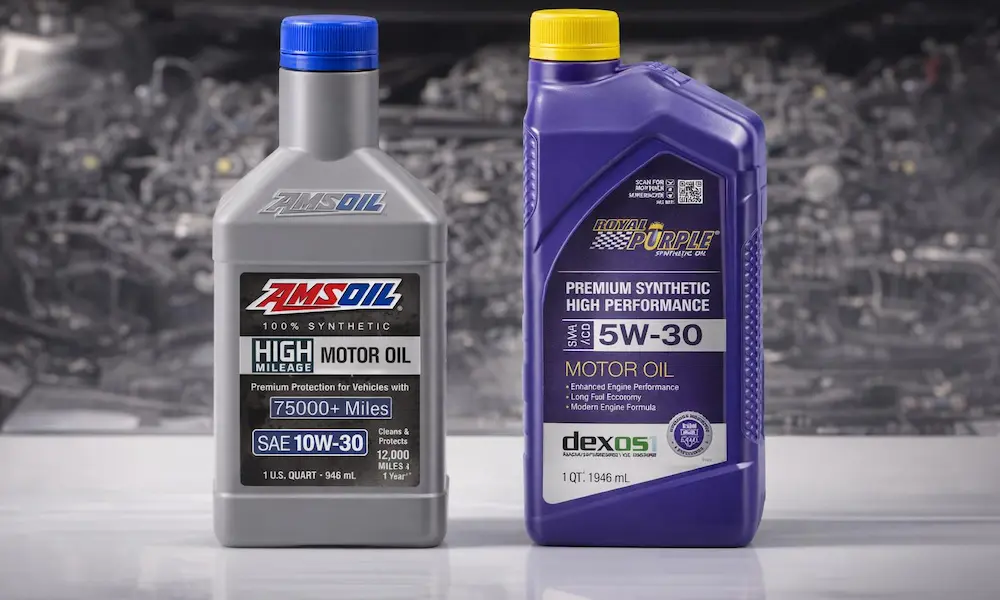
For performance applications: Amsoil Signature Series and Red Line consistently outperform Liqui Moly in high-temperature stability tests, making them better choices for track use or aggressive driving.
Product-Specific Recommendations
If you’re set on trying Liqui Moly, here’s what works best:
Special Tec AA 5W-30: The most reliable product line with current certifications. Best choice for Asian and American vehicles requiring ILSAC standards.
Leichtlauf High Tech 5W-40: Solid option for European vehicles IF it carries your required approvals. Check your owner’s manual first.
Molygen: Skip it unless you specifically want green oil for leak detection. Performance doesn’t justify the premium over Special Tec or Leichtlauf lines.
Common Questions About Liqui Moly Quality
Does Liqui Moly Really Reduce Engine Wear?
Test results show mixed outcomes. Some formulations provide adequate wear protection, but rarely better than major competitors. The molybdenum and tungsten additives help, but don’t deliver the dramatic improvements marketing suggests.
Is Liqui Moly Truly Synthetic?
Virgin oil analysis found conventional base stocks in some products marketed as synthetic. They meet legal definitions of “synthetic” in the U.S., but aren’t PAO or ester-based true synthetics like some competitors.
Why Do Some Drivers Love It?
Placebo effect plays a role. The premium price and German branding create expectations that influence perception. That said, some users genuinely experience benefits in specific applications—particularly older European engines.
Should You Use Liqui Moly Additives?
The oil additives line includes MoS2, Cera Tec, and various engine treatments. Professional mechanics generally recommend against additives in modern engines with proper oil. For high-mileage engines with consumption issues, some users report positive results.
The Bottom Line on Liqui Moly Quality
So, is Liqui Moly good oil? It’s safe and adequate, but rarely optimal.
You’re paying 40-60% more than mainstream synthetics for performance that independent testing shows is often inferior. The brand works better as a specialty option for enthusiasts who value German engineering perception over measurable performance.
For most drivers, Liqui Moly doesn’t represent the best balance of protection, performance, and value. The inconsistent results across product lines make recommendations difficult, and the certification gaps create compatibility concerns for many vehicles.
If you’re running a high-mileage European car and want to experiment, Leichtlauf High Tech with proper approvals might justify trying. For everyone else, stick with proven mainstream brands that deliver superior lab results at lower costs.
The green bottle looks cool on your garage shelf, but Blackstone Labs data and independent testing suggest your engine won’t know the difference—except possibly worse protection for more money.