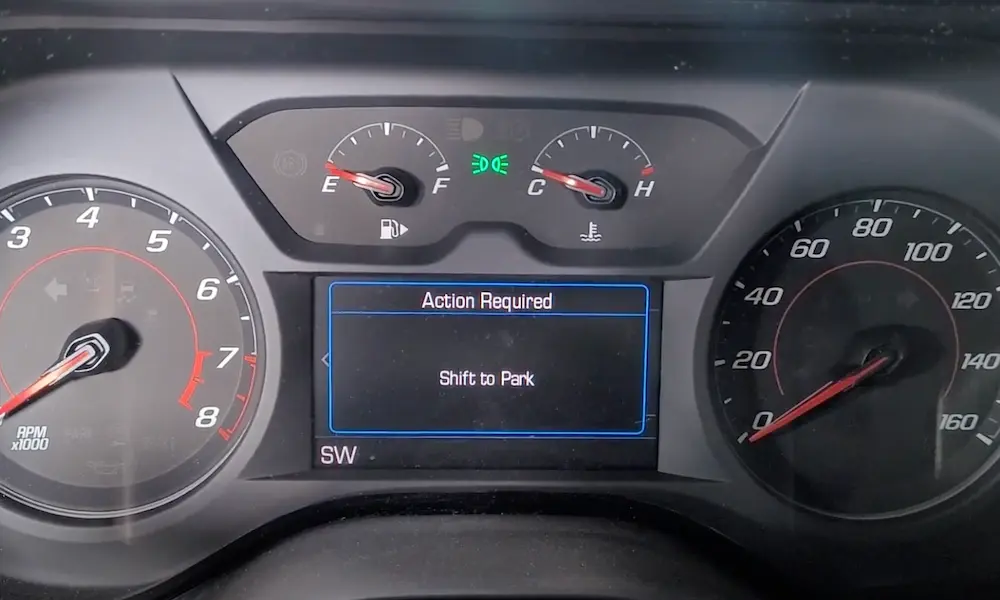
That Chevy Impala Service StabiliTrak warning just lit up your dashboard, didn’t it? Don’t panic. You’re dealing with one of the most common—and most misunderstood—issues in the Impala lineup. The good news? It’s rarely as catastrophic as it feels. The better news? This guide breaks down exactly what’s happening, why it’s happening, and what you can actually do about it.
What StabiliTrak Actually Does (In Plain English)
StabiliTrak isn’t just a fancy name GM slapped on a dashboard light. It’s your car’s electronic stability control system—basically, the tech that keeps you from spinning out when you hit a slick patch or take a turn too aggressively.
Here’s the breakdown: sensors monitor your steering wheel, how fast your wheels are spinning, and whether your car’s actually going where you’re pointing it. If the system detects a mismatch—like you’re turning left but the car’s sliding right—it steps in. It brakes individual wheels and cuts engine power to yank you back on course.
But here’s the catch: when any part of this interconnected system fails, the whole thing shuts down. That’s why your dash lights up like a Christmas tree.
Why Your Impala’s Throwing the Service StabiliTrak Warning
The Chevy Impala Service StabiliTrak message doesn’t mean your stability computer died. Nine times out of ten, it’s something cheaper and simpler. The warning is a symptom, not the disease.
The Usual Suspects (By Generation)
Your Impala’s generation matters here. The fix for a 2010 model looks nothing like the fix for a 2016.
8th Generation (2006–2013): It’s Probably Your Wiring
If you’re driving one of these, the most common culprit is broken wiring in your front wheel speed sensors. GM routed these wires along the lower control arm—right where they flex constantly with every bump and turn.
After years of bending, the copper strands inside fracture. The insulation looks fine, but the wire’s dead inside. This creates an intermittent connection that drives the system nuts.
You’ll notice the warning pops up when you:
- Turn into a parking spot (flexes the wire)
- Hit rough pavement (jostles the connection)
- Feel the ABS kick in randomly on dry roads
The diagnostic codes you’ll see: C0035 (left front sensor) or C0040 (right front sensor). These chassis codes point straight to wheel speed sensor circuits.
9th Generation (2014–2020): Check Your Hubs and Steering
The newer Impalas ditched the external wiring nightmare but introduced new failure points. The wheel speed sensors now live inside sealed wheel hub assemblies with magnetic encoder rings.
Problem is, these encoders collect metallic brake dust or corrode—especially in the Rust Belt. When rust “jacks” the sensor away from the encoder ring, the signal drops out.
But here’s the kicker for 2014-2015 models: GM issued Recall 14232 for a power steering ground fault. A bad ground causes the electric power steering module to reset, killing your steering angle sensor data. No steering data = no StabiliTrak.
If you own a 2014 Impala, check if this recall’s been done before throwing money at sensors.
The Powertrain Twist: When “Service StabiliTrak” Comes with “Reduced Engine Power”
This is where it gets weird. Your Chevy Impala Service StabiliTrak warning appears alongside “Service Traction Control” and the dreaded “Reduced Engine Power” message. Your car barely accelerates. It feels broken.
It’s not three separate failures. It’s one problem masquerading as three.
The Throttle Body and Pedal Connection
StabiliTrak needs to control engine power during a stability event. To do that safely, the computer must know exactly where your throttle plate is and what you’re asking for with the gas pedal.
Both your throttle body and accelerator pedal contain dual sensors that cross-check each other. If these sensors disagree—even slightly—the computer freaks out. It can’t safely modulate power, so it shuts everything down.
Code P2135: Your throttle body’s internal sensors aren’t correlating. The resistive tracks inside wear out or get gunked up with carbon deposits.
Code P2138: Your accelerator pedal sensors are out of sync. GM had such a problem with this on 2009–2011 Impalas that they issued Special Coverage 14636—extended warranty to 10 years/120,000 miles for pedal replacement.
The Fix (and the Relearn You Can’t Skip)
Replacing a bad throttle body isn’t hard. But if you don’t do the relearn procedure afterward, you’ll end up with a surging idle or another code.
After installing a new throttle body:
- Start the engine
- Let it idle for 3 minutes
- Turn it off for 60 seconds
- Repeat: idle 3 minutes, off 60 seconds
This teaches the computer where “closed throttle” actually is on your new part.
Pro tip: Stick with ACDelco OEM parts here. Aftermarket throttle bodies drift out of calibration within months and you’ll be right back where you started.
| Component | Typical Failure | Cost Range | DIY Difficulty |
|---|---|---|---|
| Throttle Body | P2135 correlation fault | $300–$450 | Medium (needs relearn) |
| Accelerator Pedal | P2138 correlation fault | $155–$195 | Easy (2 bolts, no programming) |
| Front Wheel Harness | C0035/C0040 sensor circuit | $195–$270 | Medium (requires soldering) |
| Wheel Hub Assembly | Encoder ring corrosion | $375–$550 | Hard (rust, special tools) |
The Hidden Electrical Gremlins
Sometimes the Chevy Impala Service StabiliTrak issue isn’t a bad part—it’s bad electricity.
Ground Points Matter More Than You Think
Your car’s electrical system needs a solid return path to the battery. If a ground connection corrodes, resistance builds up and voltage drops.
Ground G110 (on the cylinder head) serves the engine computer and transmission. Corrosion here causes communication errors between modules—you’ll see “U” codes (like U0100: Lost Communication with ECM).
The ABS pump motor ground (usually G102 on the frame rail) is another culprit. In salty climates like Chicago, the steel frame rusts under the ground connection. When the ABS pump can’t pull enough current during startup, the system throws a fault.
The fix is stupid simple:
- Remove the ground bolt
- Wire-brush everything to bare metal
- Apply dielectric grease
- Retorque the bolt
Your Battery Might Be the Real Problem
A dying battery creates phantom electrical issues. If voltage drops below 10.5V during cranking, modules fail to initialize properly.
You need a load test—not just a voltage check. A battery can show 12.6V sitting still but collapse under load. If your battery’s over 4 years old and you’re in a cold climate, replace it before chasing expensive sensors.
How to Actually Diagnose This (Without Wasting Money)
Throwing parts at your Impala until the light goes out is expensive and dumb. Here’s the smart sequence.
Step 1: Read the Actual Codes
Your neighbor’s code reader won’t cut it. You need a scanner that reads C-codes (chassis), P-codes (powertrain), and U-codes (network communication).
- C-codes = wheel sensors, hubs, wiring
- P-codes = throttle body, pedal, engine
- U-codes = module communication, grounds, battery
Step 2: Watch Live Wheel Speed Data
A good scanner lets you view all four wheel speeds simultaneously while driving. Drive straight at 20 mph and watch the numbers.
All four should read identical speeds.
If one reads 0 mph, you’ve got an open circuit (broken wire). If one jumps around erratically (20 mph… 15… 25… 18…), your hub bearing or encoder ring is toast.
Step 3: Reset the System (The Right Way)
After repairs, you need to clear the codes and relearn certain sensors.
Basic reset: Disconnect the negative battery terminal for 15 minutes. This clears soft codes and resets module memory.
Steering Angle Sensor relearn:
- Start the engine
- Turn the wheel full left
- Turn the wheel full right
- Center the wheel
- Turn off the ignition
This “lock-to-lock” procedure teaches the sensor where center is.
What It Actually Costs to Fix (Real Numbers)
Let’s talk money. Chicago-area labor rates in 2025 run $125–$150/hour at independent shops, $160–$200+ at dealerships.
Wiring harness splice: $195–$270 total. This is the cheapest common fix. Always worth doing.
Wheel hub replacement: $375–$550 per side. Necessary for safety, but a pain to DIY unless you’ve got a torch and a slide hammer to deal with rust.
Throttle body: $300–$450. Non-negotiable if you’re stuck in reduced power mode—the car’s basically undriveable.
Accelerator pedal: $155–$195. Dead simple—two bolts, no programming. Check if you’re covered under Special Coverage 14636 first.
Can You Still Drive With the Warning On?
Depends on which warning you’ve got.
“Service StabiliTrak” Only
If it’s just the StabiliTrak/Traction Control light (no Check Engine Light, no Reduced Power), your car functions normally. You’ve still got brakes and steering.
The risk: You’ve lost your electronic safety net. On dry pavement driving straight, you’re fine. In rain, snow, or emergency maneuvers, your risk of spinning out just went way up.
Drive with extra caution, especially in winter. But get it fixed soon.
“Reduced Engine Power” Mode
This is dangerous. Your car might not accelerate past 40 mph. Merging onto highways or crossing busy intersections becomes a genuine safety hazard.
Don’t drive it except to limp to a shop. If the engine stalls in traffic, you’re a sitting duck.
Check for Open Recalls First
Before you pay for anything, plug your VIN into the NHTSA database and check for open recalls.
Critical recalls to verify:
- Recall 14V355 (GM 14232): Power steering ground fault (2014 Impala)
- Special Coverage 14636: Accelerator pedal sensor (2009–2011 Impala)
These are free fixes at the dealer. Don’t let a shop charge you for warranty work.
The Bottom Line on Your Chevy Impala Service StabiliTrak Issue
Here’s what you need to remember:
For 2006–2013 Impalas: Check the front wheel speed sensor wiring first. It’s the most common failure and the cheapest fix. If you’re getting reduced power warnings, test the throttle body.
For 2014–2020 Impalas: Verify Recall 14232 has been completed. Then look at wheel hub assemblies and the power steering ground.
The Chevy Impala Service StabiliTrak warning rarely means your stability computer is dead. It’s usually a $200 wiring repair or a $400 hub replacement—annoying, but not catastrophic.
Start with code reading. Check the obvious stuff (battery, grounds, recalls). Then move to targeted sensor replacement based on actual data, not guesswork.
Your Impala’s trying to tell you something specific. Listen to the codes, not the panic.