Owning a Mercedes feels great — until the factory warranty expires and you’re staring at a $5,000 suspension bill. Understanding Mercedes extended warranty cost before that happens can save you serious money. This guide breaks down every pricing tier, coverage option, and third-party alternative so you can make a smart decision before the clock runs out.
Why Mercedes Repair Costs Make Warranty Coverage a Real Conversation
Let’s start with the numbers. The average annual repair cost for a Mercedes-Benz is $908 — more than double what Honda owners pay ($428) and well above Nissan ($500). Mercedes also ranks 27th out of 32 brands for reliability, requiring unscheduled shop visits 0.7 times per year versus the industry average of 0.4.
That’s before you hit the expensive stuff.
Here are some real-world repair costs that make extended warranty coverage worth considering:
- AIRMATIC suspension failure: $1,500–$5,000
- Active Body Control system failure (SL550): Can exceed $20,000 over three years
- Starter motor replacement (GL450): Up to $3,500 — just because it’s buried under the engine
- Electronic module failure (backup camera/radio): $6,000 at a dealership
- Oil cooler leak (E350): $1,670
- Motor mount replacement (E400): $1,900
The math is clear. One bad repair can cost more than several years of warranty premiums. The question isn’t really if you need coverage — it’s which coverage makes sense.
The Official Mercedes-Benz Extended Limited Warranty: What It Covers
Mercedes offers its own Extended Limited Warranty that kicks in after the factory four-year/50,000-mile New Vehicle Limited Warranty expires. It’s an exclusionary policy — meaning it covers everything except what’s specifically listed as excluded.
What’s Covered
The coverage is genuinely comprehensive. Key protected systems include:
- Complete powertrain, transmission, turbocharger/supercharger
- 4Matic all-wheel-drive components
- Fuel injection system and cooling infrastructure
- Climate control module and central locking system
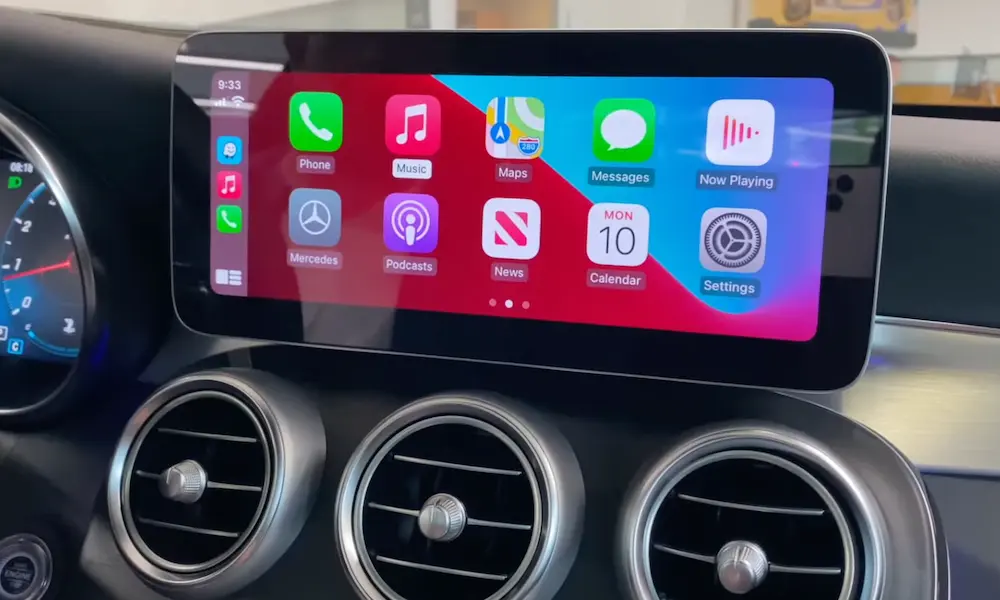
- Audio receivers, speakers, antenna motors, navigation systems
- Power seat cables, convertible/retractable top mechanisms
- Traction control, stability control, differential, and rear axles
That electronics coverage matters a lot. Replacing a navigation or infotainment module at a dealership routinely hits $6,000. Having that covered at zero out-of-pocket cost is a big deal.
What’s NOT Covered
Mercedes won’t cover standard wear-and-tear items. That means:
- Brake pads and discs
- Tires, windshield wipers, filters
- Paint, glass, convertible soft tops
- Vehicle batteries and cellular communication systems
- Traditional shock absorbers and suspension struts (important distinction from AIRMATIC components)
- Any failure caused by missed maintenance, improper fluids, or unauthorized modifications
Critical note: Vehicles used for ridesharing, taxi, or delivery services are entirely ineligible. The duty cycle falls way outside what the actuarial model assumes.
The Big Perks You Shouldn’t Overlook
Two structural advantages separate the official warranty from every third-party option:
Zero deductible. When something breaks, you pay nothing. That’s not a small thing when a single repair bill on a luxury European vehicle can hit $5,000.
No claims drama. The service advisor handles everything internally across more than 380 authorized U.S. dealerships. No waiting for third-party inspectors. No paperwork battles. No reimbursement chasing.
Repairs use genuine OEM parts, performed by factory-certified technicians. The policy also includes Mercedes-Benz Roadside Assistance — battery jumps, tire changes, fuel delivery — under a Sign and Drive program.
Fully transferable at no cost. If you sell the car privately while the warranty is active, the coverage transfers to the new owner. That directly increases your resale value.
Mercedes Extended Warranty Cost: The Full Pricing Breakdown
Mercedes uses a four-tier pricing system based on each model’s complexity and historical repair costs. You can buy coverage in one, two, or three-year extensions, with mileage caps at either 75,000 or 100,000 total miles.
| Coverage Term | Tier 1 (C, GLC, CLA, GLA, GLB, SLC) | Tier 2 (E, GLE, CLE) | Tier 3 (GLS, S, CLS) | Tier 4 (G, SL, GT, AMG, Maybach, Hybrid, EV) |
|---|---|---|---|---|
| 5 Years / 75K Miles | $3,100 | $3,350 | $3,990 | $5,640 |
| 5 Years / 100K Miles | $3,740 | $4,050 | $4,810 | $6,590 |
| 6 Years / 75K Miles | $3,350 | $3,620 | $4,620 | $7,800 |
| 6 Years / 100K Miles | $4,050 | $4,370 | $5,450 | $8,310 |
| 7 Years / 75K Miles | $3,740 | $3,990 | $5,640 | $9,080 |
| 7 Years / 100K Miles | $5,010 | $5,320 | $6,590 | $9,580 |
What the Tiers Actually Tell You
The tier system reveals exactly how Mercedes internally ranks repair risk.
Tier 1 covers the entry and mid-range lineup — C-Class, GLC, CLA, and similar. Smaller engines, more standardized parts, lower catastrophic repair ceiling. Maximum policy tops out at $5,010.
Tier 2 adds the executive segment — E-Class, GLE, CLE. More technology, heavier chassis, higher output powertrains. Pricing reflects a modest but clear risk jump.
Tier 3 hits the flagship vehicles — S-Class, CLS, GLS. The S-Class pioneered AIRMATIC, advanced autonomous sensors, and dense interior electronics. The actuarial risk jumps significantly here.
Tier 4 is the most revealing.** Every electric vehicle lands here — alongside AMG performance cars, the G-Class, and Maybach.** That tells you something important: Mercedes views high-voltage battery systems and electric drive units as massive financial liabilities, on par with twin-turbo V8 AMG powertrains. The maximum policy in this tier reaches $9,580.
Some models, like the SLS and SLR, aren’t eligible at all — their component costs are simply too exotic to fit any risk-pooling model.
The 15% Surcharge You Need to Know About
Buy the warranty more than 30 days after your original purchase date, and Mercedes tacks on a mandatory 15% surcharge to the base price.
This isn’t arbitrary. It prevents adverse selection — the scenario where owners watch their car develop problems, then scramble to get covered right before something fails. Mercedes wants you in the risk pool early, before the vehicle reveals any tendencies.
The practical implication: buy the warranty at the time of vehicle purchase if at all possible. Most dealers will roll it into your financing. Mercedes also offers a Service Payment Plan with zero-percent financing, so you don’t have to absorb the full cost upfront.
If you purchase before the original factory warranty expires, the policy is 100% refundable upon cancellation.
Certified Pre-Owned Warranty: A Different Structure Worth Understanding
CPO buyers get a slightly different setup. Every Mercedes-Benz Certified Pre-Owned vehicle includes one year of unlimited-mileage coverage after the factory warranty ends. You can then add one or two more years.
| Tier / Models | +1 Year Extension | +2 Year Extension |
|---|---|---|
| Tier 1: A, CLA, GLA, GLB, C, GLC, SLK, SLC, E, CLE | $2,640 | $3,520 |
| Tier 2: CLS, GLE, GLS, AMG Sport Models | $3,390 | $4,800 |
| Tier 3: G, S, SL, Hybrid, EV, AMG 45/63/65, GT | $4,160 | $6,300 |
Notice the shift from mileage caps to unlimited mileage. If you drive a lot, that’s a meaningful advantage. A high-mileage driver who buys a newer CPO Mercedes can lock in two full years of unlimited-mileage protection regardless of how many miles they put on it.
Third-Party Extended Warranties for Mercedes: The Alternative Market
Once your Mercedes ages out of official warranty eligibility — or crosses 100,000 miles — third-party vehicle service contracts become your primary option. Major providers include Endurance, CarShield, and CARCHEX.
Average annual costs for Mercedes coverage:
- Endurance: ~$1,914/year
- CarShield: ~$1,796/year
- Omega Auto Care: ~$1,071/year
Monthly payments typically fall between $75 and $300. CarShield offers month-to-month plans with no long-term commitment — you can cancel anytime.
Coverage Tiers in the Third-Party Market
Third-party plans use either exclusionary or stated-component structures:
Exclusionary (highest tier): Covers everything except listed exclusions. CarShield calls theirs Diamond. Most comparable to the manufacturer policy, but only available for newer, lower-mileage vehicles.
Comprehensive mid-level: Plans like CarShield’s Platinum cover 700+ components including engine, transmission, AC, and electrical systems. The Gold tier scales back to around 300 components.
Powertrain-only: The baseline. Covers lubricated engine internals, transmission, transfer case, and drive axles. Prevents total loss from catastrophic engine failure — nothing more.
Specialty add-ons: CarShield’s Aluminum plan specifically covers electronics and computer modules. They also offer dedicated EV coverage for electric drive units and high-voltage battery systems.
The Hidden Costs Third-Party Plans Don’t Advertise
The deductible situation is where things get uncomfortable. Endurance automatically assigns a $500 deductible to luxury European brands including Mercedes, Audi, and Porsche. It also caps coverage for these vehicles at eight years or 80,000 miles — right when failure rates start climbing.
Third-party claims also involve a process: the shop diagnoses the issue, submits an estimate to the warranty administrator, and waits for approval before starting repairs. For large claims, an independent inspector may visit to verify the failure. That can delay repairs by several days.
If a covered component fails because of an uncovered component’s failure, the entire claim can be denied under “consequential damage” clauses. Read that fine print carefully.
Repairs may also use aftermarket or remanufactured parts rather than genuine Mercedes components — which can occasionally cause calibration issues in precision-engineered systems.
Consumer satisfaction reflects these friction points. Despite holding an A grade with the Better Business Bureau, CarShield’s customer review average sits at 1.82 out of 5 stars. CARCHEX holds an A+ grade but averages just 1.96 stars from customers — largely due to claims disputes and processing delays.
Head-to-Head: Official Mercedes vs. Third-Party Cost Comparison
Here’s where the numbers get interesting. Based on direct quote comparisons for two-year/100,000-mile equivalent coverage:
| Vehicle | Mercedes-Benz (Official) | Endurance (Third-Party) |
|---|---|---|
| 2021 Mercedes C 300 | $3,030 | $4,103 |
| 2022 Mercedes GLE 350 | $3,030 | $4,103 |
| 2023 Mercedes S 580 | $3,700 | $4,103 |
The official manufacturer warranty is cheaper than the leading third-party alternative for the C 300 and GLE 350 — by over $1,000. And the official policy carries a zero-dollar deductible while Endurance charges $500 for luxury European vehicles.
For the S 580, the gap narrows to $403. But factor in that $500 deductible on even a single moderate repair, and the manufacturer warranty still comes out ahead financially.
The reason third-party plans cost more on newer vehicles is structural. The manufacturer earns money from the initial vehicle sale, financing, and parts supply chain. A third-party provider’s only revenue is the warranty premium — so they price it high enough to cover claims, marketing, and margin.
When Third-Party Plans Actually Make Sense
Third-party coverage has a legitimate use case: older, high-mileage vehicles that have aged out of official Mercedes warranty eligibility.
A seven-year-old E-Class at 85,000 miles can’t get the official warranty anymore. The car has depreciated heavily. You’re not trying to maintain factory precision — you’re trying to avoid a $6,000 transmission failure that would effectively total a car worth $18,000. A stated-component powertrain plan from CarShield or CARCHEX at $100–$150/month gives you that catastrophic-loss protection at a cost that makes sense for the vehicle’s current value.
The ability to use independent mechanics rather than dealerships also works in your favor at this stage — labor rates are lower, and the savings partially offset the higher deductibles.
Electric and Hybrid Mercedes: Why Warranty Costs Are Higher
Mercedes placing every EV and hybrid into Tier 4 — its most expensive warranty category — is a strong signal about where automotive repair costs are heading.
Electric vehicles eliminate most moving mechanical parts. But when EV-specific components fail, the bills are enormous. High-voltage battery packs, thermal management systems, and electric drive units represent concentrated financial risk that dwarfs a conventional engine repair.
Third-party providers are adapting. CarShield now offers standalone EV coverage plans specifically protecting electric drive units, battery management systems, and specialized electrical infrastructure. As Mercedes expands its EQ lineup, this coverage category will only grow in importance.
The Bottom Line on Mercedes Extended Warranty Cost
If your Mercedes is still within its factory warranty window, the official Extended Limited Warranty is almost certainly your best financial move. It’s competitively priced — often cheaper than third-party alternatives — and delivers zero-deductible, no-friction protection backed by the manufacturer itself. Buy it before that 30-day surcharge window closes.
If your car has aged out of eligibility, third-party providers offer the only remaining safety net. Focus on exclusionary coverage if the vehicle is still relatively young, or a solid powertrain plan if you’re simply protecting against catastrophic loss on a high-mileage car.
Either way, given that a single AIRMATIC failure or electronics module replacement can wipe out years of warranty premiums in one repair visit, going unprotected past the factory warranty isn’t a risk — it’s just a bill you haven’t received yet.