Your dashboard just flashed “B7” and now you’re wondering what that means for your wallet and your weekend plans. Good news — this post breaks down exactly what the Mercedes B7 service covers, what it costs, and what happens if you ignore it. Stick around, because the transmission section alone could save you thousands.
What Does the Mercedes B7 Service Code Actually Mean?
Mercedes doesn’t use cryptic codes just to confuse you. Each letter and number tells your technician something specific.
The “B” signals a major service interval. According to the Mercedes-Benz service schedule, your car needs a B service every 20,000 miles or two years — whichever comes first. It alternates with the “A” service, which happens at 10,000 miles or one year.
The “7” is the important modifier. It flags that your automatic transmission is also due for service. That’s what separates a B7 from a standard B service — and it’s why the price jumps noticeably.
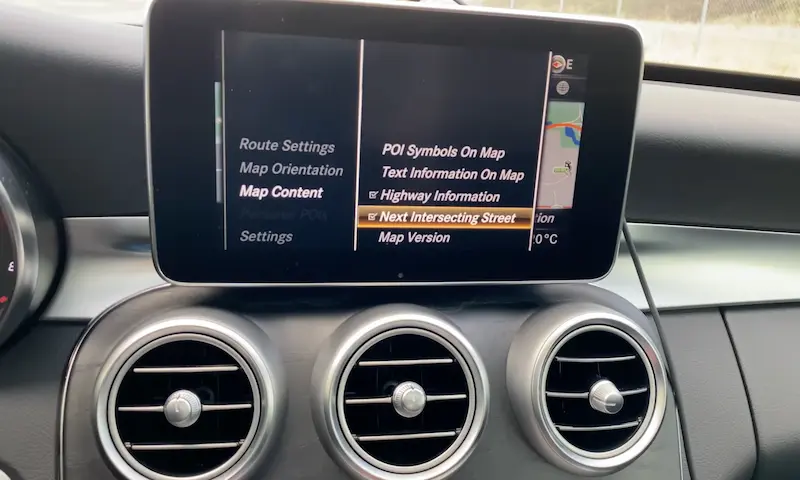
Your car figures this out on its own. The ASSYST PLUS system monitors engine revolutions, heat cycles, oil condition, and ambient temperature in real time. It calculates the exact moment each service is needed, then counts down the days and miles on your instrument cluster.
| Service Code | What It Covers | Typical Interval |
|---|---|---|
| Service A | Oil change, filter, basic inspection | 10,000 miles / 1 year |
| Service B | Full system refresh, brake fluid, filters | 20,000 miles / 2 years |
| Service B7 | Everything in B + full transmission service | 40,000–70,000 miles (model-dependent) |
What the “B” Part of Your B7 Service Covers
Before getting to the transmission, here’s what the standard B service component includes.
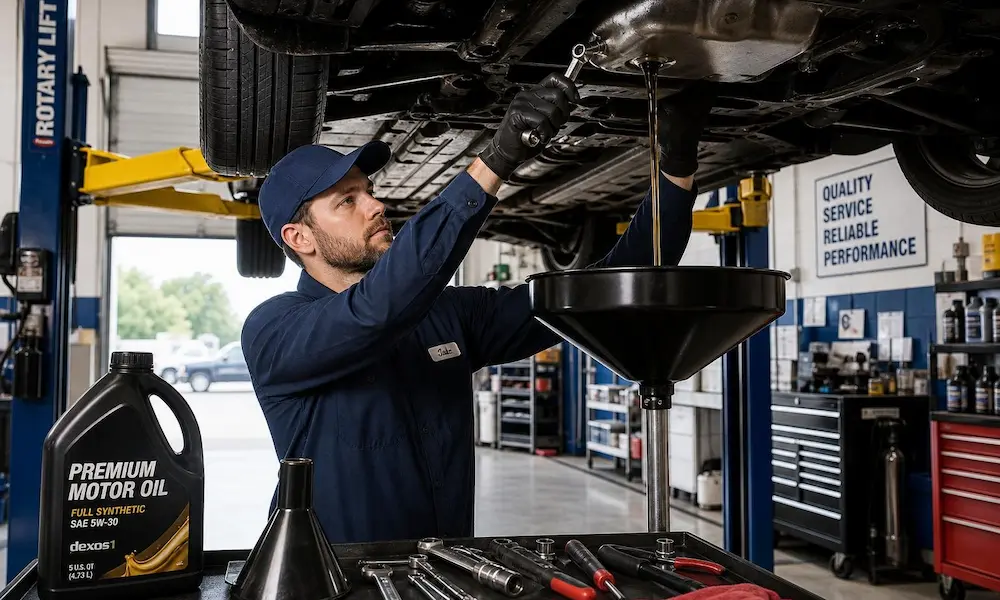
Engine Oil and Filter Replacement
Your Mercedes runs on high-spec synthetic oil — think 229.5 or 229.51 specification lubricants. These oils handle extreme heat without breaking down, keeping your turbocharger, camshafts, and pistons well-protected.
A high-capacity synthetic media filter replaces the old one at the same time. It traps the microscopic carbon particles that combustion naturally produces. Fresh oil plus a clean filter equals an engine that stays efficient longer.
Brake Fluid Flush
This one matters more than most people realize. Brake fluid is hygroscopic — it pulls moisture from the air through rubber hoses and seals over time, even in a sealed system.
As moisture builds up, the fluid’s boiling point drops. Hit your brakes hard on a mountain descent or during an emergency stop, and that water can vaporize. Vapor is compressible. A compressible brake line gives you a spongy pedal and seriously reduced stopping power — not something you want to discover mid-panic-stop.
Moisture also corrodes ABS valves and the master cylinder from the inside. The B7 service flushes the entire hydraulic system and refills it with fresh, dry fluid.
Cabin Air Filter and Engine Air Filter
The cabin filter catches dust, pollen, and allergens before they reach you. In cities, models with activated charcoal layers also filter out exhaust gases and nitrogen oxides.
The engine air filter keeps your air-to-fuel ratio where it needs to be. A clogged filter forces your ECU to adjust fuel trim aggressively, which tanks your fuel economy, reduces power, and can eventually trigger a check engine light and damage your catalytic converters.
The “7” Explained: Your Transmission Service
This is where B7 earns its place in your maintenance budget. Real-world data consistently shows that transmission fluid absolutely degrades — the old “sealed for life” claim was optimistic at best.
Why Transmission Fluid Fails
Your 7G-Tronic or 9G-Tronic transmission uses fluid for three jobs: lubrication, heat management, and hydraulic power transfer through the torque converter and internal clutches.
Heat and shear forces break down the fluid’s long-chain molecules over thousands of miles. Once degraded, it can’t manage friction or temperature effectively. Metal shavings from normal gear and clutch wear also accumulate in the fluid over time. These particles clog the transmission’s valve body, causing hard shifts, hesitation, and eventually, a very expensive mechanical failure.
What a Proper B7 Transmission Service Looks Like
A real B7 transmission service isn’t just a drain and refill. Here’s what a qualified shop actually does:
- Drain and inspect the old fluid — A burnt smell or heavy metal contamination signals deeper internal damage worth knowing about before you leave the shop
- Drain the torque converter — Many Mercedes models hold a significant portion of total fluid volume in the converter. A proper service rotates the engine manually to access that drain plug, removing nearly all degraded fluid rather than half of it
- Replace the filter and gasket — The pan comes off, the filter gets swapped, debris gets cleaned out, and the pan magnets get wiped to remove metal particles
- Use new hardware — New one-time-use aluminum bolts and a fresh gasket prevent leaks and ensure correct clamping force
- Precision refill at operating temperature — This matters. Different versions of the same transmission may require Red or Blue fluid, and they’re not interchangeable. The correct fluid level gets verified using the diagnostic computer at a specific temperature
| Component | What Happens During B7 | Why It Matters |
|---|---|---|
| Hydraulic fluid | Full exchange including torque converter | Restores friction and cooling properties |
| Transmission filter | Replaced with OEM part | Stops debris from clogging valve body |
| Pan gasket and bolts | New hardware installed | Prevents high-pressure hydraulic leaks |
| Pan magnets | Cleaned manually | Removes metallic wear particles |
Safety and Chassis Checks That Come With Your B7
Your technician doesn’t just swap fluids and send you on your way. The B7 service includes a full multi-point inspection of the vehicle’s critical systems.
Brake System Physical Inspection
While the fluid is being exchanged, the brakes get a thorough physical check. Technicians measure pad thickness and inspect rotors for warping or lip formation. Calipers get checked for leaks. Brake wear sensors — the ones that warn you before pads go metal-on-metal — get verified for correct function.
Tire Inspection and Pressure Correction
Each tire gets checked for tread depth and wear patterns. Irregular wear often points to alignment issues or worn suspension components like bushings and ball joints. Catching those early prevents a premature $800-plus tire replacement.
Tire pressure gets corrected to manufacturer spec, including the spare. Uneven pressures confuse your wheel-speed sensors, which can trigger incorrect interventions from your stability control and traction control systems.
How Much Does the Mercedes B7 Service Cost?
The B7 service costs more than a standard B service because of the transmission work. Where you take your car affects the price significantly.
Dealership vs. Independent Specialist
Franchise dealerships employ factory-trained master technicians with access to the latest diagnostic software and OEM parts. Their labor rates reflect that expertise. Independent Mercedes specialists, particularly those with former dealership technicians on staff, can deliver the same quality work at noticeably lower rates. They often use OE parts — made by the same suppliers that stock Mercedes-Benz — at better prices.
| Shop Type | Typical Labor Rate | Parts | Main Benefit |
|---|---|---|---|
| Franchise Dealership | $180–$280/hour | 100% OEM | Factory tools, loaner cars, warranty |
| Independent Specialist | $120–$190/hour | OEM or high-quality OE | 20–30% cost savings |
| General Repair Shop | $90–$130/hour | Aftermarket | Lowest price, convenient |
Independent specialists can reduce your total B7 bill by 20% to 30% compared to a dealership, without sacrificing quality — provided they have genuine Mercedes expertise.
The Digital Service Record Factor
Modern Mercedes-Benz vehicles don’t use a paper stamp book. Service records live in a centralized database. A complete digital history showing every A and B service — including B7 transmission work — directly supports your resale value. Buyers and dealers in the used luxury market treat service gaps as a red flag, and that skepticism shows up in the offer price.
What Happens If You Skip the B7 Service?
Skipping it feels like saving money. The math rarely works out that way.
Performance Drops First
Degraded transmission fluid turns smooth, crisp gear changes into hesitations and jerks. Your engine works harder to compensate for inefficient power transfer, which increases fuel consumption. In a market where gas prices swing unpredictably, that’s a real ongoing cost.
Then the Big Bills Arrive
A clogged transmission filter that doesn’t get replaced during a B7 can cause the transmission pump to overheat and fail. That repair can run $4,000 or more — compared to a $600 service that would have prevented it entirely. A new transmission can exceed $5,000.
Warranty Implications Are Real
If you own a newer Mercedes, skipping the B7 service creates warranty risk. The Magnuson-Moss Warranty Act protects your right to use independent shops — but it doesn’t protect you from failing to perform required maintenance at all. If your transmission fails and you can’t document that the B7 was done on schedule, Mercedes is within its rights to deny that warranty claim.
Safety and Liability Consequences
Contaminated brake fluid that causes reduced stopping power during an emergency stop is a serious safety hazard. In a post-accident investigation, documented maintenance neglect can give your insurer grounds to dispute coverage — and expose you to personal liability. The brake fluid degradation that the B7 service directly addresses isn’t theoretical; it’s a documented safety risk.
Regional Conditions That Affect Your B7 Timeline
Your ASSYST PLUS system adapts to how and where you drive, which means your B7 prompt might arrive earlier in certain environments.
Hot, dry climates (Arizona, Nevada, Southern Florida): Heat accelerates oxidation in both engine oil and transmission fluid. Heat is the number one transmission killer — the system may prompt your B7 earlier than the typical mileage interval based on detected thermal stress.
Humid coastal regions (Southeast, Pacific Northwest): High humidity means brake fluid absorbs moisture faster. Your biennial brake fluid flush becomes especially critical here. Cabin filters may also clog with mold faster than in drier climates.
Salt belt states (Northeast, Midwest): Road salt and de-icing chemicals attack brake lines, the transmission pan, and suspension mounting points. Technicians in these regions pay extra attention to undercarriage condition and rust during the B7 inspection.
The B7 service isn’t just a maintenance checkbox. It’s what keeps a precisely engineered car performing the way it was designed to — regardless of where you park it, how you drive it, or how many miles you’ve put on it.