Got a “B3” flashing on your Mercedes dashboard? Don’t ignore it. This guide breaks down exactly what the Mercedes B3 service covers, why it matters, and how much you should expect to pay. Stick around — there’s some useful cost-saving info near the end.
What Is the Mercedes B3 Service?
The Mercedes B3 service is a major maintenance event. It’s not just a routine oil change.
Mercedes-Benz uses a smart maintenance system called ASSYST PLUS to monitor your driving habits and tell you exactly when your car needs attention. Instead of generic mileage reminders, this system tracks real-world wear on your engine and components.
The “B” in B3 stands for a major service inspection. The “3” tells you that extra tasks — specifically the engine air filter and spark plugs — are due at the same time. You’ll typically see this notification around the 60,000-mile mark, though ASSYST PLUS can push it earlier or later depending on how you drive.
This service is most common on gasoline-powered models like the C300, E350, and GLC300.
Mercedes B3 Service Checklist: Everything That’s Included
Here’s a complete breakdown of what happens during a Mercedes B3 service.
Standard Service B Tasks (Included in Every B3)
These are the foundational tasks that come with every major “B” service:
- Synthetic oil and oil filter replacement — using Mercedes-approved 229.5 or 229.6 spec oil
- Brake fluid exchange — full hydraulic system flush with fresh, dry fluid
- Cabin air filter replacement — often includes an activated charcoal layer for odor and pollutant absorption
- Brake system inspection — pads, rotors, calipers, and brake lines checked
- Fluid level top-offs — coolant, washer fluid, power steering, and more
- Tire pressure check — including the spare
- ASSYST PLUS counter reset — your maintenance clock starts fresh
The “3” Add-Ons: What Makes B3 Different
These two items are the reason your bill is higher than a standard Service B:
Engine Air Filter Replacement
Your engine breathes through this filter. A clogged one forces the turbocharger to work harder, which increases heat, reduces fuel economy, and can cause rough idling or sluggish acceleration. The B3 service replaces it completely — no just “inspecting” it.
Spark Plug Replacement
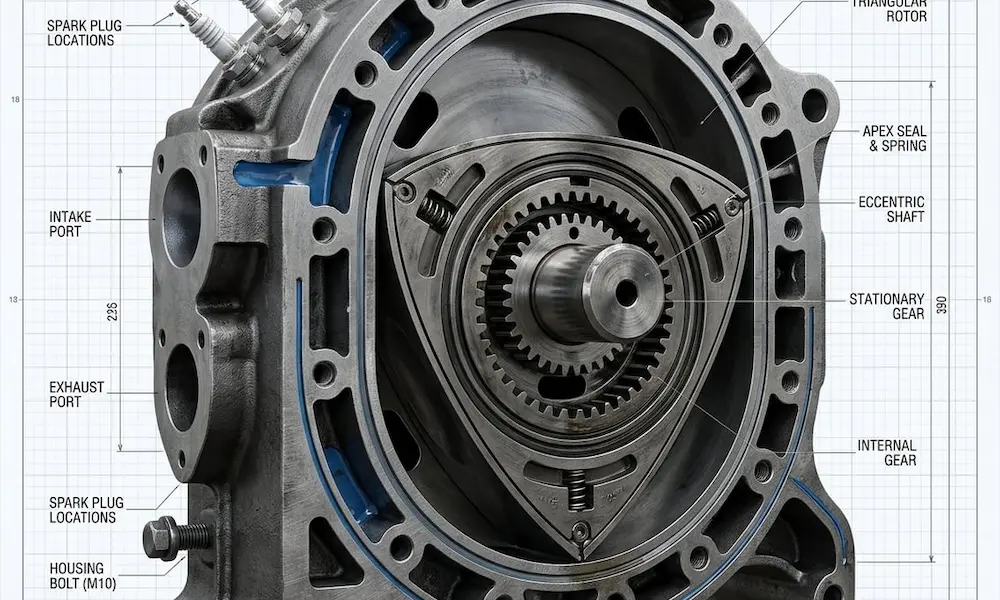
Mercedes uses iridium or platinum-tipped spark plugs designed for high-performance turbocharged engines. Over time, electrode erosion widens the gap, forcing your ignition coils to work harder. Fresh plugs restore clean combustion, smoother starts, and better throttle response. They also protect your catalytic converters from damage caused by unburned fuel.
| Service Component | Service A | Service B | Service B3 |
|---|---|---|---|
| Synthetic Oil & Filter | ✅ | ✅ | ✅ |
| Fluid Level Top-Off | ✅ | ✅ | ✅ |
| Brake Inspection | ✅ | ✅ | ✅ |
| Cabin Filter Renewal | ❌ | ✅ | ✅ |
| Brake Fluid Exchange | ❌ | ✅ | ✅ |
| Engine Air Filter | Inspection only | Model dependent | ✅ Mandatory |
| Spark Plug Renewal | ❌ | ❌ | ✅ Mandatory |
| Typical Interval | 10,000 miles | 20,000 miles | ~60,000 miles |
How the ASSYST PLUS System Triggers Your B3
Mercedes doesn’t use a simple odometer countdown. The ASSYST PLUS system monitors actual driving conditions to decide when your B3 is due.
Here’s what it tracks:
- Thermal cycles — Short city trips where the engine never fully warms up can foul spark plugs faster through carbon buildup
- Engine load — Towing, mountain driving, or sustained high speeds accelerate wear on filters and ignition components
- Ambient conditions — Extreme heat in Arizona or high humidity in Florida affects oil degradation and component wear rates
- Start-stop frequency — Frequent cold starts count against your spark plug and oil life simultaneously
This means a GLC300 used for weekend highway trips might hit the B3 prompt at 65,000 miles, while the same model used for daily stop-and-go commuting in Los Angeles could see it sooner.
Reading Your Workshop Menu for B3 Codes
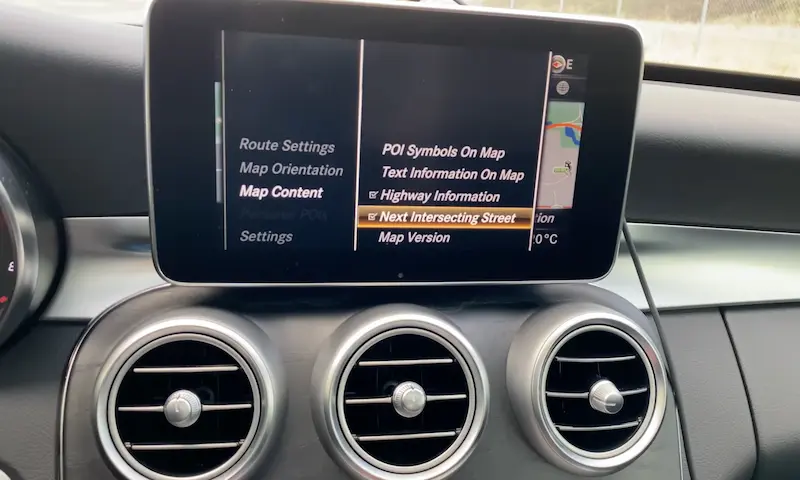
You can check exactly what your B3 requires through your car’s steering wheel controls. Navigate to the Workshop Menu to see the specific service items triggered.
| Workshop Item | What It Means |
|---|---|
| Service Item 2 | Major service inspection (Service B base) |
| Service Item 3 | Engine oil and filter change |
| Service Item 4 | Brake fluid exchange |
| Service Item 8 | Engine air filter replacement |
| Service Item 12 | Spark plug renewal (gasoline engines) |
A typical B3 notification will show Items 2, 3, 8, and 12 together.
The Brake Fluid Exchange: Why It’s Non-Negotiable
This task deserves its own spotlight because many owners underestimate it.
Brake fluid is hygroscopic — it absorbs moisture from the air over time. As moisture content rises, the fluid’s boiling point drops. During a hard emergency stop or a long mountain descent, that fluid can boil and create vapor pockets in your brake lines. The result? A spongy pedal — or worse, brake failure.
Moisture in the lines also corrodes the internal components of your ABS and traction control modules. Those aren’t cheap to replace. The brake fluid exchange during your Mercedes B3 service flushes out that contaminated fluid and restores your system’s full safety margin.
The Oil and Filter Standards That Matter
Mercedes engines aren’t happy with just any oil from a big-box store. Turbocharged four-cylinder units like the M274 and M264 (found in the C300 and GLC300) require oil that meets the 229.5 or 229.6 specification. These synthetic formulas resist thinning under turbo heat and prevent sludge buildup on your camshafts.
A typical B3 oil fill runs about 6.6 to 7.0 liters. The oil filter is a fleece or synthetic media type — not a standard paper filter. It traps finer particles and holds its structure across longer service intervals, keeping the oil feeding your turbocharger bearings clean.
Using off-spec oil or a cheap aftermarket filter during a B3 service isn’t just cutting corners — it can void your warranty and cause engine damage.
The Undercarriage and Diagnostic Inspection
The B3 isn’t just about what goes in the engine. Technicians also get underneath the car and connect it to a diagnostic computer.
Physical inspection includes:
- Engine, transmission, and differential seals checked for leaks
- Ball joints, control arm bushings, and steering rack boots checked for wear
- Exhaust system mounting and rust inspection
- 4MATIC transfer case inspection on all-wheel-drive models
Diagnostic scan includes:
- Reading stored and pending fault codes — even ones that haven’t triggered a dashboard light yet
- Checking the starter battery and auxiliary battery (used for start-stop and electronic shifting) for cold-cranking capacity
A failing auxiliary battery is one of the most common causes of mysterious electronic errors in modern Mercedes vehicles. The B3 service catches it before it leaves you stranded.
How Much Does a Mercedes B3 Service Cost?
This is where things vary significantly depending on where you go.
Dealership vs. Independent Specialist
Authorized dealerships use factory-trained technicians, XENTRY diagnostic software, and genuine Mercedes parts. That comes at a price. Service B alone starts around $450–$700 at a dealership. Add spark plugs and an air filter for the B3, and your total typically lands between $900 and $1,500 depending on your model and location.
Independent European specialists can often perform the same B3 service for 30% less. Many use the same OEM-quality parts from brands like Mann, Mahle, and NGK that the factory uses. The key is making sure the shop can reset your ASSYST PLUS counter and document the service properly — both matter for warranty coverage and resale value.
Estimated B3 Service Costs by Model
| Vehicle | Est. Annual Maintenance | B3 Service Cost (Est.) | Spark Plug Part |
|---|---|---|---|
| C300 Sedan | $1,250 | $850 – $1,200 | A0001590500 |
| E350 Sedan | $1,087 | $950 – $1,400 | A2701590600 |
| GLC300 SUV | $1,200 | $900 – $1,300 | A0041596903 |
Why Skipping the B3 Costs More Long-Term
The B3 service feels expensive upfront. But consider what skipping it can trigger:
- A clogged air filter can kill a $500+ mass airflow sensor
- Worn spark plugs stress the ignition coils and can damage catalytic converters — replacements that run into the thousands on a Mercedes
- Contaminated brake fluid can corrode ABS modules that cost more to replace than several B3 services combined
The math strongly favors doing the service on time.
B3 Service and Your Warranty
Mercedes-Benz requires documented maintenance to honor warranty claims. If your engine develops a problem and you can’t show records of timely oil changes and spark plug replacements aligned with the ASSYST PLUS schedule, your warranty claim can be denied.
This applies whether you use a dealership or an independent shop — as long as the work is documented with correct parts and a proper service reset.
B3 Service on Electric and Hybrid Mercedes Models
If you drive an EV like the EQS, your B3 service looks different. There are no spark plugs and no engine oil to change.
Instead, the B3 for electric models focuses on:
- Coolant circuit flushes for the high-voltage battery and power electronics
- Cabin air filter replacement (still required)
- Tire and brake wear inspection — EVs are heavier and wear components differently
For plug-in hybrids like the GLC350e, the B3 covers both worlds: traditional tasks like oil, filters, and spark plugs, plus specialized checks on the high-voltage cooling system and HV cable integrity.
How the B3 Service Affects Resale Value
In the used Mercedes market, service history drives sale price. A C-Class or GLC-Class with complete, documented maintenance — especially high-labor items like a B3 service — consistently sells for thousands more than one with gaps in the records.
Buyers know that a properly executed B3 means the spark plugs, brakes, filters, and fluids were all addressed at the right time. That’s a strong signal the previous owner took care of the car. If you’re planning to sell in the next few years, keeping up with your B3 is one of the best investments you can make.