Your dashboard just lit up with a “Service B5” message, and now you’re wondering what that actually means for your wallet and your weekend plans. This guide breaks down every task in the mercedes b5 service, explains why each one matters, and helps you decide where to get it done.
What Is the Mercedes B5 Service?
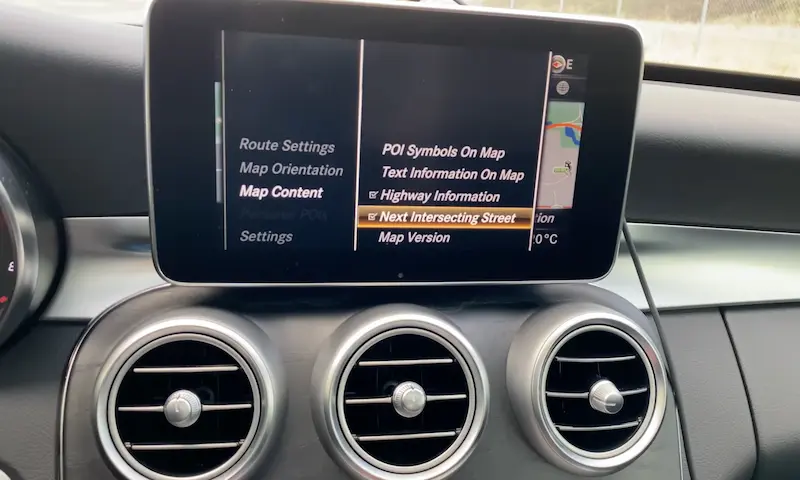
The mercedes b5 service is a major maintenance interval that typically hits around the 50,000-mile or five-year mark. Your car’s onboard computer — the ASSYST PLUS system — calculates this based on real driving data, not just mileage.
Here’s how to read the code:
- “B” = major service (more thorough than a Service A)
- “5” = a workshop code telling your technician to add spark plugs and an engine air filter to the standard checklist
So a B5 isn’t just an oil change with a fancy name. It’s a full system reset for your engine, brakes, and safety systems.
Service A vs. Service B: The Core Difference
Before diving into the B5 specifics, it helps to understand where it sits in the Mercedes-Benz maintenance schedule.
| Service Dimension | Service A (Minor) | Service B (Major) |
|---|---|---|
| Typical Interval | 10,000 miles / 1 year | 20,000 miles / 2 years |
| Synthetic Oil & Filter | ✅ Included | ✅ Included |
| Cabin Air Filter | ❌ Not standard | ✅ Mandatory |
| Brake Fluid Exchange | ❌ Not standard | ✅ Mandatory |
| Spark Plugs (B5) | ❌ No | ✅ Yes |
| Engine Air Filter (B5) | ❌ No | ✅ Yes |
| Multi-Point Inspection | Basic | Comprehensive |
The B5 sits at the top of this stack. It’s a full Service B plus the “5” add-ons.
The Full Mercedes B5 Service Checklist
Synthetic Oil and Filter Replacement
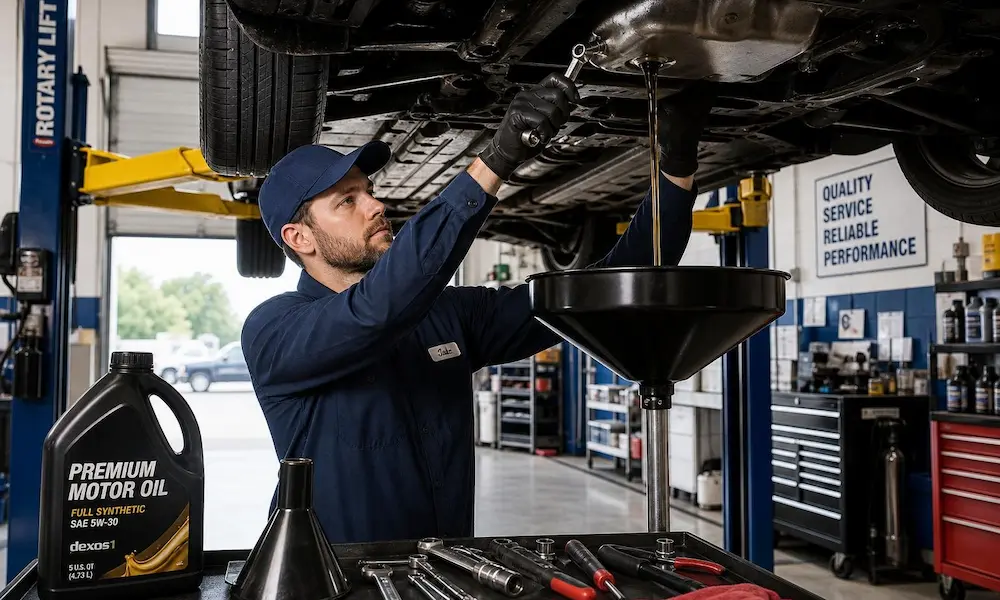
This is the core of every service. Mercedes engines run on high-performance synthetic oil that handles everything from -20°F Minnesota winters to 115°F Arizona summers. Over time, the oil’s chemical additives break down and stop suspending soot and controlling acidity. Old oil turns to sludge. Sludge kills turbocharger bearings and hydraulic lifters. The fix is simple: fresh oil every service.
Cabin Air Filter Replacement
Most Mercedes models use a combination filter with an activated charcoal layer. This filter traps pollen, dust, exhaust fumes, and nitrogen oxides before they hit the cabin. In high-smog cities or humid climates, a clogged cabin filter also strains your A/C system and can promote mold growth in the vents. Swapping it out during the B5 service keeps the air inside your car clean.
Brake Fluid Exchange
Brake fluid absorbs moisture from the air over time. That moisture lowers the fluid’s boiling point. A lower boiling point means your brakes can fade under hard use — exactly when you need them most. A full hydraulic flush every two years removes the contaminated fluid and replaces it with fresh fluid that meets Mercedes-Benz specs. It also protects the brake lines from internal corrosion.
Spark Plug Replacement (The “5” Addition)
This is what separates a standard Service B from a B5. Modern Mercedes engines use turbocharged direct injection, which places extreme heat and electrical stress on spark plugs. After 50,000 miles, the platinum or iridium electrode tips wear down. The gap between the electrodes widens. Your ignition coil has to work harder to bridge that gap, which shortens its lifespan. Fresh spark plugs restore clean combustion, protect your catalytic converter, and bring back the fuel economy you had when the car was new.
Engine Air Filter Replacement (The Other “5” Addition)
Your engine pulls thousands of cubic feet of air for every gallon of fuel it burns. The air filter traps particles down to just a few microns in size. In dusty Southwest environments or pollen-heavy regions, filters clog faster than you’d expect. A clogged filter restricts airflow, hurts turbocharger efficiency, and forces the engine to work harder just to breathe. A clean filter restores full power and protects cylinder walls from abrasive wear.
The Multi-Point Inspection: What They’re Actually Looking At
The B5 service includes a comprehensive multi-point inspection that goes well beyond the engine bay. Here’s what gets checked:
| Inspection Area | Key Items Checked | Why It Matters |
|---|---|---|
| Underside of vehicle | Axle boots, steering links, exhaust, leaks | Catches corrosion and joint failures early |
| Wheels and brakes | Pad thickness, rotor condition, tire tread, pressure | Ensures stopping power and handling stability |
| Engine compartment | Belts, hoses, cooling system, all fluid levels | Protects powertrain from heat damage and seizure |
| Interior and safety | Horn, wipers, seat belts, all lighting, battery | Keeps safety systems functional and road-legal |
A few areas deserve extra attention:
Suspension and Steering
Technicians check the front and rear axle joints, ball joints, and steering linkages. In northern states where road salt is common, the rubber boots protecting these joints corrode quickly. A torn boot leads to lost lubrication, which leads to a failed joint — an expensive repair that a 30-second visual inspection can prevent.
Tires
Tread depth, wear patterns, and inflation pressure all get measured. If your Mercedes has a staggered wheel setup (wider rears than fronts), full rotation may not be possible. Your technician will advise you based on your specific configuration.
Battery
The battery test checks charge capacity under load, not just resting voltage. Modern Mercedes vehicles run complex electrical systems and stop-start technology that demands a healthy battery — especially in cold climates where battery output drops sharply.
How Much Does the Mercedes B5 Service Cost?
Costs vary by model, region, and where you take it. Here’s a realistic range based on US market pricing:
- Mercedes-Benz dealership: $800–$1,200 for most sedans like the C-Class
- Specialized independent shop: $500–$800, depending on parts quality and labor rates
The price gap reflects dealership overhead, factory-trained technicians, and genuine parts backed by a two-year warranty. It also reflects the value of a documented service history in the Mercedes Digital Service Report, which can add real money to your car’s resale value.
Tips to reduce the cost:
- Check the dealership’s website for B-service coupons before booking
- Ask specifically if the quote includes all B5 items (spark plugs and air filter)
- Compare quotes from two or three shops before committing
Dealership vs. Independent Shop: Which Should You Choose?
Go to the Dealership If…
- Your car is still under warranty
- You plan to sell the car and want a verified service history
- You want factory diagnostic software and genuine parts
- Your vehicle is an AMG, diesel, or EQ model with specialized requirements
Dealerships offer amenities like loaner cars, shuttles, and complimentary washes, but the real value is access to the latest factory technical bulletins and software updates.
Go Independent If…
- Your car is out of warranty and you want to manage costs
- You’ve found a shop staffed by former Mercedes-trained technicians
- The shop uses Mercedes-approved oils and OEM-equivalent parts
One non-negotiable: confirm the shop uses oil that meets Mercedes-Benz approvals. Using the wrong viscosity or a non-approved formula can cause premature engine wear and void future warranty claims.
B5 Service for AMG, Diesel, and EQ Models
AMG Vehicles
AMG models run harder and hotter. The B5 service for these cars may include additional checks on rear axle oil, transmission cooling systems, and turbocharger cooling circuits. Brake systems use larger, higher-friction components that need precise measurement during inspection.
BlueTEC Diesel Models
Diesel B5 service adds an AdBlue fluid top-up, which is required for emissions compliance in the US. Diesel fuel filters have their own replacement intervals to protect the high-pressure injection system. These engines also need a diesel-specific synthetic oil designed to handle elevated soot levels.
Mercedes-EQ Electric Vehicles
EVs skip the oil change and spark plugs entirely. But the B service for an EQ still covers cabin filter replacement, a full brake fluid exchange, and a detailed inspection of the high-voltage battery casing, charging port, and thermal management systems.
How Your Location Changes Your B5 Service Needs
The US is a big place, and your environment directly affects how hard your Mercedes works between services.
Desert and arid regions (Southwest): Fine dust clogs air filters and cabin filters faster than average. High temperatures accelerate rubber degradation in belts and hoses. The “5” add-ons in your B5 service are especially critical here.
Cold climates and Rust Belt states: Road salt creates a corrosive environment that attacks brake lines and underbody components. During your B5, ask the technician to pay close attention to the hydraulic brake lines and axle boots. Battery testing is a high priority in cold climates, since extreme cold reduces battery output significantly.
Urban and high-humidity areas: Stop-and-go driving accelerates brake wear and pushes moisture into brake fluid faster. High humidity in southern states increases the risk of mold in A/C systems, making the cabin filter swap during your B5 service genuinely important for your health, not just your car’s performance.
One Last Thing Before You Book
The mercedes b5 service message is your car telling you it’s time for a specific set of tasks — not just an oil change. Ignoring it doesn’t just risk mechanical wear; it can affect your warranty, your resale value, and your safety. The ASSYST PLUS system calculated this interval based on your actual driving conditions. It’s not guessing.
Book the service, confirm the shop will complete all B5 items (oil, cabin filter, brake fluid, spark plugs, and air filter), and make sure it’s documented. That paper trail is worth money when it’s time to sell.