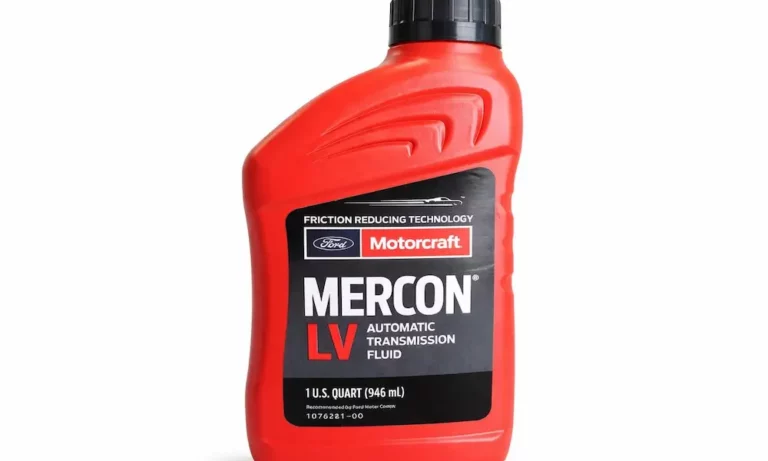
Grabbing the wrong transmission fluid is an easy mistake to make. Both bottles say “Mercon,” both are made by Ford, and both sit on the same shelf at your local auto parts store. But mixing up mercon lv vs mercon v can wreck your transmission faster than skipping an oil change. This guide breaks down exactly what makes these two fluids different, where each one goes, and how to avoid an expensive mistake.
What Is Mercon V, Exactly?
Mercon V is Ford’s transmission fluid standard from the late 1990s. Engineers built it to fix a big problem in older transmissions: shudder. That’s the shaky, vibrating feeling you get when a torque converter clutch grips unevenly.
Mercon V is thicker than newer fluids and packed with strong friction modifiers. It works great in four-speed and five-speed automatics because those transmissions have wider mechanical clearances. They need a thicker fluid to keep pressure where it needs to be.
Ford also made Mercon V backward-compatible with the original Mercon fluid. So if your owner’s manual calls for plain “Mercon,” you should use Mercon V instead. The old stuff isn’t made anymore.
What Is Mercon LV, Exactly?
Mercon LV showed up in the mid-2000s. The “LV” stands for low viscosity, and that’s the whole point of this fluid. It’s thinner, fully synthetic, and built for modern six-speed and higher transmissions.
Why thinner? Modern transmissions pack way more gears into the same size housing. Tiny solenoids control shifting with precision, and thick fluid just can’t move fast enough through those tight passages. Mercon LV flows quicker, reduces drag inside the transmission, and helps your car get better gas mileage.
You’ll find Mercon LV as the factory fill in most Ford vehicles built after 2005 or so, including popular six-speed automatics like the 6F35 and 6R80.
Mercon LV vs Mercon V: The Key Differences at a Glance
Here’s the side-by-side comparison that matters most:
| Property | Mercon V | Mercon LV |
|---|---|---|
| Viscosity at 100°C | 7.0–7.6 cSt | 6.0 cSt |
| Viscosity at 40°C | 34.8–36.0 cSt | 29.6 cSt |
| Cold flow at -40°C | 11,300–12,100 cP | 10,200 cP |
| Base stock | Conventional/synthetic blend | Full synthetic |
| Best for | Older 4-5 speed transmissions | Modern 6+ speed transmissions |
| Fuel economy impact | Standard | Improved |
Viscosity Is the Big Deal Here
Viscosity just means how thick a fluid is. Mercon V runs thicker so it can seal wider clearances in older hardware. Mercon LV runs thinner so it moves through tight, modern hydraulic circuits without choking the flow.
This isn’t a small gap. According to Gears Magazine’s breakdown of ATF viscosity, even small viscosity mismatches can throw off hydraulic pressure enough to cause shift problems. Your transmission’s computer expects fluid to move at a certain speed. Give it the wrong thickness, and shift timing goes haywire.
Base Oil and Additives Aren’t the Same Either
Mercon V uses a blend of hydroprocessed oils with friction modifiers tuned for older clutch materials, like cellulose-based linings. Mercon LV is a straight-up synthetic fluid with additives built for modern carbon-composite clutch packs.
Put the wrong friction modifier chemistry against the wrong clutch material, and you get slipping, chatter, or premature wear. It’s not a “close enough” situation.
Can You Mix Mercon LV and Mercon V?
No. Don’t do it. These fluids are not interchangeable, and Ford is crystal clear about that. Mixing them—or swapping one for the other—messes with hydraulic pressure and clutch friction in ways that cause real damage.
What Happens If You Use Mercon V in a Mercon LV Transmission
The thicker fluid clogs up the tight, modern hydraulic pathways. Your pump has to work harder, which generates extra heat and can cause aeration (air bubbles in the fluid, which is bad news for lubrication).
You’ll likely notice:
- Delayed or harsh shifting
- Lower fuel economy
- Faster clutch wear from friction modifier mismatch
- Erratic engagement, especially when the transmission is cold
What Happens If You Use Mercon LV in a Mercon V Transmission
This one’s arguably worse. Older transmissions have looser internal clearances, and they depend on thicker fluid to maintain pressure across those gaps. Thin Mercon LV can slip past worn seals and piston rings way too easily, dropping line pressure fast.
Low pressure means clutch packs and brake bands can’t clamp hard enough. That leads to slipping clutches, which generates intense heat and burns off friction material. That’s a direct path to transmission failure, not just a minor annoyance.
Which Ford Transmissions Use Which Fluid
Here’s a quick reference so you don’t have to guess:
| Transmission Type | Fluid Required |
|---|---|
| 4R100, 4R70W (heavy-duty 4-speed) | Mercon V |
| 5R55 series (5-speed) | Mercon V |
| Older 4-speed front-wheel drive | Mercon V |
| 6F35, 6F50 (6-speed front-wheel drive) | Mercon LV |
| 6R80 (6-speed rear-wheel drive) | Mercon LV |
| HF35 hybrid CVT | Mercon LV |
| 5R110W TorqShift (heavy-duty diesel) | Mercon LV (was Mercon SP) |
If you’re not sure which transmission your vehicle has, check your owner’s manual or the dipstick cap. It’s usually printed right there.
The TorqShift Exception: Mercon SP to Mercon LV
Here’s a weird one. The 5R110W TorqShift transmission, found in heavy-duty diesel trucks, originally called for a different fluid called Mercon SP. Over time, Ford found that Mercon LV actually performs better and is fully compatible with TorqShift internals.
Ford officially updated its guidance, and now Mercon LV is the approved replacement for Mercon SP in these transmissions, as confirmed in an NHTSA-published service bulletin. Interestingly, this is one of the rare cases where Ford says it’s fine to top off leftover Mercon SP with Mercon LV. No need to fully drain and flush first.
Don’t Forget the Transfer Case
If you drive a 4×4 or AWD Ford truck or SUV, your transfer case fluid matters just as much. And here’s where things get tricky: Mercon V is explicitly banned from transfer case use.
Why? Many transfer cases use a wet clutch pack to send power to the front axle automatically. Mercon V’s friction modifiers are too aggressive for these clutches and cause them to glaze over and fail.
For years, Ford required a separate fluid called XL-12 for transfer cases. That product got discontinued, and Ford now says Mercon LV is the universal replacement, according to Torque King’s guide on Ford transfer case fluids. So remember: Mercon LV works fine in the transfer case. Mercon V never should go there.
Power Steering Fluid Matters Too
Ford also uses these same fluids in hydraulic power steering systems, and the same rules apply. Vehicles built before 2012 generally need Mercon V in the steering rack. Anything newer usually calls for Mercon LV, since steering systems shrank their tolerances right along with transmissions.
Mixing these up in your power steering system causes pump whine, heavy steering feel, and can wreck seals over time. If you accidentally cross-contaminate the reservoir, a full flush is the only fix.
Why Mercon LV Turns Dark So Fast (and Why That’s Normal)
Here’s something that freaks out a lot of car owners. Fresh transmission fluid starts out bright red. Old-school thinking says dark, brownish fluid means it’s burnt and needs replacing.
That rule doesn’t apply to Mercon LV. Its synthetic base and dye combination naturally darkens within the first 20,000 miles, sometimes taking on a weird greenish tint if it mixes with factory assembly dye. Ford addressed this directly and confirmed it’s completely normal fluid behavior, not a sign of breakdown.
So skip the visual inspection if your car runs Mercon LV. Stick to mileage-based service intervals instead, or get a lab analysis if you want real data on fluid condition.
Should You Use a “Universal” ATF Instead?
You’ll see plenty of bottles marketed as “multi-vehicle” or “universal” ATF, claiming to work for both Mercon V and Mercon LV applications. Sounds convenient, right?
Here’s the catch: a fluid can’t physically be two different viscosities at once. Universal fluids split the difference, landing somewhere between 6.0 and 7.0 cSt. That means they’re not perfectly matched to either spec.
They probably won’t destroy your transmission overnight. But you might notice slightly harsher shifts in an older transmission, or slightly less efficient shifting in a newer one. If you want the smoothest, most reliable performance, stick with the exact fluid your transmission was designed for.
How Long Does Each Fluid Last?
Service intervals differ quite a bit between these two fluids:
| Fluid | Normal Driving | Severe Driving (towing, heavy stop-and-go) |
|---|---|---|
| Mercon V | 30,000–100,000 miles | 30,000 miles |
| Mercon LV | Up to 150,000 miles | 30,000 miles |
Mercon LV’s synthetic base holds up much longer under normal commuting. But if you tow trailers, drive in mountains, or do a lot of off-roading, that extended interval goes out the window. Heat from clutch slippage breaks down even the toughest synthetic fluid eventually.
Final Thoughts
The mercon lv vs mercon v debate really comes down to one thing: timing. Mercon V belongs in older Ford transmissions built before the mid-2000s. Mercon LV belongs in the modern stuff, plus your transfer case and newer power steering systems.
Check your owner’s manual before your next fluid change. Match the fluid exactly to your transmission’s spec. And don’t panic if your Mercon LV looks dark early on—that’s just how it behaves. Get this right, and your transmission has a much better shot at lasting well past 150,000 miles without drama.