Are you torn between the Mustang GT and EcoBoost? Both offer thrilling performance, but with key differences. The GT packs a powerful V8 engine, while the EcoBoost delivers impressive fuel economy with its turbocharged 4-cylinder.
You’ll find unique benefits with each model. The GT brings raw muscle car power, while the EcoBoost offers a more budget-friendly option without sacrificing the Mustang’s iconic style.
Keep reading to discover which Mustang best fits your driving style and budget. We’ll break down the engine specs, performance, and pricing to help you make the right choice for your next ride.
Key Differences Between the Mustang GT and EcoBoost
The Mustang GT and EcoBoost models offer distinct driving experiences. Their engines, performance, and exhaust systems set them apart in ways that matter to car enthusiasts.
Comparing Engines: GT’s V8 vs EcoBoost’s Inline-4
The Mustang GT comes with a powerful 5.0L V8 engine, also known as the Coyote V8. This engine gives you that classic muscle car feel and sound.
On the other hand, the EcoBoost Mustang features a 2.3-liter turbocharged inline-4 engine. This smaller engine focuses on efficiency while still delivering impressive performance.
The V8 in the GT is naturally aspirated, meaning it doesn’t use turbochargers. The EcoBoost engine, as its name suggests, uses turbocharging to boost power output.
Performance: Torque and Horsepower
When it comes to raw power, the GT takes the lead. The V8 engine produces significantly more horsepower than the EcoBoost.
However, don’t count out the EcoBoost. Its turbocharged design allows for impressive torque, especially at lower RPMs. This means you’ll feel a strong push when accelerating from a stop.
Here’s a quick comparison:
- GT: Higher top-end horsepower
- EcoBoost: Strong low-end torque
- GT: Better for high-speed performance
- EcoBoost: Quicker off-the-line acceleration in some cases
Exhaust Note and Active Exhaust System
The exhaust note is a big part of the Mustang experience. The GT’s V8 produces a deep, throaty rumble that muscle car fans love.
The EcoBoost has a different sound. It’s more subdued but still sporty. Some drivers prefer this quieter tone for daily driving.
Both models offer an active exhaust system. This lets you control how loud your Mustang is. You can choose a quiet mode for neighborhoods or a loud mode for the track.
The GT’s active exhaust has a wider range of sounds due to its V8 engine. The EcoBoost’s system is more subtle but still adds character to the car’s sound.
Design and Styling
The 2024 Ford Mustang comes in GT and EcoBoost versions with distinct looks inside and out. You’ll find key differences in the exterior styling and interior features between these two models.
Exterior Comparison
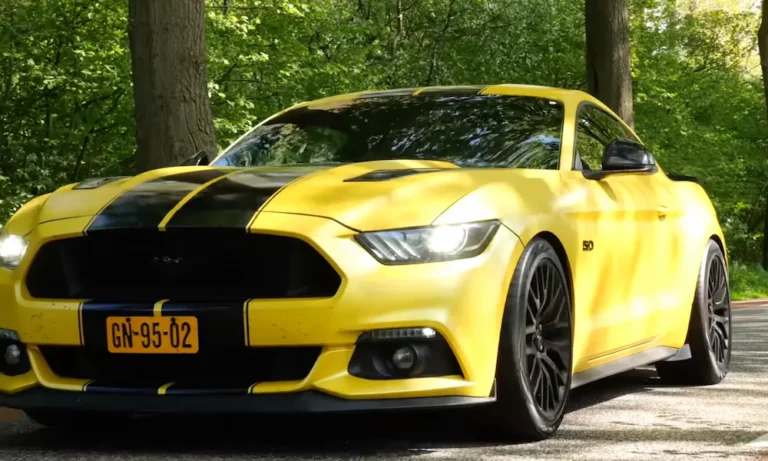
The GT and EcoBoost Mustangs have unique exterior touches. You’ll notice the GT has a more aggressive front-end with a larger grille and sportier fascia. The EcoBoost lacks fender badges, while the GT proudly displays its “5.0” badge.
Both offer Coupe and Convertible body styles. The GT gets quad exhaust tips, while the EcoBoost has dual tips. You can customize either with various wheel options and paint colors.
The Dark Horse model takes styling even further with unique accents and an even meaner look.
Interior Comforts and Technology
Inside, both GT and EcoBoost models offer similar comfort and tech features. You’ll find heated leather seats and a 12-speaker sound system in Premium trims.
The dashboard features a digital instrument cluster and large touchscreen. You get Apple CarPlay and Android Auto in both versions for easy smartphone connection.
Selectable drive modes let you customize your driving experience. The GT adds some performance-focused interior touches like special gauges and badging.
Transmission and Handling
The Mustang GT and EcoBoost offer different transmission and handling options. These choices affect how the car drives and feels on the road.
Manual vs Automatic Transmission
You can pick between a manual or automatic transmission for both the GT and EcoBoost. The GT comes with a 6-speed manual as standard. You can upgrade to a 10-speed automatic if you prefer.
The EcoBoost also offers both options. Many drivers enjoy the control of a manual. It lets you feel more connected to the car.
The automatic is easier for daily driving. It shifts faster than most people can manually. This can improve acceleration times.
Handling and Suspension Features
You’ll notice a difference in handling between the GT and EcoBoost. The EcoBoost feels sharper in corners. It’s about 160 pounds lighter than the GT. This extra agility makes it fun on twisty roads.
The GT has a heavier feel. It’s still sporty, but not as nimble as the EcoBoost. Both models offer performance packages to improve handling.
You can get features like:
- Stiffer springs
- Larger sway bars
- Special tires
These upgrades make the car stick to the road better. You’ll feel more confident taking tight turns at higher speeds.
Performance Packages and Upgrades
Ford offers exciting upgrades to boost your Mustang’s performance. You can choose from options for both the GT and EcoBoost models to enhance power, handling, and style.
GT Performance Offerings
The Mustang GT comes with some impressive performance options. You can add the GT Performance Package for better handling and power. This package includes upgraded Brembo brakes for stronger stopping ability.
The GT’s Coyote V8 engine provides thrilling acceleration. With performance upgrades, you can unlock even more potential from this powerful motor.
For drifting fans, Ford now offers an electronic drift brake option. This lets you pull off exciting slides with more control.
EcoBoost High Performance Package
Don’t count out the EcoBoost Mustang when it comes to performance. The EcoBoost High Performance Package adds some serious upgrades.
This package boosts the 2.3L engine’s output. You’ll feel more power when you hit the gas pedal. It also improves handling with suspension tweaks.
Larger brakes help you slow down faster. Special wheels and tires provide better grip for cornering. You even get unique styling touches to set your EcoBoost apart.
Comparative Analysis on the Road
The Mustang GT and EcoBoost offer different driving experiences. Let’s look at how they perform in acceleration and handling tests.
0 to 60 MPH Acceleration
The GT leaves the EcoBoost in the dust when it comes to straight-line speed. You’ll feel the difference as soon as you hit the gas.
The GT can reach 60 mph much quicker than the EcoBoost. This gap widens even more at higher speeds.
If you’re after raw power, the GT is your best bet. Its V8 engine gives you that classic muscle car feel.
The EcoBoost isn’t slow by any means. It still offers peppy acceleration for daily driving.
Handling on the Track and Autocross
Both models shine in different ways when it comes to handling.
The EcoBoost’s lighter weight gives it an edge in tight turns. You might find it easier to maneuver through an autocross course.
On a racetrack, a skilled driver in an EcoBoost can keep up with a GT. The lighter front end helps with quick direction changes.
The GT’s extra power comes in handy on longer straights. You’ll have more fun powering out of corners.
For the ultimate track experience, check out the Mustang Dark Horse. It takes the GT’s performance to the next level.
Economic Factors to Consider
Money matters when picking a Mustang. Let’s look at how the GT and EcoBoost compare in terms of costs.
Fuel Economy and Gas Mileage
The EcoBoost is easier on your wallet at the pump. It gets up to 25 mpg combined. The GT, with its bigger V8, drinks more gas. It only manages about 15 mpg in the city.
Your driving habits play a big role here. Do you have a long commute? The EcoBoost might save you cash. But if you don’t drive much, the GT’s lower mpg may not hurt as much.
Keep in mind that premium fuel is best for both engines. This adds to your costs either way.
Pricing and MSRP
The EcoBoost starts at a lower price than the GT. This makes it more budget-friendly upfront.
Here’s a quick comparison:
- EcoBoost: Starts around $28,000
- GT: Begins near $38,000
That’s a $10,000 difference! But don’t forget other costs. Insurance for the GT is often pricier due to its power.
The GT holds its value better over time. This might offset some of the higher costs if you plan to sell later.
Your choice depends on your budget and long-term plans. Think about what you can afford now and down the road.
Reliability and Ownership Costs
Owning a Mustang comes with costs beyond the purchase price. Let’s look at how the GT and EcoBoost compare in terms of upkeep and value over time.
Maintenance and Long-Term Reliability
The GT’s V8 engine is simple and tough. It has fewer parts that can break compared to the EcoBoost’s turbocharged setup. This means fewer things to fix down the road.
But the EcoBoost isn’t a slouch in reliability. Its direct injection system helps it run clean and efficiently. You’ll likely spend less on gas with the EcoBoost too.
Both engines need regular oil changes and tune-ups. The GT might cost a bit more here due to its larger engine. Brake pads and tires wear faster on the heavier GT as well.
Warranty and Resale Value
Ford offers the same warranty for both models. This covers you for 3 years or 36,000 miles bumper-to-bumper, and 5 years or 60,000 miles for the powertrain.
When it comes to resale, the GT has an edge. V8 Mustangs tend to hold their value better. Both the 2019 EcoBoost and GT models lose about 26.2% of their value over 5 years.
The GT starts at a higher price, so your total depreciation might be more in dollars. But percentage-wise, they’re neck and neck.
Final Thoughts
Choosing between a Mustang GT and EcoBoost comes down to your personal needs and preferences. Both offer the iconic Mustang style you love, but with different driving experiences.
The EcoBoost gives you better fuel economy for daily driving. You’ll save money at the pump and still have plenty of power for fun.
If you crave raw performance, the GT’s V8 engine delivers. You’ll feel the difference when you step on the gas. The GT is a whole different animal compared to the EcoBoost.
Think about how you’ll use your Mustang. For commuting and road trips, the EcoBoost might be your best bet. For weekend thrills and track days, the GT could be calling your name.
Your budget matters too. The EcoBoost starts at a lower price point, while the GT costs more but packs a bigger punch.
Test drive both if you can. You’ll get a feel for which one suits you best. Remember, there’s no wrong choice – both are awesome cars that’ll put a smile on your face!