Having your Nissan Altima’s AC blow warm air can turn a pleasant drive into a sweaty nightmare. Whether you’re dealing with weak airflow, strange noises, or no cold air at all, there’s usually a fixable cause behind your AC troubles. Let’s dive into why your Nissan Altima air conditioner isn’t working and explore practical solutions.
How Your Altima’s AC System Works
Before jumping into diagnosing problems, it helps to understand how your car’s AC actually works.
The Refrigerant Cycle
Your Nissan’s AC system works through a continuous cycle that transfers heat from inside your car to the outside:
- The compressor (powered by your engine’s belt) pressurizes refrigerant gas
- The hot, high-pressure gas flows to the condenser at the front of your car
- Outside air cools the refrigerant, turning it into a high-pressure liquid
- The refrigerant passes through an expansion valve, becoming extremely cold
- The cold refrigerant enters the evaporator core inside your dashboard
- Your blower motor pushes cabin air across the cold evaporator
- The refrigerant absorbs heat from the air, cooling what comes through your vents
This process repeats continuously when your AC is running properly.
Key Components in Your Altima’s AC System
Your AC system consists of several critical parts:
Under the Hood:
- Compressor (the heart of the system)
- Condenser (looks like a small radiator)
- High and low-pressure service ports (for recharging)
- AC lines/hoses
Inside the Cabin:
- Evaporator core (hidden deep in the dash)
- Blower motor (usually behind the glove box)
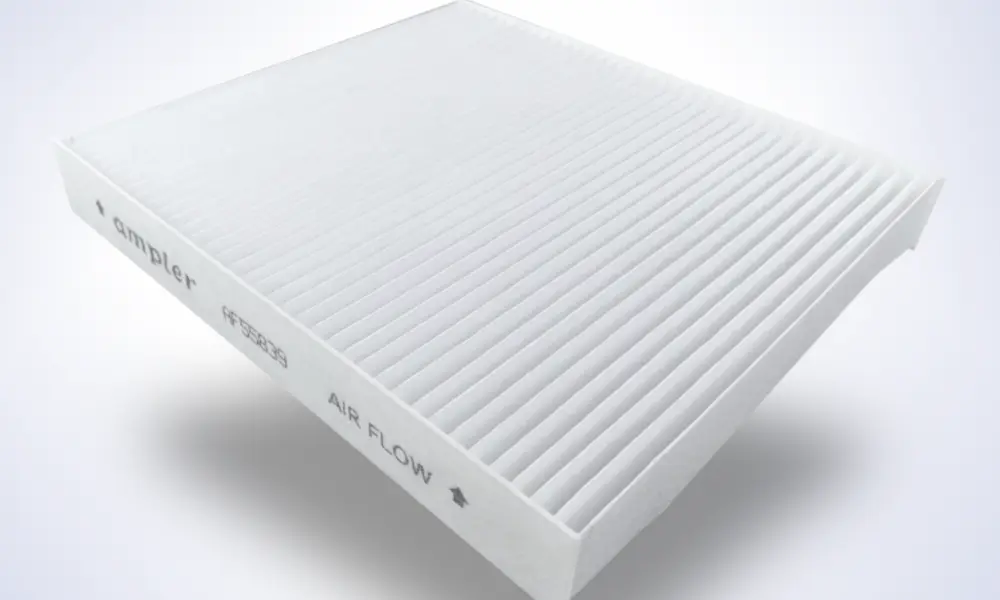
- Cabin air filter (typically behind the glove box)
- Blend door actuators (control airflow direction and temperature)
Common Nissan Altima AC Problems and Solutions
1. AC Blows Warm Air (Or Only Cools Intermittently)
This is the most common complaint from Altima owners.
Potential Causes:
| Cause | Signs | DIY Check |
|---|---|---|
| Low refrigerant | Cools on highway but not at idle; compressor clicking on/off rapidly | Check pressure at low-side port with gauge |
| AC compressor not engaging | No “click” sound when AC turned on | Listen for click with engine running when AC turned on/off |
| Faulty compressor/control valve | Weak cooling, especially at idle | Requires professional diagnosis |
| Electrical issue | No compressor engagement | Check fuses and relays |
| Blocked condenser | Poor cooling, especially in hot weather | Visual inspection of front grill area |
Solutions:
- Low refrigerant: The most common culprit is a refrigerant leak. Leaks often occur at the crimped connection on the low-pressure AC hose in Altimas. You can recharge the system as a temporary fix, but properly finding and repairing the leak is the only permanent solution.
- Compressor not engaging: If your compressor isn’t clicking on, first check the related fuse and relay in your fuse box. On newer Altimas (2013+), the relay may be integrated into the Intelligent Power Distribution Module (IPDM).
- Electronic Control Valve issues: Modern Altimas (2013+) use an Electronic Control Valve (ECV) that can fail separately from the compressor. This common failure point causes poor cooling, especially at idle. An official Nissan TSB even addresses this for 2019-2021 models.
- Blocked condenser: Check the front of your car for debris blocking the condenser. Rinse gently with a hose to remove bugs, leaves, and road grime.
2. No Airflow (Or Very Weak Air) From Vents
If you have little or no air coming through your vents, the problem is likely with the air delivery system, not the cooling components.
Potential Causes:
- Clogged cabin air filter: This is the #1 cause of weak airflow. The filter becomes clogged with dust, pollen, and debris over time.
- Failed blower motor resistor: If your fan only works on the highest speed but not lower settings, this is the likely culprit.
- Failed blower motor: If there’s no airflow at any fan setting, the motor itself may have failed.
- Frozen evaporator core: This causes airflow that starts strong but gradually diminishes as ice builds up.
Solutions:
- Replace cabin air filter: This is an easy DIY fix. Access is typically behind the glove box – remove the glove box, locate the filter housing, and swap in a new filter.
- Replace blower motor resistor: Another relatively straightforward DIY repair for those with basic tools and mechanical skills.
- Blower motor replacement: Located behind the glove box in most Altimas, this is more involved but still doable for a handy car owner.
- Defrost evaporator: For a frozen evaporator, turn off the AC but leave the fan running to allow the ice to melt. This is a temporary fix – the underlying cause needs to be addressed.
3. Strange Noises When AC Is Running
Unusual sounds when your AC is on can point to specific component issues.
Common Noises and Causes:
- Squealing/screeching: Often indicates a worn or slipping serpentine belt or failing compressor clutch bearing.
- Rattling/clicking from the dash: Usually debris in the blower motor fan.
- Grinding/knocking from engine bay: Signals a failing AC compressor – a serious issue requiring immediate attention.
- Hissing: Could indicate a refrigerant leak, especially if accompanied by poor cooling.
Solutions:
- For belt noises, inspect and possibly replace the serpentine belt.
- For blower motor noises, remove debris or replace the motor if bearing failure is detected.
- For compressor noises, professional service is recommended as this could lead to catastrophic failure.
4. Musty Odor From Vents
That unpleasant “dirty sock” smell is usually caused by mold and bacteria growing on the evaporator.
Solutions:
- Replace the cabin air filter.
- Use an evaporator cleaning product specifically designed for auto AC systems.
- As a preventive measure, run the fan for a few minutes with the AC off before shutting down your car to dry out the evaporator.
DIY or Professional Repair?
Some AC problems can be fixed by a moderately skilled DIYer, while others require professional help.
What You Can DIY:
- Replacing the cabin air filter
- Recharging the refrigerant (temporary fix)
- Replacing the blower motor or resistor
- Cleaning the condenser
When to Seek Professional Help:
- Any repair requiring opening the refrigerant system (legally requires certification)
- Compressor replacement
- Evaporator core replacement
- Leak detection and repair
- Electrical troubleshooting
AC Repair Costs for Nissan Altima
| Repair Service | Estimated Parts Cost | Estimated Labor Cost | Estimated Total Cost |
|---|---|---|---|
| AC System Recharge | $64 | $171-$251 | $235-$315 |
| AC Condenser Replacement | $418-$600 | $216-$316 | $634-$917 |
| AC Compressor Replacement | $738-$1,081 | $131-$192 | $869-$1,273 |
| AC Evaporator Replacement | $453-$508 | $1,004-$1,472 | $1,456-$1,980 |
| Blower Motor Replacement | $35-$200 | $100-$200 | $135-$400 |
| Low-Pressure Hose Replacement | $50-$150 | $100-$200 | $150-$350 |
Troubleshooting Your Altima’s AC Problems
Quick Initial Checks
Before assuming major component failure, try these simple checks:
- Verify control settings: Make sure the AC button is actually pressed (light illuminated), temperature set to coldest, and fan speed at medium or high.
- Check recirculation mode: Toggle the air recirculation button to see if performance improves when recirculating already-cooled cabin air.
- Compare idle vs. driving performance: If AC works better at higher speeds, this suggests low refrigerant or a weakening compressor.
- Listen for the compressor “click”: With the engine running, have someone turn the AC on and off. A distinct click from the engine bay indicates the compressor clutch is engaging.
Advanced Diagnosis: Using Pressure Gauges
For more definitive diagnosis, AC pressure readings can tell you a lot about what’s wrong. Here’s what pressure readings typically indicate on a hot day (85-95°F):
| System Condition | Low-Side Pressure | High-Side Pressure | Interpretation |
|---|---|---|---|
| Normal Operation | 35-45 PSI | 195-230 PSI | System working properly |
| Low Refrigerant | Below 25 PSI | Below 150 PSI | Common fault; not enough refrigerant |
| Overcharged | Above 55 PSI | Above 250 PSI | Too much refrigerant; dangerous |
| Failing Compressor | Above 45-50 PSI | Below 150 PSI | Compressor not pumping effectively |
| Blockage/Restriction | Very low (may go into vacuum) | Normal or high | Clogged expansion valve or orifice tube |
Maintenance Tips to Prevent AC Problems
Prevent future AC failures with these simple maintenance tips:
- Replace your cabin air filter regularly (annually or per your owner’s manual)
- Keep the condenser clean by periodically rinsing debris from the front grill area
- Run your AC at least 10 minutes every few weeks, even in winter, to keep seals lubricated
- Address leaks promptly rather than just recharging the system repeatedly
- Have your system professionally inspected if performance begins to decline
Generation-Specific Nissan Altima AC Issues
Different generations of the Altima tend to have unique AC problems:
2007-2012 Altimas
Common issues include weak airflow from clogged cabin filters, intermittent cooling from refrigerant leaks, and failing compressor clutches. Many owners report the driver-side vent blowing warmer than the passenger side – an early warning of low refrigerant.
2013-2018 Altimas
These models are prone to premature compressor failure, often due to the Electronic Control Valve (ECV). Low-pressure hose leaks at crimp connections are also common. Some owners notice sluggish acceleration when the AC is on, which typically relates to low refrigerant affecting engine load calculations.
2019-Present Altimas
These newer models can experience compressor engagement problems as documented in Nissan TSB NTB21-034A. This bulletin specifically addresses a condition where the AC compressor won’t engage due to Electronic Control Valve issues.
Choosing a Repair Shop for Your Altima’s AC
If you need professional help, look for a shop with:
- ASE-certified technicians (Blue Seal of Excellence is ideal)
- Experience with Nissan vehicles and AC systems
- Positive reviews mentioning honesty, communication, and fair pricing
- A proper diagnostic process rather than parts-swapping
- Good warranty coverage (12 months/12,000 miles minimum)
- Positive BBB rating and minimal complaints
Don’t hesitate to ask questions about their diagnostic approach and whether they’re familiar with common Nissan Altima AC issues before authorizing repairs.
With this guide, you’re now equipped to understand, troubleshoot, and address your Nissan Altima’s air conditioning problems. Whether you tackle the simpler fixes yourself or seek professional help for more complex issues, you’ll be back to enjoying cool comfort in your Altima in no time.