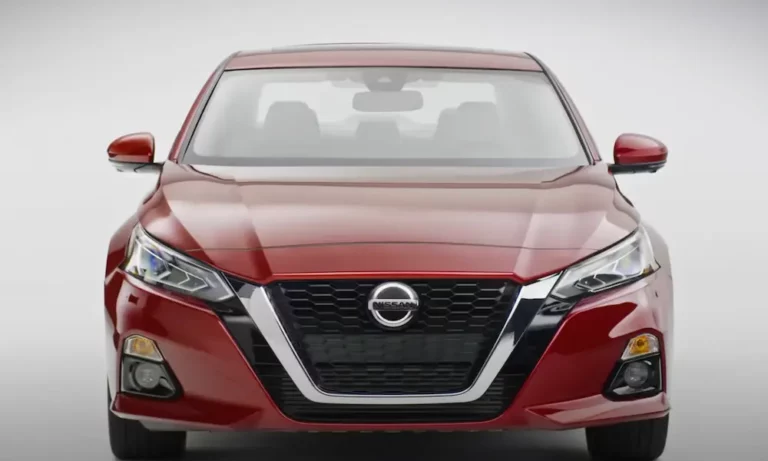
If your Nissan Altima shudders, hesitates, or suddenly loses power, you’re dealing with one of the most talked-about issues in the midsize sedan market. Nissan Altima transmission problems have frustrated hundreds of thousands of owners — and the story behind them is more complicated than a simple bad part. Read to the end, because knowing the full picture could save you thousands.
What Makes the Altima’s Transmission Different (And Tricky)
The Nissan Altima uses a Continuously Variable Transmission, or CVT, built by JATCO. Instead of fixed gears, it uses two variable-diameter pulleys connected by a steel belt or chain. The ratio shifts seamlessly by changing how wide those pulleys are, which lets the engine run efficiently at any speed.
Sounds clever. And it is — until it isn’t.
The catch? This system depends entirely on friction to transfer power. No teeth locking together like a traditional gearbox. Just metal belt against metal pulley, held in place by hydraulic pressure. That pressure often needs to exceed 700 psi just to keep things from slipping. If the fluid breaks down, that pressure drops, and everything starts to go wrong fast.
The Most Common Nissan Altima Transmission Problems
Here’s what owners actually report — and what’s causing each symptom under the hood.
Shuddering or “Judder” During Acceleration
This is the big one. That vibration you feel when you press the gas? It’s called judder, and it happens when the belt briefly slips against the pulley before the system regains grip. It’s a rapid stick-slip cycle you feel through your whole car.
Over time, those micro-slips score the pulley surfaces. Damaged surfaces create more slipping. More slipping creates more heat. More heat destroys the fluid faster. It’s a vicious cycle that ends in a repair bill you don’t want to see.
Sudden Loss of Power or Limp Mode
Your Altima isn’t broken down — it’s protecting itself. When the CVT fluid gets too hot, the system triggers a reduced-performance mode that cuts engine power and vehicle speed. It’s frustrating but intentional. Nissan built this fail-safe specifically to prevent total meltdown.
The problem? For many owners, this happens during normal highway driving on a warm day — not during a track session.
Hesitation or Delay When Accelerating From a Stop
Some 2019 and 2020 owners report a 5-second delay when pulling away from a full stop. That’s not annoying — that’s dangerous, especially at intersections. This points to hydraulic pressure issues or worn solenoids in the valve body.
Whining, Grinding, or Unusual Noises
CVT warning signs like whining or grinding usually mean internal wear is already happening. Don’t ignore these sounds. By the time metal-on-metal noise starts, you’re likely looking at a full unit replacement, not a simple fix.
“Glitter” in the Transmission Fluid
Check your fluid. If it looks dark, smells burnt, or has metallic flakes (technicians call it “sparkle”), your pulleys are already shedding material. That’s a sign that unit replacement is coming, not just a fluid change.
Which Model Years Have the Worst Problems?
Not all Altimas suffer equally. Here’s a clear breakdown by generation:
| Model Years | Generation | Key Issues | Avg. Failure Mileage |
|---|---|---|---|
| 2007–2012 | L32 | Limp mode, fluid overheating | Varies; software-triggered |
| 2013–2018 | L33 | Belt slippage, full failure, judder codes | ~79,000 miles |
| 2019–2025 | L34 | Hesitation, stalling, improved but not perfect | Longer, but not immune |
2007–2012: The Early Warning Signs
These Altimas were the first to use the CVT widely. Technical Service Bulletin NTB13-079 confirmed that sustained high-speed driving in hot weather caused the fluid to foam and lose its hydraulic properties. Nissan’s fix was an external oil cooler and eventually a warranty extension to 10 years or 120,000 miles for 2007–2010 models.
2013–2018: The Peak of the Problem
This is the generation owners and industry analysts flag most. The 2013 Altima is widely considered the worst model year, with complete transmission failures averaging just 79,000 miles. Owners reported total loss of power at highway speeds, violent jerking, and audible grinding. The failures here were more catastrophic than the earlier generation’s limp mode issues.
2019–2025: Better, But Not Bulletproof
Nissan introduced “D-Step Logic” software that simulates traditional gear shifts and reduces stress on the belt during acceleration. Some models now use a steel chain instead of a push-belt, which handles higher torque without shattering. That’s a genuine engineering improvement. But hesitation complaints continue, and the 2019–2020 VC-Turbo models carry a separate engine recall — so the overall powertrain picture is still complicated.
The Lawsuit and Warranty History You Need to Know
Nissan hasn’t just faced unhappy customers — they’ve faced courts.
Multiple class action lawsuits alleged the CVT was “uniformly defective” and that Nissan hid known problems to avoid warranty costs. Here’s what the settlements delivered for 2013–2018 owners:
- Warranty extension from 5 years/60,000 miles to 7 years or 84,000 miles
- Repair reimbursement — full coverage at dealerships, up to $5,000 at independent shops
- $1,000 voucher toward a new Nissan for owners who experienced two or more transmission replacements
Critics point out that many failures happen right after the 84,000-mile cutoff, leaving those owners completely on their own. A full CVT replacement runs $5,892–$6,402 — which can represent 80% of the car’s market value on a high-mileage 2013–2015 Altima.
Why There’s Still No Safety Recall
You might wonder: if this many transmissions fail, why hasn’t NHTSA issued a recall? Federal law only requires a recall when a defect creates an “unreasonable risk to safety.” Nissan has successfully argued that the limp mode allows drivers to safely pull over, keeping it below that legal threshold. The only actual Nissan recalls in recent years covered things like fuel tank sensors (NHTSA ID: 25V-676) and airbag components (NHTSA ID: 16V-244) — not the transmission.
It’s a compliance gap. The car is unreliable by consumer standards but technically legal by regulatory ones.
What the Error Codes Actually Mean
If your Altima throws a transmission code, here’s what your mechanic is actually looking at:
| Code | What It Means | What Comes Next |
|---|---|---|
| P17F0 | CVT Judder — internal damage | Likely full unit replacement |
| P17F1 | CVT Judder — valve body or chain | Internal inspection with borescope |
| P0744 | Torque converter clutch slipping | Often fluid-related; check heat history |
| P0890 | Solenoid power supply failure | Electrical harness or TCM issue |
There’s also a critical step most independent shops miss: the “Write IP Chara” procedure. Every valve body has unique flow characteristics programmed into the Transmission Control Module. If a technician swaps a valve body without writing the new hardware’s calibration into the TCM, the judder codes come back immediately and won’t clear. This is why a “fixed” transmission sometimes feels broken again within days.
How to Make Your Altima’s CVT Last Longer
Here’s the good news: data suggests that properly maintained CVTs can reach 200,000 miles — nearly double the average failure mileage of neglected units. The key is treating the fluid and heat as the real enemies.
Change Your Fluid More Often Than Nissan Says
Nissan’s official schedule recommends fluid changes every 60,000 miles. Most transmission specialists recommend every 30,000 miles, especially if you drive in heavy traffic, tow anything, or live somewhere hot. By the time you hit 60,000 miles in tough conditions, the friction modifiers in the fluid are already breaking down.
Use the correct fluid spec:
- 2007–2012 models: NS-2 fluid
- 2013+ models: NS-3 fluid (fully synthetic, lighter viscosity)
Some owners use aftermarket synthetics from Idemitsu, Valvoline, or Amsoil. These can offer better shear stability at high temps — but always verify compatibility before switching.
Add an Auxiliary Transmission Cooler
This is the single most effective hardware upgrade you can make. An air-to-oil cooler mounted in front of the radiator can boost cooling capacity by 30–50%. It’s especially valuable if you live in Florida, Arizona, Texas, or anywhere the summer heat alone pushes the CVT close to its thermal limit during a normal commute. Nissan even offered an external cooler kit (Part #21606-ZX59A) as part of their 2007–2012 remediation program.
Apply Every TCM Software Update
Nissan releases TCM calibration updates that improve hydraulic pressure logic and torque converter lock-up behavior. These updates matter. Ask your dealer to check for pending updates every time you bring the car in, even for unrelated service.
The Real Cost of Ignoring These Problems
For a 2013–2015 Altima with 100,000 miles, a failed CVT creates a brutal financial decision. At $5,892–$6,402 for a remanufactured unit, the repair often costs more than the car is worth. That’s why the Altima depreciates faster than its main competitors — the Toyota Camry and Honda Accord — in the used car market. Buyers know the risk. A healthy Altima with 90,000 miles carries an invisible asterisk.
The math is simple: a $300 auxiliary cooler and a $100 fluid change every 30,000 miles is a much better deal than a $6,000 transmission replacement. Treat the CVT as a consumable system that needs regular attention, not a sealed unit you ignore until it fails.