Your check engine light just came on. You pull into AutoZone, they scan it for free, and boom—P0420. The guy behind the counter says “catalyst efficiency below threshold” like it’s no big deal. But here’s the thing: if you’re driving a Frontier or Xterra, this code might be counting down to total engine destruction. We’ll break down what’s actually happening, what it costs to fix, and how to avoid getting ripped off.
What Is the Nissan P0420 Code?
The P0420 code means your catalytic converter isn’t doing its job efficiently. But let’s skip the corporate speak and get real about what that actually means.
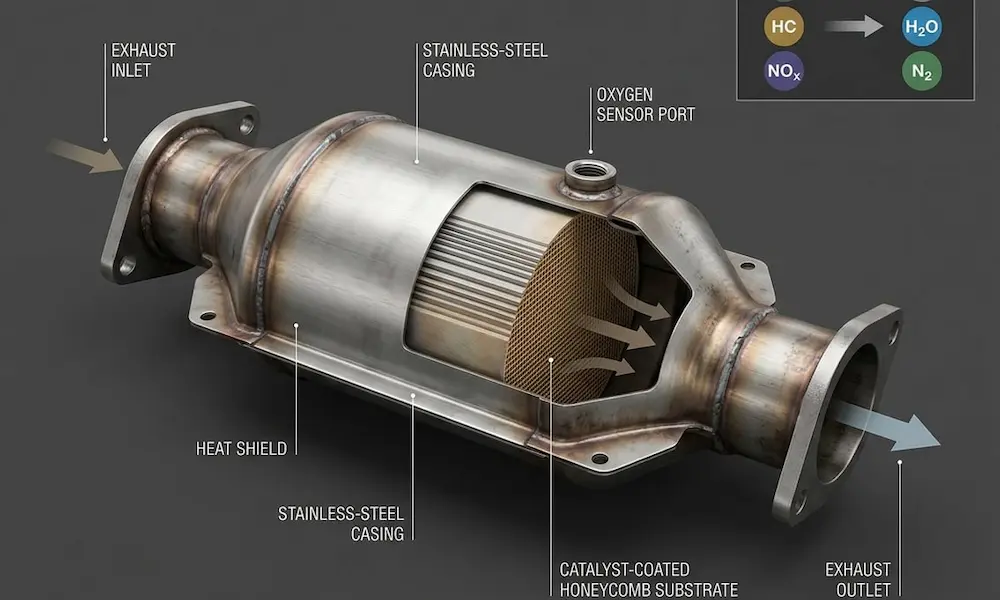
Your catalytic converter is basically a chemical reactor. It transforms toxic exhaust gases into less harmful stuff. Inside that metal can sits a ceramic honeycomb coated with precious metals—platinum, palladium, and rhodium. When everything works right, these metals convert carbon monoxide into carbon dioxide, burn up unburned fuel, and strip oxygen from nitrogen oxides.
Your engine computer watches this process using two oxygen sensors. One sits before the converter (upstream), the other sits after it (downstream). When the converter’s healthy, the upstream sensor bounces around rapidly while the downstream sensor stays relatively flat. Think of it like noise-cancelling headphones—the converter smooths out the fluctuations.
When the converter fails, both sensors start moving in sync. The computer notices this pattern and throws the P0420 code.
Why Your Nissan Triggered This Code
Here’s where it gets interesting. The P0420 isn’t always what it seems.
The converter might actually be fine. Your computer doesn’t measure pollution directly—it infers efficiency by comparing sensor signals. Several things can fake out this logic:
An exhaust leak near the downstream sensor sucks in outside air, making the sensor think oxygen levels are fluctuating wildly. A cracked exhaust manifold does the same thing. The computer blames the converter, but welding up that crack solves the problem.
Your downstream oxygen sensor might be dying. These sensors get lazy as they age, responding slower to changes in exhaust composition. A sluggish sensor creates the exact pattern the computer interprets as converter failure.
On some 2013-2016 Altimas and Sentras, Nissan’s own software had bugs. The rear oxygen sensor could develop an electrical fault that the computer couldn’t identify correctly. Nissan extended the warranty on these sensors to 15 years or 150,000 miles because they knew the logic was flawed.
Or the converter really is toast. Catalytic converters fail in two main ways:
The ceramic substrate cracks and crumbles. This happens from thermal shock (repeated heating and cooling), impact damage from speed bumps, or engine misfires dumping raw fuel into the exhaust. Once that honeycomb structure breaks apart, there’s no surface area for the chemical reactions to happen.
The precious metal coating gets poisoned. Oil consumption lets phosphorus and zinc from motor oil bake onto the catalyst surface, blocking the active sites. Coolant leaks introduce silicone that permanently destroys the coating’s effectiveness.
The Frontier and Xterra Death Sentence
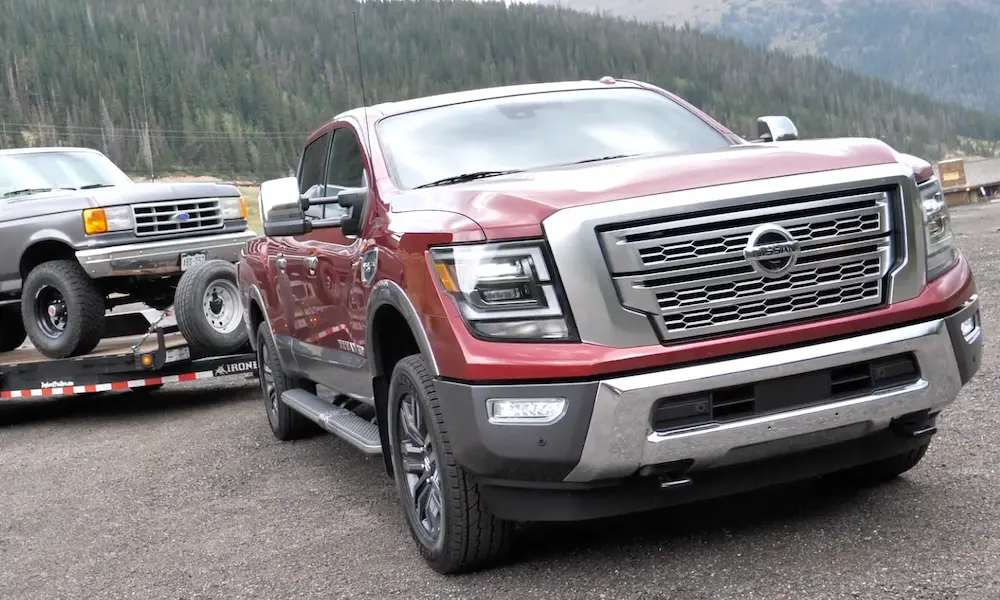
If you drive a 2005-2019 Frontier, 2005-2015 Xterra, or 2005-2012 Pathfinder with the 4.0L V6, stop reading and pay attention to this section. Your P0420 code is different—and way more dangerous.
These trucks have four catalytic converters. Two “pre-cats” bolt directly to the exhaust manifolds, right against the engine. The other two sit further downstream. The pre-cats are what trigger your P0420 code, and they’re positioned in the worst possible spot.
The close-coupled design gets them hot fast for emissions compliance. But that same positioning subjects them to extreme thermal stress and vibration. The ceramic substrate inside cracks and pulverizes into dust.
Here’s where it gets catastrophic: during deceleration, your engine’s variable valve timing creates brief periods where the exhaust valve stays open while the intake stroke begins. This creates a vacuum that sucks exhaust gases back into the cylinder—a normal process called reversion.
But if your converter has disintegrated into ceramic dust, that abrasive material gets pulled directly into your combustion chambers. Aluminum oxide and cordierite particles act like grinding compound between your pistons and cylinder walls.
The damage happens fast:
- Deep scratches gouge into the cylinder walls
- Piston rings wear down and lose their seal
- Compression drops and oil consumption skyrockets
- Contaminated oil circulates through your bearings
- Blue smoke pours from your tailpipe
- The engine seizes completely
Owners typically notice the P0420 code first, then oil consumption a few weeks later. By the time you’re adding a quart every 500 miles, your engine block is already damaged beyond repair. The rebuild cost? North of $4,000 if you can even find someone willing to take it on.
This isn’t theoretical. Search any Frontier or Xterra forum and you’ll find dozens of horror stories following this exact pattern.
The Altima and Rogue Headache
The 2.5L four-cylinder and 3.5L V6 engines in Altimas, Rogues, and Sentras don’t usually suffer the ceramic dust problem. But they have their own annoying quirk.
On these cars, the exhaust manifold and primary catalytic converter come as one welded unit. It simplifies assembly but complicates repair.
The stainless steel manifold develops stress cracks at the weld joints where the runners merge. A crack upstream of the oxygen sensor draws in outside air through the Venturi effect. The sensor reads this as a lean condition. Your computer adds more fuel to compensate. The downstream sensor sees the fluctuating oxygen from both the leak and the erratic fuel adjustments, and bam—P0420.
Mechanics replace the converter, the code comes back, and everyone’s confused. The twist? Since the OEM part is one integrated piece, replacing the “cat” also replaces the cracked manifold. The repair works, but for the wrong reason everyone assumed.
Aftermarket solutions that only replace the catalyst section (requiring cutting and welding) often fail because the original cracked manifold stays in place.
How to Actually Diagnose This Thing
Don’t just throw parts at it. A proper diagnosis saves you hundreds or thousands of dollars.
Start with the cheap stuff. Get under the car (or put it on a lift) and look for obvious exhaust leaks. Check every flange, weld, and flex pipe connection. Pay special attention to where the exhaust manifold meets the head—these gaskets fail constantly.
On 2.5L Altimas and Rogues, you’ll need to remove the heat shield to inspect the manifold welds. Look for hairline cracks or discoloration that indicates hot exhaust escaping.
Check for impact damage on the converter housing. A dented shell can crush the internal ceramic, causing it to break apart.
Pull up live data. You need a decent scanner—not the $20 Bluetooth dongle from Amazon, but something that shows you real-time oxygen sensor waveforms. Apps like Torque Pro work if your phone has enough processing power.
Get the engine fully warmed up and drive at steady highway speeds (or hold it at 2,500 RPM in park if you have a safe place to do this).
Watch both sensors:
The upstream sensor should bounce cleanly between 0.1V and 0.8V about once or twice per second. The downstream sensor should hold relatively steady around 0.5-0.7V.
If the downstream sensor mirrors the upstream sensor—same rapid oscillations, same frequency—your converter is chemically dead. The switching ratio is approaching 1:1, which is what triggers the code.
Test the temperature. Grab an infrared thermometer and measure the exhaust pipe immediately before and after the converter.
A working converter generates heat from chemical reactions. The outlet should be 100°F+ hotter than the inlet. If temperatures are identical (or the outlet is cooler), the catalyst isn’t lighting off.
This test works best after a drive or at elevated RPM. At idle on modern low-emission engines, the chemical load is too small to create much temperature difference.
Verify your sensors work. Force a reaction to check sensor response time:
Snap the throttle wide open. Both sensors should immediately spike above 0.8V (rich condition). Create a vacuum leak by disconnecting a brake booster line. Both sensors should drop below 0.1V (lean).
If your downstream sensor lags or barely responds, the sensor itself is failing—not the converter.
Your Repair Options (Ranked by Effectiveness)
Once you’ve confirmed the converter is actually inefficient, you face a hierarchy of solutions.
Chemical Cleaners
Products like Cataclean or Liqui Moly catalytic converter cleaner get dumped in your gas tank. The theory: solvents clean carbon deposits off injectors and burn hot enough to strip soot from the catalyst surface.
Reality check: These work maybe 20% of the time, and only if your problem is light carbon fouling from short trips and city driving. They can’t fix a cracked substrate, a melted core, or poisoning from oil consumption.
The old mechanic trick of adding lacquer thinner to your tank? Don’t. The aggressive solvents attack fuel pump plastics, rubber O-rings, and fuel level sender insulation. You’ll trade a $1,000 converter repair for a $2,000 fuel system replacement.
Oxygen Sensor Spacers
These threaded metal fittings screw into your O2 sensor bung. The sensor then threads into the spacer, pulling it back from the direct exhaust flow. A small orifice restricts how much exhaust reaches the sensor tip.
By dampening the oxygen fluctuations the sensor sees, the spacer artificially lowers your switching ratio. The computer thinks the converter is working better than it actually is.
The legal problem: This is emissions system tampering under the Clean Air Act. In California, New York, and other strict states, visual inspection will fail your car. You can’t legally drive it on public roads.
Spacers work great for diagnostic confirmation—if installing one clears the code, you’ve proven catalyst efficiency was the trigger. But it’s a band-aid, not a cure.
Converter Replacement
When you actually need a new converter, parts quality determines whether you fix this once or three times.
OEM Nissan parts cost $800-$1,800 just for the converter. They’ll last 10+ years because the precious metal loading is thick and the ceramic substrate is high-quality cordierite.
CARB-compliant aftermarket (Walker CalCat, Magnaflow CA-grade) runs $400-$900. These must meet California’s stricter durability standards—typically 5 years/50,000 miles warranty. The higher price reflects significantly more platinum and palladium than cheap converters.
EPA-only aftermarket costs $200-$400. These meet federal minimums but use thinner washcoat and less precious metal. They might work for 1-2 years before efficiency drops below Nissan’s strict threshold and the code returns.
Generic eBay specials under $150 are junk. Full stop. You’ll be back here in six months.
Here’s the cruel reality: Nissan’s engine computers are hypersensitive to catalyst efficiency. The OEM converter might operate at 99% efficiency. The ECM threshold for P0420 sits around 95%.
That cheap converter achieves 96% efficiency when brand new. After a few months of heat cycling and minor degradation, it drops to 94%. Code’s back. You’ve now spent money twice for the same problem.
Comparison Table: What You Get for Your Money
| Converter Type | Parts Cost | Lifespan | Will It Keep P0420 Away? | Best For |
|---|---|---|---|---|
| OEM Nissan | $800-$1,800 | 10+ years | Yes, absolutely | Frontier/Xterra V6 (mandatory to prevent engine damage) |
| CARB Aftermarket | $400-$900 | 5-8 years | Yes, very likely | Best bang for buck on all models |
| EPA Aftermarket | $200-$400 | 1-2 years | Maybe, often no | Quick sale prep or absolute budget emergency |
| eBay Generic | Under $150 | 6-12 months | No | Don’t waste your money |
For Frontier and Xterra owners with the 4.0L V6, this isn’t about passing emissions—it’s about preventing engine death. The extra cost of OEM or premium CARB parts is insurance against a $5,000 engine replacement. Don’t cheap out here.
Finding a Shop That Won’t Rip You Off
Not all repair shops understand the nuances of Nissan P0420 codes. Chain franchises often default to the cheapest Federal-grade aftermarket converter to offer you the lowest quote. You’ll be back in six months when the light returns.
Ask these specific questions before committing:
“Do you perform a smoke test for exhaust leaks before replacing the converter?” If they look confused or say it’s unnecessary, walk away. Leaks cause false P0420 codes constantly.
“What brand converter do you install, and is it CARB-compliant?” If they won’t specify or mention “universal fit,” you’re getting bottom-tier parts.
“Are you familiar with Nissan TSB NTB13-094 regarding rear oxygen sensor logic?” This bulletin addressed software issues that cause false codes. If they don’t know what a TSB is, they’re not qualified for this repair.
Nissan specialists who use Consult-III diagnostic tools understand the ceramic dust risk on VQ40DE engines and the manifold crack pattern on QR25DE engines. They’ll diagnose first, replace second.
Custom exhaust shops can weld in universal high-flow converters or repair cracked manifold flanges, often saving you money versus full component replacement.
The Money Question: Is Your Car Worth Fixing?
You need cold, hard math here.
Frontier/Xterra scenario: Your 2006 truck has 150,000 miles and books at $6,000. The P0420 just appeared.
Option A: Ignore it. Ceramic dust eats your engine in 3,000 miles. Engine replacement costs $4,500. Total loss.
Option B: Install OEM converters now. $2,500 repair. Truck runs another 100,000 miles.
Option C: Install aftermarket headers that remove the pre-cats entirely. $800 all-in. Check engine light stays on permanently (unless you get a custom tune). You can’t pass emissions testing, but your engine is safe from ceramic dust.
The math says fix it immediately with quality parts. This code is an emergency.
Altima/Rogue scenario: Your 2012 Altima has 120,000 miles and books at $4,000. P0420 appeared.
Shop quote: $1,500 for integrated manifold/converter assembly. DIY with aftermarket manifold: $300 in parts plus a Saturday afternoon.
If you’re in a non-inspection state, many people just drive with the light on. But this masks other faults—you won’t know if a cylinder misfires or the transmission develops problems because the light’s already glowing.
The sensor spacer trick costs $20 and clears the light, but it’s illegal in most states and doesn’t actually fix anything. You’re gambling that nothing else breaks before you sell the car.
What You Should Do Right Now
If your Nissan P0420 code just appeared, here’s your action plan:
Step 1: Check for exhaust leaks and inspect your oxygen sensors. These are the most common false triggers and the cheapest fixes.
Step 2: Pull live data and confirm the downstream sensor is actually mirroring the upstream sensor. Don’t guess—verify.
Step 3: If you drive a Frontier, Xterra, or Pathfinder with the 4.0L V6, schedule the repair immediately. This isn’t “when you get around to it” territory. Every mile you drive risks catastrophic engine damage.
Step 4: If you drive an Altima, Rogue, or Sentra, you have more time but don’t ignore it forever. Budget for a CARB-compliant aftermarket converter from a reputable brand. The extra $200-$300 over the cheapest option means you fix this once instead of repeatedly.
Step 5: Get multiple quotes, but don’t automatically choose the lowest number. Ask about diagnostic procedures and parts quality. The shop charging $1,200 using Walker CalCat converters will save you money versus the shop charging $800 using no-name parts that fail in eight months.
The Nissan P0420 code sits at the intersection of chemistry, software, and mechanical durability. It’s not always what it seems, and the consequences range from “annoying emissions failure” to “total engine destruction” depending on which Nissan you drive. Understanding what’s actually happening inside your exhaust system—and what can go catastrophically wrong—is the difference between a smart repair and an expensive mistake.