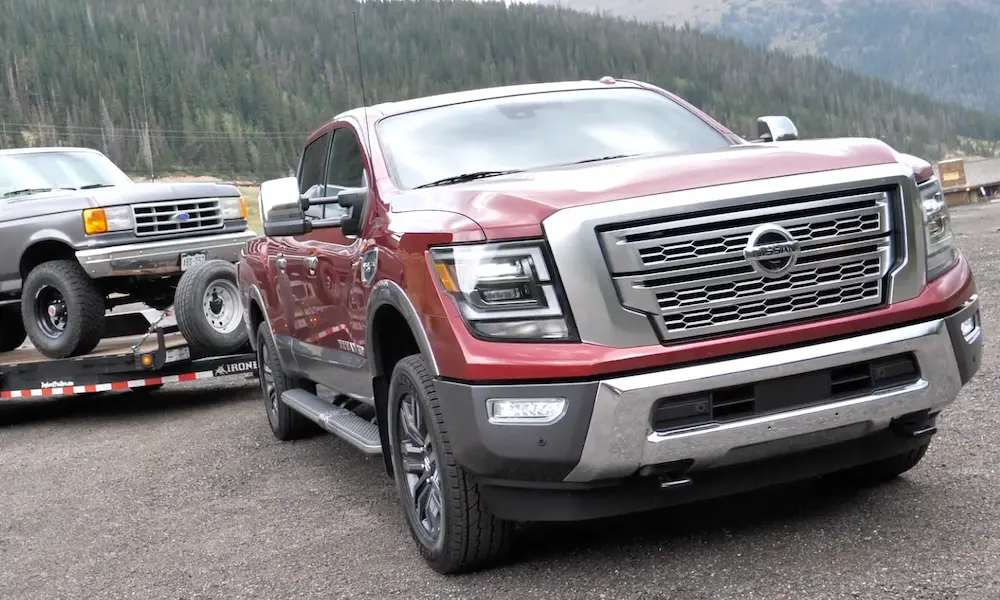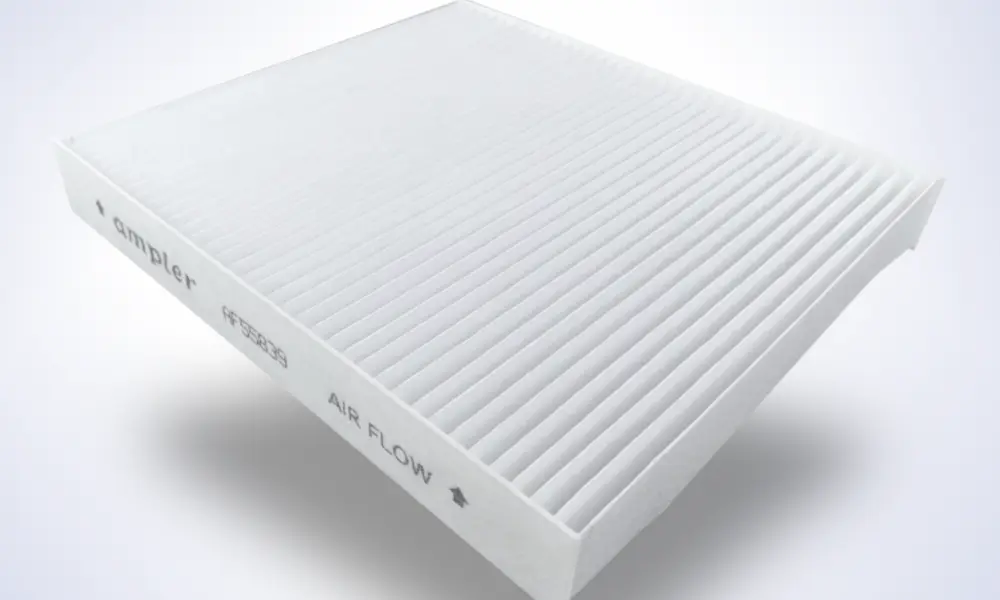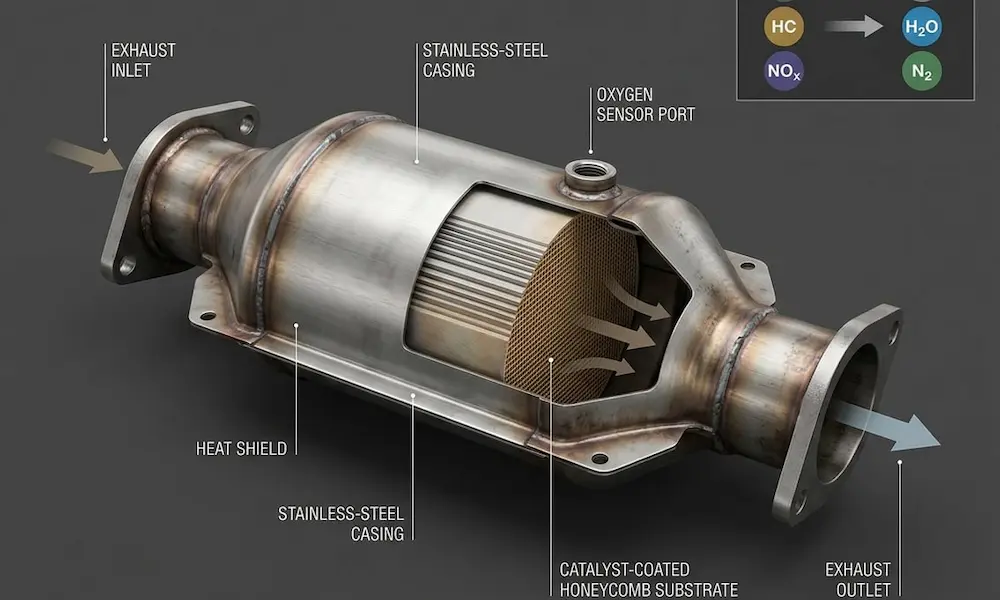
Got a check engine light and a P0430 code staring back at you? You’re probably wondering if it’s a quick fix or an expensive nightmare. This guide breaks down exactly what’s going on, what causes it, and what you should do next — including one Nissan-specific issue that can destroy your engine if you ignore it.
What Does the Nissan P0430 Code Actually Mean?
The P0430 code means your car’s computer detected that the catalytic converter on Bank 2 isn’t cleaning exhaust gases efficiently enough. Specifically, it’s called “Catalyst System Efficiency Below Threshold — Bank 2.”
Your car constantly monitors how well the catalytic converter processes toxic exhaust gases. It uses two oxygen sensors — one before the converter and one after. When the downstream sensor starts seeing the same messy readings as the upstream sensor, the computer knows the converter isn’t doing its job. Once efficiency drops below roughly 92–95%, it logs the P0430 code and lights up your check engine light.
Quick clarification: P0430 only applies to V6 and V8 engines. Four-cylinder engines only have one bank, so they can’t trigger this code.
Where Is Bank 2 on Your Nissan?
This is where a lot of people make expensive mistakes. Replacing the wrong catalytic converter is more common than you’d think.
By universal convention, Bank 1 is always the side of the engine containing cylinder number one. Bank 2 is the opposite side. But where that lands physically depends entirely on your Nissan’s engine layout.
| Engine Layout | Common Nissan Models | Bank 1 Location | Bank 2 Location (P0430 Target) |
|---|---|---|---|
| Transverse V6 | Altima, Maxima, Murano, Quest | Firewall side (rear of engine bay) | Radiator side (front of engine bay) |
| Longitudinal V6 | Frontier, Xterra, 350Z, 370Z | Passenger side | Driver side |
| Longitudinal V8 | Titan, Armada, QX56 | Driver side | Passenger side |
On front-wheel drive Nissans like the Maxima or Altima, Bank 2 sits at the front of the engine bay near the radiator — actually pretty easy to access. On trucks and rear-wheel drive models, always verify using the exact service manual for your year and model before touching anything.
Nissan P0430 Symptoms You Might Notice
Here’s the thing: P0430 often sneaks up quietly. The symptoms vary based on how far gone the converter actually is.
Early stage symptoms:
- Check engine light is on (this is usually the only sign at first)
- Slight fuel economy drop (typically 2–5%)
- Automatic emissions test failure — the car’s still drivable but won’t pass smog
Advanced stage symptoms:
- Rotten egg or sulfur smell from the exhaust — this means the converter is heavily damaged
- Sluggish acceleration and rough idling
- Engine stalling when you come to a stop
- Excessive heat under the floorboards
- Thick dark smoke from the tailpipe
If you’re seeing the advanced symptoms, stop driving and get it diagnosed immediately.
What Actually Causes Nissan P0430?
Don’t just assume it’s a dead catalytic converter. Converters have no moving parts and are built to last the life of the vehicle under normal conditions. When they fail early, something upstream killed them. Here’s what to look for:
Normal Catalyst Wear Over Time
Past 100,000 miles with no other codes? The precious metal coating inside the converter gradually loses its chemical reactivity through normal aging. This is one of the few cases where the converter itself is actually the culprit.
Engine Misfires
This is the single biggest killer of catalytic converters. A misfiring cylinder dumps raw, unburned fuel directly into the exhaust. When that fuel hits the superheated converter, it ignites inside the exhaust system. Internal temperatures spike so high the ceramic honeycomb melts. The converter’s exterior shell can glow cherry red.
If you have misfire codes alongside P0430, fix the misfires first — every time.
Rich or Lean Fuel Conditions
Too much fuel overwhelms the converter with excess hydrocarbons, causing chronic overheating. Too much air raises combustion temperatures and creates excess nitrogen oxides the converter can’t handle. Both conditions destroy converters over time. Leaking fuel injectors, vacuum leaks, or a bad mass airflow sensor are common culprits.
Exhaust Leaks Before the Downstream Sensor
This one causes a lot of unnecessary converter replacements. A cracked exhaust manifold or blown gasket lets ambient air sneak into the exhaust stream. The downstream oxygen sensor detects the extra oxygen and reports it to the computer as a failing converter — even when the converter is perfectly healthy.
Faulty Downstream Oxygen Sensor
The P0430 code relies entirely on what the downstream Bank 2 sensor reports. A lazy, carbon-coated, or electrically faulty sensor sends bad data to the computer. Corroded connector pins or damaged wiring can cause the same problem. Always test the sensor before condemning the converter.
Oil or Coolant Burning
Worn piston rings or a failing head gasket allow oil or coolant into the combustion chamber. When burned, they coat the precious metals inside the converter with a thick layer of ash. Once coated, the exhaust gases can’t reach the catalyst materials and the chemical conversion stops entirely.
The Nissan-Specific Risk That Can Destroy Your Engine
Here’s something every Nissan owner with a P0430 code needs to know. This isn’t a general car problem — it’s specific to several Nissan engine families, and it’s serious.
On engines like the 3.5L V6 and 4.0L V6 found in the Pathfinder, Frontier, Xterra, Altima, and Sentra, Nissan uses variable valve timing to manage exhaust gases internally. The system creates a condition called valve overlap, where both the intake and exhaust valves briefly open at the same time. This pulls a small amount of exhaust gas back into the cylinder to cool combustion temperatures.
The problem? The primary catalytic converter sits directly inside the exhaust manifold, just inches from the engine. When that converter starts breaking apart — from age, misfires, or heat damage — it crumbles into fine ceramic dust. The vacuum created during valve overlap pulls that abrasive dust straight back into the cylinders.
Inside the cylinders, that ceramic dust acts like sandpaper. It destroys:
- Cylinder wall cross-hatching
- Piston compression rings
- Oil control rings
The result is catastrophic oil consumption, fouled spark plugs, severe misfires, and ultimately complete engine failure. If your engine is burning oil alongside a P0430 code, you may already have internal damage.
If you own an affected Nissan V6 and see P0430 with blue smoke or sudden oil consumption — treat it as an emergency.
How to Properly Diagnose Nissan P0430
Don’t replace parts based on the code alone. A proper diagnosis saves you hundreds of dollars.
Step 1: Scan for All Codes
Connect a professional diagnostic scanner. Check for misfire codes, fuel trim codes, or oxygen sensor codes alongside P0430. If any exist, address them first. Review freeze frame data to understand exactly what the engine was doing when the code triggered.
Step 2: Analyze Live Fuel Trim Data
Check the short-term and long-term fuel trims for Bank 2. Normal is within ±5%. If trims are above +10–15% or significantly negative, there’s a systemic fuel or air issue actively destroying your converter. Fix that first.
Step 3: Graph Upstream vs. Downstream Sensors
Warm the engine fully and hold it at 2,000 RPM. Graph both oxygen sensors on Bank 2 simultaneously.
- Upstream sensor: Should fluctuate rapidly as the computer adjusts fuel delivery
- Downstream sensor: Should show a flat, stable line around 0.6–0.8 volts
If the downstream sensor mirrors the rapid fluctuations of the upstream sensor, the converter is confirmed dead. If the downstream sensor is totally flat at a low number or shows zero response, the sensor itself is faulty.
Important: The upstream sensor on many modern Nissans is a wideband air-fuel ratio sensor, not a traditional oxygen sensor. They’re not interchangeable and output completely different voltage ranges. Don’t confuse them during diagnosis.
Step 4: Check for Exhaust Leaks
Use a smoke machine to pressurize the exhaust system. Look for smoke escaping at manifold flanges, pipe joints, or sensor bungs. Also tap the catalytic converter shell with a rubber mallet — a rattling or crunching sound confirms a fractured internal substrate.
Step 5: Temperature Test the Converter
Use an infrared thermometer on the inlet and outlet pipes. A healthy converter generates significant heat during its chemical reactions, so the outlet should be noticeably hotter than the inlet. Equal temperatures mean the converter is chemically dead.
Check for Nissan Software Updates First
Before replacing anything, check if a software fix exists for your vehicle. Nissan has issued multiple Technical Service Bulletins specifically for false P0430 codes caused by overly sensitive monitoring software.
Key Nissan TSBs related to P0430:
- 2013–2017 Nissan Sentra: Voluntary service campaign requiring PCV valve inspection and ECM reprogramming — particularly for vehicles registered in hot climates like Arizona and Nevada
- 2013–2017 Nissan Altima: ECM reprogramming to prevent false catalyst efficiency codes
- 2020 Nissan Kicks: Software version check required, followed by base idle reset and ECM reflash
- 2011–2012 Infiniti QX56: ECM reprogramming required before replacing exhaust manifolds or air-fuel sensors
ECM reprogramming requires Nissan’s proprietary Consult-III Plus software. During the flash, the battery voltage must stay between 12 and 15.5 volts — use a battery maintainer. A wired laptop connection is required; Bluetooth isn’t stable enough and a dropped connection can permanently damage the ECM.
EPA Warranty Protections You Should Know About
If your Nissan is still within warranty range, federal law may cover this repair at no cost to you.
| Component Category | EPA Warranty Duration | What’s Covered |
|---|---|---|
| Short-Term Emissions Defect | 2 years / 24,000 miles | Oxygen sensors, hoses, minor emissions parts |
| Major Emissions Control | 8 years / 80,000 miles | Catalytic converters, ECM, OBD systems |
| Heavy-Duty Vehicles (8,500+ lbs) | 5 years / 50,000 miles | All emissions components |
Under the Clean Air Act’s emissions warranty provisions, the catalytic converter and ECM must be covered for 8 years or 80,000 miles against manufacturer defects. If you’re inside that window and the failure wasn’t caused by abuse or neglect, the dealership must repair it for free.
Repair Costs and What to Expect
Here’s a realistic breakdown of what P0430 repairs typically cost:
- Catalytic converter replacement (Bank 2): $600–$2,400 depending on OEM vs. aftermarket
- Downstream oxygen sensor replacement: $150–$450
- ECM replacement and programming: $800–$1,200 for the part, plus $200–$300 for labor
When replacing the catalytic converter, also replace the associated oxygen sensors. A sensor exposed to the same conditions that destroyed the converter is already compromised. Replace all exhaust flange gaskets too, and clean the mating surfaces thoroughly.
What About California and CARB-Regulated States?
If you’re in California, New York, Colorado, or any other CARB-adopted state, you can’t legally install a standard federal-compliant aftermarket converter. Any replacement must carry a California Air Resources Board Executive Order number stamped on the shell. CARB-compliant converters also carry their own mandatory 5-year/50,000-mile warranty against defects.
Installing a non-compliant converter in these states means an automatic smog inspection failure — and the P0430 code will likely return quickly because the inferior catalyst can’t meet the ECM’s monitoring thresholds.
Can You Clean a Catalytic Converter Instead?
Fuel additive cleaners can occasionally clear a P0430 if the converter is simply fouled with carbon buildup rather than physically destroyed. They won’t fix a melted substrate or chemically depleted precious metals. Most professional technicians consider them a temporary measure, not a real repair.
Oxygen sensor spacers that physically reposition the downstream sensor away from the exhaust flow suppress the code on the dashboard — but installing one violates the Clean Air Act, fails visual smog inspections immediately, and doesn’t fix the underlying problem.
After the Repair: Completing the Drive Cycle
Clearing the code and replacing parts doesn’t finish the job. The ECM won’t immediately re-test the catalyst — it waits for a specific set of driving conditions called a drive cycle.
A standard Nissan catalyst monitor drive cycle:
- Start from a fully cold engine
- Let it idle until it reaches full operating temperature
- Drive at steady highway speeds for 10–15 minutes
- Return to a complete stop
Once your scanner shows the catalyst monitor status has changed from “incomplete” to “passed” — and P0430 stays absent — the repair is officially confirmed complete.