Got a check engine light and a P0430 code staring back at you? You’re probably wondering if it’s a quick fix or an expensive nightmare. The answer depends entirely on what’s actually causing it. Skip the guesswork — this guide breaks down everything you need to know before you spend a dime.
What Does the Dodge P0430 Code Actually Mean?
The P0430 code means your powertrain control module (PCM) has detected that the catalytic converter on Bank 2 is operating below its required efficiency threshold. In plain English: the cat on one side of your engine isn’t cleaning exhaust gases properly.
Your PCM expects the converter to hit at least 95% efficiency. When it drops below that, the check engine light fires up and the code gets stored. The Society of Automotive Engineers officially defines it as “Catalyst System Efficiency Below Threshold (Bank 2).”
Here’s why you shouldn’t ignore it:
- Emissions test failure — A stored P0430 code is an automatic fail in most U.S. states
- Fuel economy drops — A degraded converter forces the engine to compensate
- Potential engine damage — A collapsed substrate can restrict exhaust flow entirely
How Your Catalytic Converter Actually Works
Your catalytic converter isn’t a filter. It’s a high-temperature chemical reactor. Inside sits a ceramic honeycomb substrate coated in platinum, palladium, and rhodium. These precious metals trigger three chemical reactions simultaneously — which is why it’s called a three-way catalyst.
- Reduction reaction — Rhodium strips oxygen from nitrogen oxides, releasing harmless nitrogen and oxygen
- Oxidation reaction — Platinum and palladium convert carbon monoxide and unburned hydrocarbons into water vapor and CO₂
- Oxygen storage — The converter absorbs oxygen during lean cycles and uses it during rich cycles
When the P0430 code appears, it means the converter has lost that oxygen storage capacity. The chemical transformation is failing, and the PCM knows it.
How the PCM Catches a Failing Catalyst
Your Dodge uses two oxygen sensors per engine bank — one upstream (before the cat) and one downstream (after it).
The upstream sensor produces a rapidly switching voltage as the engine constantly adjusts the air-fuel mixture. In a healthy system, the downstream sensor produces a slow, stable signal — proof that the converter is doing its job and smoothing out those fluctuations.
When the converter degrades, the downstream sensor starts mimicking the upstream sensor’s rapid switching. The PCM compares the two signals, notices they match, and concludes the catalyst is dead. On the second failed “trip,” it logs the P0430 code and lights the dashboard.
Bank 2 Location: Get This Wrong and You’ll Waste Money
This is where most DIYers and even some technicians go wrong. P0430 specifies Bank 2, which is the side of the engine without cylinder number one. On Dodge vehicles, this changes completely depending on the engine.
Confusing Bank 1 and Bank 2 means replacing the wrong catalytic converter — an expensive mistake that leaves the real problem untouched.
| Engine Platform | Bank 1 Location | Bank 2 Location (P0430) | Bank 2 Cylinders | Firing Order |
|---|---|---|---|---|
| 3.6L Pentastar V6 | Passenger Side | Driver Side | 2, 4, 6 | 1-2-3-4-5-6 |
| 5.7L HEMI V8 | Driver Side | Passenger Side | 2, 4, 6, 8 | 1-8-4-3-6-5-7-2 |
3.6L Pentastar V6 (Charger, Challenger, Durango, Journey, Grand Caravan)
On the Pentastar V6, the passenger side is Bank 1 (cylinders 1, 3, 5). Bank 2 sits on the driver side and houses cylinders 2, 4, and 6. If your Dodge Journey or Charger throws a P0430, look at the driver-side exhaust system first.
5.7L HEMI V8 (Ram 1500, Charger, Challenger, Durango)
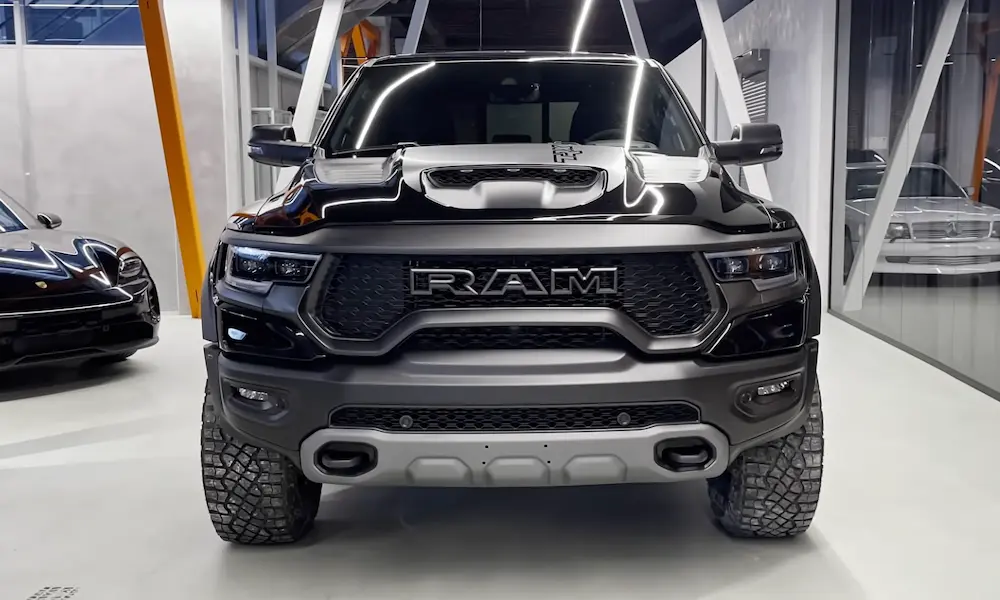
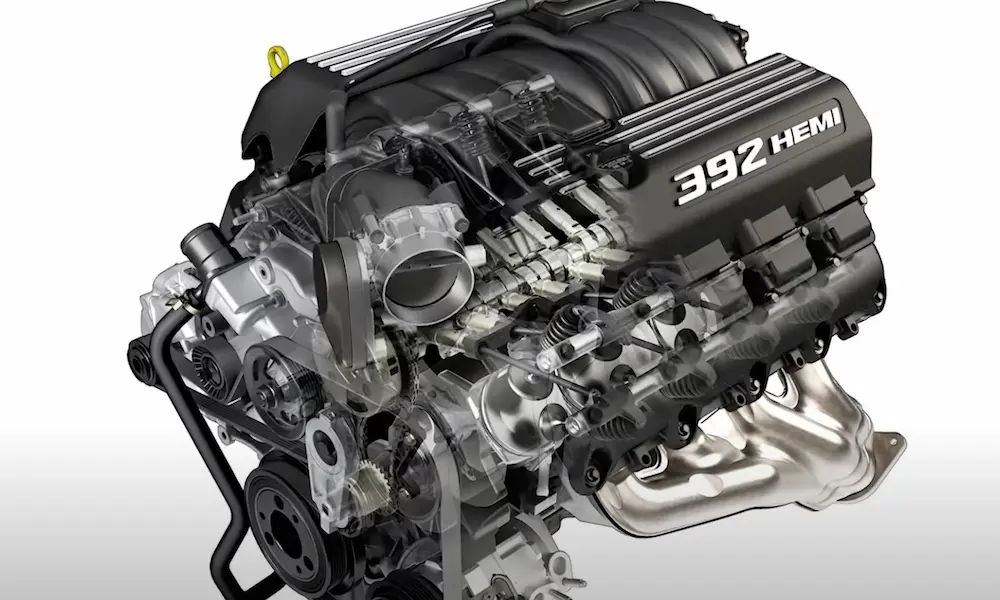
The HEMI V8 flips the convention. Bank 1 is on the driver side (cylinders 1, 3, 5, 7). Bank 2 is on the passenger side (cylinders 2, 4, 6, 8). A P0430 on a HEMI Ram or Durango means the passenger-side exhaust is your target.
What Actually Causes the Dodge P0430 Code
Here’s the key truth most people miss: catalytic converters rarely fail on their own. Replacing the cat without fixing the root cause destroys the new one just as fast.
Exhaust Manifold Leaks and False Readings
An upstream exhaust leak is one of the most common triggers for a false P0430 code. When a manifold gasket cracks or a manifold bolt shears, pulsating exhaust pressure creates a vacuum between strokes — the Venturi effect. This pulls fresh air into the exhaust stream before it reaches the oxygen sensor.
The upstream sensor reads that sudden oxygen spike as a dangerously lean condition. The PCM panics and dumps extra fuel. That excess unburned fuel floods the catalytic converter, overheats it, and scrambles the downstream sensor reading — triggering P0430 even when the converter is physically fine.
Engine Misfires: The Converter Killer
A misfiring cylinder pumps raw, unburned fuel directly into the exhaust. When that fuel hits the catalytic converter’s extreme heat — routinely above 1,000°F — it ignites inside the converter shell. Internal temperatures spike to catastrophic levels. The ceramic honeycomb melts, collapses, and blocks exhaust flow entirely. Once the substrate melts, it’s over — the converter is destroyed and P0430 is guaranteed.
Misfire codes like P0300, P0302, P0304, or P0306 alongside P0430 are a serious red flag. Fix the misfire first.
Oxygen Sensor Failure
Because the PCM relies entirely on sensor data to judge converter health, a bad downstream oxygen sensor can fake a P0430 code. Heavy carbon buildup slows the sensor’s response time, making it produce erratic signals that look identical to a failing catalyst. A failed internal heater circuit causes the same problem after cold starts. Always test the sensors before condemning the converter.
Catalyst Poisoning from Oil or Coolant
Worn piston rings or a blown head gasket allows oil or coolant into the combustion chamber. When those fluids burn and pass through the converter, they coat the precious metals in a thick, impenetrable ash layer. This physically blocks the catalytic reactions — a condition called catalyst poisoning that’s completely irreversible without replacement.
HEMI-Specific Problem: Broken Exhaust Manifold Bolts
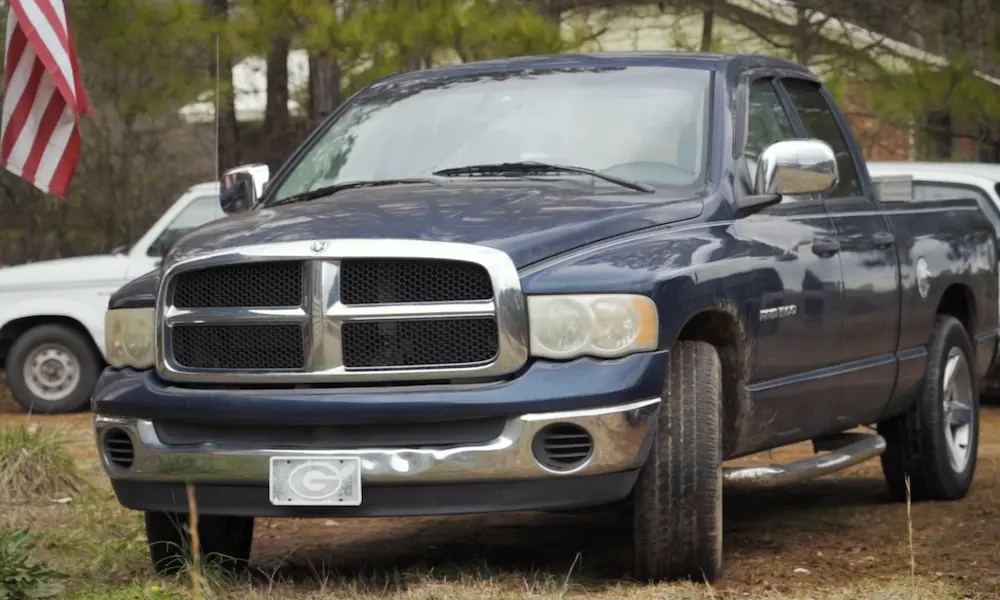
If you’ve got a 5.7L HEMI and a P0430 code, check this first. A widespread design defect affects Ram 1500 trucks, Chargers, and Durangos built between 2009 and 2022 — the passenger-side (Bank 2) exhaust manifold bolts shear off inside the aluminum cylinder head.
Here’s why it keeps happening: the aluminum cylinder head and cast-iron exhaust manifold expand at completely different rates during heat cycles. The cast-iron manifold warps at its ends, creating enormous shearing stress on the retaining bolts. Eventually the rear-most bolts snap clean off. The manifold seal fails, the exhaust leak begins, and P0430 follows.
You’ll often hear a cold-start ticking that fades as the engine warms up and the metals expand to temporarily seal the gap. That sound is your warning.
The repair isn’t cheap. Shops quote $1,000–$1,500 per side due to the difficulty of extracting broken steel from an aluminum block. Simply reinstalling the original cast-iron manifold with new bolts will repeat the failure. The durable fix uses upgraded ductile iron manifolds engineered for better thermal stability, or the original warped manifolds sent to a machine shop to be planed flat.
Replacing the Bank 2 catalytic converter without fixing the sheared bolts first is wasted money — the exhaust leak will destroy the new cat in no time.
Pentastar-Specific Problem: Left Cylinder Head Defect
For 2011–2013 Dodge vehicles with the 3.6L Pentastar V6, a P0430 code could signal something far more serious than a bad cat. A manufacturing defect caused premature wear of the valve guides and valve seats specifically on the left cylinder head — which is Bank 2.
When the valves can’t seal properly, cylinders 2, 4, and 6 lose compression and misfire constantly. Raw fuel floods the Bank 2 catalytic converter, overheats the substrate, and destroys it. The misfire codes P0300, P0302, P0304, and P0306 usually appear alongside P0430 in these cases.
This defect was serious enough to trigger Warranty Bulletin D-14-12 (the X56 Warranty Extension), extending coverage on the left cylinder head to 10 years or 150,000 miles on affected vehicles. The list includes:
- 2011–2013 Dodge Grand Caravan, Journey, Durango, Charger, Challenger, Avenger
- 2011–2013 Chrysler 200, Chrysler 300
- 2011–2013 Jeep Grand Cherokee, Jeep Wrangler
Diagnosis requires a pressurized cylinder leakage test on cylinders 2, 4, and 6. Leakage above 25% confirms the defect, and the entire left cylinder head must be replaced. Installing a new catalytic converter on an engine with worn valve seats will destroy the replacement within days.
Emissions Recalls You Might Not Know About
Before buying any parts, check if your vehicle is covered by an active recall. The FCA emissions recall covering nearly 900,000 vehicles — announced by the EPA in 2019 — targeted sulfur poisoning in catalytic converters across multiple platforms including the 2011–2016 Dodge Journey and 2011–2014 Dodge Avenger. The fix involved replacing the converter with a redesigned unit plus a mandatory PCM software update.
For HEMI performance vehicles, Recall V86 covered 2015–2017 Dodge Challenger and Charger models with the 6.2L supercharged Hellcat engine. Rapid converter degradation caused excess emissions. The remedy required replacing both catalytic converters, installing new upstream oxygen sensors, and reflashing the PCM with updated calibration software.
Check your VIN at Mopar’s official recall lookup before spending anything on repairs.
Diagnostic Tools That Actually Work
A basic code reader tells you P0430 is stored. That’s about all it’s good for here. Real diagnosis requires live sensor data.
wiTECH 2.0 (Dealership Standard)
The wiTECH 2.0 platform is what Dodge dealerships use. It graphs both oxygen sensor signals simultaneously, lets technicians execute bi-directional tests, and handles all PCM software flashing for recalls like V86. It’s the gold standard — but it’s expensive and subscription-based.
AlfaOBD (Best Aftermarket Option)
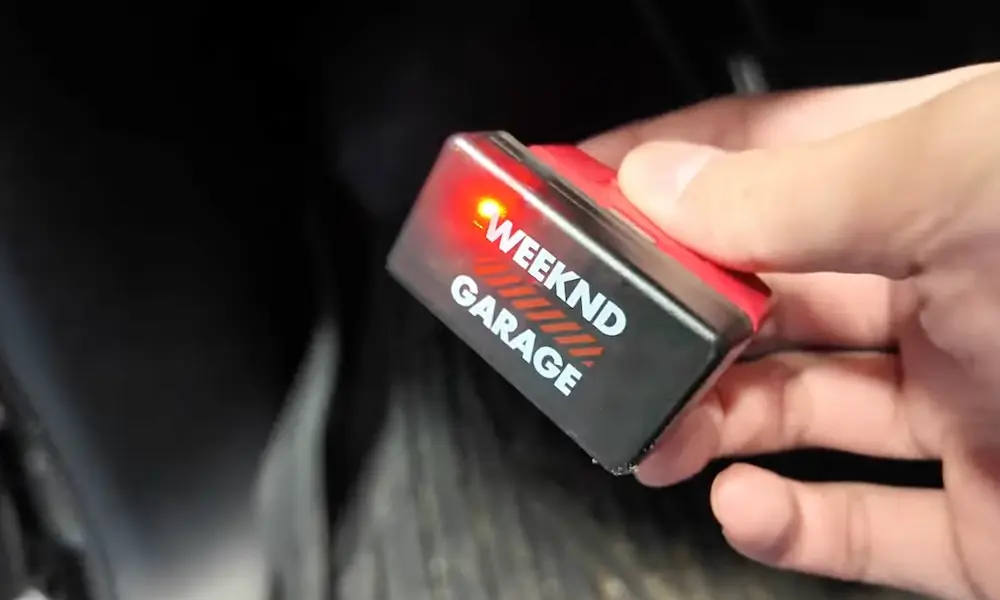
For independent shops and advanced owners, AlfaOBD provides near-dealer-level access to Chrysler, Dodge, Jeep, and Ram vehicles. It connects via Bluetooth through an OBDLink MX+ adapter and lets you graph the upstream and downstream oxygen sensors in real time — the most reliable way to confirm whether the downstream sensor is lazily switching or mimicking the upstream signal.
Important caveat: On 2018 and newer Dodge vehicles, the Security Gateway module blocks aftermarket tools from writing data. You’ll need to physically install a Security Gateway bypass cable to clear codes and run active tests on these newer models.
Mode 6 Data: The Part Most People Skip
Mode 6 data shows you the raw internal test results from the PCM’s self-checks — before the check engine light even triggers. It tells you exactly how close the converter is to the failure threshold numerically. After installing a new cat, checking Mode 6 confirms the oxygen storage values have climbed safely above the threshold. This step verifies the repair actually worked.
The OBD-II Drive Cycle: Why Your Monitors Won’t Complete
Cleared the P0430 code and headed straight to an emissions test? The car will still fail. Clearing codes resets all readiness monitors to “Incomplete.” The catalyst monitor won’t re-run until very specific conditions are met.
How to Complete the Dodge Catalyst Monitor Drive Cycle
Follow this Chrysler-specific drive cycle procedure carefully:
- Cold soak — Let the vehicle sit at least 8 hours. Coolant temperature must match ambient air and be above 70°F
- Fuel level — Keep the tank between 15% and 85% full
- Idle warm-up — Start the engine and let it idle in park for 5 minutes until it reaches full operating temperature and enters closed-loop fuel control
- Steady-state cruise — Drive at a stable 30–45 mph for exactly 2 minutes using a steady throttle. Don’t use cruise control
- Controlled deceleration — Allow the vehicle to slow down gradually without hard braking
- Shutdown pause — Stop, idle briefly, then shut the engine off for 10 minutes
The catalyst monitor runs on two-trip logic — you’ll often need to complete this sequence twice on consecutive drives before the monitor status switches to “Ready.” If the monitor stubbornly stays incomplete, look for a stuck-open thermostat, a vacuum leak throwing off fuel trims, or a pending code quietly blocking the test.
The Bottom Line on Dodge P0430
A Dodge P0430 code is your engine’s way of saying something has gone wrong upstream — and the catalytic converter is just reporting the damage. Blindly replacing the converter without diagnosing the root cause is the single most expensive mistake you can make.
Start by checking your VIN for active recalls through Mopar’s recall search. Then use a proper scan tool to graph your Bank 2 oxygen sensors live. If you’ve got a HEMI, inspect those passenger-side manifold bolts. If you’ve got a 2011–2013 Pentastar, run a cylinder leakage test before you touch the exhaust. Fix what’s actually broken, verify it with Mode 6 data, complete the drive cycle, and that check engine light stays off for good.