Got a mystery axle under your Dodge and no idea what it is? You’re in the right place. Whether you’re rebuilding a muscle car, upgrading a truck, or sourcing parts, knowing exactly what rear end you have changes everything. This guide walks you through every major Dodge rear end identification method — from cover bolts to casting numbers — so you can stop guessing and start wrenching.
Why Dodge Rear End Identification Is Harder Than It Looks
Factory build sheets disappear. Fender tags corrode. Previous owners swap parts without telling anyone.
The result? You can’t trust what the VIN says your truck or car should have. Physical inspection beats paperwork every time when it comes to Dodge rear end identification.
Here’s your starting point: walk to the back of the vehicle, look at the differential cover, and count the bolts. That single step cuts your possibilities in half immediately.
The Two Types of Dodge Rear Ends
Before you dig deeper into Dodge rear end identification, you need to know which design family you’re dealing with.
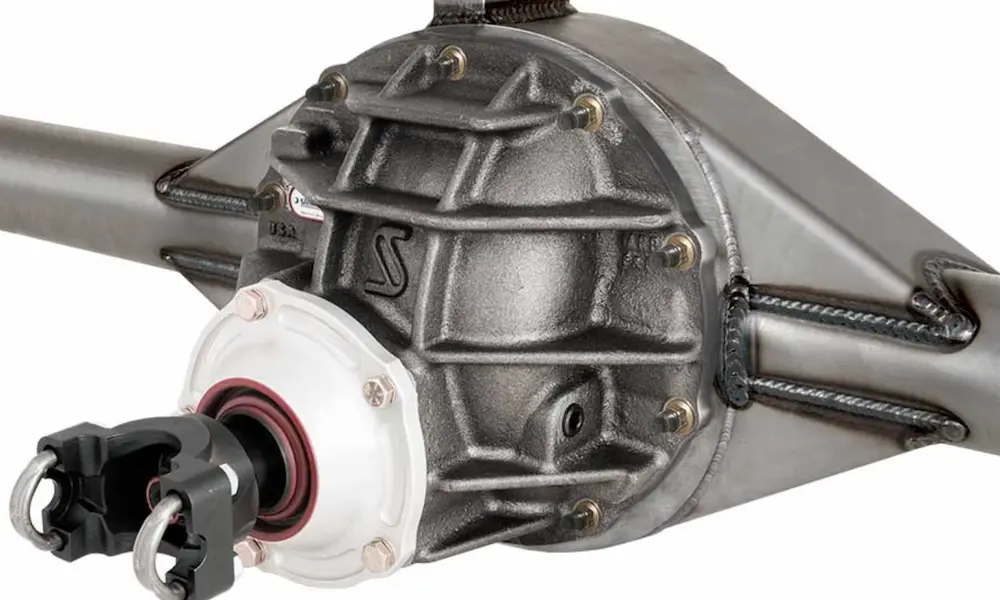
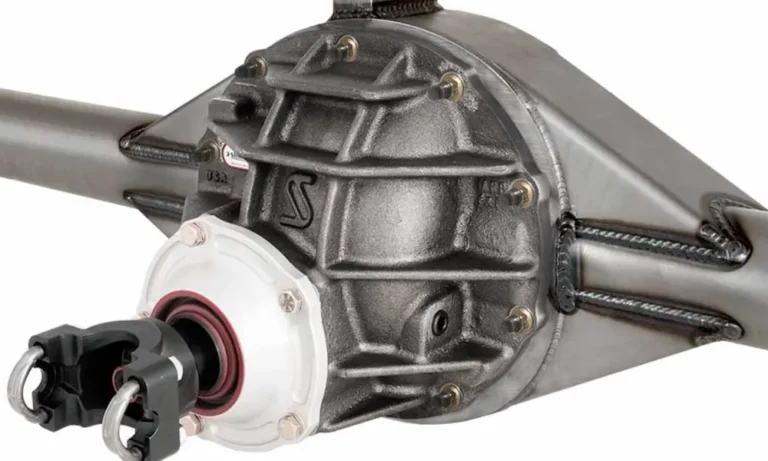
Integral carrier (cover-style): The differential housing is welded closed. A stamped steel or cast aluminum cover on the back gives you access to the gears inside. Most modern Dodge axles use this design.
Drop-out (banjo) style: No rear cover at all. The entire carrier assembly — ring gear, pinion, everything — pulls out from the front of the housing as one unit. The classic Chrysler 8.75-inch uses this design.
You can tell the difference instantly. If you see a bolt-on cover at the back of the “pumpkin,” it’s integral. If the back is smooth with no cover, it’s a drop-out.
How Axle Flotation Affects Identification
This matters more for trucks than cars, but it’s a key part of accurate differential identification.
Semi-floating axle: The axle shaft carries the vehicle’s weight and transmits torque. The wheel bolts directly to a flange on the shaft end. Most Dodge passenger cars and light trucks use this setup.
Full-floating axle: The wheel hub sits on its own bearings mounted to the axle tube. The shaft only spins — it carries zero vehicle weight. You can unbolt the shaft and pull it out without touching the wheel. Heavy-duty Ram 2500 and 3500 trucks with AAM axles use full-float designs.
If you can pull the axle shaft while the wheel stays in place, you’ve got a full-float axle. That narrows your identification significantly.
The Drop-Out Legend: Chrysler 8.75-Inch Axle
The Chrysler 8.75-inch is the most desirable Dodge rear end in existence. Muscle car restorers hunt these aggressively — and for good reason. Introduced in 1957 and used through 1974, this banjo-style axle competes directly with the Ford 9-inch and GM 12-bolt for performance credibility.
Since there’s no cover, Dodge rear end identification on the 8.75-inch relies entirely on the casting number stamped into the driver’s side of the removable center section. Three distinct case families exist.
The 741, 742, and 489 Cases: What’s the Difference?
| Case | Casting Number(s) | Years | Pinion Diameter | Spline Count |
|---|---|---|---|---|
| 741 | 1820657 / 2070741 | 1957–1972 | 1.375 inches | 10-spline |
| 742 | 1634985 / 2070742 | 1957–1969 | 1.750 inches | 10-spline |
| 489 | 2881488 / 2881489 | 1969–1974 | 1.875 inches | 10 or 29-spline |
The 741 is the lightest-duty of the three. Factory engineers put it behind slant-six engines and lower-output V8s where torque loads stayed manageable. Some post-1964 units carry an “X” stamp on the left rear of the housing.
The 742 stepped up with a thicker pinion stem and was standard equipment during peak muscle car production. Look for a “2” stamped into the driver’s side rear on 1964–1969 models.
The 489 is the big dog. Engineered for 440 V8s and 426 Hemis, it carries a massive 1.875-inch tapered pinion and often shows a “9” stamped into the casting. Later 489 cases with 29-spline yokes are especially strong.
Sure-Grip and Gear Ratio Identification
The factory Sure-Grip limited-slip option was available from 1958 onward. A small stamped metal tag under one of the ten carrier mounting nuts displays the gear ratio. If the ratio number ends with an “S,” it’s a Sure-Grip car from the factory.
On later models, an orange-painted filler plug visually flagged a Sure-Grip unit. Some also carried an additional tag specifying the required friction modifier additive.
Factory ratio options were extensive: 2.76, 2.93, 3.23, 3.31, 3.55, 3.73, 3.91, 4.10, 4.56, 4.89, 5.17, and 5.57.
Track Width Reference: 8.75-Inch Housing Lengths by Platform
Housing width varies significantly across Dodge and Chrysler platforms. This matters when you’re swapping axles or building a custom chassis.
| Platform | Model Years | Drum-to-Drum Width |
|---|---|---|
| A-Body (Dart, Duster, Barracuda) | 1966–1972 | 57.125 inches |
| B-Body Early (Coronet, Belvedere) | 1962–1963 | 58.500 inches |
| B-Body Mid (Charger, Satellite, GTX) | 1964–1967 | 59.500 inches |
| E-Body (Challenger, Barracuda) | 1970–1974 | 61.625 inches |
| C-Body (Newport, New Yorker) | 1965–1970 | 61.750 inches |
| B-Body Late / C-Body Final | 1970–1974 | 63.000 inches |
| D100 / W100 Pickup | 1965–1971 | 64.000 inches |
One critical note on A-body axles: they use a 5 on 4-inch bolt circle. Every other Dodge passenger car uses a 5 on 4.5-inch pattern. Don’t mix these up when sourcing wheels or brakes.
Performance Fender Tag Codes (1969–1971)
If you have a late 1960s or early 1970s Mopar and a legible fender tag, these option codes decode the factory axle setup:
| Code | Name | Gear Ratio |
|---|---|---|
| A31 | High Performance Axle | 3.91 |
| A32 | Super Performance Axle | 4.10 |
| A33 | Track Pak | 3.54 |
| A34 | Super Track Pak | 4.10 |
| A36 | Performance Axle Package | 3.55 |
Corporate Integral Axles: The Cover-Bolt Era
Once the 8.75-inch era ended, Chrysler moved fully to integral carrier axles. These are what you’ll find under most Dodges from the 1980s onward.
Chrysler 8.25-Inch: The Most Common Dodge Rear End
This axle shows up under the Jeep Cherokee XJ, Jeep Grand Cherokee, Dodge Dakota, Dodge Durango, Dodge Nitro, and lighter Ram 1500 trucks. It’s absolutely everywhere.
Visual identification is straightforward: the 10-bolt inspection cover has a completely flat bottom edge and a rounded top. That distinctive “D” shape with a pronounced lip around the perimeter is hard to miss.
The axle tubes measure roughly 3 inches in diameter — noticeably thicker than the Dana 35’s 2.75-inch tubes you’ll sometimes find alongside it in Jeep applications.
The most important internal detail for Dodge rear end identification on the 8.25-inch: spline count changed mid-production.
- Pre-1997: 27-spline axle shafts
- Post-1997: 29-spline axle shafts (significantly stronger)
The 1996 model year sits right in the transition. Some 1996 trucks got the upgrade, others didn’t. You can’t tell from outside. Pull an axle shaft and count the splines if it matters for your build.
One more thing: the 8.25-inch uses threaded side adjusters inside the axle tubes to set carrier bearing preload and ring-and-pinion backlash. You need a long-reach spanner wrench to reach them. Without it, you can’t properly set up the differential.
Chrysler 9.25-Inch: Half-Ton Truck Standard
The 9.25-inch served Ram 1500 trucks and heavier Dakotas for decades. Its 12-bolt cover with an octagonal “stop-sign” shape makes it easy to spot from across the garage.
Internal specs: 1.875-inch pinion, 29-spline yoke, 31-spline axle shafts.
A major redesign hit during the 2009–2011 transition when Ram 1500 switched to coil-spring rear suspension. The ZF-redesigned 9.25-inch looks different:
- Two bump-outs on the inspection cover
- ABS tone ring moved from ring gear to axle shafts
- Ring gear bolts changed to metric 14mm right-hand thread
There’s also a widely documented factory issue with later 9.25-inch axles: the pinion nut can back off under load, dropping the pinion gear into the spinning carrier and destroying the housing. Apply red Loctite to the pinion nut threads any time you service this axle. No exceptions.
Heavy-Duty Axles: Dana and AAM
Three-quarter-ton and one-ton trucks need more than Chrysler’s internal axle designs can handle. Dodge used Dana Corporation axles until 2003, then switched entirely to American Axle Manufacturing (AAM).
Pre-2003: Dana 60, 70, and 80
Dana axles use a Bill of Material (BOM) number for precise Dodge rear end identification. This six-digit code stamped into the long axle tube on the right or left side of the differential casting is your most reliable tool. It decodes the exact model, gear ratio, and limited-slip configuration.
The BOM often rusts over. Use a flat scraper — not a wire wheel — to reveal the digits without grinding them away.
When the BOM is unreadable, measure:
- Dana 60: 9.75 or 9.875-inch ring gear, 10-bolt cover roughly 12 inches tall, shallow mounting flange about 1 inch deep
- Dana 70: Identical cover bolt pattern to Dana 60, but the mounting flange is thicker at 1.25 inches, 10.5-inch ring gear
- Dana 80: 10-bolt cover but significantly taller at 13.5 inches, heaviest duty option available on early Ram chassis
Post-2003: American Axle Manufacturing (AAM)
Starting with the 2003 Ram redesign, Chrysler dropped Dana entirely and moved to AAM axles. These are massive structures built specifically for modern diesel torque loads.
- AAM 9.25-inch front axle: 14-bolt cover, reverse-rotation gears, 12 left-hand thread ring gear bolts
- AAM 10.5-inch rear axle: 14-bolt cover, 1.750-inch pinion, 30-spline shafts, 14mm metric ring gear bolts
- AAM 11.5-inch rear axle: Full-float design, 11.5-inch ring gear, 14-bolt cover, 2.0-inch pinion, 30-spline shafts, eight 14mm hub flange bolts per side
- AAM 11.8-inch rear axle: Similar 14-bolt cover appearance to 11.5-inch, internally upgraded for late-model high-output Cummins engines pushing near 1,000 ft-lbs
Modern IRS Differentials: LX/LC Platform Cars
The Dodge Charger, Challenger, and Chrysler 300 use independent rear suspension modules rather than solid axles. These differentials mount to a rear cradle and use CV-jointed half-shafts to reach the wheels.
You identify these by their metric ring gear diameter:
- 198mm and 215mm: Base and lower-performance models, Mercedes-Benz influenced design
- 226mm Getrag: R/T and SRT8 V8 models, 31-spline internal carrier, 32-spline outer wheel hubs, gear ratios from 3.73 to 3.92
- 230mm and 240mm: Hellcat and Demon applications, lower gear ratios (2.62 or 3.09) for drag-oriented acceleration
The Dodge Challenger SRT Demon 170 uses a reinforced 240mm differential built specifically to survive over 1,000 horsepower on drag radials. Aftermarket builders upgrade these with billet alloy axle bars featuring 31, 33, or 35-spline inner profiles to prevent rotational shearing under extreme launch loads.
Dodge U-Joints: The Inside-Lock Difference
Most manufacturers use Spicer-style U-joints with outer snap rings. Chrysler didn’t. Dodge used a proprietary inside-lock system where retaining C-clips sit inside machined grooves on the inner faces of the yoke flats.
This means you measure Dodge U-joints differently — across the internal lock-up width, not the exterior dimension.
| U-Joint Series | Internal Lock-Up Width | Bearing Cap Diameter | Common Use |
|---|---|---|---|
| 7260 (“Small Dodge Joint”) | 2.125 inches | 1.078 inches | Slant-six, early A-body, light duty |
| 7290 (“Large Dodge Joint”) | 2.622 inches | 1.126 inches | Big-block V8, heavy duty, commercial vans |
The 7260 looks similar in overall size to a Spicer 1310, but they’re not interchangeable. Don’t try it.
When mixing old Mopar differentials with modern driveshafts, combination crossover U-joints solve the compatibility problem. These hybrid joints run 7260 or 7290 specs on one axis and Spicer 1310/1330/1350 specs on the other, letting you mate different driveline generations cleanly.
Quick Dodge Rear End Identification Cheat Sheet
Still not sure what you have? Work through this sequence:
- Look for a rear cover. No cover = 8.75-inch banjo axle. Cover present = keep going.
- Count the cover bolts. 10 bolts = likely 8.25-inch or Dana. 12 bolts = 9.25-inch. 14 bolts = AAM heavy duty.
- Check cover shape. Flat-bottom D-shape = 8.25-inch. Octagonal stop-sign = 9.25-inch. Large round = Dana 60/70/80.
- Look for a BOM or casting number. Stamp on the axle tube for Dana. Driver-side casting on the 8.75-inch center section.
- Pull an axle shaft and count splines. 27-spline = early 8.25-inch. 29-spline = late 8.25-inch or 9.25-inch. 31-spline = 9.25-inch truck axle.
- Measure the ring gear. Pull the cover, measure tooth tip to tooth tip across the ring gear. This confirms your axle family with no guesswork.
Physical measurements don’t lie. Build sheets and option codes do — especially after 50+ years of dealer swaps, wrecking yard pulls, and well-meaning previous owners.