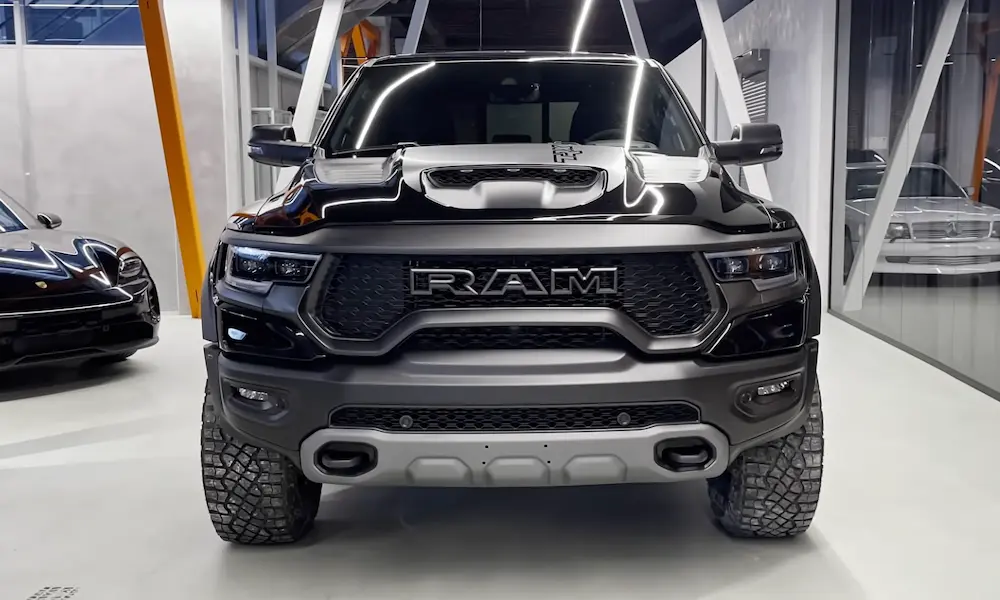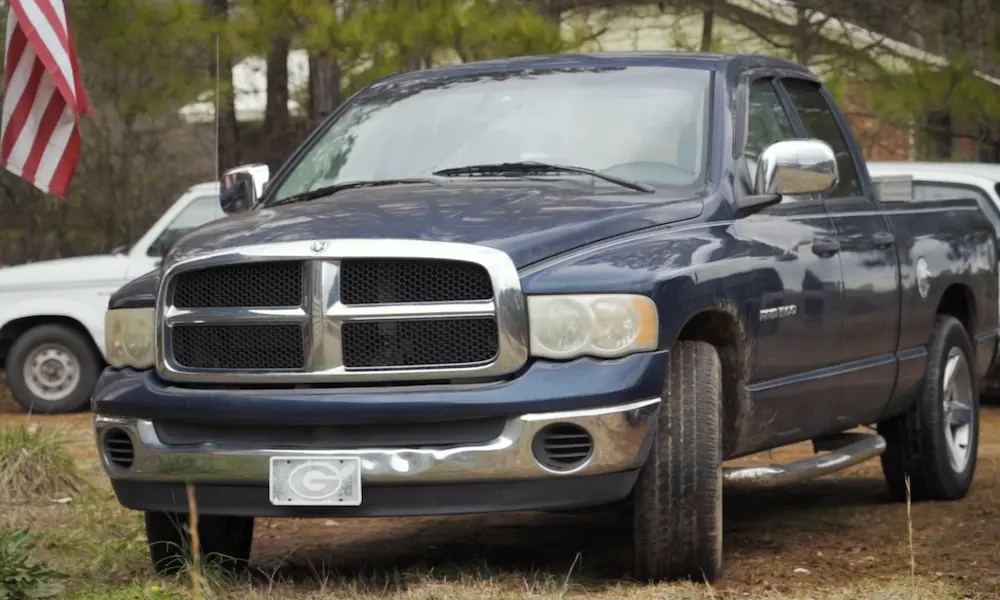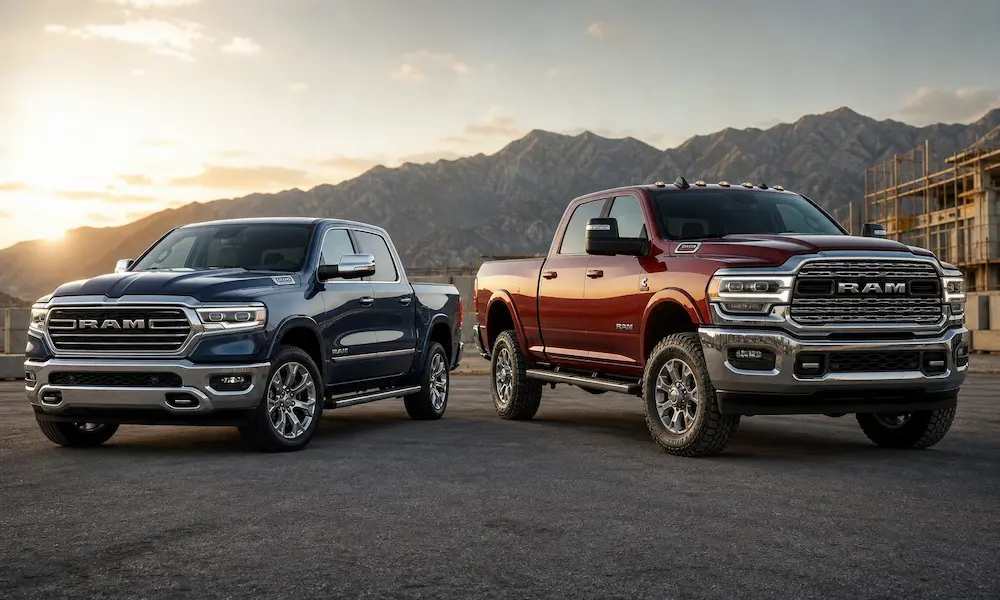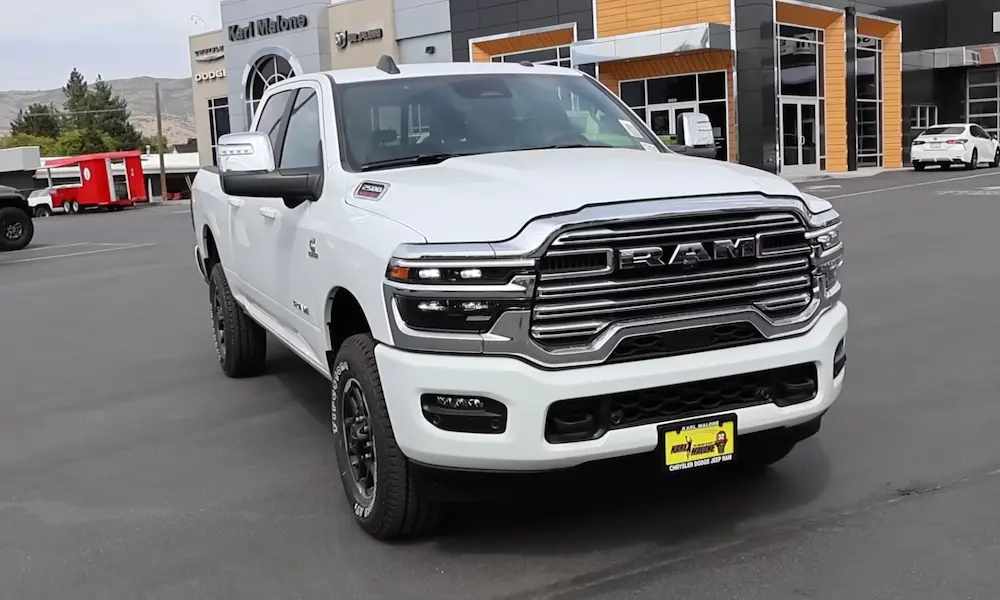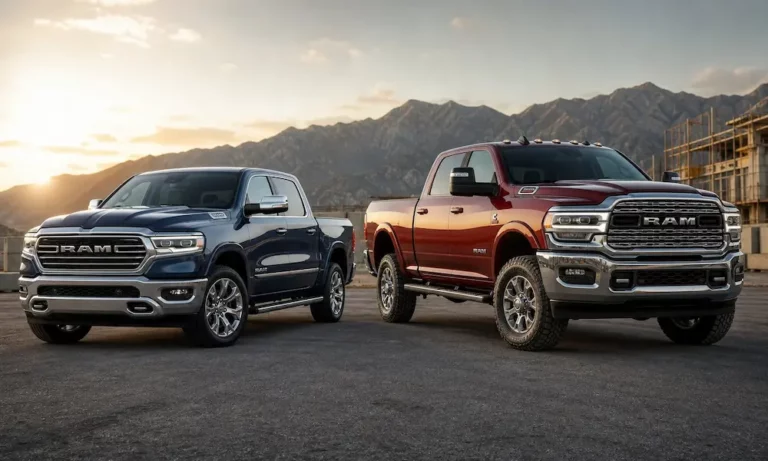
Picking between the Ram 1500 vs Ram 2500 feels simple until you start digging into the details. One wrong choice and you’re either white-knuckling an overloaded half-ton down a mountain or parking a semi-sized truck in a downtown garage. This guide cuts through the noise so you can make the right call before you sign anything.
They’re Not Just Different Sizes — They’re Different Tools
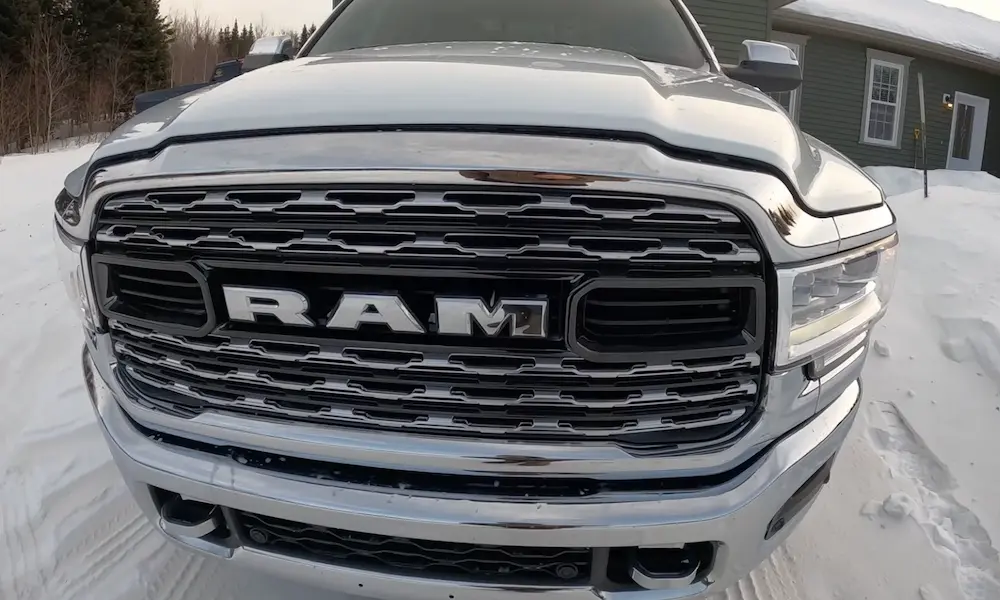
Most people assume the Ram 2500 is just a bigger Ram 1500. It’s not. These trucks share a logo and a lot of interior tech, but under the skin, they’re built for completely different jobs.
The Ram 1500 is a light-duty truck designed for family use, daily commuting, and recreational towing. The Ram 2500 is a heavy-duty workhorse built for commercial hauling, massive trailers, and sustained abuse.
Think of it this way: the 1500 is a Swiss Army knife. The 2500 is a sledgehammer.
Weight Classes, GVWR, and Why It Actually Matters
Before we talk horsepower and towing numbers, you need to understand one thing: gross vehicle weight rating (GVWR).
The Ram 1500 is a Class 2a truck with a GVWR between 6,001 and 8,500 pounds. The Ram 2500 sits in Class 2b at 8,501 to 10,000 pounds. That 10,000-pound ceiling is a big deal.
| US Truck Class | Duty Level | GVWR Range | Example Trucks |
|---|---|---|---|
| Class 2a | Light Duty | 6,001–8,500 lbs | Ram 1500, F-150, Silverado 1500 |
| Class 2b | Light/Heavy Duty | 8,501–10,000 lbs | Ram 2500, F-250, Silverado 2500 |
| Class 3 | Medium Duty | 10,001–14,000 lbs | Ram 3500, F-350, Silverado 3500 |
Here’s why the Ram 2500 tops out right at 10,000 pounds on purpose. Once a vehicle exceeds that threshold, Federal Motor Carrier Safety Administration regulations kick in. That means DOT numbers, hours-of-service logbooks, and weigh station stops. Ram keeps the 2500 just under that line so regular buyers don’t get buried in commercial compliance paperwork.
The Diesel Payload Paradox
Here’s a twist most buyers don’t expect. The Ram 2500 diesel is phenomenal for towing, but it actually hurts your payload capacity.
Why? The Cummins diesel engine block weighs roughly 900 to 1,000 pounds more than the 6.4-liter gasoline V8. Since payload = GVWR minus curb weight, that extra engine weight directly eats into how much you can carry in the bed. If you need to haul heavy equipment, wet gravel, or a loaded toolbox, the gas engine is actually the smarter pick.
Engines: Forced Induction vs. Old-School Displacement
This is where the two trucks really split apart.
Ram 1500 Engines (2025–2026)
Ram dropped its V8 engines for the 1500 in 2025. All three current options use smaller, turbocharged inline-six architecture — a major shift toward efficiency.
- 3.6-liter Pentastar V6 with eTorque — 305 hp, 269 lb-ft of torque. Great for daily commuting and light hauling, with up to 26 mpg highway in 2WD.
- 3.0-liter Hurricane Standard Output — 420 hp, 469 lb-ft of torque. This twin-turbo inline-six tops the towing chart for the 1500 at 11,550 pounds when properly equipped. Requires premium fuel.
- 3.0-liter Hurricane High-Output — 540 hp, 521 lb-ft of torque. This is the performance engine, standard on the Limited, Tungsten, and RHO. It’s fast, but max towing drops to 9,920 pounds due to heavier componentry.
Ram 2500 Engines
The 2500 keeps things old-school and massive.
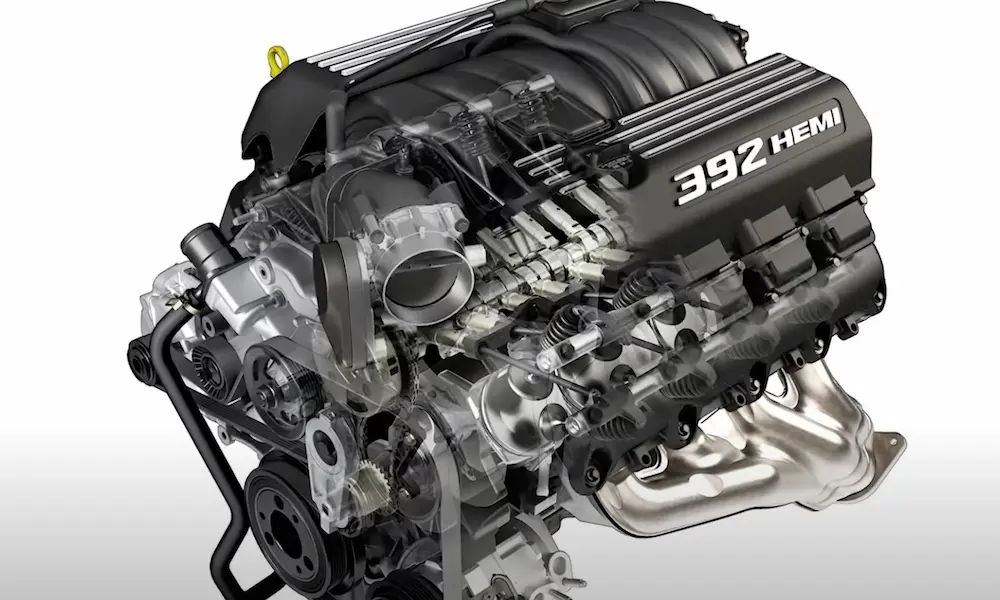
- 6.4-liter HEMI V8 — 405 hp at 5,600 rpm and 429 lb-ft of torque, running on regular 87-octane. Best for maximum payload capacity.
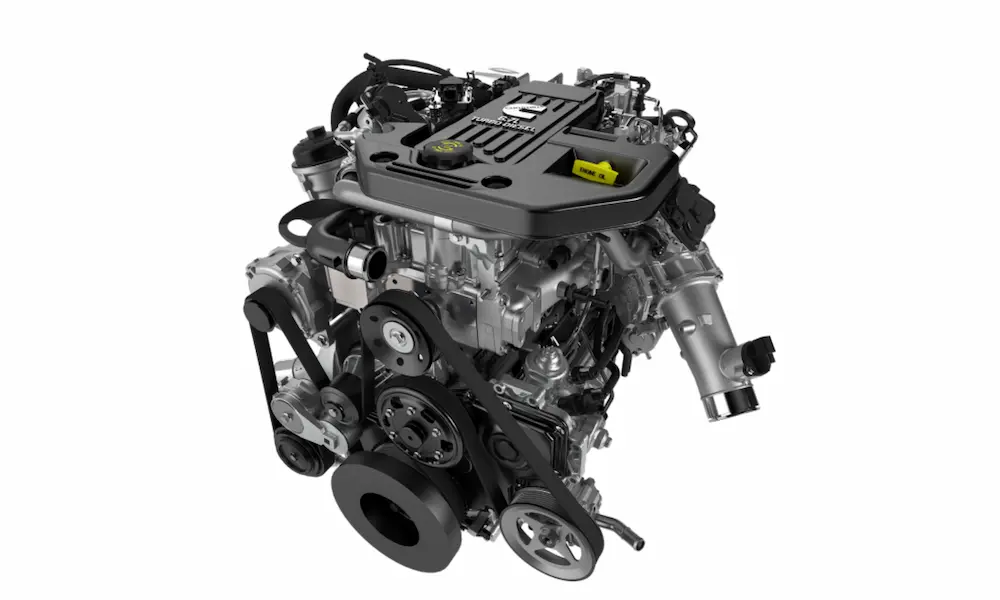
- 6.7-liter Cummins High-Output Turbo Diesel — 430 hp and a jaw-dropping 1,075 lb-ft of torque at just 1,800 rpm. For 2025, Ram discontinued the standard-output Cummins, leaving this as the only diesel option.
| Feature | Ram 1500 V6 (eTorque) | Ram 1500 Hurricane HO | Ram 2500 HEMI V8 | Ram 2500 Cummins Diesel |
|---|---|---|---|---|
| Displacement | 3.6L V6 | 3.0L Twin-Turbo I6 | 6.4L V8 | 6.7L Turbo Diesel I6 |
| Horsepower | 305 hp | 540 hp | 405 hp | 430 hp |
| Peak Torque | 269 lb-ft | 521 lb-ft | 429 lb-ft | 1,075 lb-ft |
| Fuel Type | 87-Octane | 91-Octane Premium | 87-Octane | Ultra-Low Sulfur Diesel |
| Best For | Commuting | Performance | Max Payload | Extreme Towing |
Towing and Payload: The Numbers That Matter Most
This is where buyers make or break their decision.
Ram 1500 Capacity
- Max towing: 11,550 pounds (Standard Output Hurricane, 3.92 axle, RWD, Quad Cab)
- Max payload: 2,370 pounds (Pentastar V6 configuration)
The 1500 handles boats, enclosed trailers, and campers with ease. It’s not built for fifth-wheel monsters.
Ram 2500 Capacity
- Max towing: 36,610 pounds (Cummins diesel, Regular Cab, 2WD, properly equipped)
- Max payload: 4,000 pounds (6.4L HEMI V8, Regular Cab, 2WD)
That 36,610-pound towing figure is historic for a single-rear-wheel truck. The Automatic Smart Exhaust Brake on diesel models uses engine backpressure to slow the truck on steep grades, which saves your brake pads on long descents with a heavy trailer.
| Metric | Ram 1500 Peak | Ram 2500 Peak |
|---|---|---|
| Max Towing | 11,550 lbs | 36,610 lbs |
| Max Payload | 2,370 lbs | 4,000 lbs |
Ride Quality: Coil Springs vs. Solid Axles
The suspension difference between these two trucks is night and day.
The Ram 1500 uses an independent front suspension and a five-link coil-spring rear suspension. Add the optional four-corner air suspension and it rides like a luxury SUV. It automatically lowers at highway speeds to cut drag, raises for rough terrain, and levels out when you load the bed.
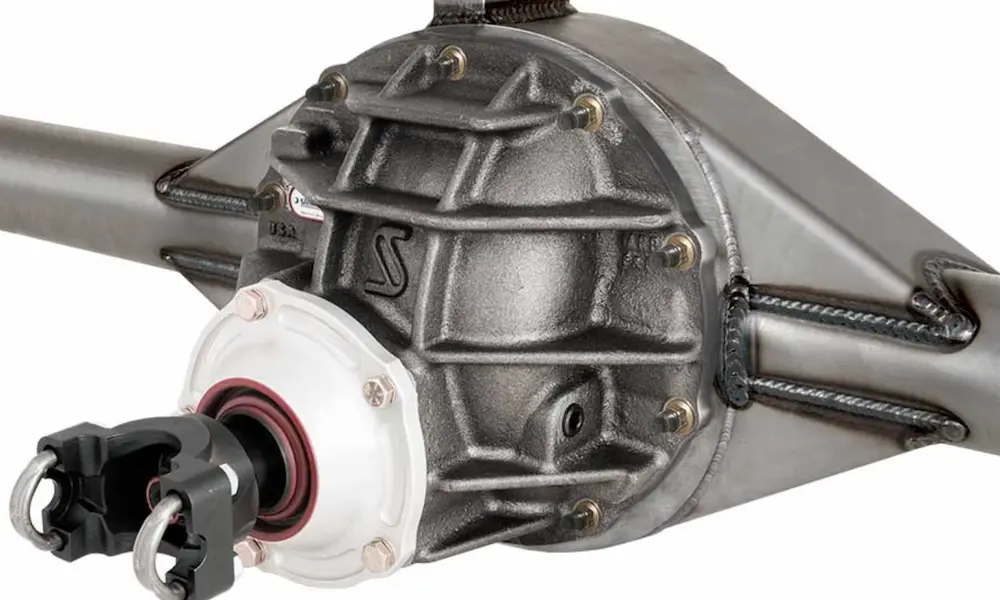
The Ram 2500 uses a heavy solid front axle and progressive-rate coil-spring rear suspension. That setup is bulletproof under load. Empty? It’s noticeably stiffer and harsher. If you drive 40 miles to work on paved roads every day and only tow twice a year, you’ll feel that difference every single morning.
Size, Dimensions, and the Garage Problem
Don’t underestimate how big these trucks actually are.
The Ram 1500 Crew Cab measures about 232.9 inches long and 77.6 inches tall. Standard residential garages and most parking structures top out at 84 inches (7 feet). The 1500 fits comfortably with room to spare.
The Ram 2500 stretches up to 260 inches long and stands over 80.2 inches tall before you add off-road tires. That puts it dangerously close to the 84-inch clearance limit. Add a bump in a concrete garage floor and you’re scraping concrete. If you rely on covered urban parking, the 2500 creates real problems.
Cab and Bed Options
The Ram 1500 comes in Quad Cab or Crew Cab with 5’7″ or 6’4″ bed options.
The Ram 2500 adds a Regular Cab with an 8-foot bed — ideal for contractors hauling 4×8 sheets of plywood or using gooseneck hitches. It also features the class-exclusive Mega Cab, which delivers massive rear legroom paired with a 6’4″ bed.
Off-Road Trims: RHO vs. Power Wagon
Both trucks offer serious off-road options, but their approaches are completely different.
The Ram 1500 RHO runs on 540 horsepower, Bilstein Black Hawk e2 adaptive shocks, and 35-inch Goodyear DuraTrac tires. It’s built for fast, sandy desert runs — think Baja-style high-speed blasting.
The Ram 2500 Power Wagon takes a different approach entirely. Its electronic front sway bar disconnect lets the axle articulate over boulders. Add 14.2 inches of ground clearance, front and rear locking differentials, and a factory-installed 12,000-pound Warn winch, and this truck is built to crawl technical terrain and recover itself when things go sideways. It runs exclusively on the 6.4L HEMI V8 — the diesel is too heavy for good off-road weight distribution.
Tech Inside: Uconnect 5 in Both Trucks
Both trucks share Ram’s Uconnect 5 infotainment system, which registers touchscreen inputs in as little as 0.05 seconds and supports wireless Apple CarPlay, Android Auto, and over-the-air map updates.
Screen sizes scale with trim:
- 8.4-inch on base trims like Tradesman and Big Horn
- 12-inch on mid-to-high trims like Laramie and Limited
- 14.5-inch portrait display on Limited and Tungsten — the largest in the segment
The Ram 1500 pushes luxury features harder. The 10.25-inch Front Passenger Interactive Display lets your co-pilot control media and navigation independently. A digital rearview mirror streams a live camera feed when tall cargo blocks your view. Total display area across the cabin hits 50 inches on top trims.
The Ram 2500 focuses its tech on towing. The Uconnect 5 system routes around low bridges and weight-restricted roads automatically based on your trailer’s dimensions and weight. Trailer camera views integrate directly into the display for tight maneuvering with big loads.
Pricing: From Work Truck to Rolling Luxury Suite
| Trim Level | Ram 1500 MSRP | Ram 2500 MSRP | Best For |
|---|---|---|---|
| Tradesman | $40,275 | $45,565 | Fleets, contractors, budget buyers |
| Big Horn | $45,230 | $49,465 | Daily drivers, moderate towing |
| Laramie | $60,030 | $61,795 | Premium comfort, long trips |
| Off-Road (RHO/Power Wagon) | $69,995 | $72,140 | Trail and desert enthusiasts |
| Limited | $75,450 | $73,460 | High-end luxury hauling |
| Tungsten | $87,320 | Not Available | Peak luxury, lifestyle buyers |
The Ram 1500 Tungsten at $87,320 features 24-way massaging seats, quilted leather, a panoramic sunroof, and the 14.5-inch display as standard. It exists because a growing number of buyers want a luxury vehicle, not a work truck. The Ram 2500 doesn’t offer a Tungsten equivalent because the heavy-duty market prioritizes capability over comfort.
Maintenance and Warranty
Both trucks follow an oil change and inspection schedule every 8,000 miles or six months. The diesel Ram 2500 adds specialized fuel filter replacements and constant monitoring of diesel exhaust fluid (DEF). Run out of DEF and the engine enters limp mode.
Ram backs both trucks with a 10-year powertrain warranty covering the engine and transmission. It’s a strong selling point, but it only applies to the original purchaser — it doesn’t transfer if you sell the truck.
So Which One Do You Actually Need?
Here’s the honest answer:
Buy the Ram 1500 if:
- You tow boats, campers, or utility trailers under 11,500 pounds
- You want car-like ride quality for daily commuting
- You need to fit in standard parking garages
- You want luxury features or family comfort
- You’re drawn to the 540-hp Hurricane or the Tungsten trim
Buy the Ram 2500 if:
- You regularly pull fifth-wheel trailers, multi-car haulers, or heavy construction equipment
- You haul over 2,500 pounds of payload in the bed regularly
- You need the Cummins diesel’s 1,075 lb-ft of torque for sustained heavy work
- You want the Power Wagon for serious rock crawling
- Your job or lifestyle demands commercial-grade durability every single day
Buying more truck than you need costs you in ride harshness, fuel, maintenance, and parking headaches. Buying less truck than you need strains the drivetrain and creates safety risks. Match the truck to the actual job, and either choice is an excellent one.