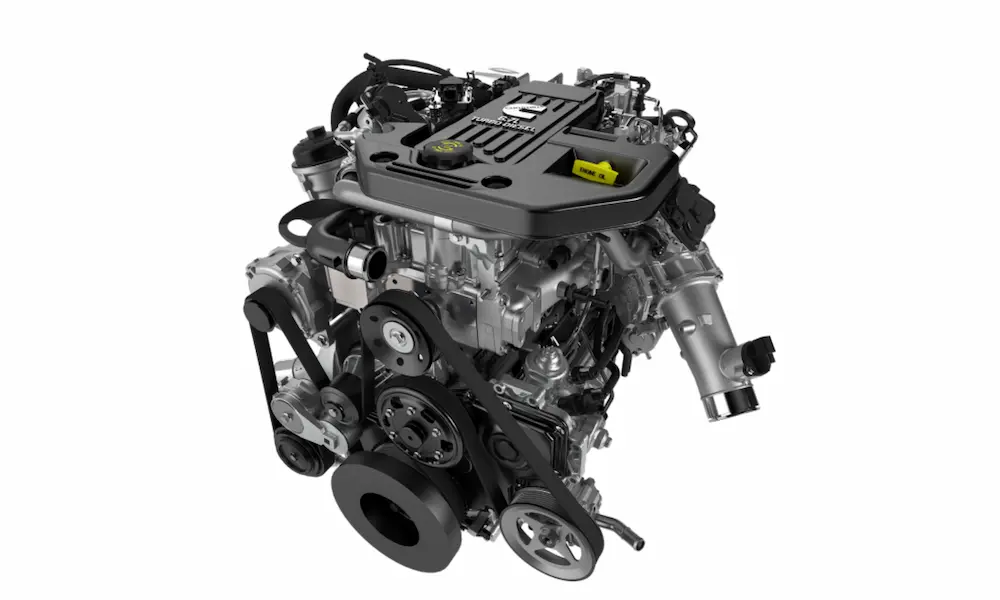
So you’re thinking about deleting your 6.7 Cummins. Maybe your DPF keeps clogging. Maybe you’re tired of regen cycles eating your fuel economy. Whatever brought you here, you’ve got questions about tuners, legality, and what actually happens under the hood. This guide breaks down everything from picking the right tuner to the real financial risks nobody talks about at the truck show.
What Does a 6.7 Cummins Delete Actually Do?
A delete removes your factory emissions hardware. That means pulling the DPF, EGR cooler, and SCR system off your truck. But here’s the catch: you can’t just yank parts and drive away.
Your engine computer watches dozens of sensors tied to those systems. Unplug them without a tuner, and your truck goes into limp mode fast. That’s why a 6.7 Cummins tuner with deletes is mandatory, not optional. The tuner rewrites your engine’s software so it stops looking for parts that aren’t there anymore.
Why Do People Delete Their 6.7 Cummins in the First Place?
Factory emissions systems fight against engine efficiency by design. They’re built to cut pollution, not protect your engine. Here’s what they actually do to your truck.
The EGR Problem: Soot Everywhere
Your EGR system pumps hot exhaust gas back into the intake to lower combustion temps. Sounds simple. But that exhaust carries thick soot straight into your intake tract.
Mix that soot with oil vapor from your crankcase, and you get a nasty sludge. Give it enough miles, and your intake grid heater turns into a solid chunk of carbon. The EGR cooler itself takes a beating too, cycling between blazing exhaust heat and cool coolant until it cracks and leaks coolant right into your intake or exhaust.
The DPF Problem: Regeneration Headaches
Your DPF traps soot so it doesn’t shoot out your tailpipe. But it fills up fast, especially if you do a lot of short trips or city driving. When it’s full, your truck starts an active regeneration cycle.
During regen, the engine dumps extra fuel into the cylinders to burn off trapped soot. This works, but it also cranks your fuel consumption way up. If you notice your truck smells like raw diesel or your oil level keeps rising between changes, chronic regen is likely why.
Oil Dilution: The Hidden Damage
This one’s sneaky. Raw fuel from regen cycles washes down your cylinder walls and pools in your oil. Diluted oil loses its ability to protect your bearings, camshaft, and fuel pump.
A 100,000-mile oil analysis study found deleted trucks had 40-60% less soot contamination in their oil compared to stock trucks. That translated to roughly 50% less wear on critical metal components. Skipping regen cycles genuinely protects your engine’s insides.
Is a 6.7 Cummins Tuner With Deletes Legal?
Short answer: no, not for street use. Here’s the longer version.
The Clean Air Act Says No
Federal law under the Clean Air Act bans tampering with emissions equipment on road-legal vehicles. This isn’t just about physical parts. Software tunes that disable regen cycles or mask missing sensors count as defeat devices too, whether or not hardware was removed.
The EPA doesn’t play around here. Between 2020 and 2023 alone, the agency finalized 172 civil enforcement cases, collecting over $55 million in penalties. That number kept climbing, hitting $720 million across 130 major cases by the end of fiscal year 2025.
What Changed in 2026 (And What Didn’t)
In January 2026, the Department of Justice told federal prosecutors to stop pursuing criminal charges for defeat device sales and installation. Then in July 2026, a dozen convicted individuals received presidential pardons.
Word spread fast that deletes were now “legal.” That’s flat-out wrong. The DOJ memo only changed criminal prosecution priorities. It didn’t touch the Clean Air Act itself, and the EPA still has full authority to pursue civil penalties. New enforcement cases kept rolling through 2026.
Civil Penalties Can Wreck You Financially
Even with prison time off the table, the money side is brutal. Federal civil penalties can hit $57,617 per noncompliant vehicle for manufacturers and dealers. Individuals and small shops face fines up to $5,761 per tampering event.
Big names have taken massive hits. Rudy’s Performance Parts paid $7 million. Diesel OPs LLC got hit with over $10.4 million. States pile on too. California can charge $1,000 to $10,000 per day, per vehicle, and that clock never stops running.
Best 6.7 Cummins Tuners for Deletes (Comparison Table)
Picking the right tuner comes down to your budget, your truck’s model year, and how much control you want.
| Tuner | How You Use It | Best For | Model Years | Standout Feature |
|---|---|---|---|---|
| EZ Lynk Auto Agent 3.0 | Smartphone app | Tech-savvy owners who want remote updates | 2013-2024 | Cloud-based tune delivery, no cables needed |
| EFILive AutoCal V3 | Handheld device, no screen | Heavy towing, custom builds | 2007.5-2021 | Best-in-class transmission control and data logging |
| MM3 Touch | Dashboard touchscreen | Drivers who want live adjustments | 2013-2021 | Change power levels on the fly, no rotary switch |
| H&S Mini Maxx | Color monitor | Budget builds on older trucks | 2007.5-2021 | Pre-loaded tunes, true plug-and-play |
The EZ Lynk system skips a physical monitor entirely. It broadcasts its own wireless network, and you control everything from your phone. Your tuner can even push updated files to you remotely, which beats the old cable-and-laptop shuffle.
If you’re building for serious towing, EFILive gives you the deepest control over shift points and line pressure. It’s not flashy, but it’s precise.
Tuning Gets Harder By Model Year
Cummins keeps upping the security on its computers, and that changes how you tune your truck.
- 2007.5-2012: Easiest to tune. Plug-and-play devices work with no extra steps.
- 2013-2017: Still straightforward through the diagnostic port with modern hardware.
- 2018+: The Security Gateway Module shows up, blocking basic flashing attempts.
- 2019-2021: Locked-down computers require a bypass cable that routes into the engine bay to unlock the flash process.
- 2022+: Encryption gets so tight, you often need to pull the computer and send it out, or buy a pre-unlocked replacement for over $5,000.
How Much Power Can You Really Add?
Most tuners give you selectable power levels, usually through a rotary switch or a touchscreen. Here’s a typical breakdown:
- Level 1 (Stock): No added power. Best for heavy hauling and long-term reliability.
- Level 2 (+40 hp): Great for towing. Keeps exhaust temps manageable.
- Level 3 (+80 hp): Balanced for daily driving with better throttle response.
- Level 4 (+120 hp): Fun for unloaded street driving. Skip towing at this level.
- Level 5 (+160 hp): Serious power gains, but your transmission needs upgrades first.
Your Transmission Might Not Survive the Extra Power
Adding power without checking your transmission is asking for trouble. The 6.7 Cummins comes with two different automatics, and they handle extra torque very differently.
| Transmission | Found In | Stock Torque Rating | Tuning Support |
|---|---|---|---|
| 68RFE | Ram 2500, standard 3500 | 600-750 lb-ft | Wide open. Fully tunable but needs a rebuild for high power |
| Aisin AS69RC | High Output 3500 | 850-1,000 lb-ft | Locked down. Basically untunable |
68RFE vs Aisin
The 68RFE has a bad reputation stock, with weak overdrive clutches that slip and burn under added power. But it’s fully open to tuning. Shops can rewrite shift points and boost line pressure well past factory limits with the right valve body upgrade.
The Aisin is tougher out of the box, built for commercial hauling with a stronger gearset. The problem is its computer is locked tight and can’t be tuned. Add power to the engine, and the Aisin doesn’t know how to handle it, leading to harsh shifts and unpredictable behavior.
The Allison Swap Option
Some owners skip both factory options entirely. A conversion kit lets you bolt an Allison LCT-1000 to your Cummins using a custom bellhousing and translator module. It keeps your factory features working while giving you a nearly bulletproof transmission for serious power builds.
Don’t Forget the Turbo
Your 6.7 Cummins uses a variable geometry turbo built by Holset. It uses movable vanes to control airflow, giving you fast spool-up at low speeds and an exhaust brake at high speeds.
The problem? Soot from your factory emissions system cakes onto those internal vanes over time. Eventually the vanes stick, and the actuator motor burns out trying to force them. You’ll notice lost exhaust braking, sluggish throttle response, and boost problems.
Cleaning the vanes with solvent sometimes fixes early stickiness. For serious power builds, many owners swap to a fixed-geometry turbo like an S300 or S400. You lose the exhaust brake, but you gain a simpler, more reliable setup that handles bigger airflow.
Head Studs: The Upgrade Nobody Talks About
Once you start pushing extra fuel and boost, cylinder pressure spikes hard. Your factory head bolts are torque-to-yield, meaning they stretch permanently during assembly and aren’t built for repeated extreme pressure.
Push past roughly 100 extra horsepower, and those bolts can stretch too far, letting the head lift microscopically off the block. That lets combustion gases blow past your gasket and into your coolant system, leading to overheating and eventual failure.
The fix is swapping to aftermarket head studs. These use stronger steel than factory bolts and clamp the head down with way more force, keeping everything sealed even under high boost and fuel levels.
What Does a Delete Actually Cost?
Money matters here, so let’s talk real numbers.
DIY delete kits with a tuner, straight pipe, and block-off plates run $1,200 to $2,000. Pay a shop to do the labor, and expect around $2,200 total.
Compare that to replacing a failed factory DPF or SCR system, which routinely costs $8,000 to $12,000. On paper, deleting looks like a bargain.
But there’s a catch. If you ever need to restore your truck to factory emissions compliance for resale, sourcing all those missing parts and getting proper tuning can cost $5,000 to $12,000. Add potential civil penalties on top, and the “savings” from deleting can disappear fast.
Final Thoughts
A 6.7 Cummins tuner with deletes solves real mechanical headaches. Less soot in your oil, cooler running temps, and more reliable power are hard to argue against. The engineering case is solid.
But the legal risk is just as real. Federal penalties can wipe out any savings you thought you’d get, and resale value takes a hit too. If you’re running this setup off-road, on a farm, or in competition, you’re in a different situation than someone daily-driving on public highways.
Whatever you decide, go in with your eyes open. Know the mechanical tradeoffs, know the tuner options that fit your model year, and know exactly what you’re risking before you pull the trigger.