Is your Nissan Rogue turning into a sauna on wheels? When your AC fails during a hot day, it’s more than just uncomfortable—it’s downright miserable. If you’ve been frantically adjusting controls only to feel warm air blowing, you’re dealing with a common Rogue problem that has clear patterns and solutions. Let’s tackle your AC troubles with practical steps you can try before heading to a mechanic.
What’s Wrong With Your Nissan Rogue’s AC System?
When your Rogue’s air conditioner stops working, you’re likely experiencing one of three common issues:
- Refrigerant leak (37% of cases): The lifeblood of your cooling system is slowly escaping
- Electrical climate control problems (21% of cases): Switches, fuses, or control modules failing
- AC compressor issues (12% of cases): The heart of the system isn’t pumping properly
Understanding which problem you’re facing starts with recognizing the symptoms.
Reading Your AC’s Warning Signs
No Cold Air, Normal Airflow
When your vents push plenty of air but it’s all warm, your refrigeration cycle is likely the culprit. This points to:
- Low refrigerant levels
- A compressor that isn’t engaging
- A faulty compressor
Weak or No Airflow
If you’re barely feeling any air from the vents:
- Your cabin air filter might be severely clogged
- The blower motor could be failing
- Your evaporator coil might be frozen (especially common on long drives)
Intermittent Cooling
Does your AC blow cold, then warm, then cold again? This frustrating pattern suggests:
- Slightly incorrect refrigerant levels
- A failing compressor clutch
- A faulty blend door actuator that can’t hold position
- Electrical sensors giving erratic readings
Strange Noises
Different sounds point to specific problems:
- Grinding or squealing from the engine bay: Likely mechanical failure in the AC compressor
- Clicking or ticking from the dashboard: Usually a failing blend door actuator with stripped plastic gears
- Rattling from vents: Often debris caught in the blower motor fan or a failing blower motor
Unpleasant Odors
- Musty smell: Mold growth in the evaporator case or dirty cabin air filter
- Sweet, chemical smell: Possible refrigerant leak from the evaporator core
DIY Diagnostic Checks Before Calling a Pro
1. Check Your Control Settings
This sounds obvious, but it’s often overlooked:
- Is the AC button illuminated?
- Is the temperature set to its coldest setting?
- Is the fan speed turned up?
- Is the system in the correct mode (not in recirculation if airflow is limited)?
- For 2023 models: Try disabling “Eco Assist” mode, which sometimes limits AC performance
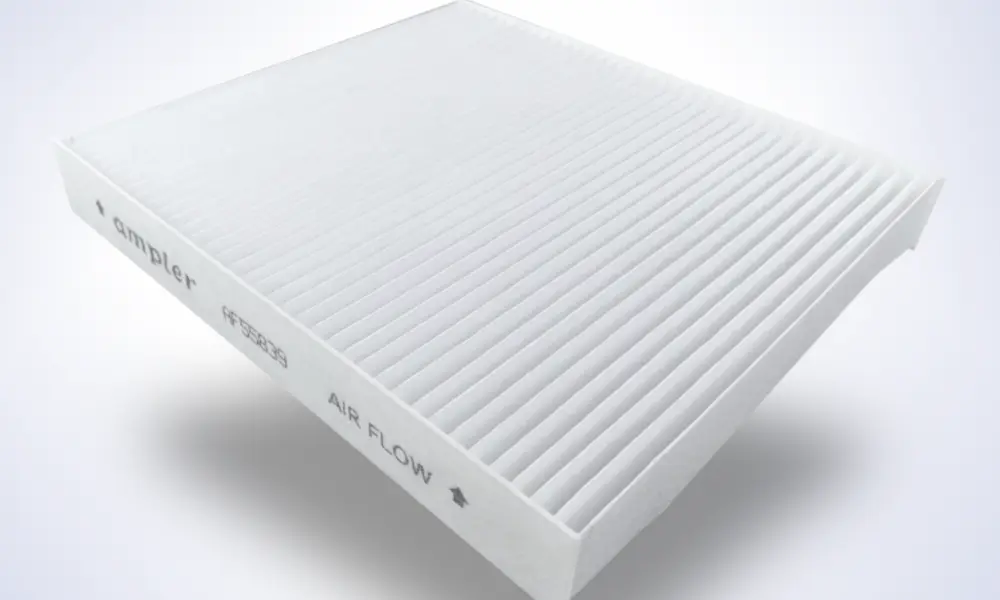
2. Inspect and Replace the Cabin Air Filter
A clogged filter is the most common cause of poor airflow. To check it:
- Locate the filter (typically behind your glove box)
- Remove it and hold it up to a light source
- If you can’t see light through it, it’s time for a replacement
This simple $15-25 fix solves many AC “failures” and takes just minutes to complete.
3. Visual Inspection Under the Hood
With the engine off:
- Check the condenser: This radiator-like component sits at the front of your vehicle. Clean any debris, leaves, or dirt with a soft brush and low-pressure water.
With the engine running and AC on max:
- Listen for the compressor clutch: You should hear a distinct “click” when the AC is turned on. Look at the compressor (connected to the serpentine belt) and verify the center plate is spinning with the outer pulley.
- Look for leaks: Check for greasy, oily residue on AC lines, hoses, or components—the telltale sign of a refrigerant leak.
4. Check for Water Under the Car
On hot days, a properly functioning AC should produce a puddle of clean water under the passenger side of your parked Rogue. No water suggests a clogged evaporator drain tube, which can cause freezing or water backup into the cabin.
Understanding Your AC Compressor Problems
The compressor is the heart of your AC system, pumping refrigerant throughout the cooling loop. When it fails, you’ll notice:
- Warm air from the vents
- Grinding or squealing when the AC is on
- Fluid leaks from the compressor
- Loss of engine power (in severe cases)
- Blown fuses or tripped circuit breakers
The Critical AC Clutch
The compressor clutch engages and disengages the compressor as needed. Common failures include:
- Clutch not engaging: This can be due to a bad clutch coil, incorrect air gap, or system issues that prevent engagement (like low refrigerant).
- Burnt-out clutch: Overheating can cause the clutch to melt, preventing proper engagement.
- Failed pulley bearing: This creates a grinding noise even when the AC is off—a dangerous condition that can lead to serpentine belt failure.
Testing Clutch Engagement
With the engine running and AC on max, visually check if the center plate of the compressor is spinning along with the outer pulley. If the outer pulley spins but the center plate doesn’t, the clutch isn’t engaging.
Refrigerant Issues: The Most Common Culprit
The most common cause of AC failure in Nissan Rogues is refrigerant problems. Your Rogue uses one of two refrigerant types:
- R-134a: Used in 2013 and earlier Rogues, and likely in 2014-2020 models
- R-1234yf: Used in newer models (approximately 2018 and later)
Always check the specification label under your hood to confirm which type your vehicle needs.
Signs of Low Refrigerant
- AC blowing warm air
- Compressor clutch won’t engage (due to low-pressure safety switch)
- Visible leaks (oily film on components)
- Hissing sounds (often from the dashboard area)
- Ice on AC components
Recharging Your AC (If You Have R-134a)
If your Rogue uses R-134a refrigerant, you might be able to perform a temporary recharge yourself:
- Safety first: Wear safety glasses and gloves
- Get a recharge kit: Use one with a built-in pressure gauge
- Prepare the vehicle: Start the engine and set AC to max cold, highest fan speed
- Find the low-pressure port: Located on the larger AC line, typically with a black or blue cap
- Connect the hose: Attach the quick-connect fitting from the recharge can
- Check pressure: Read the gauge before adding refrigerant
- Add refrigerant: Squeeze the trigger for 5-10 seconds at a time, gently rocking the can
- Monitor results: Check vent temperature and pressure readings
- Don’t overcharge: Stop when pressure reads between 25-40 PSI (or as specified for your ambient temperature)
Remember that recharging only treats the symptom. If you have a leak, the refrigerant will eventually escape again.
Electrical Problems to Check
With a 21% probability, electrical faults are the second-most common cause of AC failure in Rogues. Check:
Fuses and Relays
Locate your Rogue’s fuse boxes:
- Interior fuse box: Behind a panel on the driver’s side dash
- Engine compartment fuse box (IPDM): Under the hood, often near the battery
The IPDM (Intelligent Power Distribution Module) is particularly important for first-generation Rogues (2008-2013). In these models, the AC compressor relay is integrated into the IPDM circuit board, meaning if the relay fails, the entire module must be replaced—a much more expensive repair than a simple relay swap.
Climate Control Module Issues
Newer models, especially the 2023 Rogue, may experience erratic climate control behavior due to software or module faults. Symptoms include:
- System randomly resetting temperature to 75°F
- AC cutting out entirely
A system reset may help in these cases. Try disconnecting the vehicle’s battery for 10-15 minutes (consult your owner’s manual for the proper procedure).
Airflow Components: When Cold Air Can’t Reach You
Blower Motor Problems
The blower motor pushes air through your vents. Signs of failure include:
- No airflow or very weak airflow
- Fan only working on the highest speed setting (usually indicates a failed blower motor resistor)
- Grinding or rattling noise that changes with fan speed
The blower motor is typically located under the dashboard on the passenger side, often behind the glove box.
Blend Door Actuator Issues
This small motor controls the temperature mixing door in your HVAC system. When it fails:
- Air temperature gets stuck on full hot or full cold
- Temperature differs between driver and passenger sides
- You hear clicking or popping from the dashboard when changing temperature settings
Model-Year Specific Problems to Know
First Generation (2008-2013)
- IPDM integrated relay: AC relay failures require entire module replacement
- Compressor and fan linkage: Some models prevent fan engagement if refrigerant pressure is too low
Second Generation (2014-2020)
- Evaporator freezing: Common in 2015-2016 models, causing diminished airflow on long drives
- Compressor clutch failure: Frequently reported in 2014-2015 models
- Intermittent operation: 2016 Rogues often have intermittent AC issues that are difficult to diagnose
Third Generation (2021-Present)
- 2023 climate control issues: Numerous complaints about temperature randomly resetting and AC cutting out
- Lemon law potential: For persistent, unfixable defects in newer vehicles
When DIY Won’t Cut It: What Repairs Cost
If your DIY efforts don’t fix the problem, here’s what you might pay for professional repairs:
| Repair | Estimated Cost Range | Notes |
|---|---|---|
| AC Diagnosis | $122 – $179 | Professional evaluation with specialized tools |
| AC Recharge | $233 – $313 | Assumes no major leak repair needed |
| AC Compressor | $1,007 – $1,392 | Must replace condenser and receiver/drier too |
| AC Condenser | $681 – $849 | Often damaged in minor front-end collisions |
| Blower Motor | $303 – $922 | Cost varies dramatically by model year |
| Blend Door Actuator | $79 – $2,500+ | Price depends on location and accessibility |
Choosing the Right Repair Approach
Do It Yourself If:
- You need to check fuses
- You’re replacing a cabin air filter
- You want to inspect for leaks or condenser blockage
- You’re recharging R-134a refrigerant (if comfortable using a gauge)
Call a Professional If:
- Any repair requires opening the AC system
- You’re diagnosing complex electrical issues
- You need components replaced that are difficult to access
- You have a newer Rogue with R-1234yf refrigerant
Key Takeaways Every Rogue Owner Should Remember
- The compressor “package deal”: If your compressor fails mechanically, you must also replace the condenser and receiver/drier to prevent contaminating and destroying the new compressor.
- The IPDM “gotcha”: In 2008-2013 Rogues, a failed AC relay means replacing the entire IPDM module.
- For newer models: If facing persistent climate control issues while under warranty, document every dealer visit and repair attempt to protect your Lemon Law rights.
By understanding these common Nissan Rogue AC failure patterns, you can save time, money, and frustration. Start with the simple checks, recognize when it’s time to call in professional help, and approach repairs with knowledge that keeps you from paying for unnecessary parts or missing the real problem.