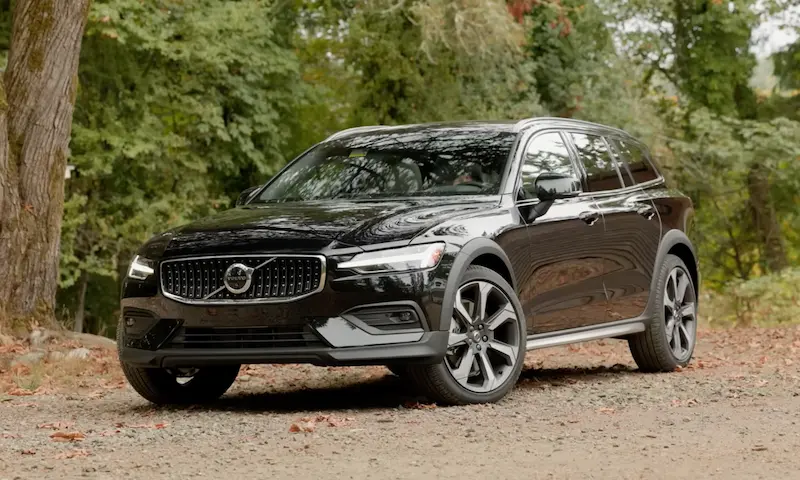
Wondering if your sleek Swedish sedan demands the pricier stuff at the pump? You’ve probably noticed that premium fuel costs quite a bit more than regular, and if you’re putting thousands of miles on your Volvo S60 each year, the difference adds up fast. Let’s cut through the confusion and get straight to what your S60 actually needs to perform its best.
Understanding Volvo S60 Fuel Requirements
Different Volvo S60 engines have different fuel needs. The key factor is which engine sits under your hood.
T5 Engine: Premium Recommended, Regular Acceptable
If you drive an S60 with the T5 2.0-liter turbocharged four-cylinder engine, you’ve got some flexibility. Volvo officially recommends premium unleaded gasoline (91 AKI or higher) for optimal performance, but your T5 will run safely on regular unleaded (87 AKI) without causing mechanical damage.
This works because the T5’s advanced knock sensors automatically adjust ignition timing when lower-octane fuel is detected, preventing harmful pre-detonation. It’s like having a built-in safety net for your engine.
But there’s a tradeoff: using regular gas in your T5 means:
- Acceleration drops (0-60 mph slows from 6.1 to 7.0 seconds)
- Fuel economy decreases slightly (1-2 mpg less)
- Reduced peak power and torque, especially in the mid-range RPMs
T6, T8, and B-Series Engines: Premium Required
If you’ve got a more powerful S60 variant with a T6 (turbocharged and supercharged), T8 (plug-in hybrid), or newer B4/B5/B6 (mild hybrid) engine, the situation is different.
These high-performance powertrains require premium gasoline (91 AKI minimum) – not just for optimal performance, but for proper engine operation. Using regular gas in these engines risks:
- Engine knock/pre-detonation
- Potential damage to pistons and catalytic converters
- Check engine lights and reduced power modes
- Voided warranty coverage for fuel-related issues
How Engine Types Affect Fuel Requirements
Why T5 Engines Can Use Regular Fuel
The T5’s single-turbo design operates at moderate boost levels, giving it flexibility with fuel grades. When you use regular gas:
- Knock sensors detect the lower octane
- Engine computer retards timing to prevent knock
- Boost pressure may be slightly reduced
- Power output decreases but engine remains protected
This makes the T5 ideal if you prioritize everyday driving and occasional premium fill-ups for spirited weekend drives.
Why T6/T8/B-Series Engines Need Premium
These more advanced engines run at higher compression ratios and boost pressures. The T6 adds a supercharger on top of turbocharging, while the T8 integrates complex hybrid systems with the combustion engine.
According to Volvo’s technical specifications, these engines:
- Can’t adequately adjust timing for regular gas
- Operate with precise air-fuel mixtures that require consistent combustion
- Rely on premium fuel’s higher octane to prevent knock under high loads
- May experience reduced hybrid system efficiency with improper fuel
Performance and Economy: The Real Impact of Fuel Choice
Power Difference You’ll Actually Feel
In independent tests of T5 models using different fuel grades:
| Performance Measure | Premium (91 AKI) | Regular (87 AKI) | Difference |
|---|---|---|---|
| 0-60 mph time | 6.1 seconds | 7.0 seconds | -0.9 sec |
| Highway passing | Responsive | Noticeably slower | Moderate |
| Torque (mid-range) | Full output | 11-15% reduction | Significant |
For T6/T8 models, the differences are even more pronounced, with dynamometer testing showing torque reductions exceeding 15% with regular fuel.
Fuel Economy Reality Check
Despite regular gas being cheaper per gallon, you might not actually save money by using it:
| Engine Type | Fuel Type | MPG (Combined) | Annual Cost* |
|---|---|---|---|
| T5 FWD | Premium | 29 mpg | $2,241 |
| T5 FWD | Regular | 27-28 mpg | $2,157-2,217 |
| T6 AWD | Premium | 26 mpg | $2,500 |
| T6 AWD | Regular | Not recommended | – |
*Based on 15,000 miles annually, with premium at $4.30 and regular at $3.90 per gallon
The minimal savings with regular gas in T5 models (potentially just $24-84 annually) might not justify the performance drop and potential long-term effects.
Ethanol Content and Fuel Compatibility
E10 vs. Higher Ethanol Blends
All Volvo S60 models are compatible with E10 gasoline (up to 10% ethanol), which is now standard across the U.S.
However, Volvo explicitly warns against using:
- E15 (15% ethanol)
- E85/flex fuel (85% ethanol)
- Any blend exceeding 10% ethanol content
Higher ethanol concentrations can damage fuel system components and affect the precision of the engine’s fuel management systems.
TOP TIER Gasoline Benefits
Volvo recommends using TOP TIER detergent gasolines, which exceed minimum EPA additive requirements. These premium fuels contain:
- Enhanced cleaning additives
- Corrosion inhibitors
- Deposit control formulations
Regular use of TOP TIER gasoline helps prevent carbon buildup on intake valves and fuel injectors—a common issue in direct-injection turbocharged engines like those in the S60.
Regional Differences in Volvo S60 Fuel Specifications
North American vs. European Standards
Fuel standards vary globally, creating confusion for international travelers and importers:
- North America: Uses AKI (Anti-Knock Index) rating system: (RON+MON)/2
- Europe: Uses RON (Research Octane Number) only
- Asia/Australia: Primarily uses RON
This means European “95 octane” roughly equals North American “91 octane” premium fuel.
| Region | Standard Grade | Premium Grade | S60 Requirement |
|---|---|---|---|
| North America | 87 AKI | 91-93 AKI | 91+ (T6/T8/B-Series) |
| Europe | 95 RON | 98 RON | 95+ RON |
| Asia-Pacific | 91-95 RON | 97-100 RON | 95+ RON |
Climate and Altitude Effects
Your location affects how your S60 responds to different fuel grades:
- High altitude locations (Denver, Mexico City) naturally reduce knock tendency, making regular fuel more viable in T5 engines
- Hot climates (Arizona, Florida) increase knock tendency, making premium fuel more important
- Cold climates might mask poor fuel quality initially, but issues manifest when temperatures rise
Long-Term Engine Health Considerations
Carbon Buildup Prevention
Modern direct-injection engines like those in the S60 are prone to carbon deposits on intake valves. Using the recommended fuel grade helps minimize this by:
- Ensuring complete combustion
- Reducing carbon byproducts
- Working properly with the engine’s cleaning cycles
Avoiding Long-Term Damage
While a T5 engine can run on regular gas without immediate harm, consistent use of lower-octane fuel than recommended can lead to:
- Accelerated wear on engine components
- More frequent misfires (P0300-P0304 codes)
- Increased knock sensor activity (P0327 codes)
- Reduced fuel injector lifespan
- Potential overheating during high-load conditions
For T6, T8, and B-Series engines, using premium fuel isn’t just about performance—it’s essential for preventing costly repairs.
Practical Recommendations for S60 Owners
T5 Engine Owners
You have options based on your driving style:
- Daily commuting: Regular (87 AKI) is acceptable if you drive conservatively
- Performance driving: Premium (91+ AKI) will deliver the advertised power
- Mixed usage: Consider premium for summer months and high-performance needs
- Towing/heavy loads: Always use premium when pushing the engine hard
T6/T8/B-Series Engine Owners
Your path is clearer:
- Always use premium (91+ AKI) fuel
- Consider 93 AKI for maximum performance where available
- Never use regular gas, even for a single tank
- If premium is temporarily unavailable, fuel with the minimum amount needed to reach a station with premium
For All Volvo S60 Models
- Stick with TOP TIER certified gas stations when possible
- Keep your tank at least ¼ full to prevent fuel pump overheating
- Follow Volvo’s recommended maintenance schedule for fuel system services
- Use Volvo-approved fuel system cleaners if performance issues arise
The Electric Future: S60 Recharge Considerations
The S60 Recharge plug-in hybrid (T8 powertrain) combines gasoline and electric propulsion. For these sophisticated systems:
- Premium fuel remains essential for the combustion engine
- Fuel quality impacts the harmony between gas and electric power delivery
- Using improper fuel can reduce electric range by forcing the system to rely more on battery power to compensate for reduced engine efficiency
- Following Volvo’s fueling guidelines is crucial for maintaining the complex energy management systems
By understanding your specific Volvo S60’s fuel requirements, you can make informed decisions at the pump that balance performance, economy, and long-term reliability—keeping your Swedish engineering masterpiece running at its best for years to come.