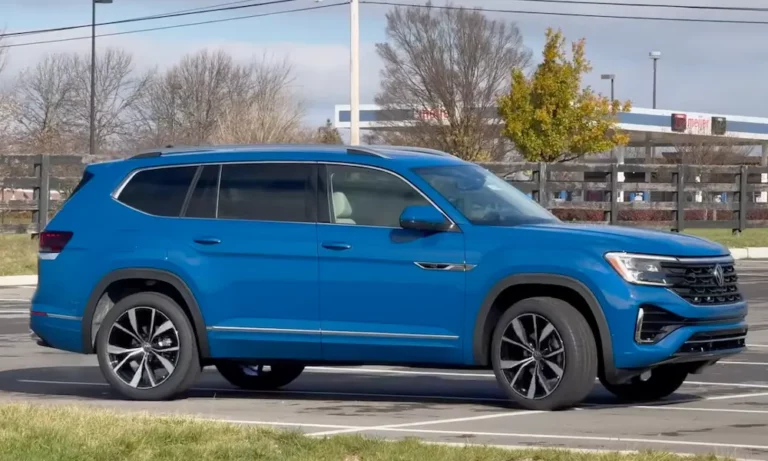
Wondering what to put in your Volkswagen Atlas at the pump? I’ll make this simple: most VW Atlas models run perfectly fine on regular 87 octane gasoline. But there are some nuances depending on your model year and engine type. Let’s dive into everything you need to know about keeping your Atlas properly fueled.
Regular vs. Premium: What Your Atlas Really Needs
The Volkswagen Atlas family has straightforward fuel requirements that won’t break the bank. Here’s the quick answer:
For most Atlas models: Regular unleaded gasoline (87 octane) is perfectly fine.
The exception: 2018-2023 models with the 2.0-liter turbocharged four-cylinder engine perform best with premium fuel (91 octane), though they’ll accept regular 87 octane without damage.
Starting with the 2024 redesign, even the turbocharged models are calibrated to run efficiently on regular 87 octane fuel. This change makes the Atlas even more budget-friendly to operate.
Volkswagen Atlas Fuel Requirements by Engine Type
Your Atlas’s fuel needs depend primarily on which engine it has. Here’s a breakdown by engine type:
| Engine Type | Model Years | Recommended Fuel | Notes |
|---|---|---|---|
| 3.6L VR6 (CDVC) | 2018-2023 | 87 octane (regular) | Premium offers no performance benefits |
| 2.0L TSI Gen 3 (EA888) | 2018-2023 | 91 octane (premium) recommended; 87 acceptable | Premium helps with peak power and towing |
| 2.0L TSI Gen 4 (EA888) | 2024+ | 87 octane (regular) | Specifically calibrated for regular fuel |
The 3.6L VR6 engine that came in many first-generation Atlas models was designed to run perfectly on regular 87 octane fuel. Using premium in this engine won’t improve performance or fuel economy – it’s just wasting money.
The pre-2024 turbocharged 2.0L engines are where things get interesting. While Volkswagen recommends premium for these engines, they’re designed with knock sensors that allow them to safely run on regular fuel with slightly reduced performance.
Why the 2024 Atlas Changed Its Fuel Requirements
The redesigned 2024 Atlas represents a significant shift in Volkswagen’s approach. The new 2.0T EA888 Gen 4 engine produces 269 horsepower and 273 lb-ft of torque – more than the previous generation – while being specifically calibrated for 87 octane fuel.
This change offers several benefits:
- Lower operating costs for owners
- Simplified fueling decisions
- Maintains strong performance despite using regular fuel
- Better alignment with competitor offerings in the midsize SUV segment
Will Premium Gas Improve My Atlas Performance?
For 2018-2023 Atlas models with the 2.0T engine, using premium fuel can make a noticeable difference in specific situations:
- When towing near the maximum 5,000-pound capacity
- During hot weather driving
- When climbing steep grades
- For maximum acceleration
Independent dyno testing shows these older turbo engines can gain 5-7% more horsepower when using premium fuel. That’s the difference between 235 hp on regular and about 250 hp on premium.
However, for the VR6 engine and all 2024+ Atlas models, premium fuel provides no measurable benefit. The money you’d spend on higher-octane fuel would be better saved or spent on regular maintenance.
Fuel Economy and Range: How Far Can You Go?
Every Volkswagen Atlas comes with an 18.6-gallon fuel tank, regardless of whether you have the three-row model or the slightly smaller Cross Sport variant.
Your real-world driving range will depend on which engine and drivetrain you have:
| Atlas Configuration (2025) | EPA Estimates (City/Highway) | Approximate Highway Range |
|---|---|---|
| 2.0T FWD | 20/27 mpg | ~500 miles |
| 2.0T AWD | 19/26 mpg | ~480 miles |
These ranges assume highway driving at steady speeds. Your actual mileage will vary based on driving habits, load, temperature, and terrain. Most drivers report slightly lower numbers than the EPA estimates in real-world conditions.
Ethanol Compatibility and Fuel Additives
All Volkswagen Atlas engines are compatible with E10 fuel (gasoline containing up to 10% ethanol), which is standard at most U.S. gas stations. However, higher ethanol blends like E15 or E85 should be avoided as they’re not certified for use in your Atlas and could potentially void your warranty.
Volkswagen recommends using “Top Tier” gasoline brands, which contain additional detergent additives that help reduce carbon deposits in direct-injection engines. This is especially important for turbocharged models.
If you can’t regularly access Top Tier gas stations, adding a bottle of VW-approved fuel system cleaner every 10,000 miles can provide similar protection against deposits.
Common Fuel Myths Debunked
There are several persistent myths about premium fuel that simply aren’t true for the Atlas:
Myth 1: “Premium fuel cleans your engine better”
Both regular and premium Top Tier fuels contain the same detergent package. The octane rating has nothing to do with cleaning ability.
Myth 2: “All turbo engines require premium fuel”
This depends entirely on the engine’s calibration. The 2024+ Atlas turbo is specifically engineered to run optimally on regular fuel.
Myth 3: “At high altitudes, you can use lower octane fuel”
While the air is thinner at altitude, Volkswagen still requires at least 87 AKI fuel. Using lower octane fuel like 85 (commonly found in mountain states) can trigger knock-control events and potentially affect your warranty.
Best Practices When Refueling Your Atlas
Follow these tips to keep your Atlas running smoothly:
- Always check the fuel door sticker on your specific vehicle, which will confirm the minimum required octane rating.
- Avoid any gasoline with more than 10% ethanol content (like E15 or E85).
- After refueling, wait about five seconds before replacing the gas cap. This allows the evaporative emission system to settle and helps prevent check engine lights.
- Use your trip computer to track fuel economy. A sudden drop could indicate maintenance issues that need attention.
- When traveling in extreme heat or towing heavy loads with a 2018-2023 turbo model, consider using premium fuel temporarily for better performance.
Understanding Octane Ratings
Gas stations in the United States typically offer three octane grades:
- Regular: 87 octane (AKI)
- Mid-grade: 89 octane (AKI)
- Premium: 91-93 octane (AKI)
The octane rating measures a fuel’s resistance to engine knock or pinging—premature combustion that can damage engines. Higher compression engines (like some turbocharged designs) typically require higher octane fuels.
The Atlas engines use knock sensors that automatically adjust timing if they detect knock, allowing most models to safely use regular fuel even if premium is recommended for optimal performance.
Atlas Fuel System Design Features
Volkswagen has incorporated several technologies into the Atlas fuel system to ensure reliability:
- Direct injection for improved efficiency and power
- Electronic throttle control for responsive acceleration
- Knock sensors to prevent engine damage when using lower octane fuels
- Evaporative emission controls to prevent fuel vapor leaks
- Capless fuel filler on newer models for easier refueling
These systems work together to provide strong performance while maintaining fuel efficiency and emissions compliance.
Fuel Quality and the Direct Injection Debate
The Atlas uses direct fuel injection technology, which can be more sensitive to fuel quality than older port injection systems. This is why Volkswagen recommends Top Tier gasoline.
Some owners of direct injection engines (not just in the Atlas) report carbon buildup on intake valves over time. While this is a characteristic of the technology rather than a defect, using quality fuel can help minimize deposits. The 2024+ Atlas engines incorporate design improvements to address this concern.
How Weather and Driving Conditions Affect Fuel Requirements
Your Atlas’s fuel needs may vary slightly based on:
- Temperature: Extreme heat increases the chance of knock, making premium fuel more beneficial in older turbo models during hot summer months.
- Altitude: Higher elevations have less oxygen, which reduces the chance of knock. However, you should still use at least 87 octane.
- Towing: Pulling a heavy trailer increases engine load and heat, which might make premium fuel worthwhile in 2018-2023 turbo models.
- Driving style: Aggressive acceleration and high-speed driving put more stress on the engine, potentially making premium more beneficial in older turbo engines.
For most daily driving situations, however, regular fuel works perfectly fine in all Atlas models.
The Financial Equation: Regular vs. Premium
Let’s look at the annual cost difference between using regular and premium fuel:
Assuming:
- 15,000 miles per year
- 20 mpg average
- $0.50/gallon price difference between regular and premium
That’s 750 gallons per year × $0.50 = $375 annual premium fuel cost
For 2024+ Atlas owners, that’s $375 you can save by using regular fuel as designed. For 2018-2023 turbo owners, you need to decide if slightly better performance is worth the extra cost.
What Atlas Owners Are Saying
Many Atlas owners in online forums report excellent results using regular fuel, even in the 2018-2023 turbo models where premium is recommended.
For the VR6 engine, nearly all owners stick with regular fuel since there’s no benefit to premium. For the newer 2024+ models, the consensus is that regular fuel performs perfectly, with no noticeable downsides compared to premium.
Maximizing Fuel Economy in Your Atlas
Regardless of what fuel you use, these tips can help you get better mileage:
- Maintain proper tire pressure
- Remove roof racks when not in use
- Use the ECO driving mode for daily driving
- Accelerate gently from stops
- Service your engine regularly, including air filter changes
- Use the start/stop feature in city driving
Following these practices can improve your real-world fuel economy by 10-15% compared to aggressive driving.
When Regular Fuel Might Not Be Enough
There are a few specific scenarios where premium fuel might be beneficial, even if not strictly required:
- If you notice engine pinging or knocking with regular fuel (rare but possible)
- When towing heavy loads in hot weather with a 2018-2023 turbo model
- If you’ve modified your engine for higher performance
- When driving in extremely hot climates with heavy loads
In these cases, the knock sensors might be working overtime with regular fuel, potentially reducing power and efficiency.
Atlas Warranty Considerations and Fuel Type
Volkswagen’s warranty coverage isn’t affected by your fuel choice as long as you use at least the minimum recommended octane. For most Atlas models, that’s 87 octane regular unleaded.
Using fuels with high ethanol content (beyond E10) or very low octane fuels (below 87) could potentially affect warranty coverage if they cause damage. When in doubt, check your owner’s manual or the fuel door label.
The bottom line on Volkswagen Atlas fuel requirements is refreshingly simple: regular 87 octane gasoline is perfectly fine for most models. Even the pre-2024 turbo engines that “recommend” premium will run safely and reliably on regular fuel, though with slightly reduced peak power.
The redesigned 2024+ Atlas takes things a step further by optimizing even its turbo engine for regular fuel, meaning you can save money at the pump without sacrificing performance or reliability.