That yellow engine light staring at you from the dash isn’t just annoying—it’s your VW’s way of saying something’s off. Whether you’re dealing with sudden power loss or just a persistent warning, understanding what triggers a VW engine control malfunction can save you from panic and expensive guesswork. Let’s break down what’s actually happening and how to fix it.
What Does “Engine Control Malfunction” Actually Mean?
Your VW’s engine control system isn’t a single part—it’s a network of sensors, computers, and actuators working together. When something goes wrong, you’ll typically see one of two warning lights (or both):
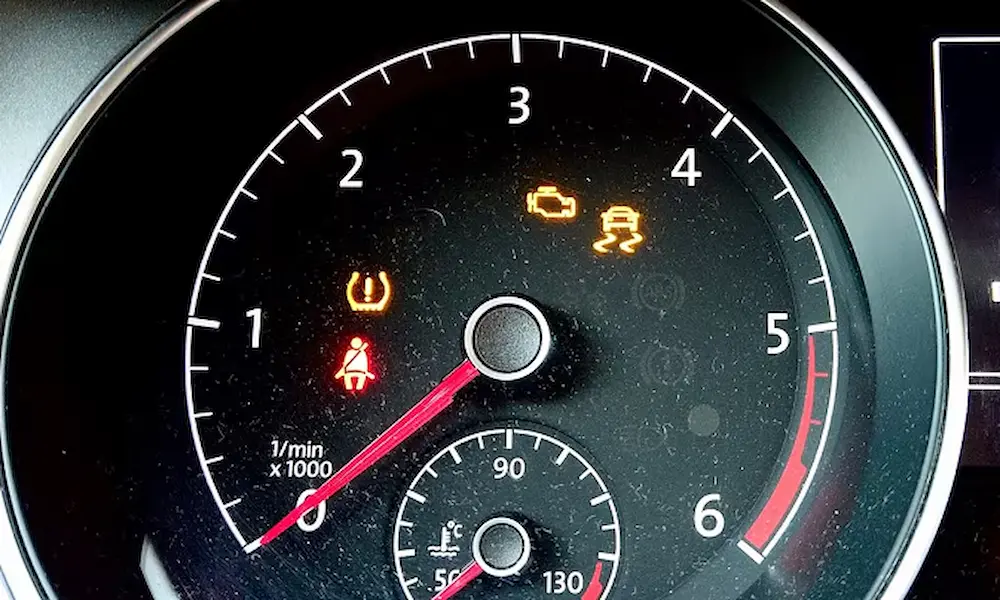
The Check Engine Light (MIL) appears as a yellow engine icon. This monitors emissions-related systems like fuel injection, oxygen sensors, and the catalytic converter. A steady light means you’ve got time to get it checked. A flashing light? That’s urgent—you’re experiencing misfires severe enough to damage your catalytic converter.
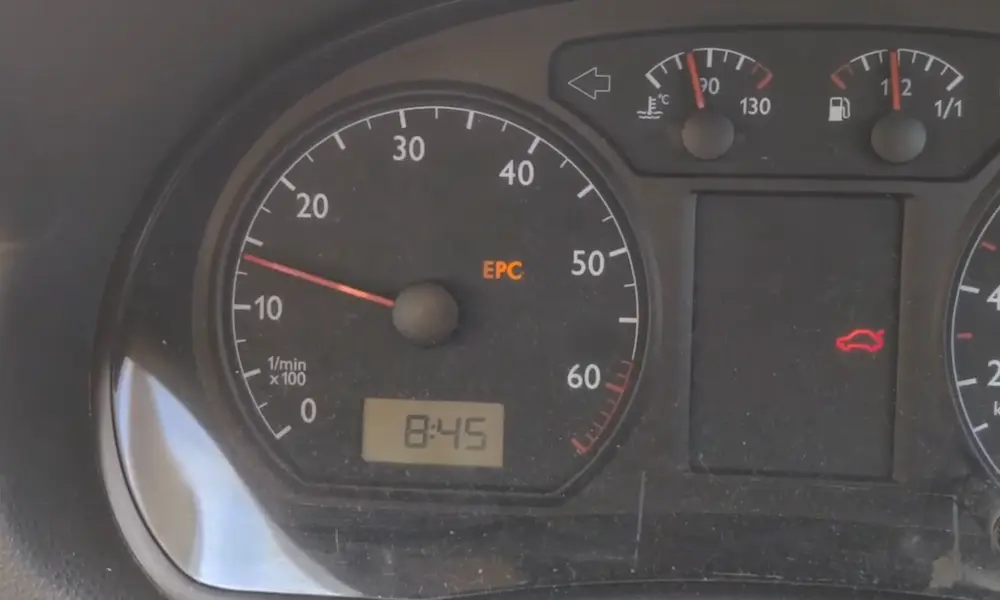
The EPC (Electronic Power Control) Light is VW-specific and signals trouble with your drive-by-wire system. This covers everything from your accelerator pedal to the throttle body. When this light comes on, you’ll usually notice a real difference in how the car drives.
The message “Engine Control Malfunction” can appear alongside either light, confirming the problem’s in the engine management system rather than transmission or brakes.
Why Your VW Suddenly Lost Power
If your car feels sluggish and won’t rev past 3,000 RPM, you’ve entered what mechanics call “limp mode.” This isn’t a failure—it’s actually a protective feature.
Your ECU (Engine Control Unit) detects a problem that could damage the engine if you keep driving normally. To prevent catastrophic failure, it limits engine power dramatically. On turbocharged models, the wastegate dumps all boost pressure, turning your 200hp engine into an 80hp weakling. The transmission might lock into third gear. Air conditioning shuts off to reduce load.
It’s frustrating, but this mode can prevent a $500 repair from becoming a $5,000 disaster.
The Brake Light Switch: A $100 Fix That Feels Like Engine Failure
Here’s something that catches people off guard: a faulty brake light switch can trigger the EPC light and kill your throttle response.
Your VW has a safety feature called “brake override.” If the ECU sees both the brake pedal and accelerator pressed simultaneously, it assumes you’re trying to stop and cuts engine power. Smart, right?
The problem? When the brake light switch fails, it sends a constant “braking” signal even when your foot’s nowhere near the pedal. The ECU sees conflicting commands—you’re asking for power while “braking”—and defaults to the safe choice: no power.
You’ll experience sudden power loss, an EPC light, and total confusion because the engine sounds fine. The fix? A $43-$51 brake light switch and 30 minutes of labor. Total cost: $101-$135.
Turbo Wastegate Issues: The Expensive One
If you own a GTI, Tiguan, or Passat with the 2.0 TSI engine, pay attention. The turbocharger wastegate actuator is a known weak point that triggers VW engine control malfunction warnings.
What Goes Wrong
The wastegate controls boost pressure by diverting exhaust gases away from the turbo. It’s operated by an electric actuator connected to a mechanical rod. This rod sits in the hot exhaust stream, cycling between ambient temperature and 900°C repeatedly.
Over time, the pivot joint corrodes and seizes. When the wastegate binds, the actuator strains to move it. The internal position sensor detects a mismatch between commanded position and actual position, triggering code P00AF (Boost Control Module Performance).
Result? EPC light, limp mode, and either no boost (if stuck open) or dangerous overboost (if stuck closed).
The Warning Sign
Before total failure, you’ll often hear a distinctive rattle during acceleration between 2,000-3,000 RPM. It sounds like metal chattering or rustling leaves. That’s excessive play in the wastegate linkage.
VW released a TSB (Technical Service Bulletin 2024061) addressing this with a spring clip (Part Number 06J145220A) that costs around $10-$20. This clip dampens the vibration but won’t fix a wastegate that’s already seized.
The Cost Reality
Dealerships often quote $3,000-$4,000 for complete turbocharger replacement. But here’s what you need to know: the turbo itself is usually fine. The problem is just the wastegate mechanism.
Independent shops can install wastegate repair kits or separate actuators for $700-$1,200 total. If you’re in a PZEV state (California, New York, etc.), check if your emissions warranty covers it—some owners have gotten this fixed free under the 15-year/150,000-mile PZEV warranty.
The Intake Manifold Runner Problem (Code P2015)
TSI and TDI engines use variable intake runners—flaps inside the manifold that change position based on RPM. Closed at low RPM for better mixing, open at high RPM for maximum airflow.
These flaps are moved by a small motor (V157) via a plastic linkage. Two things go wrong:
Carbon buildup from the PCV system physically blocks the flaps from moving. Direct injection engines don’t wash the intake valves with fuel like port injection engines do, so carbon accumulates faster.
Mechanical wear causes the linkage arm to overextend. The position sensor reads values outside the expected range (like 110% open when max should be 100%).
The ECU sets code P2015, illuminates the MIL, and disables the runner control. You’ll notice rough idling and poor fuel economy.
VW wants $600-$900 for a complete manifold replacement. The aftermarket solution? Limit brackets that physically restrict the arm’s movement back to factory range. Cost: under $50.
Throttle Body: Dirty vs. Broken
Your throttle body is a precision instrument with a motorized butterfly valve and dual position sensors. It needs to be clean and calibrated.
The Dirty Throttle Problem
Oil vapor and EGR gases create a carbon ridge around the throttle plate. At idle, this disrupts airflow. The ECU compensates by opening the throttle further—a process called “throttle body adaptation.”
But there’s a limit. Once the required opening exceeds the ECU’s programmed tolerance (usually +5 degrees), it assumes the throttle body is malfunctioning and triggers code P0507 or an EPC light.
The solution? Clean the throttle body with solvent and perform a “Throttle Body Alignment” to reset the adaptation values. This often fixes the problem without replacement.
When Replacement Is Needed
High-mileage vehicles can develop worn resistive tracks in the throttle position sensors. These cause voltage dropouts at commonly-used throttle positions (like highway cruising). The ECU loses trust in the position signal and enters limp mode for safety.
Replacement costs: $292-$727 depending on whether you need OEM Bosch parts or can use quality aftermarket.
Sensor Network Failures
The ECU makes decisions based on data from dozens of sensors. When sensors lie, bad things happen.
Mass Air Flow (MAF) Sensor
The MAF measures the actual mass of air entering the engine—critical for fuel calculation. A contaminated MAF (often from over-oiled aftermarket air filters) under-reports airflow. The ECU injects less fuel, creating a lean condition (code P0171).
Here’s the weird part: your automatic transmission relies on the MAF to calculate engine load. A failing MAF causes erratic shifting, leading you to suspect transmission problems when the real culprit is an air sensor.
Replacement: $221-$513. Don’t cheap out—low-quality aftermarket MAF sensors cause more problems than they solve.
Camshaft and Crankshaft Position Sensors
The crankshaft position sensor (G28) is the engine’s heartbeat. If it fails, the ECU can’t determine engine position or speed. The engine dies instantly and won’t restart.
The camshaft sensor (G40) monitors valve timing. When it fails, the engine runs in a static timing map—reduced power, efficiency loss, and longer cranking during startup.
DIY Diagnostics: What You Can Actually Do
Generic OBD-II scanners from AutoZone give you basic codes, but they miss VW-specific data. Tools like Ross-Tech’s VCDS or OBDeleven let you access “measuring blocks”—live data streams showing exactly what the ECU sees.
For example, you can watch the voltage from both accelerator pedal position sensors in real-time to confirm a pedal fault before spending $200 on a new part.
The Throttle Body Alignment Procedure
After cleaning a throttle body or replacing the battery, you need to perform a Throttle Body Alignment (TBA). This recalibrates the ECU to the throttle plate’s closed and open positions.
Manual method (works on some models):
- Turn ignition to ON, engine OFF
- Wait 30 seconds (you’ll hear high-pitched whining and clicks from the throttle motor)
- Turn ignition OFF
VCDS is more reliable, but this manual method works in a pinch.
The VW Drive Cycle
After repairs, you need to complete a specific drive cycle to reset emission monitors and clear permanent codes. Many check engine lights return because the monitors were never properly set.
| Phase | What to Do | Why It Matters |
|---|---|---|
| Cold Soak | Engine off overnight, coolant below 50°C | Tests temperature sensor correlation |
| Idle | Run with A/C and rear defrost on for 2-3 min | Checks misfire detection, O2 heater |
| Acceleration | Moderate throttle to 55 mph | Tests EGR and variable valve timing |
| Cruise | Hold steady 45-55 mph for 7 minutes | Monitors O2 sensors, fuel trim, catalyst |
| Deceleration | Coast from 60 to 20 mph without braking | Tests EVAP system and fuel cutoff |
The deceleration phase is critical and often missed. Coasting in gear creates the high vacuum needed to test the evaporative emissions system.
Common Repair Costs: What to Expect
Here’s what you’re looking at for typical VW engine control malfunction repairs:
| What’s Broken | Codes You’ll See | Total Cost | Notes |
|---|---|---|---|
| Throttle Body | P0121, P0221, EPC | $292-$727 | Try cleaning first—often works |
| Mass Air Flow | P0101, P0171 | $221-$513 | Cheap sensors cause transmission issues |
| Brake Light Switch | EPC (no code) | $101-$135 | High failure rate, easy fix |
| Fuel Injectors | P030x, lean codes | $591-$813 | Labor-intensive on direct injection |
| Turbo Wastegate | P00AF, P0299 | $700-$4,000 | Dealer quotes full turbo; indies can repair |
| Ignition Coils | P0300, flashing MIL | $138-$196 | DIY-friendly if you’re handy |
What About Warranty Coverage?
Don’t assume you’re on your own for repairs. VW has extended coverage on certain issues without issuing formal recalls.
If you’re in a PZEV state, emissions components like the intake manifold, fuel injectors, and ECU are covered for 15 years or 150,000 miles. This isn’t advertised loudly, but it can save thousands.
VW also extended coverage on 2015-2018 models specifically for wastegate actuator seizure, acknowledging the problem’s prevalence.
Always check for Technical Service Bulletins (TSBs) related to your specific issue before paying out of pocket.
The Bottom Line
A VW engine control malfunction warning isn’t a death sentence for your car. It’s a symptom with dozens of possible causes, ranging from a $20 clip to a $3,000 turbo.
The key is accurate diagnosis before throwing parts at the problem. A $50 VCDS scan at an independent VW specialist can save you from replacing the wrong components.
Start with the cheap stuff: check your brake light switch, clean your throttle body, inspect obvious vacuum leaks. If those don’t fix it, you’ll need proper scanning to read the specific fault codes and live data.
And remember—limp mode is protecting your engine, not punishing you. It’s annoying, but it’s preventing minor problems from becoming catastrophic ones.