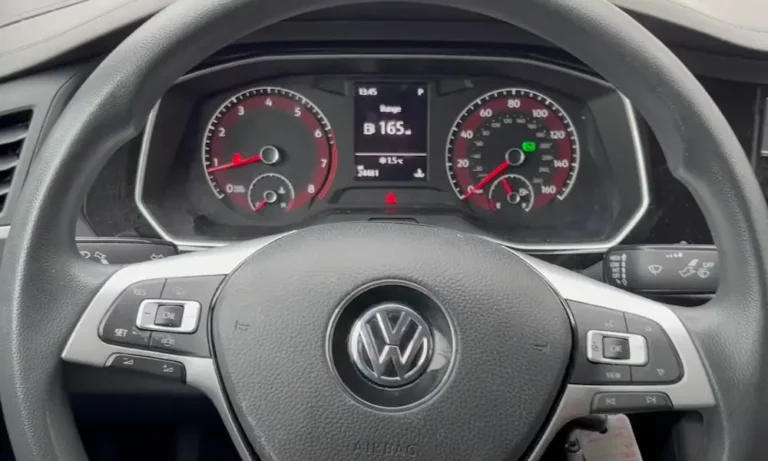
Is your VW’s red coolant light flashing at you? Don’t panic, but don’t ignore it either. This warning light is your car’s way of telling you something’s wrong with the cooling system – and addressing it quickly could save you from expensive engine repairs down the road. I’ll walk you through what’s happening, why it matters, and exactly what steps to take next.
What Does a Flashing Coolant Light Mean in a Volkswagen?
When that red coolant light starts flashing on your VW’s dashboard, it’s signaling one of several potential issues with your cooling system. This warning is more serious than many other dashboard indicators and deserves your immediate attention.
The flashing coolant light typically indicates either low coolant levels or a malfunction in the cooling system that could lead to engine overheating. If ignored, this can quickly escalate to catastrophic engine damage costing thousands to repair.
Unlike a check engine light that might allow some driving time before service, a flashing coolant light often requires immediate action to protect your engine.
Common Causes of a Flashing Coolant Light in VWs
Low Coolant Level
The most straightforward cause is simply that your coolant reservoir is running low. When the coolant drops below the minimum level in the expansion tank, the level sensor triggers the warning light.
You’ll need to check your coolant level by locating the translucent expansion tank (usually on the passenger side of the engine bay) and seeing if the fluid is between the minimum and maximum markers when cold.
Repeated low coolant levels aren’t normal – they suggest you have a leak somewhere in the system that needs addressing.
Faulty Coolant Level Sensor
If your coolant level looks fine but the light keeps flashing, you might be dealing with a bad coolant level sensor. These sensors are built into the expansion tank and commonly fail as they age.
The sensor typically fails when deposits build up on the internal contacts, causing incorrect resistance readings. Unfortunately, you can’t replace just the sensor – the entire coolant bottle must be replaced as one unit.
This is a common issue in VWs, especially those approaching the 100,000-mile mark.
Cold Weather Triggering
Many VW owners notice the coolant light flashing only on cold mornings, which then disappears once the engine warms up. This happens because coolant contracts in cold temperatures.
When temperatures drop below about 15°F (-15°C), the coolant contracts enough that it might temporarily trigger the low-level sensor, even if your coolant level is actually fine. The light typically turns off once the engine warms and the coolant expands back to its normal volume.
Coolant System Leaks
A persistent or recurring low coolant level usually points to leaks in your cooling system. Common leak points include:
- Hose connections
- Water pump seals
- Radiator connections or core
- The coolant expansion tank itself
- Heater core
Look for pink or white crystalline deposits around connection points – these are telltale signs of dried coolant residue indicating a leak.
What to Do When Your VW’s Coolant Light Starts Flashing
Immediate Steps to Take
- If the light is solid red (not flashing) or accompanied by the temperature gauge climbing into the red zone, pull over safely and shut off the engine immediately.
- For a flashing light without temperature rise, check the coolant level when it’s safe to do so.
- Never open the coolant cap while the engine is hot – wait until it cools completely to avoid dangerous scalding from pressurized hot coolant.
- Check if there are any visible leaks under the car.
How to Check and Add Coolant
- Locate the coolant expansion tank. It’s a translucent plastic reservoir, usually on the passenger side of the engine bay.
- When the engine is cold, the coolant level should be between the MIN and MAX marks on the side of the tank.
- The coolant should appear pink or purple in color for VWs using G13 coolant (the current specification).
- If low, carefully remove the cap (only when cold!) and add the proper VW-specific coolant.
VWs require specific coolant formulations. Most modern VWs use G13 coolant, which has a distinctive pink/purple color. Never use green or orange coolants, as these can damage VW cooling systems and void warranties.
Temporary vs. Permanent Fixes
| Situation | Temporary Fix | Permanent Solution |
|---|---|---|
| Low coolant, no leak visible | Add proper VW coolant mixed 50/50 with distilled water | Have system pressure tested to find hidden leaks |
| Flashing light only on cold mornings | Check level is above MIN mark | Replace coolant expansion tank with sensor |
| Visible leak | Add coolant temporarily if safe to drive | Repair specific leak point |
| Overheating engine | Do not drive – have vehicle towed | Professional diagnosis and repair |
If you need to add coolant as a temporary measure but don’t have G13 available, you can use distilled water to get you to a repair shop. However, this should only be a very short-term solution.
Diagnosing the Root Cause
When the Coolant Level is Normal But the Light Still Flashes
If your coolant level is correct but the warning persists, the most likely culprit is the coolant level sensor built into the expansion tank. This is an extremely common failure point in VWs.
The sensor cannot be replaced separately – you’ll need to replace the entire coolant expansion tank assembly. This is a relatively straightforward repair that costs $60-150 in parts plus labor.
Signs of a More Serious Problem
Watch for these warning signs that indicate a potentially more serious issue:
- Engine temperature gauge climbing into the red zone
- White smoke from the exhaust (possible head gasket failure)
- Engine running rough or misfiring
- Sweet smell from the vents (leaking heater core)
- Visible coolant puddles under the vehicle
Any of these symptoms warrants immediate professional attention, as they can indicate problems that could lead to engine failure if ignored.
DIY Repair vs. Professional Service
DIY-Friendly Fixes
If you’re mechanically inclined, these repairs are typically doable at home:
- Checking and adding coolant: Simple and requires no special tools.
- Replacing the coolant expansion tank: Moderately easy – requires removing a few clips and hose connections. The tank usually costs $60-150 depending on whether you use OEM or aftermarket parts.
- Replacing simple hoses: External coolant hoses are generally accessible and can be replaced with basic hand tools.
For these repairs, always use the correct G13 coolant (or the specification recommended in your owner’s manual) mixed 50/50 with distilled water.
Professional Repairs Needed For:
Some issues require professional equipment or expertise:
- System bleeding: After repairs, the cooling system often needs proper bleeding to remove air pockets, which requires specialized knowledge and sometimes tools.
- Water pump replacement: This is labor-intensive and often requires timing belt area access.
- Pressure testing: Finding small leaks often requires a professional pressure test of the entire system.
- Head gasket issues: If coolant is mixing with oil or combustion gases, you likely have a head gasket problem requiring extensive work.
Preventing Future Coolant Issues in Your VW
Regular Maintenance Tips
- Check coolant levels monthly: Make it a habit to check your coolant level when the engine is cold.
- Replace the expansion tank proactively: VW recommends replacing coolant expansion tanks around 100,000 miles due to the high failure rate of the integrated level sensors.
- Use only VW-approved coolant: Always use G13 coolant (or whatever is specified for your specific model) to prevent cooling system damage.
- Flush the system according to schedule: VW typically recommends coolant flushes every 40,000-60,000 miles.
Watch for Early Warning Signs
Be proactive if you notice:
- Small drops of coolant under the car
- The need to add coolant more than once per year
- Intermittent flashing of the coolant light
- Any changes in engine temperature behavior
Addressing these early indicators can prevent more serious failures down the road.
Understanding Your VW’s Cooling System
The cooling system in your Volkswagen maintains the engine at its optimal operating temperature. It consists of:
- The radiator, which dissipates heat
- The water pump, which circulates coolant
- The thermostat, which regulates flow based on temperature
- The expansion tank, which accommodates volume changes and houses the level sensor
- Various hoses and connections
- The coolant itself, which transfers heat away from the engine
VW coolant systems are designed to be sealed and shouldn’t require frequent topping up. If you find yourself regularly adding coolant, you have a leak that needs addressing.
The Importance of Using the Correct Coolant
Volkswagens are particularly sensitive to coolant specifications. Using the wrong coolant can cause:
- Corrosion of aluminum engine components
- Degradation of plastic and rubber parts
- Poor heat transfer
- Premature water pump failure
- Sensor malfunctions
Modern VWs typically use G13 coolant, which has excellent corrosion protection and heat transfer properties. Always verify the correct specification in your owner’s manual and don’t substitute with generic coolants.
Real-World Cost Expectations
Understanding potential repair costs can help you make informed decisions:
| Repair | Typical Cost Range |
|---|---|
| DIY coolant top-off | $20-30 for coolant |
| Expansion tank replacement | $60-150 for parts + $100-200 labor |
| Coolant hose replacement | $20-50 per hose + $80-150 labor |
| Water pump replacement | $150-300 parts + $300-700 labor |
| Radiator replacement | $200-500 parts + $200-400 labor |
| Engine overheating damage | $1,500-4,000+ |
As you can see, addressing cooling system issues early is far less expensive than dealing with the aftermath of an overheated engine.
Common VW Models and Known Coolant Issues
Different VW models have specific coolant system quirks:
- Golf/Jetta MK4 (1999-2005): Prone to plastic expansion tank cracking and level sensor failures.
- Passat B5/B5.5 (1998-2005): Often develops leaks at the water pump and plastic coolant pipe fittings.
- Jetta/Golf MK5 (2006-2010): Common issues with the water pump impeller failing and coolant level sensors giving false readings.
- CC/Passat B6 (2006-2012): Prone to thermostat housing leaks and water pump failures.
- Golf/GTI MK6-7 (2010-2020): More reliable cooling systems but still can have expansion tank sensor issues around 80,000-100,000 miles.
Knowing these common failure points for your specific model can help you anticipate and prevent problems.
Remember, a flashing coolant light should never be ignored. While it doesn’t always mean immediate catastrophe, it’s a warning that your cooling system needs attention. Addressing it promptly can save you from expensive engine repairs and keep your VW running smoothly for years to come.